ZNN Network Literary and Illustrator Agency
- International Copyright, Licensing, and Literary Agency - International Illustrator Agency and Management Services - Creative Content Development Services
View Rights Portal
- International Copyright, Licensing, and Literary Agency - International Illustrator Agency and Management Services - Creative Content Development Services
View Rights Portal
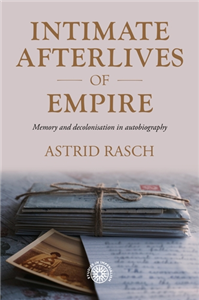
Through close readings of almost twenty autobiographies written after the break-up of the British Empire, the book examines how individuals engage with the changing narrative landscape brought about by decolonisation. It considers the autobiographies less for what they may teach us about the moment remembered and more as windows on the act of remembering. This adds a crucial dimension to our understanding of the legacies of colonialism and how the ongoing process of decolonisation is reflected on the level of the individual. It argues that autobiographers are at once influenced by and seek to influence the cultural memory of empire and its legacies, and the authors' own position in both. Situated at the intersection of imperial/decolonisation history, memory studies, and life writing studies, the book uncovers this intimate afterlife of empire.


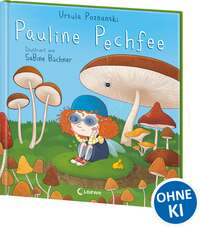
Help the animals to find their letters ... easy as ABC!• By best-selling author Ursula Poznanski• Get a first feeling for letters and words!• Humorously illustrated, with funny details!After a big storm in the jungle, the little monkey collects many funny-looking things. “That are letters,” knows the smart parrot. “Somebody must have lost them”. And indeed, monkey and parrot come across strange animals that seem like something is missing. A "iger", a "nake", a "at" … An exciting letter story for reading aloud and early reading, guessing and poetizing by yourself!
 Trusted Partner
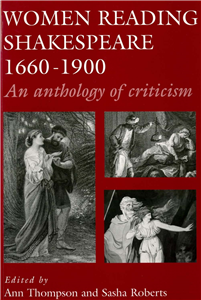
Women reading Shakespeare, 1660-1900 comprehensively rediscovers a lost tradition of women's writing on Shakespeare. Since Margaret Cavendish published the first critical essay on Shakespeare in 1664, women have written as scholars, critics, editors, performers and popularisers of Shakespeare. Many found in Shakespeare criticism the opportunity to raise a wide variety of issues, ranging from the use of women in society, family life, social relations and ethnic difference. In their different ways, women appropriated Shakespeare to their own ends - not always in step with their male contemporaries. Virtually none of this work is available today; it is unread and unknown. This fascinating anthology draws upon extensive new research to collect for the first time in one volume the Shakespeare criticism of some fifty British and American women writing before 1900. It includes the work of both familiar and unknown names and represents the diversity of literary genres used by women: the scholarly article, the periodical essay, book-length studies, personal memoirs, books for children, school editions. The volume also includes previously unknown Shakespeare illustrations by women, and a general introduction to the development of women's criticism of Shakespeare before 1900. ;
Trusted Partner
 Trusted Partner

The Arctic region has been the subject of much popular writing. This book considers nineteenth-century representations of the Arctic, and draws upon an extensive range of evidence that will allow the 'widest connections' to emerge from a 'cross-disciplinary analysis' using different methodologies and subject matter. It positions the Arctic alongside more thoroughly investigated theatres of Victorian enterprise. In the nineteenth century, most images were in the form of paintings, travel narratives, lectures given by the explorers themselves and photographs. The book explores key themes in Arctic images which impacted on subsequent representations through text, painting and photography. For much of the nineteenth century, national and regional geographical societies promoted exploration, and rewarded heroic endeavor. The book discusses images of the Arctic which originated in the activities of the geographical societies. The Times provided very low-key reporting of Arctic expeditions, as evidenced by its coverage of the missions of Sir John Franklin and James Clark Ross. However, the illustrated weekly became one of the main sources of popular representations of the Arctic. The book looks at the exhibitions of Arctic peoples, Arctic exploration and Arctic fauna in Britain. Late nineteenth-century exhibitions which featured the Arctic were essentially nostalgic in tone. The Golliwogg's Polar Adventures, published in 1900, drew on adult representations of the Arctic and will have confirmed and reinforced children's perceptions of the region. Text books, board games and novels helped to keep the subject alive among the young.
Trusted Partner

Ruby Fairygale and the Island of Magic Ruby Fairygale's first adventure - lovingly and excitingly told, with many atmospheric illustrations• Feel-good fantasy for Story Time, Early Readers and Fans of "Ruby Fairygale"!• Written by Marlene Jablonski (“Liliane Susewind” Chapter book series), based on a synopsis by Kira Gembri• Strong female protagonist and lovingly developed characters, with a high sympathy factor8-year-old Ruby Fairygale lives on a small island near the west coast of Ireland. After school, she always helps her grandmother, who works as a veterinarian. But the two of them have a big secret: they know that there are not only animals on the island, but also magical mythical creatures that need their help.Summer vacation at last! Now Ruby can spend the whole day helping her grandma. The two of them not only take care of animals, but also fairies, goblins and other mythical creatures! It's not easy to keep this secret - especially from Briana, the most unfriendly girl in Ruby's class. When Bri's father's fishing nets are destroyed, Briana suspects a pack of seals and is determined to drive them away. But Ruby suspects that something else is behind this. Something completely magical ... And indeed: a little mermaid had become entangled in the fishing net! Can Ruby still stop Bri without revealing her secret?
Trusted Partner
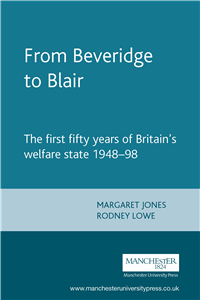
The creation of Britain's welfare state in 1948 was an event of major international importance. Designed to provide a concise introduction to the evolution of both the structure of the welfare state and attitudes towards it. Concentrates on five core services: health care, education, social security, the personal social services and housing. For each service it examines the original vision, the attempts to implement this vision, the resulting complexities and controversies and, above all, the impact on individual 'customers'. A wide range of documentary evidence is used, including published and unpublished government sources, political memoirs, newspaper exposés and personal testimony. ;
Trusted Partner
Trusted Partner

In this bold and exhilarating mix of memoir and writing guide, Melissa Febos tackles the emotional, psychological, and physical work of writing intimately while offering an utterly fresh examination of the storyteller's life and the challenges it presents. How do we write about the relationships that have formed us? How do we describe our bodies, their desires and traumas? What does it mean to have your writing, or living, dismissed as "navel-gazing"-or else hailed as "so brave, so raw"? And to whom, in the end, do our most intimate stories belong? Drawing on her journey from aspiring writer to acclaimed author and writing professor-via addiction and recovery, sex work and academia-Melissa Febos has created a captivating guide to the writing life, and a brilliantly unusual exploration of subjectivity, privacy, and the power of divulgence. Candid and inspiring, Body Work will empower readers and writers alike, offering ideas-and occasional notes of caution-to anyone who has ever hoped to see their true self reflecting back from the open page.
Trusted Partner

In this bold and exhilarating mix of memoir and writing guide, Melissa Febos tackles the emotional, psychological, and physical work of writing intimately while offering an utterly fresh examination of the storyteller's life and the challenges it presents. How do we write about the relationships that have formed us? How do we describe our bodies, their desires and traumas? What does it mean to have your writing, or living, dismissed as "navel-gazing"-or else hailed as "so brave, so raw"? And to whom, in the end, do our most intimate stories belong? Drawing on her journey from aspiring writer to acclaimed author and writing professor-via addiction and recovery, sex work and academia-Melissa Febos has created a captivating guide to the writing life, and a brilliantly unusual exploration of subjectivity, privacy, and the power of divulgence. Candid and inspiring, Body Work will empower readers and writers alike, offering ideas-and occasional notes of caution-to anyone who has ever hoped to see their true self reflecting back from the open page.
Trusted Partner
In this bold and exhilarating mix of memoir and writing guide, Melissa Febos tackles the emotional, psychological, and physical work of writing intimately while offering an utterly fresh examination of the storyteller's life and the challenges it presents. How do we write about the relationships that have formed us? How do we describe our bodies, their desires and traumas? What does it mean to have your writing, or living, dismissed as "navel-gazing"-or else hailed as "so brave, so raw"? And to whom, in the end, do our most intimate stories belong? Drawing on her journey from aspiring writer to acclaimed author and writing professor-via addiction and recovery, sex work and academia-Melissa Febos has created a captivating guide to the writing life, and a brilliantly unusual exploration of subjectivity, privacy, and the power of divulgence. Candid and inspiring, Body Work will empower readers and writers alike, offering ideas-and occasional notes of caution-to anyone who has ever hoped to see their true self reflecting back from the open page.
Trusted Partner
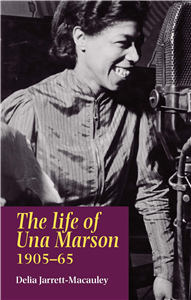
This is an original, full length biography of Britain's first twentieth-century black feminist - Una Marson - poet, playwright, and social activist and BBC broadcaster. Una Marson is recognised today as the first major woman poet of the Caribbean and as a significant forerunner of contemporary black writers; her story throws light on the problems facing politicised black artists. In challenging definitions of 'race' and 'gender' in her political and creative work, she forged a valiant path for later black feminists. Her enormous social and cultural contributions to the Caribbean and Britain have, until now, remained hidden in archives and memoirs around the world. Based on extensive research and oral testimony, this biography embraces postcolonial realities and promise, and is a major contribution to British cultural history. ;
Trusted Partner
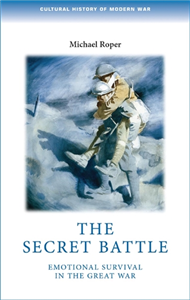
What did home mean to British soldiers and how did it help them to cope with the psychological strains of the Great War? Family relationships lie at the heart of this book. It explores the contribution letters and parcels from home played in maintaining the morale of this largely young, amateur army. And it shows how soldiers, in their turn, sought to adapt domestic habits to the trenches. Pursuing the unconscious clues within a rich collection of letters and memoirs with the help of psychoanalytical ideas, including those formulated by the veteran tank commander Wilfred Bion, this study asks fundamental questions about the psychological resources of this generation of young men. It reveals how the extremities of battle exposed the deepest emotional ties of childhood, and went on marking the post-war domestic lives of those who returned. ;
Trusted Partner
Trusted Partner
 Trusted Partner
Trusted Partner
Trusted Partner
Trusted Partner
Trusted Partner
Trusted Partner
Trusted Partner
Trusted Partner
Trusted Partner