
La Pollera Ediciones
La Pollera's catalog includes narrative, essay, and chronicle of contemporary and classic authors.
View Rights Portal
La Pollera's catalog includes narrative, essay, and chronicle of contemporary and classic authors.
View Rights Portal
Polperro Heritage Press is an independent British publisher, established in 1995. Recent titles from Polperro Press have included biographies, guides and a growing list of Cornish local history titles.
View Rights Portal
Migration and social policy in a changing world bridges the generally separate fields of social policy and migration studies. This book traces social policy responses to migration from the Industrial Revolution to today's era of globalisation and large-scale migration. Through case studies from across the globe, the book explores key themes including rural-urban migration, social citizenship, welfare internationalism and diasporic care systems. It examines how migrants are included in or excluded from social citizenship in host societies, and how they become providers of welfare services such as health and social care. Moving beyond a methodological nationalist focus, the book investigates migrant incorporation into welfare states through family networks, faith communities, and other informal welfare structures. It combines migrants' experiences with host societies' immigration politics, institutional perspectives and policies to present a comprehensive analysis of the migration-welfare relationship. This volume fills a gap in academic literature and offers policymakers, practitioners and scholars a framework for understanding the interplay between migration and social policy in our changing world.
Amid the global migration crisis, the UK has created and increasingly hostile policy environment for asylum seekers that has pushed many into unnecessary hardship and homelessness. This volume is an ethnographic study alongside refused asylum seekers and refugees living destitute in Manchester, UK. Based on over three years of research in emergency night shelters and on the streets of the city, it draws on the stories and experiences of those who have been driven into destitution by an antagonistic immigration system. The book not only explores how legal and temporal uncertainty shapes the daily lives of those who have had their asylum claims refused, but also attends to the experiences of volunteers and activists working on the frontline of the crisis. While the work is rich in detail, it also extends outwards and offers new insights into our understanding of borders and the need to rethink the grand notions of justice and hospitality.
 Trusted Partner
The first book-length analysis of EU health policy since the COVID-19 pandemic, encompassing the creation of the European Health Union and the Recovery and Resilience Facility, this volume offers a timely and accessible analysis of the EU's health policy, institutions and governance. Focusing on the EU's health objectives and how they are pursued, it offers a detailed overview of the development of EU health policy, and five in-depth case studies of specific policy fields. The book will appeal to academic and policy audiences interested in the EU's health objectives and how it pursues them.
Trusted Partner
European citizenship, identity and immigration are constitutive issues facing the European polity and have important consequences for domestic political systems. There has been a great deal published about citizenship within the setting of the nation-state and comparative immigration policies, but relatively little has been written on their theorisation in a post-national, post-statist context, such as the EU, and on alternative European institutional designs. Now available in paperback, this volume blends normative political theory with European integration, and develops an original theoretical framework for European Union citizenship, identity and immigration as well as a set of policy proposals for institutional reform. Challenging the conventionally held views in these areas, the author argues that a constructive model of European citizenship and identity is vital to the construction of a democratic, heterogeneous and inclusive European polity. The book will appeal to academics and political actors concerned with issues of European governance as well as to undergraduate and postgraduate students of European politics, European integration, European Union Law, political theory and sociology.
Trusted Partner
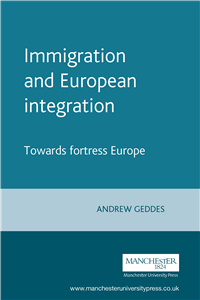
Migration is at the heart of the contemporary European Union. This new edition addresses three key questions that underpin EU responses to migration policy. First, what role does the EU play in the regulation of migration? Second, how and why have EU measures developed to promote the integration of migrants and their descendants? Third, what impact do EU measures on migration and asylum have on new member states and non member states? The updated edition covers important recent developments, addressing new migration flows and the external dimension of EU action on migration and asylum and placing in all these in the context of a 'wider' Europe. Andrew Geddes provides comprehensive analysis of the EU's free movement framework, of the development of co-operation on immigration and asylum policy, of the mobilisation by groups seeking to represent migrant's interests in EU decision-making, the interface between migration, welfare and the EU's social dimension, and the impact of enlargement on migration and asylum. This innovative and original analysis of the European dimension of immigration policy is essential reading for scholars of European integration, the politics of immigration and the prospects for new patterns of migrant inclusion at member state and EU level. ;
Trusted Partner
 Trusted Partner
 Trusted Partner
Trusted Partner
Trusted Partner
An exploration of the European Union with sections on conflict, intelligence and security, immigration and human rights, world economic development and environmental sustainability, high technologies and their growing impact.
Trusted Partner

This book examines how Ireland's relationship with the EU was affected by a succession of crises in both the Republic of Ireland and Northern Ireland. The financial crisis, the Brexit crisis and the migration crisis were not of equal significance on the island of Ireland. The financial crisis was a huge issue for the Republic but not Northern Ireland, Brexit had a major impact in both polities, the migration and populism issues were less controversial, while foreign policy challenges had a minimal impact. The book provides a summary of the main features of each of the crises to be considered, from both the EU and the Irish perspective. Ireland and the European Union is the first volume of its kind to provide a comprehensive analysis on British-Irish relations in the context of Brexit. It assesses the Withdrawal Agreement and Protocol on Ireland/Northern Ireland, the devolution settlement and the 1998 Agreement, as well as the European dimension to Northern Ireland's peace process. The contributors explore a number of policy areas that are central to the understanding of each of the crises and the impact of each for Ireland. Chapters examine issues such as security, migration and taxation as well as protest politics, political parties, the media, public opinion and the economic impact of each of these crises on Ireland's relationship with the EU.
Trusted Partner
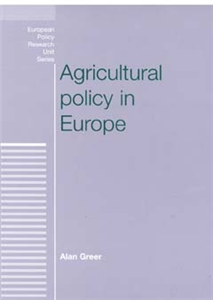
'Agricultural policy in Europe', available for the first time in paperback, provides a unique comparative analysis of the UK, France, Poland, the Netherlands, Greece and Ireland, using up-to-date material on CAP reform, world trade liberalisation, animal disease, rural development and the environment. In its core argument that Europe has a Common Agricultural Policy in name only, the study offers a distinctive interpretation of contemporary policies for agriculture and rural development. Policy is considerably more diverse than usually recognised, and also varies across different policy stages such as agenda setting, formulation and implementation. This diversity is the result of a multilevel policy process in which global, regional and local actors play a key role alongside the institutions of the EU. Yet nation states are central. Despite the existence of the CAP, substantial policy variations reflect different national economies, cultures, priorities and interests, usually mediated through different types of policy networks. Far from greater policy integration, the pressures for diversity have increased in recent years, notably through world trade liberalisation, environmental concern and EU enlargement. With continuing controversy about the future direction and powers of the EU, this groundbreaking book sheds new light on the extent to which agricultural policy in Europe is common. It goes beyond formal legal structures and the rhetoric of popular debate to look at what actually happens in a complex policy process that is both multilevel and multi stage. The result is a very different picture in which agricultural policy is considerably more diverse and fragmented than usually assumed. ;
Trusted Partner
 Trusted Partner
 Trusted Partner
 Trusted Partner
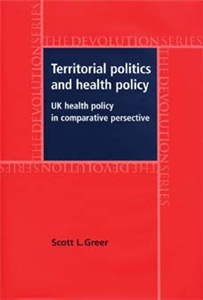
This study is the first large-scale comparison of policy and divergence in the UK since devolution. Based on extensive original research, it argues that we see substantial divergence in policies and social citizenship among the four parts of the UK as its autonomous political systems try to solve the unpredictable and difficult puzzles of health policy-making. ;
Trusted Partner
Settlers at the end of empire traces the development of racialised migration regimes in South Africa, Rhodesia (present-day Zimbabwe) and the United Kingdom from the Second World War to the end of apartheid in 1994. While South Africa and Rhodesia, like other settler colonies, had a long history of restricting the entry of migrants of colour, in the 1960s under existential threat and after abandoning formal ties with the Commonwealth they began to actively recruit white migrants, the majority of whom were British. At the same time, with the 1962 Commonwealth Immigrants Act, the British government began to implement restrictions aimed at slowing the migration of British subjects of colour. In all three nations, these policies were aimed at the preservation of nations imagined as white, revealing the persistence of the racial ideologies of empire across the era of decolonisation.
Trusted Partner
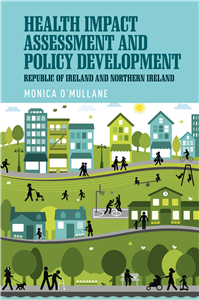
It is an accepted convention that non-health sector policies and strategies impact on population health. An instrument and approach, Health Impact Assessment (HIA), seeks to assess the health impacts of projects, programmes and policies in a systematic way. The ultimate goal of HIA is to inform public policy processes of these impacts. This book provides for the first time an analysis of how and why HIAs informed local policy development in both jurisdictions on the island of Ireland. An original theoretical framework was used as the analytical lens for this exploration, drawing from the fields of political and social sciences, and public health. The HIA projects were conducted on traffic and transport, Traveller accommodation, urban redevelopment and air quality. This conceptually-grounded guide draws from the disciplines of the political and social sciences and public health, and will appeal to academics, students and practitioners in these fields as well as policy-makers and planners at local and national government levels. ;
Trusted Partner

This electronic version has been made available under a Creative Commons (BY-NC-ND) open access license. Race talk is about language use as an anti-racist practice in multicultural city spaces. The book contends that attention to talk reveals the relations of domination and subordination in heterogeneous, ethnically diverse and multilingual contexts, while also helping us to understand how transcultural solidarity might be expressed. Drawing on original ethnographic research conducted on licensed and unlicensed market stalls in in heterogeneous, ethnically diverse and multilingual contexts, this book examines the centrality of multilingual talk to everyday struggles about difference, positionality and entitlement. In these street markets, Neapolitan street vendors work alongside documented and undocumented migrants from Bangladesh, China, Guinea Conakry, Mali, Nigeria and Senegal as part of an ambivalent, cooperative and unequal quest to survive and prosper. As austerity, anti-immigration politics and urban regeneration projects encroached upon the possibilities of street vending, talk across linguistic, cultural, national and religious boundaries underpinned the collective action of street vendors struggling to keep their markets open. The edginess of their multilingual organisation offered useful insights into the kinds of imaginaries that will be needed to overcome the politics of borders, nationalism and radical incommunicability.
Trusted Partner
Trusted Partner

This edited collection is the first to apply the theoretical lens of post-Foucauldian governmentality to an analysis of health problems, practices, and policy in Ireland. Drawing on empirical examples related to childhood, obesity, mental health, smoking, ageing and others, the collection explores how specific health issues have been constructed as problematic and in need of intervention in the Irish State, and considers the strategies, discourses and technologies involved in the art of governing health in advanced liberal democracies. Bringing together academics from social policy, sociology, political science and public health, the text seeks to develop a dialogue about both the nature of health and health policy in the Ireland, but also how governmentality, as a theoretical approach, can contribute to the development of critical health policy analysis.


