
Your Search Results
-

-

AITBS Publishers India
We are one of the leading publishers in India dealing in more than 400 titles. We are well reputed for publishing quality books mainly in Medical, Nursing, Pharmacy, Dentistry, Dictionaries, Management, Economics, Mathematics, Engineering and English Literature. We have published many good books authored by learned and eminent Indian authors. We sell and purchase reprint rights. Our aim is to publish good books, useful for students, colleges, professional institutes and public libraries.
View Rights Portal
-
Promoted Content

 April 2026
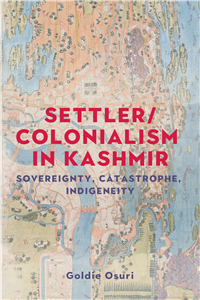
Settler/colonialism in Kashmir
Sovereignty, catastrophe, indigeneity
by Goldie Osuri
Sovereignty, catastrophe, Indigeneity examines Indian rule in occupied Jammu and Kashmir through settler/colonial geopolitics. Engaging with settler colonial, decolonial and Indigenous studies, the book explores how European sovereignty was shaped by settler/colonialism. Settler/colonialism was catastrophic for Indigenous worlds and generated the climate crisis. The book explores how India draws on settler/colonialism's catastrophic mechanisms to rule Kashmir, thus fuelling the climate crisis and participating in the geopolitical settler/colonial world order. Sites of analysis include the India China rivalry, Kashmir's political economy, and India's indigenisation of its Hindu sacred geography in Kashmir. Through this exploration, the author argues for asserting Kashmiri resistance as an Indigenous anti-colonial struggle. The intersections between sovereignty, catastrophe, Indigeneity, and ecology, illuminate Kashmir's place in the geopolitical settler/colonial world order. The book contributes to timely debates regarding settler/colonialism and planetary crises.
-
Promoted Content
 Humanities & Social SciencesJune 2025
Global networks of Indigeneity
by Bronwyn Carlson, Tristan Kennedy, Madi Day
-
 Trusted Partner
-
Trusted Partner
-
Trusted Partner
Humanities & Social SciencesMarch 2024
Diaspora as translation and decolonisation
by Ipek Demir
This innovative study engages critically with existing conceptualisations of diaspora, arguing that if diaspora is to have analytical purchase, it should illuminate a specific angle of migration or migrancy. To reveal the much-needed transformative potential of the concept, the book looks specifically at how diasporas undertake translation and decolonisation. It offers various conceptual tools for investigating diaspora, with a specific focus on diasporas in the Global North and a detailed empirical study of the Kurdish diaspora in Europe. The book also considers the backlash diasporas of colour have faced in the Global North.
-
Trusted Partner
 Humanities & Social SciencesJuly 2018
Savage worlds
German encounters abroad, 1798–1914
by Matthew Fitzpatrick, Peter Monteath
With an eye to recovering the experiences of those in frontier zones of contact, Savage Worlds maps a wide range of different encounters between Germans and non-European indigenous peoples in the age of high imperialism. Examining outbreaks of radical violence as well as instances of mutual co-operation, it examines the differing goals and experiences of German explorers, settlers, travellers, merchants, and academics, and how the variety of projects they undertook shaped their relationship with the indigenous peoples they encountered. Examining the multifaceted nature of German interactions with indigenous populations, this volume offers historians and anthropologists clear evidence of the complexity of the colonial frontier and frontier zone encounters. It poses the question of how far Germans were able to overcome their initial belief that, in leaving Europe, they were entering 'savage worlds'.
-
Trusted Partner
 Humanities & Social SciencesMarch 2022
Diaspora as translation and decolonisation
by Ipek Demir, Gurminder Bhambra
-
Trusted Partner
 Humanities & Social SciencesApril 2015
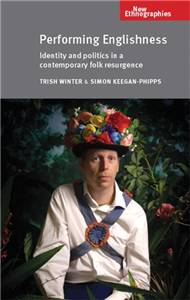
Performing Englishness
Identity and politics in a contemporary folk resurgence
by Trish Winter, Alexander Smith, Simon Keegan-Phipps
Now available in paperback, Performing Englishness examines the growth in popularity and profile of the English folk arts in the first decade of the twenty-first century. In the only study of its kind, the authors explore how the folk resurgence speaks to a broader explosion of interest in the subject of English national and cultural identity. Combining approaches from British cultural studies and ethnomusicology, the book draws on ethnographic fieldwork, interviews with central figures of the resurgence and close analysis of music and dance as well as visual and discursive sources. Its presentation of the English case study calls for a rethinking of concepts such as revival and indigeneity. It will be of interest to students and scholars in cultural studies, ethnomusicology and related disciplines. ;
-
Trusted Partner
 Humanities & Social SciencesMarch 2017
Rethinking settler colonialism
History and memory in Australia, Canada, Aotearoa New Zealand and South Africa
by Annie Coombes
Rethinking settler colonialism focuses on the long history of contact between indigenous peoples and the white colonial communities who settled in Australia, Aotearoa New Zealand, Canada and South Africa. It interrogates how histories of colonial settlement have been mythologised, narrated and embodied in public culture in the twentieth century (through monuments, exhibitions and images) and charts some of the vociferous challenges to such histories that have emerged over recent years. Despite a shared familiarity with cultural and political institutions, practices and policies amongst the white settler communities, the distinctiveness which marked these constituencies as variously, 'Australian', 'South African', 'Canadian' or 'New Zealander', was fundamentally contingent upon their relationship to and with the various indigenous communities they encountered. In each of these countries these communities were displaced, marginalised and sometimes subjected to attempted genocide through the colonial process. Recently these groups have renewed their claims for greater political representation and autonomy. The essays and artwork in this book insist that an understanding of the political and cultural institutions and practices which shaped settler-colonial societies in the past can provide important insights into how this legacy of unequal rights can be contested in the present. It will be of interest to those studying the effects of colonial powers on indigenous populations, and the legacies of imperial rule in postcolonial societies.
-
Trusted Partner
 Geography & the EnvironmentJuly 2026
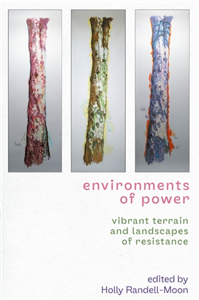
Environments of power
Vibrant terrain and landscapes of resistance
by Holly Randell-Moon
Environments of power provides unique case studies of environmental inclusion and exclusion across the Americas, Africa, Japan, India, and the South-Pacific. Using more-than-human and Indigenist approaches, chapters focus on Indigenous environmental resistance, marginalisation across social and physical environments, ecology as art, and how local communities are caught up in and resist development and infrastructure projects. The book demonstrates how environments influence which bodies and other matter belong (or not) in certain places.
-
Trusted Partner
 Humanities & Social SciencesAugust 2025
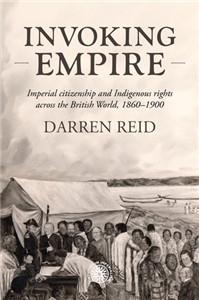
Invoking Empire
Imperial citizenship and Indigenous rights across the British World, 1860–1900
by Darren Reid
Invoking Empire examines the histories of Canada, South Africa, Australia, and New Zealand during the transitional decades between 1860-1900, when each gained some degree of self-government yet still remained within the sovereignty of the British Empire. It applies the conceptual framework of imperial citizenship to nine case studies of settlers and Indigenous peoples who lived through these decades to make two main arguments. It argues that colonial subjects adapted imperial citizenship to both support and challenge settler sovereignty, revealing the continuing importance of imperial authority in self-governing settler spaces. It also posits that imperial citizenship was rendered inoperable by a combination of factors in both Britian and the colonies, highlighting the contingency of settler colonialism on imperial governmental structures and challenging teleological assumptions that the rise of settler nation states was an inevitable result of settler self-government.
-
Trusted Partner
 Teaching, Language & ReferenceApril 2025
Anti-colonial research praxis
Methods for knowledge justice
by Caroline Lenette
How can anti-colonial research methodologies be transformative and achieve knowledge justice? This book brings together an eclectic group of leading scholars from around the world to share methodological knowledge grounded in First Nations and majority-world expertise and wisdom. The authors challenge western-centric and colonial approaches to knowledge production and redefine the possibilities of what we can achieve through social research. First Nations and majority-world perspectives are contextual and unique. They share a common aim of disrupting established beliefs on research methodologies and the unquestioned norms that dictate whose knowledge the academy values. The ten chapters in this edited collection describe how the authors draw on Indigenous knowledge systems, feminist frameworks, and creative methodologies as anti-colonial research praxis. The examples span several disciplines such as development studies, geography, education, sexual and reproductive health, humanitarian studies, and social work. Authors use a reflexive approach to discuss specific factors that shape how they engage in research ethically, to lead readers through a reflection on their own practices and values. The book reimagines social research using an anti-colonial lens and concludes with a collaboratively developed and co-written set of provocations for anti-colonial research praxis that situate this important work in the context of ongoing colonial violence and institutional constraints. This book is an essential guide for researchers and scholars within and beyond the academy on how anti-colonial research praxis can produce meaningful outcomes, especially in violent and troubled times. Cover art courtesy of Tawny Chatmon
-
Trusted Partner
Humanities & Social SciencesMarch 2017
Air power and colonial control
by David Omissi
Air policing was used in many colonial possessions, but its most effective incidence occurred in the crescent of territory from north-eastern Africa, through South-West Arabia, to North West Frontier of India. This book talks about air policing and its role in offering a cheaper means of 'pacification' in the inter-war years. It illuminates the potentialities and limitations of the new aerial technology, and makes important contributions to the history of colonial resistance and its suppression. Air policing was employed in the campaign against Mohammed bin Abdulla Hassan and his Dervish following in Somaliland in early 1920. The book discusses the relationships between air control and the survival of Royal Air Force in Iraq and between air power and indirect imperialism in the Hashemite kingdoms. It discusses Hugh Trenchard's plans to substitute air for naval or coastal forces, and assesses the extent to which barriers of climate and geography continued to limit the exercise of air power. Indigenous responses include being terrified at the mere sight of aircraft to the successful adaptation to air power, which was hardly foreseen by either the opponents or the supporters of air policing. The book examines the ethical debates which were a continuous undercurrent to the stream of argument about repressive air power methods from a political and operational perspective. It compares air policing as practised by other European powers by highlighting the Rif war in Morocco, the Druze revolt in Syria, and Italy's war of reconquest in Libya.
-
Trusted Partner

 December 2023
Cloud-native Computing
Software Engineering von Diensten und Applikationen für die Cloud
by Kratzke, Nane
-
Trusted Partner

 Children's & YA
Quiz Yourself Smart! Bees and Our Nature
by Friederun Reichenstetter/ Helen Seeberg/ Hans-Günther Döring
Where do bees get the wax for their honeycombs from? What does the bee dance mean? Why are bees important for us humans? General knowledge for primary school children! Who will be quiz king? The life of the little honeybee and its environment is full of surprises. Do you know your way around the native animal world? Discover their secrets, research how animals live and what distinguishes them. One quiz question – three possible answers. Plus all sorts of fascinating facts on the reverse page. For one or more players aged 6+.
-
Trusted Partner
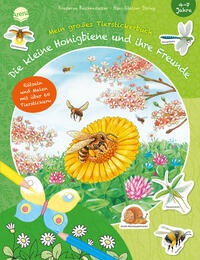 Children's & YA
The Little Honey Bee and Friends
by Friederun Reichenstetter/ Hans-Günther Döring
Bees, butterflies, ladybirds! So many insects are out and about in our native meadows. This puzzle book is full of little informative texts, animal stickers and pictures to colour in which not only educate but also promote early awareness about the environment and conservation. The pedagogical concept works through age-appropriate tasks and a clear structure: true-to-nature picture book illustrations on the left-hand side with a short factual text that can be read aloud or independently, plus a quiz question, then on the right-hand side are stickers and a puzzle to colour in. Testing knowledge is good. But this goes further: encouraging children to be inquisitive and imaginative about nature. At the end each animal sticker book with the little honey bee will look different. However you want it to be.
-
Trusted Partner
-
Trusted Partner
-
Trusted Partner
-
Trusted Partner



