
Your Search Results
-

-

AITBS Publishers India
We are one of the leading publishers in India dealing in more than 400 titles. We are well reputed for publishing quality books mainly in Medical, Nursing, Pharmacy, Dentistry, Dictionaries, Management, Economics, Mathematics, Engineering and English Literature. We have published many good books authored by learned and eminent Indian authors. We sell and purchase reprint rights. Our aim is to publish good books, useful for students, colleges, professional institutes and public libraries.
View Rights Portal
-
Promoted Content
-
Promoted Content

 Humanities & Social SciencesJuly 2018
Savage worlds
German encounters abroad, 1798–1914
by Matthew Fitzpatrick, Peter Monteath
With an eye to recovering the experiences of those in frontier zones of contact, Savage Worlds maps a wide range of different encounters between Germans and non-European indigenous peoples in the age of high imperialism. Examining outbreaks of radical violence as well as instances of mutual co-operation, it examines the differing goals and experiences of German explorers, settlers, travellers, merchants, and academics, and how the variety of projects they undertook shaped their relationship with the indigenous peoples they encountered. Examining the multifaceted nature of German interactions with indigenous populations, this volume offers historians and anthropologists clear evidence of the complexity of the colonial frontier and frontier zone encounters. It poses the question of how far Germans were able to overcome their initial belief that, in leaving Europe, they were entering 'savage worlds'.
-
 Trusted Partner
 Humanities & Social SciencesMarch 2017
Rethinking settler colonialism
History and memory in Australia, Canada, Aotearoa New Zealand and South Africa
by Annie Coombes
Rethinking settler colonialism focuses on the long history of contact between indigenous peoples and the white colonial communities who settled in Australia, Aotearoa New Zealand, Canada and South Africa. It interrogates how histories of colonial settlement have been mythologised, narrated and embodied in public culture in the twentieth century (through monuments, exhibitions and images) and charts some of the vociferous challenges to such histories that have emerged over recent years. Despite a shared familiarity with cultural and political institutions, practices and policies amongst the white settler communities, the distinctiveness which marked these constituencies as variously, 'Australian', 'South African', 'Canadian' or 'New Zealander', was fundamentally contingent upon their relationship to and with the various indigenous communities they encountered. In each of these countries these communities were displaced, marginalised and sometimes subjected to attempted genocide through the colonial process. Recently these groups have renewed their claims for greater political representation and autonomy. The essays and artwork in this book insist that an understanding of the political and cultural institutions and practices which shaped settler-colonial societies in the past can provide important insights into how this legacy of unequal rights can be contested in the present. It will be of interest to those studying the effects of colonial powers on indigenous populations, and the legacies of imperial rule in postcolonial societies.
-
Trusted Partner
 Humanities & Social SciencesAugust 2025
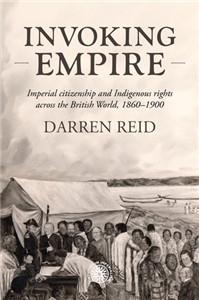
Invoking Empire
Imperial citizenship and Indigenous rights across the British World, 1860–1900
by Darren Reid
Invoking Empire examines the histories of Canada, South Africa, Australia, and New Zealand during the transitional decades between 1860-1900, when each gained some degree of self-government yet still remained within the sovereignty of the British Empire. It applies the conceptual framework of imperial citizenship to nine case studies of settlers and Indigenous peoples who lived through these decades to make two main arguments. It argues that colonial subjects adapted imperial citizenship to both support and challenge settler sovereignty, revealing the continuing importance of imperial authority in self-governing settler spaces. It also posits that imperial citizenship was rendered inoperable by a combination of factors in both Britian and the colonies, highlighting the contingency of settler colonialism on imperial governmental structures and challenging teleological assumptions that the rise of settler nation states was an inevitable result of settler self-government.
-
Trusted Partner
 Humanities & Social SciencesMarch 2017
Air power and colonial control
by David Omissi
Air policing was used in many colonial possessions, but its most effective incidence occurred in the crescent of territory from north-eastern Africa, through South-West Arabia, to North West Frontier of India. This book talks about air policing and its role in offering a cheaper means of 'pacification' in the inter-war years. It illuminates the potentialities and limitations of the new aerial technology, and makes important contributions to the history of colonial resistance and its suppression. Air policing was employed in the campaign against Mohammed bin Abdulla Hassan and his Dervish following in Somaliland in early 1920. The book discusses the relationships between air control and the survival of Royal Air Force in Iraq and between air power and indirect imperialism in the Hashemite kingdoms. It discusses Hugh Trenchard's plans to substitute air for naval or coastal forces, and assesses the extent to which barriers of climate and geography continued to limit the exercise of air power. Indigenous responses include being terrified at the mere sight of aircraft to the successful adaptation to air power, which was hardly foreseen by either the opponents or the supporters of air policing. The book examines the ethical debates which were a continuous undercurrent to the stream of argument about repressive air power methods from a political and operational perspective. It compares air policing as practised by other European powers by highlighting the Rif war in Morocco, the Druze revolt in Syria, and Italy's war of reconquest in Libya.
-
Trusted Partner
Humanities & Social SciencesJune 2025
Global networks of Indigeneity
by Bronwyn Carlson, Tristan Kennedy, Madi Day
-
Trusted Partner
 April 2026
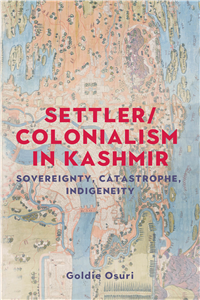
Settler/colonialism in Kashmir
Sovereignty, catastrophe, indigeneity
by Goldie Osuri
Sovereignty, catastrophe, Indigeneity examines Indian rule in occupied Jammu and Kashmir through settler/colonial geopolitics. Engaging with settler colonial, decolonial and Indigenous studies, the book explores how European sovereignty was shaped by settler/colonialism. Settler/colonialism was catastrophic for Indigenous worlds and generated the climate crisis. The book explores how India draws on settler/colonialism's catastrophic mechanisms to rule Kashmir, thus fuelling the climate crisis and participating in the geopolitical settler/colonial world order. Sites of analysis include the India China rivalry, Kashmir's political economy, and India's indigenisation of its Hindu sacred geography in Kashmir. Through this exploration, the author argues for asserting Kashmiri resistance as an Indigenous anti-colonial struggle. The intersections between sovereignty, catastrophe, Indigeneity, and ecology, illuminate Kashmir's place in the geopolitical settler/colonial world order. The book contributes to timely debates regarding settler/colonialism and planetary crises.
-
Trusted Partner
 Geography & the EnvironmentJuly 2026
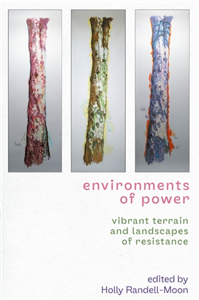
Environments of power
Vibrant terrain and landscapes of resistance
by Holly Randell-Moon
Environments of power provides unique case studies of environmental inclusion and exclusion across the Americas, Africa, Japan, India, and the South-Pacific. Using more-than-human and Indigenist approaches, chapters focus on Indigenous environmental resistance, marginalisation across social and physical environments, ecology as art, and how local communities are caught up in and resist development and infrastructure projects. The book demonstrates how environments influence which bodies and other matter belong (or not) in certain places.
-
Trusted Partner
 Teaching, Language & ReferenceApril 2025
Anti-colonial research praxis
Methods for knowledge justice
by Caroline Lenette
How can anti-colonial research methodologies be transformative and achieve knowledge justice? This book brings together an eclectic group of leading scholars from around the world to share methodological knowledge grounded in First Nations and majority-world expertise and wisdom. The authors challenge western-centric and colonial approaches to knowledge production and redefine the possibilities of what we can achieve through social research. First Nations and majority-world perspectives are contextual and unique. They share a common aim of disrupting established beliefs on research methodologies and the unquestioned norms that dictate whose knowledge the academy values. The ten chapters in this edited collection describe how the authors draw on Indigenous knowledge systems, feminist frameworks, and creative methodologies as anti-colonial research praxis. The examples span several disciplines such as development studies, geography, education, sexual and reproductive health, humanitarian studies, and social work. Authors use a reflexive approach to discuss specific factors that shape how they engage in research ethically, to lead readers through a reflection on their own practices and values. The book reimagines social research using an anti-colonial lens and concludes with a collaboratively developed and co-written set of provocations for anti-colonial research praxis that situate this important work in the context of ongoing colonial violence and institutional constraints. This book is an essential guide for researchers and scholars within and beyond the academy on how anti-colonial research praxis can produce meaningful outcomes, especially in violent and troubled times. Cover art courtesy of Tawny Chatmon
-
Trusted Partner
 Humanities & Social SciencesJuly 2022
Performing the jumbled city
by Olivia Casagrande, Faye Ginsburg, Andrew Irving, Sarah Pink, Paul Henley
-
Trusted Partner
-
Trusted Partner
 Humanities & Social SciencesSeptember 2020
Savage worlds
by Matthew Fitzpatrick, Peter Monteath, Andrew Thompson
-
Trusted Partner
 Humanities & Social SciencesJuly 2016
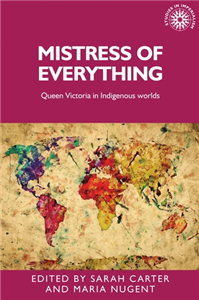
Mistress of everything
Queen Victoria in Indigenous worlds
by Andrew Thompson, John Mackenzie, Sarah Carter, Maria Nugent
Mistress of everything examines how indigenous people across Britain's settler colonies engaged with Queen Victoria in their lives and predicaments, incorporated her into their political repertoires, and implicated her as they sought redress for the effects of imperial expansion during her long reign. It draws together empirically rich studies from Canada, Australia, New Zealand and Southern Africa, to provide scope for comparative and transnational analysis. The book includes chapters on a Maori visit to Queen Victoria in 1863, meetings between African leaders and the Queen's son Prince Alfred in 1860, gift-giving in the Queen's name on colonial frontiers in Canada and Australia, and Maori women's references to Queen Victoria in support of their own chiefly status and rights. The collection offers an innovative approach to interpreting and including indigenous perspectives within broader histories of British imperialism and settler colonialism. ;
-
Trusted Partner
 Literature & Literary StudiesMay 2026
Women’s Agency and the Gothic in Spain and the Americas
by Megan DeVirgilis, Sandra García Gutiérrez
This volume has emerged to fulfill two main purposes: Primarily, to constitute the first collaborative work that traces the relationship between the Gothic and Women in Spain and the Americas, but also, to surpass the term 'Female Gothic,' coined by Ellen Moers, by transferring the focus towards women and their agency as writers, readers and characters. This volume functions as a manifesto per se to open new avenues into understanding how women have interacted with the Gothic between the nineteenth and twenty-first centuries in Spain and the Americas. The question, we determine, is not simply about identity, but rather about agency. We define women's agency as the total capacity of characters, authors and readers to act freely within a social framework in relation to gothic texts. In our exploration of authorship, we reject the claim that the Gothic is a simplistic literary genre, instead sustaining that the plasticity of the Gothic has enabled it to survive for centuries; by shifting from a genre to a mode, it has surpassed literary forms and invaded all kinds of media: from film to music and merchandise such as clothing and pop culture collectables, fostering an authentic goth fandom.
-
Trusted Partner
 Humanities & Social SciencesFebruary 2017
Conquering nature in Spain and its empire, 1750–1850
by Helen Cowie, Andrew Thompson, John M. MacKenzie
This book examines the study of natural history in the Spanish empire in the years 1750-1850. During this period, Spain made strenuous efforts to survey, inventory and exploit the natural productions of her overseas possessions, orchestrating a serries of scientific expeditions and cultivating and displaying American fauna and flora in metropolitan gardens and museums. This book assesses the cultural significance of natural history, emphasising the figurative and utilitarian value with which eighteenth-century Spaniards invested natural objects, from globetrotting elephants to three-legged chickens. It considers how the creation, legitimisation and dissemination of scientific knowledge reflected broader questions of imperial power and national identity. This book will be of particular interest to scholars and students of Spanish and Latin American History, the History of Science and Imperial Culture
-
Trusted Partner
Humanities & Social SciencesMarch 2017
Colonial frontiers
by Andrew Thompson, John M. MacKenzie, Kim Latham
Colonial frontiers explores the formation, structure and maintenance of boundaries and frontiers in settler colonies. Drawing on the work of anthropologists, historians, archaeologists and post-colonial theorists, the authors in this fascinating collection explore the importance of cross-cultural interactions in the settler colonies of Australia, New Zealand, South Africa and America. Taking key historical moments to illuminate the formation of new boundaries and the interaction between the settler societies and the indigenous groups, this book raises many important questions about how the empire worked 'on the ground'. Importantly, the collection attempts to theorise the indigenous experience. As we move towards globalisation, borders and boundaries have begun to fall away. This book reminds us that not long ago the frontiers and boundaries were the key sites for cross-cultural interaction. This collection, which includes chapters by John K. Noyes, Nigel Penn, Kay Schaffer and Ian McNiven, is broad in scope and presents an exciting new approach to the issues surrounding group interaction in colonial settings. Students and academics, from backgrounds such as imperial history, anthropology and post-colonial studies, will find this collection extremely valuable.
-
Trusted Partner
-
Trusted Partner
 Humanities & Social SciencesMarch 2026
The cultural politics of food in South Africa
Media, nourishment, inequality
by Mehita Iqani, Sarah Gibson
Food is both a material system of nourishment, necessary for human survival, and a communicative system that signifies multiple meanings across human cultures. This book explores the cultural politics of food in the South African context, bringing together a range of disciplinary perspectives on the links between media, nourishment, and inequality. The chapters all highlight the multiplicity of meanings that food has in South African society. These include historical perspectives on the impact of colonialism, migration and apartheid had on food and foodways in South Africa; sociological interventions on food and society; aesthetic practices in relation to food; and mediated food cultures in South Africa. Taken together, the book critically explores the multiple ways in which food is never just food, and always linked to complex and shifting modalities of meaning and knowledge in the South African context.
-
Trusted Partner
 The ArtsJune 2017
Contemporary Australian cinema
An introduction
by Jonathan Rayner
Provides an introduction to the products and context of the new Australian film industry which arose toward the end of the 1960s. Traces the development of Australian film, in terms of prominent directors and stars, consistent themes, styles and evolving genres. The evolution of the film genres peculiar to Australia, and the adaptation of conventional Hollywood forms (such as the musical and the road movie) are examined in detail through textual readings of landmark films. Films and trends discussed include: the period film and Picnic at Hanging Rock; the Gothic film and the Mad Max trilogy; camp and kitsch comedy and the Adventures of Pricilla, Queen of the Desert. The key issue of the revival (the definition, representation and propagation of a national image) is woven through analysis of the new Australian cinema.
-
Trusted Partner
Business, Economics & LawJanuary 2026
Latin America and international investment law
A mosaic of resistance
by Sufyan Droubi, Cecilia Juliana Flores Elizondo
Latin America has been a complex laboratory for the development of international investment law. While some governments and non-state actors have remained true to the Latin American tradition of resistance towards the international investment law regime, other governments and actors have sought to accommodate said regime in the region. Consequently, a profusion of theories and doctrines, too often embedded in clashing narratives, has emerged. In Latin America, the practice of international investment law is the vivid amalgamation of the practice of governments sometimes resisting and sometimes welcoming mainstream approaches; the practice of lawyers assisting foreign investors from outside and within the region; and the practice of civil society, indigenous peoples and other actors in their struggle for human rights and sustainable development. Latin America and international investment law describes the complex roles that governments have played vis-à-vis foreign investors and investments; the refreshing but clashing forces that international organizations, corporations, civil society, and indigenous peoples have brought to the field; and the contribution that Latin America has made to the development of the theory and practice of international investment law, notably in fields in which the Latin American experience has been traumatic: human rights and sustainable development. Latin American scholars have been contributing to the theory of international investment law for over a century; resting on the shoulders of true giants, this volume aims at pushing this contribution a little further.



