
Éditions de la Pastèque
Livres Canada Books
View Rights Portal

Pastrengo is a Milan-based literary agency founded on September 2016 by Francesco Sparacino and Michele Turazzi. Pastrengo represents Italian authors of fiction (commercial and literary, young adult) and non fiction.
View Rights Portal

David and Bathsheba presents a modernised edition of George Peele's explosive biblical drama about the tangled lives, deadly liaisons, and twisted histories of Ancient Israel's royal family. Martin's critical edition is the first modern single-volume edition of the play since 1912 and opens up this unduly neglected gem of English Renaissance drama to student and scholar alike. The introduction examines such topics as the play's treatment of its biblical and poetic sources, its engagement with Elizabethan politics, and its forceful representations of religious fanaticism, genocide, and sexual violence. Its commentary notes clarify the text's meaning and staging, guide the reader through the play's dramatisation of the turbulent Davidic period of Ancient Israel's history, and place the play in its broader cultural and artistic milieu. Martin's edition aims to encourage new contemporary critical study of Peele's powerful and disturbing drama.

David and Bathsheba presents a modernised edition of George Peele's explosive biblical drama about the tangled lives, deadly liaisons, and twisted histories of Ancient Israel's royal family. Martin's critical edition is the first modern single-volume edition of the play since 1912 and opens up this unduly neglected gem of English Renaissance drama to student and scholar alike. The introduction examines such topics as the play's treatment of its biblical and poetic sources, its engagement with Elizabethan politics, and its forceful representations of religious fanaticism, genocide, and sexual violence. Its commentary notes clarify the text's meaning and staging, guide the reader through the play's dramatisation of the turbulent Davidic period of Ancient Israel's history, and place the play in its broader cultural and artistic milieu. Martin's edition aims to encourage new contemporary critical study of Peele's powerful and disturbing drama.
 Trusted Partner

This book examines the television serials created by influential showrunner David Simon. The book argues that Simon's main theme is the state of the contemporary American city and that all of his serials (barring one about the Iraq War) explore different facets of the metropolis. Each series offers distinctly different visions of the American city, but taken together they represent a sustained and intricate exploration of urban problems in modern America. From deindustrialisation in The Wire and residential segregation in Show Me a Hero to post-Katrina New Orleans in Treme and the transformation of the urban core in The Deuce, David Simon's American city traces the urban through-line in Simon's body of work. Based on sustained analysis of these serials and their engagement with contemporary politics and culture, David Simon's American city offers a compelling examination of one of television's most arresting voices.
Trusted Partner


In “When The Giraffe Still Had Admirers” we get to know Claude Bernard and Louis Pasteur, Antoine Laurent de Lavoisier and Étienne Geoffroy Saint-Hilaire. Lichtwarck-Aschoff takes their lives and discoveries – often resulting from serendipity – as the starting point for his stories. The enthralling read makes literature so eloquent, full of wit and powerful that this author is no longer just an insider tip.
Trusted Partner


„Glaubst du an die Wirklichkeit?“ Diese Frage eines Kollegen verwunderte Bruno Latour. In diesem Buch liefert er seine detaillierte Antwort. Anhand verschiedener Fallstudien - eine bodenkundliche Expedition im Regenwald des Amazonas, die französische Atomforschung kurz vor der Okkupation, die Entdeckung des Milchsäureferments durch Pasteur - nimmt Latour die vieldiskutierte Frage auf, ob die im Labor gewonnen Tatsachen „konstruiert“ oder „wirklich“ sind. Doch bereits diese Frage soll vor allem eine polemische Form des wissenschaftlichen „Objekts“ begründen und ist Teil der gegenwärtigen „Science Wars“, die er bis in die Antike verfolgt. Bei aller Instrumentalisierung der Wissenschaften zum Zweck der Bevormundung, ist Latour dennoch kein Wissenschaftsgegner, sondern für die Forschung in ihrem offenen Experimentieren.
Trusted Partner
For nearly half a century Anne Lake Prescott has been a force and an inspiration in Renaissance studies. A force, because of her unique blend of learning and wit and an inspiration through her tireless encouragement of younger scholars and students. Her passion has always been the invisible bridge across the Channel: the complex of relations, literary and political, between Britain and France. The essays in this long-awaited collection range from Edmund Spenser to John Donne, from Clément Marot to Pierre de Ronsard. Prescott has a particular fondness for King David, who appears several times; and the reader will encounter chessmen, bishops, male lesbian voices and Roman whores. Always Prescott's immense erudition is accompanied by a sly and gentle wit that invites readers to share her amusement. Reading her is a joyful education.
Trusted Partner
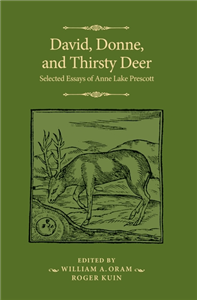
For nearly half a century Anne Lake Prescott has been a force and an inspiration in Renaissance studies. A force, because of her unique blend of learning and wit and an inspiration through her tireless encouragement of younger scholars and students. Her passion has always been the invisible bridge across the Channel: the complex of relations, literary and political, between Britain and France. The essays in this long-awaited collection range from Edmund Spenser to John Donne, from Clément Marot to Pierre de Ronsard. Prescott has a particular fondness for King David, who appears several times; and the reader will encounter chessmen, bishops, male lesbian voices and Roman whores. Always Prescott's immense erudition is accompanied by a sly and gentle wit that invites readers to share her amusement. Reading her is a joyful education.
Trusted Partner

Robert Louis Stevenson, geboren 1850 in Edinburgh (Schottland) und verstorben 1894 in Vailima (Samoa), studierte Rechtswissenschaft an der Universität Edinburgh, bevor er sich vollends dem Schreiben widmete. Stevenson hinterließ ein umfangreiches Werk von Reiseerzählungen, Abenteuerliteratur sowie Lyrik und Essays. Bekanntheit erlangte er vor allem durch Die Schatzinsel.
Trusted Partner
»Cogito ergo sum« – »Ich denke, also bin ich«: Mit diesem Satz begründete Descartes das rationalistische Denken der Neuzeit. Wenn Bruno Latour nun den Singular durch den Plural ersetzt, betont er damit, daß es immer Kollektive sind, die denken, und diese Kollektive, so Latour, umfassen auch leblose Dinge und Technologie. Diese These untermauerte der Begründer der politischen Ökologie in seinen bahnbrechenden interdisziplinären Fallstudien über das Labor Pasteurs und das gescheiterte Pariser Nahverkehrsprojekt Aramis. In Cogitamus erläutert Latour in fiktiven Briefen an eine deutsche Studentin, die seine Vorlesungen aus mysteriösen Gründen immer verpaßt, auf anschauliche Weise seine komplexe Theorie.
Trusted Partner

—300th birthday of Tobias Mayer in February 2023 — The rediscovery of a great scientist — A chapter in the fascinating history of science The story of Tobias Mayer's life (1723 to 1762) is that of a child prodigy and orphan who became a pioneer of the Enlightenment as a cartographer, mathematician, physicist and astronomer. Having never been to university, at the age of 28 he was appointed a professor in Göttingen by the Elector of Hanover and King of England. He revolutionised cartography with his zeal and skill, helping sailors to find the right path across the seas and providing people with the firstever clear view of the moon. 17th February 2023 marks the 300th anniversary of the birth of Tobias Mayer. High time to recall this prototype of a scientist.
Trusted Partner

Robert Louis Stevenson and theories of reading is both an exceptionally well researched study of the novelist, and well as an intriguing exploration of 'literary consumption'. Glenda Norquay presents fresh interpretations of Stevenson's literary essays, of major works including The Master of Ballantrae, and some of his more neglected fiction such as St Ives and The Wrecker, as well as illuminating our understanding of his role within debates over popular fiction, romance and reading pleasure. She offers an unusual combination of literary history and reception theory and argues that Stevenson both exemplified tensions within the literary market of his time and anticipated later developments in reading theory. By combining the study of nineteenth-century cultural politics with detailed analysis of his Scottish Calvinism, Stevenson is reassessed as both a Victorian and Scottish writer. The book is aimed at scholars, postgraduates and undergraduates with an interest in the nineteenth-century literary marketplace, in Scottish culture, and in reading /reception theory as well as Stevenson enthusiasts. ;
Trusted Partner

Ein kindliches Gemüt, gepaart mit tiefer Melancholie, ein etwas verschrobener Außenseiter, ein politisch unbequemer Geist: Caspar David Friedrich – geboren in Greifswald, bereits zu Lebzeiten umstritten, nach seinem Tod für ein halbes Jahrhundert vergessen, heute der bedeutendste Maler der deutschen Romantik. In seiner prägnanten Biografie erzählt Boris von Brauchitsch, wie Caspar David Friedrich die Malerei revolutionierte, entschieden mit dem Kunstverständnis seiner Zeitgenossen brach und mit seinen rätselhaften Bildern zu einem prägenden Vorläufer der Moderne wurde. Dabei zeigt er überraschende Zusammenhänge auf, nimmt die Wiederentdeckung und enthusiastische Rezeption des Malers in den Blick und macht anschaulich, warum die Faszination seines Werkes gerade heute – in Zeiten von Wachstumsskepsis und einer Rückbesinnung auf die Kräfte einer zusehends bedrohten Natur – eine besondere Wirkung entfaltet.
Trusted Partner

Ein kindliches Gemüt, gepaart mit tiefer Melancholie, ein etwas verschrobener Außenseiter, ein politisch unbequemer Geist: Caspar David Friedrich – geboren in Greifswald, bereits zu Lebzeiten umstritten, nach seinem Tod für ein halbes Jahrhundert vergessen, heute der bedeutendste Maler der deutschen Romantik. In seiner prägnanten Biografie erzählt Boris von Brauchitsch, wie Caspar David Friedrich die Malerei revolutionierte, entschieden mit dem Kunstverständnis seiner Zeitgenossen brach und mit seinen rätselhaften Bildern zu einem prägenden Vorläufer der Moderne wurde. Dabei zeigt er überraschende Zusammenhänge auf, nimmt die Wiederentdeckung und enthusiastische Rezeption des Malers in den Blick und macht anschaulich, warum die Faszination seines Werkes gerade heute – in Zeiten von Wachstumsskepsis und einer Rückbesinnung auf die Kräfte einer zusehends bedrohten Natur – eine besondere Wirkung entfaltet.
Trusted Partner
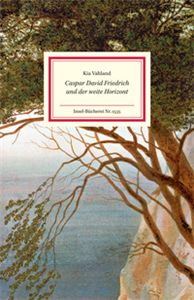
Caspar David Friedrich macht es seinen Betrachterinnen und Betrachtern nicht leicht. Immer steht dem Blick etwas im Weg: eine Rückenfigur, ein Stein, eine Baumwurzel. Mit seiner Kunst der Gegensätze wurde der Romantiker aus Greifswald zum Seelenmaler vor allem vieler Deutscher, etwa mit seinem »Wanderer über dem Nebelmeer« (um 1818). Doch die Malerei dieses eigensinnigen Mannes ist nicht plakativ und düster, sondern subtil, farben- und ideenreich: eine Feier der Natur und innerer Landschaften. Zu Caspar David Friedrichs 250. Geburtstag lädt die Kunsthistorikerin und Sachbuch-Autorin Kia Vahland ein, seine Meisterwerke neu zu entdecken. Ihr mitreißend erzähltes Buch führt durch Leben, Werk und Zeit des Malers und Zeichners und erklärt die erstaunlichen Ergebnisse der jüngeren Forschung.
Trusted Partner

Looking at royal ritual in pre-revolutionary France, Death and the crown examines the deathbed and funeral of Louis XV in 1774, the lit de justice of November 1774, and the coronation of Louis XVI, including the ceremony of the royal healing touch for scrofula. It reviews the state of the field in ritual studies and appraises the status of the monarchy in the 1770s, including the recall of the parlements and the many ways people engaged with royal ritual. It answers questions such as whether Louis XV died in fear of damnation, why Marie Antoinette was not crowned in 1775 and why Louis XVI's coronation was not held in Paris. This lively, accessible text is a useful tool for under- and post-graduate teaching which will also be of interest to specialists on this under-researched period.
Trusted Partner

Als Halbwaise geboren, leidet der junge David unter den Grausamkeiten seines Stiefvaters und muß bereits als Zehnjähriger unter unmenschlichen Bedingungen in einer Fabrik arbeiten. Mit Mut und Intelligenz kann er sich aus diesen Verhältnissen befreien und findet schließlich seinen Weg in die Unabhängigkeit als Parlamentsreporter und Schriftsteller.
Trusted Partner
Trusted Partner

Als Kind träumte David davon, die ganze Welt zu bereisen und überall neue Tiere und Pflanzen zu entdecken. Später studierte er und arbeitete für das Fernsehen. Für seine Tierfilme war er auf allen Kontinenten, sogar in der Antarktis, und begeisterte damit Millionen Zuschauer. Bis heute setzt er sich für den Umweltschutz und eine lebenswerte Welt für alle Menschen und Tiere ein. Little People, Big Dreams erzählt von den beeindruckenden Lebensgeschichten großer Menschen: Jede dieser Persönlichkeiten, ob Künstlerin, Pilotin oder Wissenschaftler, hat Unvorstellbares erreicht. Dabei begann alles, als sie noch klein waren: mit großen Träumen.
Trusted Partner
 Trusted Partner

The Annals of St-Bertin, covering the years 830 to 882, are the main narrative source for the Carolingian world in the ninth century. This richly-annotated translation by a leading British specialist makes these Carolingian histories accessible in English for the first time, encouraging readers to reassess and evaluate a crucially formative period of European history. Produced in the 830s in the imperial palace of Louis the Pious, The Annals of St-Bertin were continued away from the Court, first by Bishop Prudentius of Troyes, then by the great scholar-politician Archbishop Hinemar of Rheims. The authors' distinctive voices and interests give the work a personal tone rarely found in medieval annals. They also contain uniquely detailed information on Carolingian politics, especially the reign of the West Frankish king, Charles the Bald (840-877). No other source offers so much evidence on the Continental activities of the Vikings. Janet L. Nelson offers in this volume both an entrée to a crucial Carolingian source and an introduction to the historical setting of teh Annals and possible ways of reading the evidence. The Annals of St-Bertin will be valuable reading for academics, research students and undergraduates in medieval history, archaeology and medieval languages. It will also fascinate any general reader with an interest in the development of European culture and society.


