
Your Search Results
-

-

Agriculture & International Development
Textbooks, research and professional titles in Agriculture and International Development
View Rights Portal
-
Promoted Content

 Humanities & Social SciencesMarch 2017
The French empire between the wars
Imperialism, politics and society
by Martin Thomas
By considering the distinctiveness of the inter-war years as a discrete period of colonial change, this book addresses several larger issues, such as tracing the origins of decolonization in the rise of colonial nationalism, and a re-assessment of the impact of inter-war colonial rebellions in Africa, Syria and Indochina. The book also connects French theories of colonial governance to the lived experience of colonial rule in a period scarred by war and economic dislocation.
-
Promoted Content
 Humanities & Social SciencesMarch 2017
Britain in China
by Robert Bickers
This is a study of Britain's presence in China both at its peak, and during its inter-war dissolution in the face of assertive Chinese nationalism and declining British diplomatic support. Using archival materials from China and records in Britain and the United States, the author paints a portrait of the traders, missionaries, businessmen, diplomats and settlers who constituted "Britain-in-China", challenging our understanding of British imperialism there. Bickers argues that the British presence in China was dominated by urban settlers whose primary allegiance lay not with any grand imperial design, but with their own communities and precarious livelihoods. This brought them into conflict not only with the Chinese population, but with the British imperial government. The book also analyzes the formation and maintenance of settler identities, and then investigates how the British state and its allies brought an end to the reign of freelance, settler imperialism on the China coast. At the same time, other British sectors, missionary and business, renegotiated their own relationship with their Chinese markets and the Chinese state and distanced themselves from the settler British.
-
 Trusted Partner
 June 2025
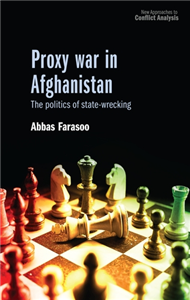
Proxy war in Afghanistan
The politics of state-wrecking
by Abbas Farasoo
This book provides a compelling analysis of proxy warfare and its far-reaching implications for statehood, focusing on the conflict in Afghanistan. Introducing the innovative concept of "state-wrecking," it bridges theory and practice to unravel how external support for insurgent actors fuels violence, undermines territorial control and sovereignty, intensifies violence, and dismantles political legitimacy. The work shifts the discourse on proxy wars from the strategies of global powers to the procedural and structural impacts within target states. Grounded in rigorous empirical research, including interviews, archival data, and conflict analysis, the book critically examines the Pakistan-Taliban nexus and the limitations of US-led interventions. By blending a robust theoretical framework with in-depth case studies, it reveals how proxy dynamics shape conflicts, disrupt governance, and challenge international security. This is an essential resource for those seeking to understand the entanglements of modern warfare and the fragility of states under external influence.
-
Trusted Partner

 April 2008
Sommer war es
Roman
by Iselin C. Hermann, Regine Elsässer
Ein Sommertag in den sechziger Jahren, eine verschwundene Zeit. Die fünfjährige Zwetsche sitzt mit ihrer Großmutter im Auto, sie sind unterwegs zum großelterlichen Gutshof, wo Zwetsche bleiben soll, bis ihre Eltern von ihrer Urlaubsreise zurückkommen. Auf dem Hof warten der Großvater, ihre drei studierenden Onkel und die Haushälterin Nea. Der Hof ist ein großer Abenteuerspielplatz, ein Paradies mit Kühen, Pferden und kurzen Ausflügen in die Stadt. Aber werden die Eltern wiederkommen? Die Bornholmer Uhr in der Diele mißt die Zeit, sie ist merkwürdig elastisch, wenn man erst fünf Jahre alt ist. Ein Tag währt ein ganzes Leben und das Abenteuer wartet in einer sich blähenden Sommergardine und den Glasaugen der ausgestopften Eule auf dem Schrank. Sommer war es ist die Erinnerungsphantasie einer Frau aus dem Land der Kindheit. Aus einer Zeit, in der die Erwachsenen riesige Nasenlöcher haben und merkwürdige Dinge sagen, die man nur halb versteht. Vielleicht haben wir es vergessen, aber genau so war es.
-
Trusted Partner

 May 2022
In the Shadow of War
Diary notes from Ukraine
by Christoph Brumme
"What can you learn in war? Do you become numb, do you get used to it at some point? Does war make you "hard", uncaring, above pain? No. These are just clichés. Every day brings new horrors. At best, one learns for some time to suppress strong feelings, because to give in to them would weaken one's life instinct." In a very stirring and shocking, but sometimes humorous language, Christoph Brumme tells of the situation in Ukraine, the everyday life of his family and friends, of fears, longings and political assessments. The diary entries of the war and the resistance of the Ukrainians, starting from the first signs of the impending war in mid-January 2022 until the printing of this book, 1st May 2022, impressively bear witness to the brutality of these events.
-
Trusted Partner
 Humanities & Social SciencesFebruary 2026
Make cheese not war
Transnational resistance and the Larzac in modern France
by Andrew W. M. Smith
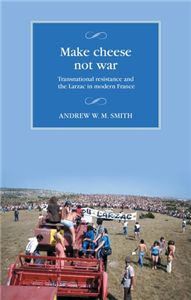
In 1971, the French government announced a massive extension of its military base on the Larzac plateau in southern France. Land was to be expropriated from 107 farms around the small town of La Cavalerie. Limited resistance was expected, but what happened next exceeded all expectations. Local sheep farmers set up protest camps and occupied the land. They soon attracted an astonishing level of support, pioneering a form of regional radicalism with global implications. Drawing out the international dimensions of the protest, Make cheese not war explores a transnational resistance movement in the 1970s that challenged dominant visions of modernity and became a wellspring of radical alternatives. Exploring previously unconsulted archives in France and elsewhere, the book offers an in-depth analysis of the decade-long peasant movement and its aftermath. Repositioning the Larzac struggle within a wider network of French and international solidarities, from the US to the UK, Germany, Burkina Faso, New Caledonia and Japan, the book retraces political networks of pacifist activism, as well as environmental movements and anti-nuclear protest. It shows how this French peasant campaign became both a platform and a model for popular engagement.
-
Trusted Partner
 Humanities & Social SciencesMarch 2017
Air power and colonial control
by David Omissi
Air policing was used in many colonial possessions, but its most effective incidence occurred in the crescent of territory from north-eastern Africa, through South-West Arabia, to North West Frontier of India. This book talks about air policing and its role in offering a cheaper means of 'pacification' in the inter-war years. It illuminates the potentialities and limitations of the new aerial technology, and makes important contributions to the history of colonial resistance and its suppression. Air policing was employed in the campaign against Mohammed bin Abdulla Hassan and his Dervish following in Somaliland in early 1920. The book discusses the relationships between air control and the survival of Royal Air Force in Iraq and between air power and indirect imperialism in the Hashemite kingdoms. It discusses Hugh Trenchard's plans to substitute air for naval or coastal forces, and assesses the extent to which barriers of climate and geography continued to limit the exercise of air power. Indigenous responses include being terrified at the mere sight of aircraft to the successful adaptation to air power, which was hardly foreseen by either the opponents or the supporters of air policing. The book examines the ethical debates which were a continuous undercurrent to the stream of argument about repressive air power methods from a political and operational perspective. It compares air policing as practised by other European powers by highlighting the Rif war in Morocco, the Druze revolt in Syria, and Italy's war of reconquest in Libya.
-
Trusted Partner
 Humanities & Social SciencesSeptember 2023
Civil war London
Mobilizing for parliament, 1641–5
by Jordan S. Downs
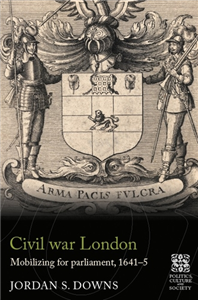
This book looks at London's provision of financial and military support for parliament's war against King Charles I. It explores for the first time a series of episodic, circumstantial and unique mobilisations that spanned from late 1641 to early 1645 and which ultimately led to the establishment of the New Model Army. Based on research from two-dozen archives, Civil war London charts the successes and failures of efforts to move London's vast resources and in the process poses a number of challenges to longstanding notions about the capital's 'parliamentarian' makeup. It reveals interactions between London's Corporation, parochial communities and livery companies, between preachers and parishioners and between agitators, propagandists and common people. Within these tangled webs of political engagement reside the untold stories of the movement of money and men, but also of parliament's eventual success in the English Civil War.
-
Trusted Partner
 The ArtsSeptember 2024
The renewal of post-war Manchester
Planning, architecture and the state
by Richard Brook
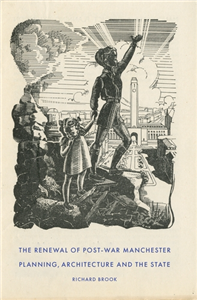
A compelling account of the project to transform post-war Manchester, revealing the clash between utopian vision and compromised reality. Urban renewal in Britain was thrilling in its vision, yet partial and incomplete in its implementation. For the first time, this deep study of a renewal city reveals the complex networks of actors behind physical change and stagnation in post-war Britain. Using the nested scales of region, city and case-study sites, the book explores the relationships between Whitehall legislation, its interpretation by local government planning officers and the on-the-ground impact through urban architectural projects. Each chapter highlights the connections between policy goals, global narratives and the design and construction of cities. The Cold War, decolonialisation, rising consumerism and the oil crisis all feature in a richly illustrated account of architecture and planning in post-war Manchester.
-
Trusted Partner
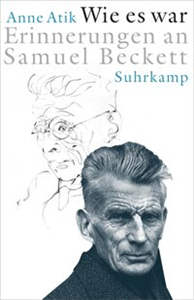 April 2003
Wie es war
Erinnerungen an Samuel Beckett
by Anne Atik, Avigdor Arikha, Wolfgang Held
»wie es war ich zitiere vor Pim mit Pim nach Pim wie es ist drei Teile ich sage es wie ich es höre« – so beginnt Samuel Becketts Roman Wie es ist , dessen Titel diese Erinnerungen aufgreifen und abwandeln: Wie waren sie denn, die Jahre mit »Sam«? Einer von Samuel Becketts Malerfreunden ist Avigdor Arikha. »Für Avigdor Arikha«, so heißt ein bekannter, kurzer Text Becketts. Arikha heiratete Anne Atik, eine amerikanische Dichterin. Dem Paar wurden zwei Töchter geboren, Beckett war Patenonkel Albas, der älteren. Bis zu seinem Tod ging er bei dieser Familie ein und aus. Immer wieder zeichnete Arikha die charismatische Figur seines Freundes: allein, im Gespräch, beim Schachspiel mit Tochter Noga. Briefe wurden gewechselt. 1959 hatte Anne Atik Beckett kennengelernt. 1970, elf Jahre später, begann sie, sich nach solchen Treffen Notizen zu machen; Gedächtnis und Aufzeichnungen speisen ihren Erinnerungsband. Beim Trinken und Essen, am Klavier, vor Gemälden, in vielen Gesprächen über Musik, Malerei, Literatur – speziell über Gedichte (darunter eine ganze Reihe von deutschen), die auswendig rezitiert, deklamiert, ja »gesungen« und in Einzelheiten besprochen wurden – wird die sympathische Gestalt des hochgebildeten, aufmerksamen und freundschaftlich zugewandten, doch immer um die Konzentration aufs eigene Werk ringenden älteren Beckett lebendig. Anne Atik zeigt, wie Sam auch als Freund der Familie und überraschend nahbarer Privatmensch ganz »in der Kunst lebte«. Außer den genannten Porträtzeichnungen und Fotos enthält der schön gestaltete, großformatige Band zahlreiche Faksimiles von Briefen und Postkarten Becketts an das befreundete Paar sowie von einigen Manuskriptblättern.
-
Trusted Partner

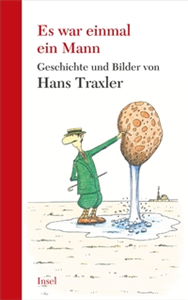 September 2012
Es war einmal ein Mann
by Hans Traxler
Am Anfang steht der alte Kinderreim: »Es war einmal ein Mann, der hatte einen Schwamm.« Dann aber machen sich Reim und Handlung selbständig, und der Mann mit dem Kindergemüt und der seltsamen Kleidung geht auf anarchisch-witzige Weltreise. Er trifft einen Biber mit Ottilie, ein Schiff, das auf sechs Füßen läuft, und ein Hemd, "das war ihm seltsam fremd". Auf dem Mond schließlich begegnet ihm ein Mann, "der hatte einen Schwamm / und so fängt die Geschichte von vorne an." Hans Traxler, Autor und Illustrator dieses Kultbuchs, war Mitarbeiter der legendären Zeitschrift »pardon« und Gründungsmitglied des Satiremagazins »Titanic«. Gemeinsam mit Robert Gernhardt, F. W. Bernstein u. a. schrieb er als "Neue Frankfurter Schule" ein Kapitel deutsche Philosophiegeschichte ("Die schärfsten Kritiker der Elche / waren früher selber welche"). Nach »Die Wahrheit über Hänsel und Gretel« erschien 1979 im Insel Verlag mit »Es war einmal ein Mann« ein Buch, das zum Familienklassiker wurde. Wir legen dieses lange vergriffene Standardwerk der Nonsense-Literatur als schöne, gebundene Ausgabe zum Schenken und Wiederlesen neu vor. - illustriert und mit einem Nachwort von Hans Traxler
-
Trusted Partner
 March 2009
Es war einmal eine Familie
by Lizzie Doron, Mirjam Pressler
Tel Aviv, Anfang der neunziger Jahre: Helena, Elisabeths Mutter, ist gestorben. Während der Schiva, der sieben Trauertage, ist Elisabeth wieder in dem kleinen Viertel, in dem sie in den fünfziger und sechziger Jahren aufgewachsen ist, ein Viertel, in dem Überlebende der Shoah versuchten, sich ein neues Leben aufzubauen. Alle Kinder, mit denen sie groß geworden ist, haben wie Elisabeth schon vor vielen Jahren dieses Viertel verlassen. Sie wollten die Ängste und Alpträume ihrer Eltern hinter sich lassen, ein normaleres Leben führen, ein Großteil von ihnen jedoch gehörte zu jenen, die in den ersten Tagen des Jom-Kippur-Krieges fielen. Nun kommen die Nachbarinnen und Nachbarn von einst zu Besuch, um Helena die letzte Ehre zu erweisen, allen voran die zwei alten Schiva-Expertinnen Sonia und Genia. Durch die Trauergäste und ihre Erinnerungen wird für Elisabeth noch einmal die versunkene Welt ihrer Kindheit gegenwärtig, mit Müttern und Vätern, die in der israelischen Gegenwart nie heimisch wurden. Elisabeth, die keine anderen Verwandten hatte als ihre Mutter, erkennt am Ende der Trauerwoche, daß sie doch nicht ohne Familie aufgewachsen ist: Das Viertel hier, es war einmal eine Familie, das machen ihr die sieben Trauertage klar, die Sonia folgendermaßen zusammenfaßt: »Es war richtig gelungen, nur schade, daß Helena nicht dabei war.«
-
Trusted Partner
-
Trusted Partner
 Humanities & Social SciencesApril 2026
Christ’s war
Holiness, heroism and horror in Carolingian poetry, c.730-c.900 CE
by Matthew Bryan Gillis
Christ's war examines Carolingian holy war from the forging of their empire in the eighth century to its dissolution in the late ninth century during the Northmen's attacks. It argues that the Franks understood their wars to be holy when their soldiers were without sin and, therefore, were holy themselves. God heard their prayers as they begged for divine aid, and he helped them overcome and slaughter their foes. Therefore, the Carolingian vision of holy war differed from the pious, apocalyptic military pilgrimages of the subsequent Crusades. Latin poetry serves as an important source in this study for understanding holy war, including how poets dramatized glorious victories or horrifying defeats for their audiences. The book offers important insights into the religious nature of Frankish warfare, while also contributing a fresh and innovative perspective on medieval holy war overall.
-
Trusted Partner
 Humanities & Social SciencesJanuary 2022
Exiting war
The British Empire and the 1918–20 moment
by Romain Fathi, Margaret Hutchison, Andrekos Varnava, Michael Walsh, Alan Lester
Exiting war explores a particular 1918-20 'moment' in the British Empire's history, between the First World War's armistices of 1918, and the peace treaties of 1919 and 1920. That moment, we argue, was a challenging and transformative time for the Empire. While British authorities successfully answered some of the post-war tests they faced, such as demobilisation, repatriation, and fighting the widespread effects of the Spanish flu, the racial, social, political and economic hallmarks of their imperialism set the scene for a wide range of expressions of loyalties and disloyalties, and anticolonial movements. The book documents and conceptualises this 1918-20 'moment' and its characteristics as a crucial three-year period of transformation for and within the Empire, examining these years for the significant shifts in the imperial relationship that occurred and as laying the foundation for later change in the imperial system.
-
Trusted Partner

 Medicine
The Psychologist’s Role in Disaster Risk Reduction
Theory and Practice
by Olavo Sant’Anna Filho / Daniela da Cunha Lopes (Eds.)
The book introduces the psychology of disaster scenarios, taking into account national and international research. The title outlines different concepts, like anguish, stress, and resilience, and highlights the importance of psychosocial attention to minimize the consequences of disastrous situations and maintaining good mental health. The book consists of a foreword and four chapters, which include a technical note from the Federal Counsel of Psychology, the main concepts of risk and disaster management, and information on the official agencies and nonprofit organizations that work with disaster risks reduction. Target Group: clinical psychologists, mental health professionals, psychiatrists, students, and teachers
-
Trusted Partner
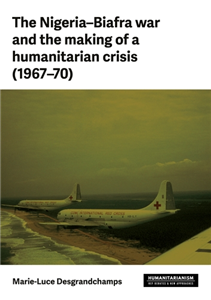 Business, Economics & LawMarch 2026
Humanitarianism in Civil War
The Biafra crisis, 1967-1970
by Marie-Luce Desgrandchamps
May 1967, in Nigeria, the Republic of Biafra declared its independence. Soon, civil war and famine ravaged the region and gradually entered the European and American media. Photographs of the conflict arouse considerable emotion in the West. The secessionist enclave and the areas taken over by the Nigerian army then became the scene of major relief operations, developed and financed by multiple organizations and governments. Part of a historiography of humanitarianism in full renewal, this book tells the story of the war, its metamorphosis into an international crisis and the responses that were provided. Based on a large body of sources from French, British, Swiss, Nigerian and American archives, it offers an insight into the world of humanitarian work at the end of the 1960s. It shows the reconfigurations taking place there. in the postcolonial era by proposing complementary scales of observation - international, national and local. The work also revisits some of the controversies which developed around the conflict regarding the instrumentalization of aid, its links with politics, the reception of relief operations on the ground or even the birth of borderlessness and testimony. It thus returns to the place occupied by the Biafran crisis in the history of humanitarian aid.
-
Trusted Partner
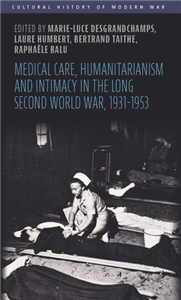 Business, Economics & LawJuly 2025
Medical care, humanitarianism and intimacy in the long Second World War, 1931-1953
by Marie-Luce Desgrandchamps, Laure Humbert, Bertrand Taithe, Raphaële Balu
This book offers a micro-global history of humanitarianism and medical care during the 'long' Second World War, which challenges the traditional and Eurocentric chronological boundaries of 1939/1945. It takes as its starting point the Japanese invasion of Manchuria in 1931, which led to the progressive dislocation of the League of Nations, with the Japanese, German and Soviet departures in the 1930s. It ends with the termination of the Korean War in 1953, and the subsequent dismantlement of the first United Coalition and UN Peace enforcement operation. It considers the slow, messy and ambivalent transformation of humanitarian actors' relations to the suffering of distant others through a study of humanitarian encounters, practices, spaces and affects. Paying close attention to a variety of actors, such as French colonial doctors, Swiss ICRC delegates, Egyptian relief workers, Chinese-style physicians, Peruvian and Ecuadorian nurses or American member of the Unitarian Service Committee, the book provides a more holistic story of humanitarianism.
-
Trusted Partner
 Literature & Literary StudiesOctober 2025
Early modern drama and the theatre of war
Militarism, conflict and disruption in the plays of Shakespeare and his contemporaries
by Bronwen Price, Hilary Hinds
This volume explores the disruptive effects of militarism, war and social unrest in early modern drama. Engaging with Simon Barker's seminal work on dramatic representations of war and militarism, contributors highlight what often lies hidden beneath the surface of martial narratives, treating them as formative interventions in contemporary discourses, whether in justifying war, excluding dissident voices or shaping cultural identities. Discussions include new examinations of militarism, the figure of the soldier and early modern theories of war in Shakespearean tragedy, history and comedy, alongside antimasque and dramatic satire by lesser-known playwrights. The essays investigate how ideas of war underpin emerging concepts of gender, leadership, marriage and the family, as well as the continuing mobilisation of Shakespearean drama in the context of modern armed conflict. Together, they offer rich new contributions to the current lively critical debates on this topic.
-
Trusted Partner
 January 1993
Als es Frühling war
Von Rachel Carson zur feministischen Ökologie
by Hynes, H Patricia / Einleitung von Cramon-Daiber, Birgit; Englisch Bischoff, Ursula



