
Narrative Landscape Press Ltd
Narrative Landscape Press is an independent publisher and a provider of publishing services and independent authors in Nigeria.
View Rights Portal
Narrative Landscape Press is an independent publisher and a provider of publishing services and independent authors in Nigeria.
View Rights Portal
We are a boutique publishing house producing quality books on Asian subjects. We also provide publishing services and consultancy.
View Rights Portal Trusted Partner
Trusted Partner
Trusted Partner
Trusted Partner
Trusted Partner
Trusted Partner
Trusted Partner

 Trusted Partner
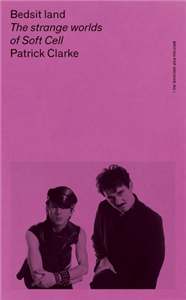
A rich and revealing examination of the legendary pop duo Soft Cell. Soft Cell are not your average pop band. Marc Almond and Dave Ball may be best known for the string of hits they released in 1981, but the powerful first phase of their collaboration embraced a staggering array of sounds, influences and innovations that would change the face of music to come. In Bedsit land, Patrick Clarke plunges into the archives and interviews more than sixty contributors, including the band members themselves, to follow Soft Cell through the many strange and sprawling worlds that shaped their extraordinary career. They lead him from the faded camp glamour of the British seaside to the dizzying thrills of the New York club scene. From transgressive student performance art to the sleaze and squalor of pre-gentrified Soho. From the glitz of British showbiz to the drug-addled chaos of post-Franco Spain. He emerges on the other side with the most in-depth, innovative and entertaining account of the duo ever written.
Trusted Partner
Trusted Partner

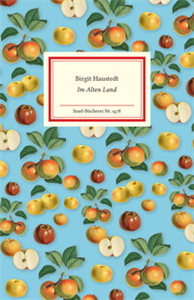
Apfelbäume, so weit das Auge reicht, idyllische Fachwerkdörfer hinter dem Deich und am Horizont die Elbe: Das Alte Land ist eine uralte Kulturlandschaft am Wasser, die ihren eigenen Charakter bewahrt hat. Prächtige Bauernhöfe und Backsteinkirchen mit kostbaren Barockorgeln zeugen noch heute vom frühen Wohlstand der Altländer. Birgit Haustedt erzählt von den Anfängen im Mittelalter, von Deichbau und Sturmfluten, vom Alltag der kleinen Leute und von großer Handwerkskunst, von stolzen Bauern und mutigen Schiffern. Dazu ein Exkurs, welche Rolle das Alte Land in Lessings Leben und Goethes Faust spielte.
Trusted Partner
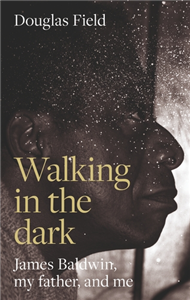
A moving exploration of the life and work of the celebrated American writer, blending biography and memoir with literary criticism. Since James Baldwin's death in 1987, his writing - including The Fire Next Time, one of the manifestoes of the Civil Rights Movement, and Giovanni's Room, a pioneering work of gay fiction - has only grown in relevance. Douglas Field was introduced to Baldwin's essays and novels by his father, who witnessed the writer's debate with William F. Buckley at Cambridge University in 1965. In Walking in the dark, he embarks on a journey to unravel his life-long fascination and to understand why Baldwin continues to enthral us decades after his death. Tracing Baldwin's footsteps in France, the US and Switzerland, and digging into archives, Field paints an intimate portrait of the writer's life and influence. At the same time, he offers a poignant account of coming to terms with his father's Alzheimer's disease. Interweaving Baldwin's writings on family, illness, memory and place, Walking in the dark is an eloquent testament to the enduring power of great literature to illuminate our paths.
Trusted Partner

The labour movement in Lebanon: Power on hold narrates the history of the Lebanese labour movement from the early twentieth century to today. Bou Khater demonstrates that trade unionism in the country has largely been a failure, for reasons including state interference, tactical co-optation, and the strategic use of sectarianism by an oligarchic elite, together with the structural weakness of a service-based laissez-faire economy. Drawing on a vast body of Arabic-language primary sources and difficult-to-access archives, the book's conclusions are significant not only for trade unionism, but also for new forms of workers' organisations and social movements in Lebanon and beyond. The Lebanese case study presented here holds significant implications for the wider Arab world and for comparative studies of labour. This authoritative history of the labour movement in Lebanon is vital reading for scholars of trade unionism, Lebanese politics, and political economy.
Trusted Partner
On 25 January 1474, Charles the Bold, duke of Burgundy, appeared before his subjects in Dijon. Robed in silk, gold and precious jewels and wearing a headpiece that gave the illusion of a crown, he made a speech in which he cryptically expressed his desire to become a king. Three years later, Charles was killed at the battle of Nancy, an event that plunged the Great Principality of Burgundy into chaos. This book, innovative and essential, not only explores Burgundian history and historiography but offers a complete synthesis about the nature of politics in this region, considered both from the north and the south. Focusing on political ideologies, a number of important issues are raised relating to the medieval state, the signification of the nation under the 'Ancien Regime', the role of warfare in the creation of political power and the impact of political loyalties in the exercise of government. In doing so, the book challenges a number of existing ideas about the Burgundian state.
Trusted Partner
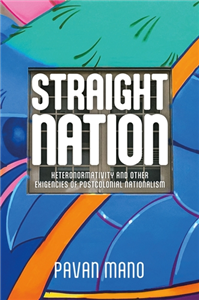
In Straight Nation, Pavan Mano reveals the logic of straightness that sits at the heart of postcolonial nationalism in Singapore. Mano rejects the romantic notion of the nation as a haven of belonging, showing it to be a relentless force that is allied with heteronormativity to create a host of minoritized and xenologized figures. Through meticulous exploration and close reading of a swathe of texts, Mano unveils the instrumental role of sexuality in structuring the national imaginary. The book adroitly demonstrates how queerness is rendered foreign in postcolonial Singapore and functions alongside technologies of "race", gender, and class. A provocative critique of narrow contemporary identity politics and its concomitant stymying of a more ambitious political critique, Straight Nation sets out an argument that moves beyond the negativity of traditional critique into a space of (re)thinking, (re)building and (re)imagining.
Trusted Partner


This book is a result of the author's search for these facts and truths as a student and farmer and his endeavor as a teacher to present them in a simple manner to others. The object in presenting the book to the general public is the hope that it may be of assistance to farmers, students and teachers, in their search for the fundamental truths and principles of farming.
Trusted Partner


Edward Bond wurde 1934 in der Londoner Vorstadt Holloway geboren. 1956 schrieb er erste Gedichte und Stückentwürfe und trat 1960 einer Dramatikergruppe um John Osborne, Arnold Wesker und John Arden bei. 1962 wurde Bonds erstes Stück, The Pope's Wedding (Die Hochzeit des Papstes), in London uraufgeführt. Sein zweites Theaterstück, Saved (Gerettet), provozierte einen der größten Skandale der britischen Theatergeschichte: Das Stück wurde kurz nach seiner Premiere im November 1965 im Royal Court Theatre aufgrund von expliziter Gewaltdarstellung von der Zensur verboten. Die sich anschließende Diskussion um Freiheit der Kunst bewirkte 1968 das Ende der britischen Theaterzensur. Große Erfolge wurden Anfang der 1970er Jahre seine Lear-Bearbeitung und das Stück The Sea (Die See). In den kommenden Jahrzehnten zahlreiche Stücke, Opernlibretti für Hans Werner Henze, Arbeit an Theatern, für den Film (u.a. Mitarbeit am Drehbuch zu Antonionis Film Blow up) und das Fernsehen. Edward Bond lebt in der Nähe von Cambridge. Brigitte Landes, geboren 1946 in Frankfurt/Main. Sie arbeitet freiberuflich als Dramaturgin, Regisseurin und Autorin.
Trusted Partner

Child, nation, race and empire is an innovative, inter-disciplinary, cross cultural study that contributes to understandings of both contemporary child welfare practices and the complex dynamics of empire. It analyses the construction and transmission of nineteenth-century British child rescue ideology. Locating the origins of contemporary practice in the publications of the prominent English Child rescuers, Dr Barnardo, Thomas Bowman Stephenson, Benjamin Waugh, Edward de Montjoie Rudolf and their colonial disciples and literature written for children, it shows how the vulnerable body of the child at risk came to be reconstituted as central to the survival of nation, race and empire. Yet, as the shocking testimony before the many official enquiries into the past treatment of children in out-of-home 'care' held in Britain, Ireland, Australia and Canada make clear, there was no guarantee that the rescued child would be protected from further harm.
Trusted Partner


Land in Sicht! Die „Hoppetosse“ von Kapitän Langstrumpf sticht in See – und mit an Bord sind Pippi und ihre Freunde. Das Ziel heißt natürlich Taka-Tuka-Land, wo alle gemeinsam viele tolle Sachen erleben. Kaum zurück, entschließt Pippi sich, niemals erwachsen zu werden. Wie sie das wohl anstellen will? Aufwendig produziertes Hörspiel mit hinreißender Musik von Dieter Faber und Frank Oberpichler. Entdecke Oetinger Kinder-Hörbücher zum Mitfiebern und Träumen! Mit unseren Hörspielen für Kinder von 4 bis 8 Jahren werden die schönsten Kinderbuch-Klassiker von Astrid Lindgren lebendig wie nie zuvor, von Michel aus Lönneberga bis hin zu Lotta aus der Krachmacherstraße. Ob als Hörspiel oder als musikalisch unterlegte Lesung, mit unseren Hör-CDs tauchen Kinder in die kunterbunte Welt der berühmten schwedischen Kinderbuch-Autorin ein. Renommierte Sprecher*innen und eine sorgfältige Komposition machen jede unserer Audio-CDs zum Erlebnis für junge und jung gebliebene Hörer*innen. Dabei regen Hörbücher für Kinder die Fantasie an, erweitern den Wortschatz und fördern ganz nebenbei die Konzentration. Vom ersten Sonnenstrahl bis zum Einschlafen – ob zu Hause oder als Kinderbeschäftigung auf Reisen: Astrid Lindgrens Hörspiel-Geschichten begleiten Kinder jeden Tag aufs Neue dabei, die Welt für sich zu erobern!
Trusted Partner
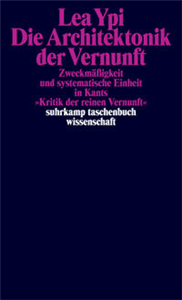
Die Vernunft ist ein vielfältiges Vermögen. Ein vernünftiges Wesen erkennt, wie die Dinge sind; zugleich kann es sich vorstellen, was sein soll, und entsprechend handeln. Wie aber können zwei scheinbar so verschiedene Fähigkeiten – Erkennen und Handeln – als Teile desselben Vermögens begriffen werden? Lea Ypi geht der Einheit der Vernunft in einem oft vernachlässigten Kapitel von Kants Hauptwerk nach: der »Architektonik der reinen Vernunft«. Die Vernunft gleicht hier einem Bauwerk, dem ein Plan zugrunde liegt, der jedem Bestandteil seinen festen Platz zuweist. Doch ihr theoretischer und ihr praktischer Teil werden von einem fragilen Bindeglied zusammengehalten, an dem sich die Stabilität des Ganzen entscheidet. Diesem spürt dieses meisterhafte Buch nach.
Trusted Partner

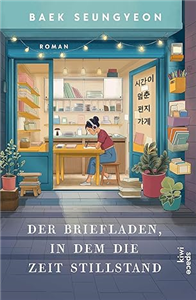
Ein Roman für alle, die schönes Briefpapier lieben und die nach Entschleunigung suchen. In dem Briefladen, in dem die Zeit stillstand, umgeben von schönsten Dingen, lernt Hyoyeong nach einem schweren Schicksalsschlag, das Leben wieder zu spüren. Sie hört die Geschichten von Menschen, die ihre Hoffnungen, Ängste und Träume zu Papier bringen, und lernt dabei nicht nur neue Freund*innen kennen, sondern auch, wie man zu sich selbst zurückfindet.



