
PHI Learning Pvt. Ltd.
Leading Indian academic publisher with 58 years' experience in higher education textbooks in print and digital format.
View Rights Portal
Leading Indian academic publisher with 58 years' experience in higher education textbooks in print and digital format.
View Rights Portal
Editions Difaf, a Lebanese publishing house founded in 2012, in response to the market need of modern and classic Arabic literature, comparative literature and novels in Philosophy and related subjects. The house has faced great challenges and was able to present hundreds of intellectual titles, linguistics and novels. Many of the publishing house books was shortlisted for the following leading literary awards (Sheikh Zayed Book Award, the Booker prize, Naguib Mahfouz) and has become an important source in the studies issued by Arab scholars. Behind this literature is a committee of reviewers who carefully select books eligible for publishing. Editions Difaf created partnership agreements to overcome distribution barriers and governmental censorship. Moreover, the publishing house focused throughout the past years on translating non-Arabic literature. Panda is a part of Edition Difaf which focuses on publishing children's books. Up till now more than 120 titles were published to serve the youth in the Arab countries.
View Rights Portal

The school years are a major challenge, not only for your child but also for you as a parent. You may be asking yourself questions like: • How can I motivate my child to study and learn? • How should I handle homework conflicts? • How can I help my child to become more independent? • What learning strategies are appropriate for primary school children? • How can I help if my child has problems with math, reading, or spelling? Answers to these and many other questions about homework, learning, and studying can be found in this book. It describes practical methods and effective strategies, and shows how providing just a little support can be a big help to your child. Target Group: psychologists, education specialists, parents.


For prospective pharmaceutical sales assistant professionals! With an exam around the corner, the key question is how to cope with all the content to be learned. Whether for the intermediate or final exam: this flashcard box is the ultimate learning companion for the entire training period. Two hundred flashcards • are colour-coded into the different learning fields of the training course, • summarise the most important learning content, and • are based on real examination tasks. The solutions on the back of the cards can be used to check learning success immediately. Supplementary information from the author contributes to better understanding. Efficient learning in the shortest possible time has never been easier. Nothing stands in the way of a successful career as a pharmaceutical sales assistant!
 Trusted Partner
Trusted Partner
Trusted Partner

 Trusted Partner
Trusted Partner
Trusted Partner
 Trusted Partner


— An exciting and entertaining explanation of neuroscience — In the diverting and humorous style for which the author is known – learning has never been this much fun What processes in the brain are responsible for intelligence, free will, empathy or reason? Can memories be falsified? And what does actually happen in the brain when we reach puberty? Monika Niehaus and Martin Osterloh answer these and many other neuroscientific questions in their book – a fundamental work on brain research, and easy to understand, exciting and entertaining.
Trusted Partner

This book brings a new classroom approach for primary teachers to teach the explicit knowledge of scientific question-asking. This is an essential skill when children are involved in finding out about the world around them through science enquiry. Challenging the assumption that because children ask lots of questions in science, this automatically leads to meaningful learning of the enquiry curriculum, QuBuild is important for all children developing as scientific thinkers. It outlines an approach to explicitly plan for, practice and develop the craft of scientific question-asking. Unlock your children's science learning potential by exploring the QuBuild Process.
Trusted Partner
Trusted Partner

 Trusted Partner
Trusted Partner
Trusted Partner

This book is our principal source for the history of the Kingdom of Sicily in the troubled years between the death of its founder, King Roger, in February 1154 and the spring of 1169. It covers the reign of Roger's son, King William I, known to later centuries as 'the Bad', and the minority of the latter's son, William II 'the Good'. The book illustrates the revival of classical learning during the twelfth-century renaissance. It presents a vivid and compelling picture of royal tyranny, rebellion and factional dispute at court. Sicily had historically been ruled by tyrants, and that the rule of the new Norman kings could be seen, for a variety of reasons, as a revival of that classical tyranny. A more balanced view of Sicilian history of the period 1153-1169 has been provided as an appendix to the translation in the section of the contemporary world chronicle ascribed to Archbishop Romuald II of Salerno, who died in April 1181. In particular the chronicle of Romuald enables us to see how the papal schism of 1159 and the simultaneous dispute between the German Emperor Frederick Barbarossa and the north Italian cities affected the destiny of the kingdom of Sicily. In contrast to the shadowy figure of Hugo Falcandus, the putative author of the principal narrative of mid-twelfth-century Sicilian history, Romuald II, Archbishop of Salerno 1153-1181, is well-documented.
Trusted Partner

This book takes the reader on a fascinating journey, demonstrating in an understandable and entertaining way how the brain affects our thoughts, actions, and feelings - and that this sometimes only peripherally involves reason. It shows, that the subconscious actually exists and how it affects us, how we arrive at both right and wrong decisions, how our memory works, how fragile it can be, and yet also how robust. Using insightful experiments and the latest research results, including many examples, this book presents the reader what an incredibly impressive thinking organ the brain actually is – even if it is not a purely “rational machine”. Target Group: For people interested in the results of research into the workings of the brain in the areas of decision-making, memory, and consciousness.
Trusted Partner

For children with ADHD and their parents, the school years are often difficult. Children may avoid homework they dislike, involve their parents in endless discussions of the point or pointlessness of particular exercises, dawdle and daydream their time away, or explode with frustration if they get something wrong or cannot do something. This book provides parents with concrete and practical help. It shows you how you can: • improve your child’s concentration and stamina• increase your child’s motivation to learn and study• reduce frustration, arguments, and tears over homework• control chaos and forgetfulness• help your child succeed by using smart learning methods• develop your child’s strengths• help your child cope with failure and maintain self-confidence• establish a good relationship with the school. For: • parents / relatives of children with ADHD• therapists• learning coaches• teachers
Trusted Partner
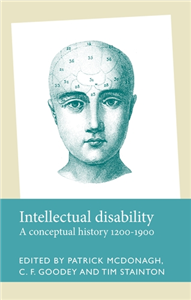
This collection explores the historical origins of our modern concepts of intellectual or learning disability. The essays, from some of the leading historians of ideas of intellectual disability, focus on British and European material from the Middle Ages to the late-nineteenth century and extend across legal, educational, literary, religious, philosophical and psychiatric histories. They investigate how precursor concepts and discourses were shaped by and interacted with their particular social, cultural and intellectual environments, eventually giving rise to contemporary ideas. Intellectual disability is essential reading for scholars interested in the history of intelligence, intellectual disability and related concepts, as well as in disability history generally.
Trusted Partner
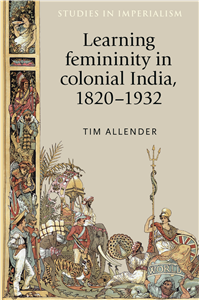
Learning femininity in colonial India explores the colonial mentalities that shaped and were shaped by women living in colonial India between 1820 and 1932. Using a broad framework the book examines the many life experiences of these women and how their position changed, both personally and professionally, over this long period of study. Drawing on a rich documentary record from archives in the United Kingdom, India, Pakistan, North America, Ireland and Australia this book builds a clear picture of the colonial-configured changes that influenced women interacting with the colonial state. This book will appeal to students and academics working on the history of empire and imperialism, gender studies, postcolonial studies and the history of education.
Trusted Partner
Brings together the varied artistic, critical and cultural productions by women scholars, critics and artists between 1790-1900, many of whom are little known in the canonical histories of the period. Questions the concepts of 'scholarship', 'criticism' and 'artist' across the different disciplines. Women discussed include authors (Mary Wollstonecraft Shelley, Sydney Morgan and Anna Jameson) actresses ( Elizabeth Siddons, Dorothy Jordan, and Mary Robinson) critics ( Margaret Oliphant and Mary Cowden Clarke) historians (Agnes Strickland, Lucy Aikin, Mary Anne Everett Green, Elizabeth Cooper and Lucy Toulmin Smith) as well as the writers and readers of Women's magazines, educationalists and translators. Makes a significant and original contribution to the development of gender studies by extending the frontiers of existing knowledge and research. ;
Trusted Partner
Trusted Partner
 Trusted Partner



