Your Search Results

      • Shanghai Century Publishing Group

        Founded in 1999, Shanghai Century Publishing (Group) Co., Ltd. was the first publishing group in China as well as one of the first pilot units for the reform of the national cultural system. The Group is a comprehensive large-scale publishing media group integrating publication of books and journals, digital publishing, copyright trade, import and export of books, printing, art business, and so on. The Group has been taking a statewide leading position in national key publishing projects, becoming one of the enterprises generating most influential publishing culture and providing most influential content in China.

        View Rights Portal
      • Trusted Partner
        Literature & Literary Studies
        May 2024

        EcoGothic gardens in the long nineteenth century

        by Sue Edney

      • Trusted Partner
      • Trusted Partner
        Literature & Literary Studies
        June 2025

        The nineteenth-century present

        Literature, print culture and historicity

        by Koenraad Claes, Elizabeth Ludlow

        The Nineteenth-Century Present explores the multiple ways in which history was understood, structured, and reassessed in literary, theological, and political contexts across the nineteenth century. While the scope of the book is wide, ranging from the representations of geological time and ancient history to the writing of the recent past, and covering the work of writers from Walter Scott to G.K. Chesterton, each chapter reveals how present concerns intrude on and shape every view of history. Ultimately, the collection emphasises that issues raised regarding historicity in recent methodological debates were already concerns in the nineteenth century.

      • Trusted Partner
        Literature & Literary Studies
        January 2013

        Eleventh-century Germany

        The Swabian chronicles

        by I. Robinson

        Three of the most important chronicles of eleventh-century Germany were composed in the south-western duchy of Swabia. The chronicles reveal how between 1049 and 1100 the centripetal attraction of the reform papacy became the dominant fact of intellectual life in German reformed monastic circles. In the abbey of Reichenau Herman 'the Lame' composed a chronicle of the reign of Emperor Henry III (1039-56). His pupil, Berthold of Reichenau, continued his master's work, composing a detailed account of 1076-1079 in Germany. Bernold, a clergyman of Constance, continued the work of Herman and Berthold in a text containing the fullest extant account of 1080-1100. Herman's waning enthusiasm for the monarchy and growing interest in the newly reformed papacy were intensified in Berthold's chronicle, and writing in the new context of the reformed monasteries of south-western Germany, Bernold preached total obedience to the Gregorian papacy. The Swabian chronicles are an indispensable resource to the student of the changing loyalties and conflicts of eleventh-century Germany.

      • Trusted Partner
        Literature & Literary Studies
        October 2025

        Objects of belief

        Material culture and religious writings in late Medieval England

        by Joshua Easterling, Fiona Somerset

        Objects in late medieval Europe were a means for lay people and clergy to negotiate their access to powers beyond the everyday, in folk practice as well as religious observance. As has been noted by scholars, this period is marked by a profusion of objects granted special importance, imaginary as well as material. These objects prompt reconsideration of cultural and intellectual frameworks, for example of superstition, reform, and heresy, that never quite successfully contain them. Essays in this volume center attention on these things themselves, from puppets to rosaries, as indeed do the written accounts through which they are often mediated. With a focus on England, contributors re-evaluate our understanding of works and authors including Geoffrey Chaucer, Walter Hilton, Nicholas Love, Julian of Norwich, miracles of the Virgin, Edward Hall's Chronicle, the Wycliffite Glossed Gospels, and the Croxton Play of the Sacrament.

      • Trusted Partner
        Literature & Literary Studies
        April 2026

        Re-examining nineteenth-century Easts

        Gendered narratives of encounter

        by Claudia Capancioni, Julia Kuehn, Mariaconcetta Costantini

        Re-examining nineteenth-century Eastscontributes novel approaches to gendered and gendering fictions and travel writing in and of the cultural-geographical-ideological contexts surrounding nineteenth-century Easts. It examines underexplored stories of travel and narratives of encounter to reconsider the western allure of travelling to the Easts - from the Balkans to the Middle and Far East, through a range of diverse critical approaches. It discusses writers - travellers, novelists, and short-story writers - who authored texts based on their varied experiences in eastern lands. It also analyses how views of eastern places became a rich source of material for identity formations related to Empire but also discussions about masculinity and femininity at 'home'.

      • Trusted Partner
        Literature & Literary Studies
        June 2026

        Contemporary Chaucer across the centuries

        by Helen Hickey, Anne McKendry, Melissa Raine

        This unique and exciting collection, inspired by the scholarship of literary critic Stephanie Trigg, offers cutting-edge responses to the writings of Geoffrey Chaucer for the current critical moment. The chapters are linked by the organic and naturally occurring affinities that emerge from Trigg's ongoing legacy; containing diverse methodological approaches and themes, they engage with Chaucer through ecocriticism, medieval literary and historical criticism, and medievalism. The contributors, trailblazing international specialists in their respective fields, honour Trigg's distinctive and energetic mode of enquiry (the symptomatic long history) and intellectual contribution to the humanities. At the same time, their approaches exemplify shifting trends in Chaucer scholarship. Like Chaucer's pilgrims, these scholars speak to and alongside each other, but their essays are also attentive to 'hearing Chaucer speak' then, now and in the future.

      • Trusted Partner
        Humanities & Social Sciences
        May 2020

        Spain in the nineteenth century

        New essays on experiences of culture and society

        by Andrew Ginger, Geraldine Lawless

        The nineteenth-century Hispanic world was shattered to its core by war, civil war, and revolution. At the same time, it confronted a new period of European and North-American expansion and development. In these essays, authors explore major, dynamic ways that people in Spain envisaged how they would adapt and change, or simply continue as they were. Each chapter title begins with the words "How to...", and examines the ways in which Spaniards conceived or undertook major activities that shaped their lives. These range from telling the time to being a man. Adaptability, paradox, and inconsistency come to the fore in many of the essays. We find before us a human quest for opportunity and survival in a complex and changing world. This wide-ranging book contains chapters by leading scholars from the United States, United Kingdom, and Spain.

      • Trusted Partner
        Literature & Literary Studies
        March 2025

        Through the fiction of Phebe Gibbes (1764–90)

        Women, alienation, and prodigality in the long eighteenth century

        by Kathryn Freeman

        Through the Fiction of Phebe Gibbes places this prolific, newly recovered English writer at the centre of the revolutionary period. Gibbes's novels mark the struggles of women for agency in an expanding British empire, from the Seven Years' War to revolutions in American, Haiti and France. With Gibbes as a nexus in a lineage of women writers from Aphra Behn to Jane Austen, Kathryn S. Freeman offers a valuable perspective on the 'long eighteenth century', with Gibbes' own evolution mirroring that of the larger period. The study traces the development of Gibbes' authorial voice from satire to irony through a range of female characters subverting patriarchal oppression. Freeman guides the reader through patterns of narrative voice, concerns with gender and sexuality, and elements of wordplay through detailed discussion of five novels representing Gibbes' evolving representation of a subversive female subjectivity.

      • Trusted Partner
        Literature & Literary Studies
        January 2013

        The Papal Reform of the Eleventh Century

        Lives of Pope Leo IX and Pope Gregory VII

        by I. Robinson

        The eleventh-century papal reform transformed western European Church and society and permanently altered the relations of Church and State in the west. The reform was inaugurated by Pope Leo IX (1048-54) and given a controversial change of direction by Pope Gregory VII (1073-85). This book contains the earliest biographies of both popes, presented here for the first time in English translation with detailed commentaries. The biographers of Leo IX were inspired by his universally acknowledged sanctity, whereas the biographers of Gregory VII wrote to defend his reputation against the hostility generated by his reforming methods and his conflict with King Henry IV. Also included is a translation of Book to a Friend, written by Bishop Bonizo of Sutri soon after the death of Gregory VII, as well as an extract from the violently anti-Gregorian polemic of Bishop Benzo of Alba (1085) and the short biography of Leo IX composed in the papal curia in the 1090s by Bishop Bruno of Segni. These fascinating narrative sources bear witness to the startling impact of the papal reform and of the 'Investiture Contest', the conflict of empire and papacy that was one of its consequences. An essential collection of translated texts for students of medieval history.

      • Trusted Partner
      • Trusted Partner
        20th century history: c 1900 to c 2000
        December 2016

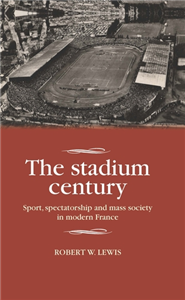
        The stadium century

        Sport, spectatorship and mass society in modern France

        by Robert W. Lewis. Series edited by Maire Cross, David Hopkin

        The stadium century traces the history of stadia and mass spectatorship in modern France from the vélodromes of the late nineteenth century to the construction of the Stade de France before the 1998 soccer World Cup. As the book demonstrates, the stadium was at the centre of debates over public health and urban development and proved to be a key space for mobilising the urban crowd for political rallies and spectator sporting events alike. After 1945, the transformed French stadium constituted part of the process of postwar modernisation but also was increasingly connected to global transformations to the spaces and practices of sport. Drawing from a wide range of sources, the stadium century links the histories of French urbanism, mass politics and sport through the stadium in an innovative work that will appeal to historians, students of French history and the history of sport, and general readers alike.

      • Trusted Partner
        Humanities & Social Sciences
        October 2020

        Christmas in nineteenth-century England

        by Neil Armstrong

        Whether for reasons of family, food, shopping or religion, it's hard to imagine a British winter without Christmas, or to think of a more traditional national festival. But how and when did Christmas cards, pantomimes and advertising become part of that tradition? This book looks at how people in the nineteenth and early twentieth centuries experienced Christmas and how today's priorities and rituals began and endured. It explores the origins of our deeply held notions around Christmas traditions and demonstrates how those ideas were in fact shaped by the fast-paced modernisation of English life. A fascinating account of the development of many things we now take for granted, the book touches on the history of childhood and the family, philanthropy and work, and the beginnings of consumerism that shaped the Christmas we know today.

      • Trusted Partner
      • Trusted Partner
      • Trusted Partner
        Medieval history
        May 2006

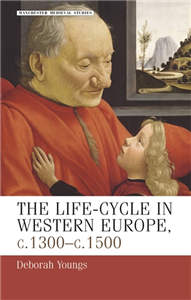
        The life–cycle in Western Europe, c.1300–c.1500

        by Deborah Youngs

        This is the first study to examine the entire life cycle in the Middle Ages. Drawing on a wide range of secondary and primary material, the book explores the timing and experiences of infancy, childhood, adolescence and youth, adulthood, old age and, finally, death. It discusses attitudes towards ageing, rites of passage, age stereotypes in operation, and the means by which age was used as a form of social control, compelling individuals to work, govern, marry and pay taxes. The wide scope of the study allows contrasts and comparisons to be made across gender, social status and geographical location. It considers whether men and women experienced the ageing process in the same way, and examines the differences that can be discerned between northern and southern Europe. The fourteenth and fifteenth centuries suffered famine, warfare, plague and population collapse. This fascinating consideration of the life cycle adds a new dimension to the debate over continuity and change in a period of social and demographic upheaval.

      • Trusted Partner
        Humanities & Social Sciences
        January 2020

        The life–cycle in Western Europe, c.1300–c.1500

        by S. H. Rigby, Deborah Youngs

        This is the first study to examine the entire life cycle in the Middle Ages. Drawing on a wide range of secondary and primary material, the book explores the timing and experiences of infancy, childhood, adolescence and youth, adulthood, old age and, finally, death. It discusses attitudes towards ageing, rites of passage, age stereotypes in operation, and the means by which age was used as a form of social control, compelling individuals to work, govern, marry and pay taxes. The wide scope of the study allows contrasts and comparisons to be made across gender, social status and geographical location. It considers whether men and women experienced the ageing process in the same way, and examines the differences that can be discerned between northern and southern Europe. The fourteenth and fifteenth centuries suffered famine, warfare, plague and population collapse. This fascinating consideration of the life cycle adds a new dimension to the debate over continuity and change in a period of social and demographic upheaval.

      • Trusted Partner
        History of art & design styles: c 1800 to c 1900
        August 2016

        Civilisation and nineteenth-century art

        A European concept in global context

        by O'Brien

        Over the course of the long nineteenth century, Civilisation was the subject of some of the most prominent public mural paintings and sculptures in Europe and the United States, especially those that speculated on the direction of history. It also underpinned Western depictions of non-Western societies and evaluations of social progress and artistic excellence. The essays in this volume explore the ways in which the idea of Civilisation acted as a lens through which Europeans and Americans represented themselves and others, how this concept reshaped understandings of historical and artistic development, and also how it changed and was put to new uses as the century progressed. This collection will prove invaluable to students and academics in both history and art history.

      Subscribe to our

      newsletter