
Lunar Leaves literary agency
Francesca Ferrua (literary agent, editor, bookseller)
View Rights Portal
Francesca Ferrua (literary agent, editor, bookseller)
View Rights Portal
Our passion is to show kids, how colourful and fascinating the world is. There is not only one way to live but so many. We love curious children and we do the books they need to explore the world. So we do travel books for kids and novels for the journey in a hammock.
View Rights Portal
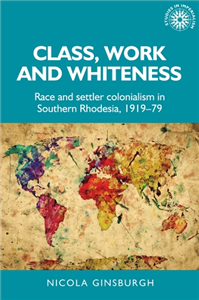
This book offers the first comprehensive history of white workers from the end of the First World War to Zimbabwean independence in 1980. It reveals how white worker identity was constituted, examines the white labouring class as an ethnically and nationally heterogeneous formation comprised of both men and women, and emphasises the active participation of white workers in the ongoing and contested production of race. White wage labourers' experiences, both as exploited workers and as part of the privileged white minority, offer insight into how race and class co-produced one another and how boundaries fundamental to settler colonialism were regulated and policed. Based on original research conducted in Zimbabwe, South Africa and the UK, this book offers a unique theoretical synthesis of work on gender, whiteness studies, labour histories, settler colonialism, Marxism, emotions and the New African Economic History.
 Trusted Partner
 Trusted Partner
 Trusted Partner
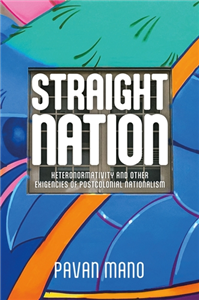
In Straight Nation, Pavan Mano reveals the logic of straightness that sits at the heart of postcolonial nationalism in Singapore. Mano rejects the romantic notion of the nation as a haven of belonging, showing it to be a relentless force that is allied with heteronormativity to create a host of minoritized and xenologized figures. Through meticulous exploration and close reading of a swathe of texts, Mano unveils the instrumental role of sexuality in structuring the national imaginary. The book adroitly demonstrates how queerness is rendered foreign in postcolonial Singapore and functions alongside technologies of "race", gender, and class. A provocative critique of narrow contemporary identity politics and its concomitant stymying of a more ambitious political critique, Straight Nation sets out an argument that moves beyond the negativity of traditional critique into a space of (re)thinking, (re)building and (re)imagining.
Trusted Partner
Trusted Partner
 Trusted Partner
Trusted Partner
Trusted Partner
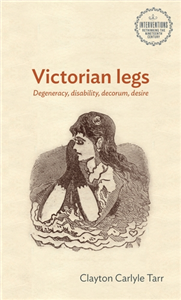
Victorian legs is about the science (sometimes spurious) and sexuality (often frivolous) of legs during the Victorian period. The book argues that legs occupy a particularly vexed position in Victorian culture. Strong legs formed the foundation (or the columns) of the civilized subject, but the politics of who could show their legs remained gendered. For the most part, men exhibited and admired, while women concealed and demurred. This book not only joins and advances the lively critical discourse on the Victorian body, but also marks new paths to pursue. While legs made us human, they could also dehumanize.
Trusted Partner
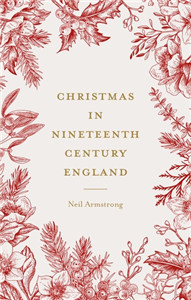
Whether for reasons of family, food, shopping or religion, it's hard to imagine a British winter without Christmas, or to think of a more traditional national festival. But how and when did Christmas cards, pantomimes and advertising become part of that tradition? This book looks at how people in the nineteenth and early twentieth centuries experienced Christmas and how today's priorities and rituals began and endured. It explores the origins of our deeply held notions around Christmas traditions and demonstrates how those ideas were in fact shaped by the fast-paced modernisation of English life. A fascinating account of the development of many things we now take for granted, the book touches on the history of childhood and the family, philanthropy and work, and the beginnings of consumerism that shaped the Christmas we know today.
Trusted Partner
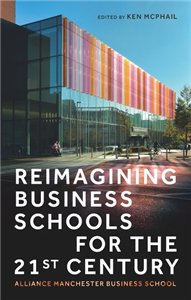
Whether it's dealing with regional economic disparities, global geopolitical upheaval, climate change, or the impact of new technologies such as artificial intelligence, we are living in pivotal times. To mark its 60th anniversary in 2025, this accessible book from Alliance Manchester Business School outlines in detail how business schools can play a significant role in confronting these huge challenges, and equip the next generation of business leaders with the skills they need to embrace them. Informing public and political debate on the role of business in both the causes and solutions to our biggest challenges the book offers a rethinking of the role of business in society. It will also discuss specific examples of how collaborations with business are leading to impact and change in society. Featuring a range of thought-provoking essays co-authored by eminent academics and business leaders, this collection will challenge the status quo and outline how business and management research is helping address grand challenges, generate economic growth, inform policy development, and define business thinking over the next generation.
Trusted Partner
 Trusted Partner
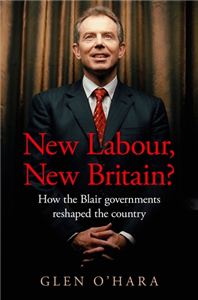
A bold and balanced re-appraisal of New Labour in power. Rewriting the story of New Labour, Glen O'Hara challenges the prevailing narrative to present a more balanced and positive assessment. New Labour, new Britain is the first book to examine both the intentions behind New Labour's domestic policies and their real-world effects, moving beyond the entrenched left-right debates that have dominated the party's legacy. The period from 1997 to 2007 marked a pivotal moment in modern British history, as New Labour sought to reshape Britain into a more cohesive and forward-thinking society. It saw the rise of socially liberal attitudes and flourishing public services under a government committed to rebuilding and investing in them. Yet New Labour's track record was far from flawless and its legacy remains complicated and contested. Through interviews with key players and rigorous archival research, O'Hara offers a new perspective on Tony Blair's years in power. Painting a fuller picture of New Labour's successes and challenges, he highlights its lasting impact on Britain and offers a thoughtful reassessment of its place in history.
Trusted Partner

Devolution to Scotland and Wales represented the most fundamental reform of the British state for almost a century. Ten years on, how successful has the reform been? Drawing on the views of citizens, elected representatives and interest groups in Scotland and Wales, this book provides an answer. The book is based on a wide ranging programme of research, involving dedicated surveys and interviews across Scotland, Wales and England. The results provide important new evidence on how devolution has been seen to have performed. What are its perceived achievements? What are its shortcomings? Is the new devolution 'settlement' stable, or is there a demand for further reform? By bringing together perspectives from the public, members of the devolved legislatures and representatives of civil society, the book establishes a unique picture of where devolution in Britain stands today. The book is accessibly written, and contains a wide range of useful primary data. It is ideal for undergraduate and postgraduate students studying devolution in Britain, as well as for general readers with an interest in constitutional reform and territorial politics. ;
Trusted Partner
After the fall of the Ben Ali regime in 2011, Tunisia swiftly began dealing with its authoritarian past and initiated a comprehensive transitional justice process, with the Truth and Dignity Commission as its central institution. However, instead of bringing about peace and justice, transitional justice soon became an arena of contention. Through a process lens, the book explores why and how the process evolved, and explains how it relates to the country's political transition. Based on extensive field research in Tunisia and the US, and interviews with a broad range of international stakeholders and decision-makers, this is the first book to comprehensively study the Tunisian transitional justice process. It provides an in-depth analysis of a crucial period, examining the role of justice professionals in different stages, as well as the alliances and frictions between different actor groups that cut across the often-assumed local-international divide.
Trusted Partner


Die gelungenste Weltausstellung aller Zeiten war die Exposition Universelle de Paris von 1889. Weit über 32 Millionen Menschen besuchten das gigantische Spektakel mit knapp 62.000 Ausstellern aus 54 Nationen und 17 französischen Kolonien. Das Wahrzeichen der Schau, der Eiffelturm, blieb Paris bis heute erhalten. Einen legendären Ruf erwarb sich auch das offizielle, wöchentlich erscheinende Journal der Weltausstellung. Auf großformatigen, mit Stahlstichen üppig illustrierten Seiten berichtete es von den Sensationen vor Ort, von dreirädrigen selbstfahrenden Karren und ethnologischen Dörfern, in denen es Kamelreiten für die Kinder und Bauchtänze für die Herren gab. Der Schweizer Kunsthistoriker Beat Wyss hat die hundert originellsten Abbildungen ausgewählt. Sie illustrieren, wie die Expo den Erdball auf ein »Weltdorf« zwischen Trocadéro und Champ de Mars schrumpfen lässt, wie räumliche Distanzen abgebaut und dabei kulturelle Differenzen freigelegt werden. Das späte 20. Jahrhundert wird dafür den Begriff der Globalisierung prägen. Beat Wyss zeigt, wie die Gesellschaften seit dem 19. Jahrhundert mit diesem Prozeß umgehen und mit der Verwestlichung der Welt eine Orientalisierung des Westens einhergeht. Dem Leser als Flaneur über die Bühne der Weltausstellung wird klar: Die Expo 1889 belegt nicht nur den aktuellen Zustand einer Zeit, sondern bietet über die spektakuläre Anordnung ihrer Exponate den Vorschein einer gesellschaftlichen Utopie.
Trusted Partner
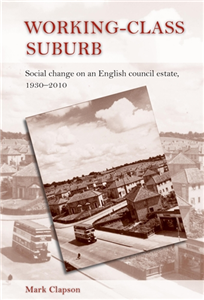
Not all council estates are the same. A detailed historical account of the birth and social evolution of the Whitley council estate in Reading, Working-Class Suburb challenges many of the more depressing images and cultural stereotypes about council housing in twentieth and twenty-first century England. Key areas covered by the study are housing and politics; community campaigns; women and the corporate life of council estates; the uses of leisure; the relationships between tenants, residents and the local authority, and continuities in working-class life despite economic, demographic and political change. The book will be of interest to anyone studying urban history and social history, to professionals working in the fields of housing policy and housing studies, and to the growing number of academics interested in suburban studies. ;
Trusted Partner

This collection brings together scholars from disciplines including Children's Literature, Classics, and History to develop fresh approaches to children's culture and the uses of the past. It charts the significance of historical episodes and characters during the long nineteenth-century (1750-1914), a critical period in children's culture. Boys and girls across social classes often experienced different pasts simultaneously, for purposes of amusement and instruction. The book highlights an active and shifting market in history for children, and reveals how children were actively involved in consuming and repackaging the past: from playing with historically themed toys and games to performing in plays and pageants. Each chapter reconstructs encounters across different media, uncovering the cultural work done by particular pasts and exposing the key role of playfulness in the British historical imagination.
Trusted Partner
 Trusted Partner
Cases of citation presents a history of artists who incorporated literary references into their work from the 1960s onwards. Through a series of object-focused chapters that each take up a singular 'case of citation', the collection considers how literary citation emerged as a viable and urgent strategy for artists during this period. It surveys nine artworks by a diverse group of artists - including David Wojnarowicz, Lis Rhodes, Romare Bearden and Silvia Kolbowski - whose citations draw on literary works with authors ranging from Gertrude Stein to Jean Genet. The book also features an interview with pioneering feminist artist Elaine Reichek that discusses her career-long commitment to working with text. Together, the artworks and cited texts are approached from various critical angles, with each author questioning and complicating the ways in which we can 'read' textual citations in art.



