Your Search Results

      • Rights Expert

        Rights Expert Literary and Licensing Agency is representing in Romania, directly or through other agents, more than 45 publishing houses and imprints (mainly from UK and USA). Part of the publishers represented in Romania agreed to give us the international representation for other CEE territories: Poland, Czech Republic, Slovakia, Hungary, Croatia, Slovenia, Serbia, Bulgaria. Rights Expert Literary and Licensing Agency is having a portfolio of creative, independent and flexible publishers from domains like: Children and Young Adult books (non-fiction): activity books, color and stickers books. Children and Young Adult books (fiction): picture books (trendy in all the markets); story books; novels; comic magazines and books. Adult non-fiction: Self-help, Health, Body, Mind & Spirit etc. Adult fiction

        View Rights Portal
      • Trusted Partner
        Medicine
        November 2019

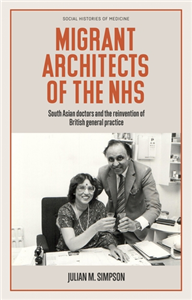
        Migrant architects of the NHS

        South Asian doctors and the reinvention of British general practice (1940s-1980s)

        by Julian Simpson, Keir Waddington

        Migrant architects of the NHS draws on forty-five oral history interviews and extensive archival research to offer a radical reappraisal of how the National Health Service was made. It tells the story of migrant South Asian doctors who became general practitioners in the NHS. Imperial legacies, professional discrimination and an exodus of UK-trained doctors combined to direct these doctors towards work as GPs in some of the most deprived parts of the UK. In some areas, they made up over half of the general practitioner workforce. The NHS was structurally dependent on them and they shaped British society and medicine through their agency. Aimed at students and academics with interests in the history of immigration, immigration studies, the history of medicine, South Asian studies and oral history. It will also be of interest to anyone who wants to know more about how Empire and migration have contributed to making Britain what it is today.

      • Trusted Partner
        Humanities & Social Sciences
        March 2017

        Migrant races

        Empire,Identity and K.S. Ranjitsinhji

        by Andrew Thompson, John M. MacKenzie, Satadru Sen

        This book is a study of mobility, image and identity in colonial India and imperial Britain in the late nineteenth and early twentieth centuries. It is a model for studies of migrant figures like K.S. Ranjitsinhji who emerged during the imperial period. Ranjitsinhji is an important figure in the history of modern India and the British empire because he was recognized as a great athlete and described as such. The book focuses on four aspects of Ranjitsinhji's life as a colonial subject: race, money, loyalty and gender. It touches upon Ranjitsinhji's career as a cricketer in the race section. The issue of money gave Indian critics of Ranjitsinhji's regime the language they needed to condemn his personal and administrative priorities, and to portray him as self-indulgent. Ranjitsinhji lived his life as a player of multiple gender roles: sometimes serially, and on occasion simultaneously. His status as a "prince" - while not entirely fake - was fragile enough to be unreliable, and he worked hard to reinforce it even as he constructed his Englishness. Any Indian attempt to transcend race, culture, climate and political place by imitating an English institution and its product must be an unnatural act of insurgency. The disdain for colonial politics that was manifest in the "small rebellions" at the end of the world war converged with the colonized/Indian identity that was evident at the League of Nations. Between the war and his death, it is clear, Ranjitsinhji moved to maximize his autonomy in Nawanagar.

      • Trusted Partner
        June 2024

        At the Very Bottom of the System

        How migrant workers ensure prosperity for us

        by Sascha Lübbe

        The author reveals structural problems and offers solutions – an urgently necessary book, not least with a view to the acute shortage of skilled workers 450,000 migrant workers toll on German construction sites, work in sometimes inhumane conditions in meat factories or as truck drivers, and let’s not forget the hordes of cleaners in German hotels and companies. They are systematically exploited and cheated out of their wages. Sascha Lübbe exposes the octopus-like network of partly criminal companies in a shadowy world where the boundary between the legal and the illegal is blurred. In his evocative book with interviews with those aff ected, he reveals how a parallel system has established itself in the German working world, but also how those affected resist.

      • Trusted Partner
        October 2023

        From India to Germany:What My Father's Journey Tells Usabout Migration and the Kindness ofStrangers

        by Sunita Sukhana

        — An extraordinary story of migration — Contemporary history of the 70s and backgrounds to India, Afghanistan, Iran, Turkey, Bulgaria, the former Yugoslavia, the GDR and the Federal Republic of Germany He was the son of the Sikh priest, a successful 400-meter runner and, eventually, a migrant. In 1979, Bagicha Singh turned his back on his homeland and set off with a head full of dreams on the long, turbulent overland journey from India to Germany. It was the year the Soviet Union invaded Afghanistan and the Islamic Revolution raged in Iran. A year whose aftermath continues to shape the world to this day. More than 40 years later, his daughter tells the story of Bagicha's adventurous journey. The result is a touching document on origin, contemporary history, and the meaning of migration.

      • Trusted Partner
        Humanities & Social Sciences
        September 2008

        Immigration and European integration

        Towards fortress Europe

        by Andrew Geddes, Dimitris Papadimitriou, Simon Bulmer, Andrew Geddes, Peter Humphreys

        Migration is at the heart of the contemporary European Union. This new edition addresses three key questions that underpin EU responses to migration policy. First, what role does the EU play in the regulation of migration? Second, how and why have EU measures developed to promote the integration of migrants and their descendants? Third, what impact do EU measures on migration and asylum have on new member states and non member states? The updated edition covers important recent developments, addressing new migration flows and the external dimension of EU action on migration and asylum and placing in all these in the context of a 'wider' Europe. Andrew Geddes provides comprehensive analysis of the EU's free movement framework, of the development of co-operation on immigration and asylum policy, of the mobilisation by groups seeking to represent migrant's interests in EU decision-making, the interface between migration, welfare and the EU's social dimension, and the impact of enlargement on migration and asylum. This innovative and original analysis of the European dimension of immigration policy is essential reading for scholars of European integration, the politics of immigration and the prospects for new patterns of migrant inclusion at member state and EU level. ;

      • Trusted Partner
        Humanities & Social Sciences
        March 2017

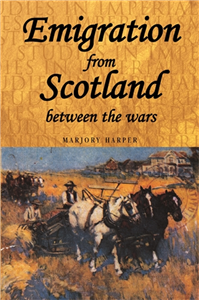
        Emigration from Scotland between the wars

        by Marjory Harper

        Emigration from Scotland has always been very high. However, emigration from Scotland between the wars surpassed all records; more people emigrated than were born, leading to an overall population decline. Why was it so many people left? Marjory Harper, whose knowledge is grounded in a deep understanding of the local records, maps out the many factors which worked together to cause this massive diaspora. After an opening section where the author sets the Scottish experience within the context of the rest of the British Isles, the book then divides the country geographically, starting with the Highlands, then coastal Scotland, and the urban Lowland highlighting in turn the factors that particularly influenced each of these areas. Harper then discusses the organised religious and political movements that encouraged emigration. By interweaving personal stories with statistical evidence Harper brings to life the reality behind the dramatic historical migration.

      • Trusted Partner
        Humanities & Social Sciences
        March 2017

        Emigrant homecomings

        The return movement of emigrants, 1600–2000

        by Marjory Harper

        Emigrant Homecomings addresses the significant but neglected issue of return migration to Britain and Europe since 1600. While emigration studies have become prominent in both scholarly and popular circles in recent years, return migration has remained comparatively under-researched, despite evidence that in the nineteenth and twentieth centuries between a quarter and a third of all emigrants from many parts of Britain and Europe ultimately returned to their countries of origin. Emigrant Homecomings analyses the motives, experiences and impact of these returning migrants in a wide range of locations over four hundred years, as well as examining the mechanisms and technologies which enabled their return. The book examines the multiple identities that migrants adopted and the huge range and complexity of homecomers' motives and experiences. It also dissects migrants' perception of 'home' and the social, economic, cultural and political change that their return engendered.

      • Trusted Partner
      • Trusted Partner
        Humanities & Social Sciences
        October 2024

        Brexit and citizens’ rights

        History, policy and experience

        by Djordje Sredanovic, Bridget Byrne

        The book offers interdisciplinary analyses of the impact of Brexit on the rights of EU27 citizens in the UK, Britons in the UK and the EU, and third-country nationals. It combines a historical examination of citizenship and migration between the UK, Europe and the Commonwealth with the analysis of policies and of the experiences of the different groups impacted by Brexit. The book discusses Brexit within the larger history and dynamics of UK and EU citizenship and migration. The individual chapters look at how Brexit is transforming the citizenship rights of different groups, including issues of loss of citizenship and experiences of naturalisation. They further examine the fears of the groups impacted, and larger issues of belonging, marginalisation, political orientations and mobilisations that cross legal status, nationality, ethnicity, race and class.

      • Trusted Partner
        Migration, immigration & emigration
        July 2015

        Immigration and housing in the Republic of Ireland

        by Brian Portley

        This book is the first comprehensive analysis of migrants' housing experiences in Ireland. It introduces, in an accessible manner, the key factors that determine how well migrants can engage with Ireland's housing system. It outlines the opportunities and challenges migrants encounter accessing housing and benefits from analysis drawn from the actual lived housing experience of migrants whose homes are located in inner-city, town and small town locations in Ireland. Therefore, this book is positioned to highlight differences between various groups of migrants living in contrasting locations in Ireland and argues that housing policy development can be informed by the consideration given to migrants' meanings and perceptions of housing.

      • Trusted Partner
        Humanities & Social Sciences
        January 2026

        The tragedy of the border

        Asylum, destitution and homelessness

        by Mark Rainey

        Amid the global migration crisis, the UK has created and increasingly hostile policy environment for asylum seekers that has pushed many into unnecessary hardship and homelessness. This volume is an ethnographic study alongside refused asylum seekers and refugees living destitute in Manchester, UK. Based on over three years of research in emergency night shelters and on the streets of the city, it draws on the stories and experiences of those who have been driven into destitution by an antagonistic immigration system. The book not only explores how legal and temporal uncertainty shapes the daily lives of those who have had their asylum claims refused, but also attends to the experiences of volunteers and activists working on the frontline of the crisis. While the work is rich in detail, it also extends outwards and offers new insights into our understanding of borders and the need to rethink the grand notions of justice and hospitality.

      • Trusted Partner
        Political science & theory
        July 2015

        Ireland and migration in the twenty-first century

        by Mary Gilmartin

        Migration is one of the key issues in Ireland today. This book provides a new and original approach to understanding contemporary Irish migration and immigration, showing that they are processes that need to be understood together rather than separately. It uses a wide range of data - from statistical reports to in-depth qualitative studies - to show these connections. The book focuses on four key themes - work, social connections, culture and belonging - that are common to the experiences of immigrants, emigrants and internal migrants. It includes a wide selection of case studies, such as the global GAA, the campaign for emigrant voting, and the effects of migration on families. Clearly written and accessible, this book is an invaluable resource for students and scholars of Irish migration. It also has broader relevance, as it suggests a new approach to the study of migration nationally and internationally.

      • Trusted Partner
        Humanities & Social Sciences
        April 2025

        Bordering social reproduction

        Migrant mothers and children making lives in the shadows

        by Rachel Rosen, Eve Dickson

        Bordering social reproduction explores what happens when migrants subject to policies that seek to deny them the means of life nonetheless endeavour to make and sustain meaningful lives. Developing innovative theorisations of welfare bordering, the volume provides rich ethnographic insights into the everyday lives of destitute mothers and children who are denied mainstream welfare support in the United Kingdom due to their immigration status. This book shows how enforced destitution and debt work alongside detention and deportation as part of a tripartite of exclusionary technologies of the racial state. It advances the novel concept of weathering to comprehend mother's and children's life-making practices under duress - arguing that these are neither acts of heroic resilience nor solely symptomatic of lives rendered disposable, but indications of the fragilities of repressive migration regimes and, on occasion, refusals to accept their terms of existence.

      • Trusted Partner
        History of medicine
        October 2016

        Medicine, health and Irish experiences of conflict, 1914–45

        by Edited by David Durnin, Ian Miller

        This book explores Irish experiences of medicine and health during the First and Second World Wars, the War of Independence and the Civil War. It examines the physical, mental and emotional impact of conflict on Irish political and social life, as well as medical, scientific and official interventions in Irish health matters. The contributors put forward the case that warfare and political unrest profoundly shaped Irish experiences of medicine and health, and that Irish political, social and economic contexts added unique contours to those experiences not evident in other countries. In pursuing these themes, the book offers an original and focused intervention into a central, but so far unexplored, area of Irish medical history.

      • Trusted Partner
        Geography & the Environment
        March 2020

        Stories from a migrant city

        by Ben Rogaly

      • Trusted Partner
      • Trusted Partner
        Humanities & Social Sciences
        August 2009

        Emigration from Scotland between the wars

        by Marjory Harper, Andrew Thompson, John Mackenzie

        Emigration from Scotland has always been very high. However, emigration from Scotland between the wars surpassed all records; more people emigrated than were born, leading to an overall population decline. Why was it so many people left? Marjory Harper, whose knowledge is grounded in a deep understanding of the local records, maps out the many factors which worked together to cause this massive diaspora. After an opening section where the author sets the Scottish experience within the context of the rest of the British Isles, the book then divides the country geographically, starting with the Highlands, then coastal Scotland, and the urban Lowland highlighting in turn the factors that particularly influenced each of these areas. Harper then discusses the organised religious and political movements that encouraged emigration. By interweaving personal stories with statistical evidence Harper brings to life the reality behind the dramatic historical migration. ;

      • Trusted Partner

      Subscribe to our

      newsletter