
Your Search Results
-

-

Fortellerforlaget
Fortellerforlaget is a children´s book publisher with 30 titles a year. We are emphasis to publish the good story no matter genre. We have success with our series: Book with sound. We sell as many books as children is born in Norway every year. You can browse our catalogue HERE
View Rights Portal
-
Promoted Content

 Humanities & Social SciencesJune 2024
Peace and the politics of memory
by Annika Björkdahl, Susanne Buckley-Zistel, Stefanie Kappler, Johanna Mannergren Selimovic, Timothy Williams
This important book provides new understandings of how the politics of memory impacts peace in societies transitioning from a violent past. It does so by developing a theoretical approach focusing on the intersection of sites, agency, narratives, and events in memory-making. Drawing on rich empirical studies of mnemonic formations in Cyprus, Bosnia and Herzegovina, Rwanda, South Africa and Cambodia, the book speaks to a broad audience. The in-depth, cross-case analysis shows that inclusivity, pluralism, and dignity in memory politics are key to the construction of a just peace. The book contributes crucial and timely knowledge about societies that grapple with the painful legacies of the past and advances the study of memory and peace.
-
Promoted Content
 Humanities & Social SciencesJanuary 2026
The spatiality and temporality of urban violence
by Mara Albrecht, Alke Jenss
-
 Trusted Partner
-
Trusted Partner
Humanities & Social SciencesJune 2026
The Conservative Party and the Constitution
by Daniel Pitt
The Conservative Party and the Constitution examines the profound influence on Britain's constitutional framework over nearly two centuries. Through rigorous analysis, it traces how Tory leaders navigated parliamentary reform, devolution, and Brexit, balancing tradition with pragmatic adaptation. Drawing on exclusive interviews, archival records, and historical sources, the book reveals the Party's statecraft and offers fresh insights into the Conservatives' role in shaping modern governance. Essential for historians, political scientists, and those engaged with British politics, this study illuminates the dynamic interplay of power, ideology, and constitutional change, making it a vital contribution to understanding Britain's constitutional history.
-
Trusted Partner
 Sociology: family & relationshipsJuly 2016
Changing gender roles and attitudes to family formation in Ireland
by Series edited by Rob Kitchin, Margret Fine-Davis
Recent decades have witnessed major changes in gender roles and family patterns, as well as a falling birth rate in Ireland and the rest of Europe. While the traditional family is now being replaced in many cases by new family forms, we do not know the reasons why people are making the choices they are and whether or not these choices are leading to greater well-being. While demographic research has attempted to explain the new trends in family formation and fertility, there has been little research on people's attitudes to family formation and having children. This book presents the results of the first major study to examine people's attitudes to family formation and childbearing in Ireland. Based on a nationwide representative sample of 1,404 men and women in the childbearing age group, the study was carried out against a backdrop of changing gender role attitudes and behaviour as well as significant demographic change.
-
Trusted Partner
Business, Economics & LawJanuary 2026
International organisations, non-State actors, and the formation of customary international law
by Sufyan Droubi, Jean d'Aspremont
This volume offers new practical and theoretical perspectives on one of the most complex questions regarding the formation of international law, namely that actors other than states contribute to the making of customary international law. Notwithstanding the International Law Commission's valuable contribution, the making of customary international law remains riddled with acute practical and theoretical controversies that continue to be intensively debated. Making extensive reference to the case-law of international law courts and tribunals, as well as the most recent scholarly work on customary international law, this volume provides a comprehensive study of the contribution of international organisations and non-state actors to the formation of customary international law. With innovative tools and guidance for law students, legal scholars, and researchers in law, as well as legal practitioners, advisers, judges, arbitrators, and counsels, this collection is essential reading for those wishing to understand and address contemporary questions of international law-making.
-
Trusted Partner

 November 2011
Organisation und Störung
Aufsätze
by Dirk Baecker
Organisation ist die Herstellung und Aufrechterhaltung von Ordnung. Diese Ordnung ist aber ohne die dauernde Behebung von Störungen und – wichtiger noch – ohne ihre Vorwegnahme im Routineablauf der Organisation nicht zu denken. Wenn die Organisation einer Behörde, eines Krankenhauses, einer Schule oder eines Unternehmens nicht von außen gestört wird, muß sie sich also selbst stören, um auf alle Eventualitäten vorbereitet zu sein. Dirk Baecker zeigt in diesem Band unter anderem, was aus dieser Überlegung folgt, nämlich daß Führung und Management nichts anderes sind als die geordnete Störung einer Organisation.
-
Trusted Partner
 January 2003
Organisation und Management
Aufsätze
by Dirk Baecker
Kaum ein soziales System ist uns unbekannter als jenes, in dem jeder von uns den größten Teil seines Tages verbringt. Wenn man einmal von Vokabeln wie „Arbeit, „Bürokratie und „Karriere“ absieht, haben wir kaum eine Sprache, um zu beschreiben, was wir von der Organisation von Unternehmen, Behörden, Kirchen, Schulen und Theatern wissen. Dieser Mangel an einer elaborierten Sprachen wäre unter Umständen nicht weiter zu bedauern, wenn man nicht den Eindruck haben müßte, daß eine einzige Vokabel die Beschreibung all dessen, was hier zu beschreiben wäre, auf ihre Schultern nimmt, das Wort „Management.“ Dirk Baecker geht in einer Reihe von Aufsätzen der Frage nach, was er mit diesem „Management“ auf sich hat und worin seine unzureichend bedachten organisatorischen Voraussetzungen bestehen. Einleitung Durch diesen schönen Fehler mit sich selbst bekannt gemachtInteresse an KommunikationTurbulenzUnentrinnbarkeit der bürokratischen Herrschaft?Freedom and OrganizationSchriftliche AktenführungKonditionierung der AutonomieOrganisation als SelektionDie IndifferenzzoneUngewißheitsabsorptionDie Wiedereinführung der Ungewißheit Müllers VermutungInteresse an UndurchschaubarkeitFurcht und SchreckenDas Spiel des ManagementsParadoxe InterventionenEin Kalkül Das Produkt ist ein GespinstHieroglyphenManagerSchlanke ProduktionInterpretationenKontexte Die Unterscheidung der ArbeitArbeit als „Gestalt“ der modernen GesellschaftArbeit an der ArbeitDie Form der UnterscheidungForm und MediumOperation und BeobachtungSystem und Umwelt Die „andere Seite“ des WissensmanagementsWie liest man ein Schlagwort?Der blinde FleckRekonstruktion, Vernetzung und KorrekturKonditionen Organisation und GeschlechtOrganisation als soziales SystemIndividualisierung und GeschlechtKörper, Psyche, Kommunikation Begeisterte Unternehmer Tabus in FamilienunternehmenDie Trennung von Haushalt und BetriebDer FamilienunternehmerSozialsystem Familie, Sozialsystem BetriebDas Tabu Kommunikation und Kultur als Ressourcen der UnbestimmtheitOrganisationsentwicklungDie Wiedereinführung der KommunikationProbleme der Kultur Der Witz der OrganisationDie DoppelbewegungKommunikation über ArbeitDer WitzDie Kunst Die Strategie der OrganisationOrganisationRaumWissenMachtStrategie Die verlernende OrganisationLernen als ProblemIm Medium der AbweichungDie kompetente OrganisationDie Ebenen des LernensDie Form des Lernens Drei Regeln einer wirtschaftlich effizienten UnternehmenskulturDas Unternehmen als „Rechner“Die Regel der EinfachheitDie Regel der AutonomieDie Regel der kulturellen FührungWirtschaftliche EffizienzTheorie der UnternehmensorganisationDie „Dienstleistungsgesellschaft“ Ausgangspunkte einer soziologischen ManagementlehreWarum Soziologie?Organisation als soziales SystemFünf RessourcenVier UnterscheidungenVier ReferenzenEin MaschinenmodellFünf EckwerteDie Zielsetzung Management im SystemStrukturelle SpannungenArbeit, Arbeitsteilung, HierarchieDie Leistung der BetriebswirtschaftslehreDie Rolle der ProfessionenVariation, Selektion und RetentionFührungSystem und Strukur Organisation und GesellschaftWelche Gesellschaft?OrganisationsdesignRoutinenAusblick Was tut ein Berater in einem selbstorganisierenden System?Radikaler KonstruktivismusSelbstorganisation durch AutopoiesisDer Berater und der ManagerDas System Nachweise
-
Trusted Partner
 Humanities & Social SciencesSeptember 2018
Race and the Yugoslav region
Postsocialist, post-conflict, postcolonial?
by Catherine Baker, Gurminder Bhambra
This is the first book to situate the territories and collective identities of former Yugoslavia within the politics of race - not just ethnicity - and the history of how ideas of racialised difference have been translated globally. The book connects critical race scholarship, global historical sociologies of 'race in translation' and south-east European cultural critique to show that the Yugoslav region is deeply embedded in global formations of race. In doing this, it considers the everyday geopolitical imagination of popular culture; the history of ethnicity, nationhood and migration; transnational formations of race before and during state socialism, including the Non-Aligned Movement; and post-Yugoslav discourses of security, migration, terrorism and international intervention, including the War on Terror and the present refugee crisis.
-
Trusted Partner
 Humanities & Social SciencesOctober 2013
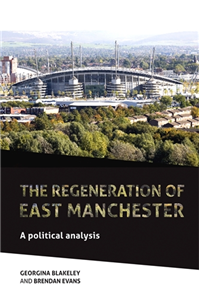
The regeneration of east Manchester
A political analysis
by Georgina Blakeley, Brendan Evans
East Manchester has been the site of one of the most substantial regeneration projects internationally. The initiative in east Manchester confirmed the tag that the city is the 'regeneration capital' of the United Kingdom. While the book focuses on a single project, it has wider relevance to national and international regeneration initiatives. The book assesses the outcomes of the regeneration, although it demonstrates the difficulties in producing a definitive evaluation. It has a political focus and illuminates and challenges many assumptions underpinning three major current academic debates: governance, participatory democracy and ideology. The book is relevant to students of politics, geography, sociology, public administration and recent history but will also interest practitioners, academics and general readers interested in urban regeneration. Mancunians will also be fascinated by the rapidly changing face and character of their city as will those with an interest in Manchester's football, the Commonwealth Games and Sportcity. ;
-
Trusted Partner
 Humanities & Social SciencesAugust 2016
The regeneration of east Manchester
by Georgina Blakeley, Brendan Evans
-
Trusted Partner
 September 1999
Organisation als System
Aufsätze
by Dirk Baecker
Die hier gesammelten Aufsätze erkunden die Möglichkeiten der Organisationstheorie, einem Selbstverständnis der modernen Gesellschaft entgegenzukommen, das von der Organisation nicht mehr nur die Umsetzung guter Absichten, sondern die Diagnose relevanter Problemstellungen erwartet. Die Organisation ist dann nicht mehr die rationale Maschine mit irrationalen Sonderleistungen, sondern ein soziales System mit eigenen Absichten und Beschränkungen.
-
Trusted Partner
 Political science & theoryJuly 2015
The political theory of the Irish Constitution
Republicanism and the basic law
by Eoin Daly, Tom Hickey
The political theory of the Irish Constitution considers Irish constitutional law and the Irish constitutional tradition from the perspective of Republican theory. It analyses the central devices and doctrines of the Irish Constitution - popular sovereignty, constitutional rights and judicial review - in light of Republican concepts of citizenship and civic virtue. The Constitution, it will argue, can be understood as a framework for promoting popular participation in government as much as a mechanism for protecting individual liberties. It will be of interest to students and researchers in Irish politics, political theory and constitutional law, and to all those interested in political reform and public philosophy in Ireland.
-
Trusted Partner
-
Trusted Partner
 Politics & governmentFebruary 2013
Shaping a global women's agenda
Women's NGOs and global governance, 1925–85
by Karen Garner
Available in paperback for the first time, and drawing on a wide range of archival sources, Shaping a global women's agenda documents international women's history through the lens of the long-established Western-led international organisations that defined and dominated women's involvement in global politics from the 1925 founding of the Joint Standing Committee of Women's International Organisations up through the UN Decade for Women (1976-85). Documenting specific global campaigns in episodes that span the twentieth century, Garner includes biographical information about lesser known international leaders as she discusses important historic debates regarding feminist goals and strategies among women from the East and West, North and South. This interdisciplinary study addresses questions of interest to historians, political scientists, international relations scholars, sociologists, and feminist scholars and activists whose work promotes women's and human rights.
-
Trusted Partner
 September 2025
Chemistry for Pharmaceutical Technicians
by Marion Romer, Silke Dittmar, Dorothee Famulla-Weber, Claudia Huppertz, Doris Grimm
Chemistry is all about smells and explosions – but real understanding often gets left behind. This textbook keeps you on track by reviewing the fundamentals, strengthening chemical understanding and guiding students towards independent learning. Thanks to the pharmaceutical context, chemistry is understood as the foundation of medicinal substances. Practical examples, mnemonics and summaries enhance the structure and make the content easier to digest. The book sparks pharmaceutical technicians’ interest in medicinal substances – an ideal foundation for mastering everyday chemistry in both study and practice. Target group: Pharmaceutical technicians in training and on the job, teachers at pharmaceutical technician schools, students of pharmacy
-
Trusted Partner
 Humanities & Social SciencesJanuary 2012
The Left and the European Constitution
From Laeken to Lisbon
by Michael Holmes, Knut Roder
This book examines how the Left is affected by European integration. It starts from the rejection of the European Constitution in France and the Netherlands in 2005, in which left-wing parties played key roles. The book explores the level of pro- and anti-EU sentiment among left-wing parties. It discusses the left's reaction to the EU's neo-liberal policies such as Laval, the Lisbon Agenda and the Bolkestein Directive. It examines the extent to which parties are Europeanised or remain nationally-oriented. The book looks at parties from all three left-wing families -social democrats, left-socialists and left-greens. It contains case-studies of eleven EU member states, and also examines the left in the European Parliament. It provides a unique cross-national, cross-party evaluation of contemporary events. ;
-
Trusted Partner
 2022
2022Medical Device Information for Pharmaceutical Technicians
by Founded by Friedlinde Wilson and Baldur Kohm.Edited by Dr. Anette Vasel-Biergansand Hannelore Eitel-Hirschfeld
Ranging from eyebaths and compression stockings to electronic cigarettes, the variety of medical aids available is huge. Every day, expert advice on these is needed at the pharmacy. The authors have summarised these aids in a practically oriented way. They provide background information, specifics about the materials, application descriptions, practical tips and product examples. Colourful illustrations show how they are used on or by the patient. Fully updated, the new edition of the book contains not only conventional medical devices but also those asked for at a contemporary community pharmacy. This 11th edition, which has been completely revised, contains: - definitions enabling rapid familiarisation with the topic, - tables that provide an overview, - illustrations and advice tips to help with practical use, - mnemonics and practice questions which help reinforce the knowledge Bonus: QR codes take the user to additional digital material! The ideal companion in training and on the job!
-
Trusted Partner
 Humanities & Social SciencesMarch 2026
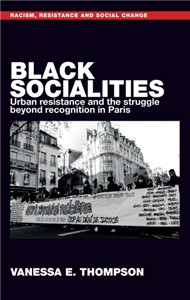
Black socialities
Urban resistance and the struggle beyond recognition in Paris
by Vanessa Eileen Thompson
From author: This is a cutting-edge exploration of black urban politics in Parisian racialized working class and working poor districts, the formation of abolition geography, and the possibilities of new forms of political blackness. In Black Socialities. Urban resistance and the struggle beyond recognition in Paris, Vanessa E. Thompson argues that black urban politics in the French banlieues are multi-racial and spatially grounded towards abolition. Based on a close engagement with urban black activist practices against racial imagery in the city, policing and state racism, and housing insecurity, she shows how radical anti-racism goes beyond struggles for recognition and unfolds alongside new formations of political blackness that is based on urban conviviality. This form of black politics has much to teach us in this current conjuncture of liberal anti-racism and state recognition politics.
-
Trusted Partner
 Humanities & Social SciencesNovember 2020
Writing the United Kingdom Constitution
by Brice Dickson
Our unwritten Constitution is past its sell-by date. If the Union is to be preserved we must recognise the UK as a federal country along the lines of Canada and Australia, and soon. Such is the argument made by Brice Dickson in this lucid and timely intervention to the debate on Britain's political future. A federal structure, he reasons, could maximise the benefits of cooperation between semi-autonomous regions while at the same time paying due respect to the nationalisms that exist within constituent parts of the country. The devolution of powers to the home nations, coupled with the trials and tribulations associated with Brexit and reform of the House of Lords, point to grave risks in the UK's current constitutional position. Dickson proposes a Constitutional Reform Act which would federalise the nation, provide a modern Bill of Rights, formalise allocation of public expenditure to devolved regions, and contain a clause setting out the 'purpose' of the UK. The UK has an enviable record in rising to a variety of challenges down the centuries, but the fallout from our recent history makes greater certainty and predictability imperative. This urgent analysis by one of our leading constitutional experts points to how that might best be achieved.



