Your Search Results

      • Trusted Partner
        Literature & Literary Studies
        January 2014

        Court and civic society in the Burgundian Low Countries c.1420–1530

        by Andrew Brown, Graeme Small

        This volume is the first ever attempt to unite and translate some of the key texts which informed Johan Huizinga's famous study of the Burgundian court, The Waning of the Middle Ages, a work which has never gone out of print. It combines these texts with sources that Huizinga did not consider, those that illuminate the wider civic world that the Burgundian court inhabited and the dynamic interaction between court and city. Through these sources, and an introduction offering new perspectives on recent historiography, the book tests whether Huizinga's controversial vision of the period still stands. Covering subjects including ceremonial events, such as the spectacles and gargantuan banquets that made the Burgundian dukes the talk of Europe, the workings of the court, and jousting, archery and rhetoric competitions, the book will appeal to students of late medieval and early modern Europe and to those with wider interests in court culture, ritual and ceremony.

      • Trusted Partner
        Business, Economics & Law
        June 2024

        The labour movement in Lebanon

        Power on hold

        by Lea Bou Khater

        The labour movement in Lebanon: Power on hold narrates the history of the Lebanese labour movement from the early twentieth century to today. Bou Khater demonstrates that trade unionism in the country has largely been a failure, for reasons including state interference, tactical co-optation, and the strategic use of sectarianism by an oligarchic elite, together with the structural weakness of a service-based laissez-faire economy. Drawing on a vast body of Arabic-language primary sources and difficult-to-access archives, the book's conclusions are significant not only for trade unionism, but also for new forms of workers' organisations and social movements in Lebanon and beyond. The Lebanese case study presented here holds significant implications for the wider Arab world and for comparative studies of labour. This authoritative history of the labour movement in Lebanon is vital reading for scholars of trade unionism, Lebanese politics, and political economy.

      • Trusted Partner
        Business, Economics & Law
        May 2024

        Governance, democracy and ethics in crisis-decision-making

        The pandemic and beyond

        by Caroline Redhead, Melanie Smallman

        This book is a powerful addition to a developing literature informed by arts and humanities research carried out during the COVID-19 pandemic. Investigating the impacts of crisis governance and decision-making on people and populations, the book brings together microbial organisms and humans, children and data, decision-making and infection prevention, publics and process, global vaccine distribution and citizens' juries. Through its eight chapters, the book stimulates broadly-drawn discussions about exceptional executive powers in an emergency, the role of trust, and the importance of the principles of good governance - such as selflessness, ethics, integrity, accountability and honesty in leadership. The lessons drawn out in this book will support future decision-makers in both ordinary times and extra-ordinary emergencies.

      • Trusted Partner
        April 2023

        Purveyors to the Court

        How politics makes use of science and breaks down because of it

        by Klaus Ferdinand Gärditz

        — Astute analysis of the relationship between politics and the natural sciences — Danger of undermining democratic processes Today, political decision-making processes are closely intertwined with processes of scientific knowledge generation. The natural sciences play a central role in politics. This became particularly clear during the corona pandemic and in the regular press conferences in which politicians largely narrowed their course to scientific findings. The consequence of this maxim is that the rationalisation of politics is accompanied by a politicisation of science. Science is exploited, and sometimes allows itself to be exploited. In his equally brilliant and sharp analysis, Klaus Ferdinand Gärditz explains the consequences of this development for the democratic process in particular.

      • Trusted Partner

        Basic Stimulation in Nursing

        by Christel Bienstein

        This bestselling title is a practical handbook on the concept of basic stimulation in nursing and its application for patients suffering from perceptional deficits, developmental delays and mental handicaps. It enables nurses to develop, improve and stabilize physically and mentally handicapped people with impaired perceptional, communicative and motor skills.   Target Group: Nurses

      • Trusted Partner
        Children's & YA
        January 2020

        Das Krakeltier

        by Mareike Postel

        The Scrabbly   A special board book for growing up• Trains motor skills• Text plays with illustrations• Message: there is no wrong in drawing – everyone can do it!Whether zigzag, big, small, chaotic, or fine – when Scrabbly draws its colourful lines, there’s no right or wrong! It’s easy: be brave, have fun and just start drawing!

      • Trusted Partner
        Social services & welfare, criminology
        October 2014

        Ireland's District Court

        Language, immigration and consequences for justice

        by Kate Waterhouse

        For the uninitiated, the Irish District Court is a place of incomprehensible, organised chaos. This comprehensive account of the court's criminal proceedings, based on an original study which involved observing hundreds of cases, aims to demystify the mayhem and provide the reader with descriptions of language, participant discourse and procedure in the typical criminal case. In addition, the book captures a recent and important change in the District Court: the advent of the immigrant or the Limited-English-proficient (LEP) defendant. It traces the rise of these defendants and explores the issues involved in ensuring access to justice across languages. It also provides an original description of LEP defendants and interpreters in District Court proceedings, ultimately considering how they have altered the institution and how the characteristics of the District Court affect how limited English proficient defendants access justice at this level of the Irish courts system.

      • Trusted Partner
        Humanities & Social Sciences
        August 2021

        Rules and ethics

        Perspectives from anthropology and history

        by Morgan Clarke, Emily Corran

        This book investigates the pronounced enthusiasm that many traditions display for codes of ethics characterised by a multitude of rules. Recent anthropological interest in ethics and historical explorations of 'self-fashioning' have led to extensive study of the virtuous self, but existing scholarship tends to pass over the kind of morality that involves legalistic reasoning. Rules and ethics corrects that omission by demonstrating the importance of rules in everyday moral life in a variety of contexts. In a nutshell, it argues that legalistic moral rules are not necessarily an obstruction to a rounded ethical self, but can be an integral part of it. An extended introduction first sets out the theoretical basis for studies of ethical systems that are characterised by detailed rules. This is followed by a series of empirical studies of rule-oriented moral traditions in a comparative perspective.

      • Trusted Partner
        Humanities & Social Sciences
        April 2007

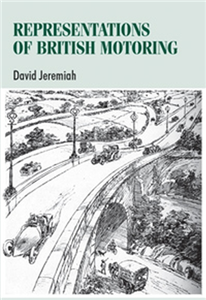
        Representations of British motoring

        by David Jeremiah, Christopher Breward, Bill Sherman, Alan Rutter

        Representations of British motoring provides important new insights into the established discourses of British motoring. Based on the patterns of representation that have mediated between the trade, owners and society, particularly the myths and realities generated by the advertising campaigns and motoring journals, it identifies the landmarks of change and innovation. It is not about great images as such, although some are, but particular attention has been directed towards the creative intervention of the artist-illustrators. Part One emphasises the critical significance of the emerging concerns and aspirations of the first decade of motoring, while the two subsequent parts provide a clear understanding of how the continuity of the public debate has shaped the concepts of modern and popular motoring. The new models, motorists and motoring landscape are the central themes through which it has been possible to track the preoccupation with questions regarding speed and safety, the idea of being British, the aesthetics of the car and motoring, and the family, women and the car. As such it is a design history that redefines and extends the parameters of the history of motoring, providing an overview of the place of the motor-car and motoring in British society that is relevant to undergraduate and postgraduate studies and the motoring enthusiast. ;

      • Trusted Partner
        Humanities & Social Sciences
        May 2016

        Crossing the floor

        by Geoff Horn

      • Trusted Partner

        Does Movement Really Make Us Smart?

        by Petra Jansen, Stefanie Richter

        Media reports often praise movement as a cure-all. But apart from its undisputed positive effect on health, does movement really make us smarter? Consider a national football team, for example – are these excessively sports-driven players automatically the smartest people? Should we simply replace all school subjects with sports? The authors provide a detailed summary of the latest scientific findings on the influence of movement on cognitive ability. They describe the effects of movement, on old age, embodiment, emotion, school as well as other factors that influence cognition. Target Group: teachers, lecturers, psychologists, psychiatrists, neurologists, psychotherapists, movement therapists.

      • Trusted Partner
        Business, Economics & Law
        February 2022

        The labour movement in Lebanon

        by Lea Bou Khater, Simon Mabon

      • Trusted Partner
        Computing & IT
        May 2025

        The myth of good AI

        by Arshin Adib-Moghaddam

      • Trusted Partner
        The Arts
        September 2020

        Science in performance

        Theatre and the politics of engagement

        by Simon Parry

        This electronic version has been made available under a Creative Commons (BY-NC-ND) open access license. This book is about science in theatre and performance. It explores how theatre and performance engage with emerging scientific themes from artificial intelligence to genetics and climate change. The book covers a wide range of performance forms from Broadway musicals to educational theatre, from Somali drama to grime videos. It features work by pioneering companies including Gob Squad, Headlong Theatre and Theatre of Debate as well as offering fresh analysis of global blockbusters such as Wicked and Urinetown. The book offers detailed description and analysis of theatre and performance practices as well as broader commentary on the politics of theatre as public engagement with science. Science in performance is essential reading for researchers, students and practitioners working between science and the arts within fields such as theatre and performance studies, science communication, interdisciplinary arts and health humanities.

      • Trusted Partner
        The Arts
        February 2026

        Visual arts and medicine in early modern Europe and beyond

        A collection of essays and sources

        by Robert Brennan, Fabian Jonietz, Romana Sammern

        This book opens up new perspectives on the relationship between art, medicine, and science in late-medieval and early modern Europe. Looking beyond the traditional nexus of art, anatomy, and optics, the volume sheds light on a broader array of connections between artists and physicians: collaborations between painters and doctors on colour charts, handwork skills common to sculptors and surgeons, the transmission of art theory through medical texts long before the emergence of art writing itself as an independent genre, and the kinship of medical diagnosis with early modes of connoisseurship. Reconfiguring the histories of art, medicine, and science, the book also traverses conventional boundaries between physical and mental health, religious and medical modes of healing, menial and exalted forms of knowledge and labour, as well as vernacular and scientific understandings of human difference, including gender, race, and neurodiversity.

      • Trusted Partner
        Literature & Literary Studies
        July 2022

        Spenser's ethics

        by Andrew Wadoski

      • Trusted Partner
      • Trusted Partner
        Humanities & Social Sciences
        January 2022

        How to Promote Motivation to Change

        by Hötzel, Katrin; von Brachel, Ruth

        Promoting motivation to change is one of the most important treatment components in psychotherapeutic practice across disorders. Working through ambivalence and ultimatelyincreasing motivation to choose recovery with all its consequences is one of the main goals in treatment.  This book presents the current state of knowledge anddescribes practical interventions to promote motivation to change. When dealing with ambivalent issues, an open, therapeutic attitude is recommended, as well as certainstrategies for conducting conversations to avoid reactance and resistance. The main focus of the book is therefore on therapeutic conversation and concrete interventions to clarify and increase motivation to change. For:• medical and psychological psychotherapists• child and adolescent psychotherapists• specialists working in psychiatry, psychotherapy,or psychosomatic medicine• clinical psychologists• psychological counselors• students and teachers in psychotherapeutic training,further training, and continuing education

      Subscribe to our

      newsletter