
Your Search Results


-
Promoted Content

 Teaching, Language & ReferenceNovember 2022
Stories from small museums
by Fiona Candlin, Toby Butler, Jake Watts
-
Promoted Content
 The ArtsAugust 2010
Art, museums and touch
by Fiona Candlin, Amelia Jones, Marsha Meskimmon
Art, museums and touch examines conceptions and uses of touch within arts museums and art history. Candlin deftly weaves archival material and contemporary museology together with government policy and art practice to question the foundations of modern art history, museums as sites of visual learning, and the association of touch with female identity and sexuality. This remarkable study presents a challenging riposte to museology and art history that privileges visual experience. Candlin demonstrates that touch was, and still is, crucially important to museums and art history. At the same time she contests the recent characterisation of touch as an accessible and inclusive way of engaging with museum collections, and argues against prevalent ideas of touch as an unmediated and uncomplicated mode of learning. An original and wide-ranging enquiry, this book is essential reading for scholars and students of museum studies, art history, visual culture, disability, and for anyone interested in the cultural construction of the senses. ;
-
 Trusted Partner
 Humanities & Social SciencesFebruary 2017
Curating empire
Museums and the British imperial experience
by Sarah Longair, John McAleer
Curating empire explores the diverse roles played by museums and their curators in moulding and representing the British imperial experience. This collection demonstrates how individuals, their curatorial practices, and intellectual and political agendas influenced the development of a variety of museums across the globe. Taken together, these contributions suggest that museums are not just sites for accessing history but need to be considered as historical sites of significance in themselves. Individual essays examine the work of curators in museums in Britain and the colonies, the historical display and interpretation of empire in Britain, and the establishment of 'museum networks' in the British imperial context. Curating empire sheds new light on the relationship between museums, as repositories for objects and cultural institutions for conveying knowledge, and the politics of culture and the formation of identities throughout the British Empire.
-
Trusted Partner
 Teaching, Language & ReferenceAugust 2022
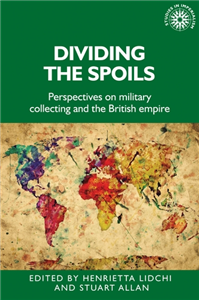
Dividing the spoils
Perspectives on military collections and the British empire
by Henrietta Lidchi, Stuart Allan
At a time of heightened international interest in the colonial dimensions of museum collections, Dividing the Spoils provides new perspectives on the motivations and circumstances whereby collections were appropriated and acquired during colonial military service. Combining approaches from the fields of material anthropology, imperial and military history, this book argues for a deeper examination of these collections within a range of intercultural histories that include alliance, diplomacy, curiosity and enquiry, as well as expropriation and cultural hegemony. As museums across Europe reckon with the post-colonial legacies of their collections, Dividing the Spoils explores how the amassing of objects was understood and governed in British military culture, and considers how objects functioned in museum collections thereafter, suggesting new avenues for sustained investigation in a controversial, contested field.
-
Trusted Partner
 Biography & True StoriesFebruary 2025
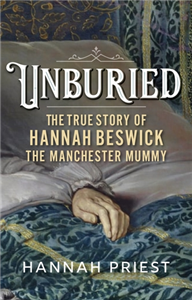
Unburied
The true story of Hannah Beswick, the Manchester Mummy
by Hannah Priest
The macabre tale of an eighteenth-century woman immortalised in folklore as the 'Manchester Mummy'. In 1835, the Manchester Natural History Society opened the doors of its museum. Taking pride of place in its collection were three mummies: one was Egyptian, one was Peruvian and one was a woman from Cheetham Hill. This is the first time the true story of Hannah Beswick, the so-called 'Manchester Mummy', has been told. Over the years, explanations for the Manchester Mummy have ranged from the chilling - Hannah's fear of being buried alive - to the downright bizarre - the legend of her buried gold - but the truth is more complex. Exploring this fascinating episode from museum history, Unburied sheds light on the Victorian turn to the macabre and changing attitudes to the display of human remains. It debunks the legends and asks what Hannah Beswick can tell us about death and dying, mummies and museums.
-
Trusted Partner
-
Trusted Partner

 October 2006
Heimat und Exil
Emigration der deutschen Juden nach 1933
by Stiftung Jüdisches Museum Berlin, Stiftung Haus der Geschichte der Bundesrepublik Deutschland
Flucht, Vertreibung und Neuanfang der deutschen Juden nach 1933 sind das Thema einer großen Ausstellung des Jüdischen Museums Berlin in Kooperation mit dem Haus der Geschichte in Bonn. Erstmals wird der erzwungene Exodus der deutschen Juden in weltweit über hundert Länder in einer Gesamtschau vor Augen geführt. Der reich illustrierte Begleitband ist wie die Ausstellung biographisch ausgerichtet. Dokumentiert werden vielfältige Flucht- und Lebenswege, die von Deutschland aus bis nach Shanghai oder in die Dominikanische Republik führten und, nach 1945, in einzelnen Fällen auch wieder zurück. Wo konnten die Emigranten unter welchen Bedingungen Zuflucht finden? Wie hat sich ihr Leben in den Zufluchtsländern gestaltet? Unterschiedliche Facetten der Exilerfahrung sowie der emotionalen und geographischen Verortung von »Heimat« werden in den Blick genommen. Zudem wird in einem gesonderten Teil jedes der über hundert Transit- und Aufnahmeländer aus der Perspektive der Emigranten vorgestellt – dieser historische Atlas eröffnet einen einzigartigen Zugang zu der vor über siebzig Jahren sich begründenden deutsch-jüdischen Diaspora in aller Welt.
-
Trusted Partner
 Humanities & Social SciencesApril 2026
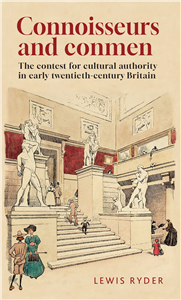
Connoisseurs and conmen
The contest for cultural authority in early twentieth-century Britain
by Lewis Ryder
This book examines John Hilditch (1872-1930), a notorious collector of Chinese art who lied, hoaxed and manipulated in his struggle against museum experts to become a cultural authority. Previously overlooked as a pest with a dubious collection, this book uses Hilditch to interrogate how far the monumental social, cultural and political changes of the early twentieth century unsettled social and cultural hierarchies and how these hierarchies were remade. It shows how the cultural elites were forced to engage with the public and re-draw the boundaries of citizenship, expertise and high and low culture in response to unprecedented social mobility, the democratisation of culture and politics, as well as the effects of British imperialism which brought ordinary Britons access to antiquities as well as confidence to claim expertise over foreign cultures. The book will interest social and cultural historians of Modern Britain, museum scholars and art historians.
-
Trusted Partner

 November 2017
Von Ata bis Zentralkomitee
DDR-Alltag in Objekten
by Herausgegeben von Kulturhistorisches Museum Rostock
-
Trusted Partner
July 2017
Das Netz des neuen Glaubens
Rostock, Mecklenburg und die Reformation im Ostseeraum
by Herausgegeben von Kulturhistorisches Museum Rostock
-
Trusted Partner
-
Trusted Partner
-
Trusted Partner
 1983
1983Heil Hitler, Herr Lehrer
Volksschule 1933-1945
by Herausgegeben von Arbeitsgruppe Pädagogisches Museum
-
Trusted Partner
-
Trusted Partner
 Humanities & Social SciencesJuly 2016
Women and museums 1850–1914
by Pamela Sharpe, Penny Summerfield, Lynn Abrams, Cordelia Beattie, Kate Hill
-
Trusted Partner
 December 2001
"Ich schlug meiner Mutter die brennenden Funken ab"
Berliner Schulaufsätze aus dem Jahr 1946
by Herausgegeben von Prenzlauer Berg Museum, ; Herausgegeben von Gröschner, Annett
-
Trusted Partner
 Humanities & Social SciencesJune 2016
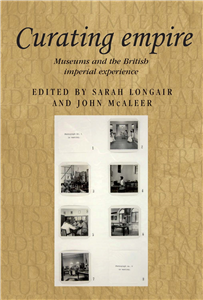
Curating empire
Museums and the British imperial experience
by Sarah Longair, Andrew Thompson, John McAleer, John Mackenzie
Curating empire explores the diverse roles played by museums and their curators in moulding and representing the British imperial experience. This collection demonstrates how individuals, their curatorial practices, and intellectual and political agendas influenced the development of a variety of museums across the globe. Taken together, these contributions suggest that museums are not just sites for accessing history but need to be considered as historical sites of significance in themselves. Individual essays examine the work of curators in museums in Britain and the colonies, the historical display and interpretation of empire in Britain, and the establishment of 'museum networks' in the British imperial context. Curating empire sheds new light on the relationship between museums, as repositories for objects and cultural institutions for conveying knowledge, and the politics of culture and the formation of identities throughout the British Empire. ;
-
Trusted Partner
-
Trusted Partner

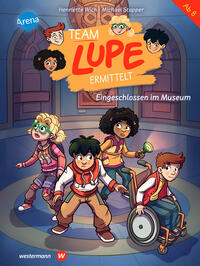 February 2024
TEAM LUPE ermittelt (4). Eingeschlossen im Museum
Rate-Krimi zum Selberlesen für Kinder ab 8 Jahren
by Henriette Wich, Michael Stapper
Der Krimi-Rätsel-Spaß geht weiter: ein actionreiches Abenteuer mit TEAM LUPE für Leseprofis ab 8 Jahren. Schock! Das Gemälde, das Lulus Oma dem Museum geliehen hat, wurde gefälscht. Wo ist das Original? Bei seinen Ermittlungen wird TEAM LUPE im Museum eingeschlossen. Nun müssen die Detektive nicht nur den Fälschern auf die Spur kommen, sondern auch einen Weg aus dem Museum finden … Ein spannender neuer Fall, perfekt für alle Leseratten und auch zur Ergänzung des Westermann Lehrwerks PASSWORT LUPE. • Eine Geschichte in kurzen Kapiteln • Mit Fibelschrift • Detektivrätsel zum Mitknobeln • Zwei Lesestufen für den perfekten Lesespaß Weitere Titel in der Reihe „TEAM LUPE ermittelt“:Der rätselhafte Hundedieb (ab 7 Jahren)Spurensuche um Mitternacht (ab 8 Jahren)Koffer-Klau im Klassenzimmer (ab 8 Jahren) Der Titel ist auf Antolin.de gelistet
-
Trusted Partner
December 2012
Frischer Fisch und Heidekraut
Walther Herwig - Präsident der Klosterkammer Hannover und "Vater der Fischer"
by Herausgegeben von Klosterkammer Hannover; Herausgegeben von Altonaer Museum für Kunst und Kulturgeschichte



