
National Academies Press
The National Academies Press (NAP)publish the reports of the National Academies of Sciences, Engineering and Medicine. They published more than 200 books a year on a wide range of topics.
View Rights Portal
The National Academies Press (NAP)publish the reports of the National Academies of Sciences, Engineering and Medicine. They published more than 200 books a year on a wide range of topics.
View Rights Portal
In Yakutia, every winter day is a quest! Putting 10 layers of clothing on, before you go outside, says a lot. Well, that is the tip of the iceberg! The most difficult thing is to wait until a bus arrives when it is -50°C outdoors. Therefore, it is never boring here. Adults and children of the planet would be interested in such warm books from the Pole of Cold with funny facts about life in Yakutia, traditions, history, amazing people and their incredible adventures in the coldest place of the World. Every year, we publish more than 300 titles of various children’s, fiction, study and guidance, reference books, as well as digital and multimedia publications. Over the past 5 years, we won more than 20 international and Russian prizes wherein 14 are for children's book.
View Rights Portal
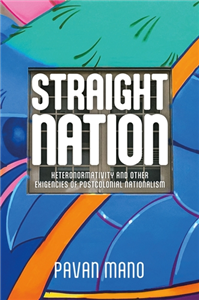
In Straight Nation, Pavan Mano reveals the logic of straightness that sits at the heart of postcolonial nationalism in Singapore. Mano rejects the romantic notion of the nation as a haven of belonging, showing it to be a relentless force that is allied with heteronormativity to create a host of minoritized and xenologized figures. Through meticulous exploration and close reading of a swathe of texts, Mano unveils the instrumental role of sexuality in structuring the national imaginary. The book adroitly demonstrates how queerness is rendered foreign in postcolonial Singapore and functions alongside technologies of "race", gender, and class. A provocative critique of narrow contemporary identity politics and its concomitant stymying of a more ambitious political critique, Straight Nation sets out an argument that moves beyond the negativity of traditional critique into a space of (re)thinking, (re)building and (re)imagining.
 Trusted Partner

This is the first book to examine the relationship between English nationalism, Brexit and 'the Anglosphere' - a politically-contested term used to denote English-speaking countries sharing cultural and historical roots with the UK. In the aftermath of the UK's EU referendum some pointed to a 'revolt' of those 'left behind' by globalisation. Ben Wellings argues instead that Brexit was and is an elite project, firmly situated within the tradition of an expansive English nationalism. Far from being parochial 'Little Englanders', elite Brexiteers sought to replace the European Union with trade and security alliances between 'true friends' and 'traditional allies' in the Anglosphere. Brexit was thus reassuringly presented as a giant leap into the known. As the UK's future relationship with the rest of the world is negotiated, the need to understand this 'English moment' has never been more pressing.
Trusted Partner
 Trusted Partner
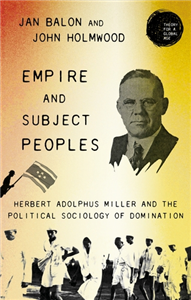
The book outlines the sociological arguments and political activities of the US pragmatist sociologist, Herbert Adolphus Miller (1875-1951). Miller was part of the milieu of Chicago sociology and involved in its studies of race and immigration. He took a distinctly more radical approach and developed a novel political sociology of domination in which he set out a critique of empires, the plight of subject minorities and the risks associated with the inevitable nationalist responses. Where others have identified with the 'internationalisation' of nationalism, Miller sought to make the nation 'international'. He was actively involved in movements for racial justice, Czechoslovakian independence, the formation of the Mid-European Union of subject peoples, as well as support for Korean and Indian independence. He was dismissed by Ohio State University for his activism in 1932.
Trusted Partner
Trusted Partner
Trusted Partner
Trusted Partner
Trusted Partner
Trusted Partner
Trusted Partner

 Trusted Partner
Trusted Partner
Trusted Partner
Trusted Partner
Trusted Partner

In the changed political landscape of Northern Ireland, where all major political parties with a nationalist agenda are now reconciled to the use of peaceful and constitutional means to achieve their objectives, this book presents a timely analysis of the constitutional nationalist tradition in Northern Ireland in the period leading up to the outbreak of the Troubles. The first book on constitutional nationalism to appear in over a decade, this new and incisive work based on extensive primary sources and existing secondary literature, maps the history of the campaigns of nationalist parties and organisations to redress the grievances of Northern Ireland's Catholics and bring partition to an end. It offers a critical reappraisal of these campaigns and it assesses the outcomes and consequences of the political strategies pursued by an array of nationalist parties and groups. ;
Trusted Partner

»Erinnertes und aus Empfindungen Imaginiertes, Durchblicke rückwärts bis in seine frühen Wanderjahre, in die Zeit der ersten Auflehnung gegen die Militärregime und wie selbstverständlich darin eingebettet die Utopie oder besser Hoffnung, es werde der Tag des ›Festes‹ kommen, der Wiedervereinigung des so lange in Süd und Nord zerstückten ›Landes der Väter‹ –: Daß dieser Koreaner weltweit zu den großen Engagierten gehört, ist das eine; wichtiger erscheint mir seine Begabung, Botschaften völlig aus dem Persönlichen zu vermitteln«, schreibt Siegfried Schaarschmidt über einen der bedeutendsten Dichter Koreas. 1933 wurde er als ältester Sohn einer Bauernfamilie in der Provinz Chollabukdo im Südwesten der koreanischen Halbinsel geboren, die auch die Heimat des Politikers Kim Dae-Jung und des Lyrikers Kim Chi-Ha ist. Mit Neunzehn trat er in ein zenbuddhistisches Kloster ein und verbrachte dort zehn Jahre. In dieser Zeit begann er Gedichte zu schreiben. Sein erster Gedichtband erschien 1960. Ko Un hat seither nahezu hundert Bücher veröffentlicht mit Gedichten, Romanen, Essays und Kritiken. Er wurde in Korea mit Literaturpreisen geehrt und ist inzwischen Professor für koreanische Literatur. Wegen seines politischen Engagements wurde er während der ersten Hälfte der achtziger Jahre politisch verfolgt, verhaftet und gefoltert.
Trusted Partner

Imperial cities explores the influence of imperialism in the landscapes of modern European cities including London, Paris, Rome, Vienna, Marseilles, Glasgow and Seville. Examines large-scale architectural schemes and monuments, including the Queen Victoria Memorial in London and the Vittoriano in Rome. Focuses on imperial display throughout the city, from spectacular exhibitions and ceremonies, to more private displays of empire in suburban gardens. Cconsiders the changing cultural and political identities in the imperial city, looking particularly at nationalism, masculinity and anti-imperialism.
Trusted Partner
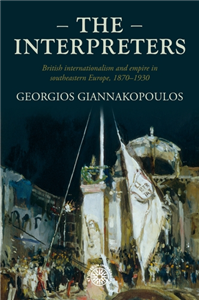
The book offers a new interpretation of the cultural and intellectual exchanges between Britain and southeastern Europe in an age of imperial transformation. It considers systematically the question of the management of ethnic difference in multinational imperial states as diverse as Britain, Austria-Hungary and the Ottoman Empire. It traces the regional experiences and impact of British scholars and public intellectuals steering through competing nationalisms and translating regional national questions to British and international audiences. The emphasis on past attempts to reconcile liberal democracy and nationalism with imperial rule continues to resonate in our day as intellectuals confront the challenges presented the rise of ethno-nationalist politics and shifting place of Britain in Europe.
Trusted Partner

By considering the distinctiveness of the inter-war years as a discrete period of colonial change, this book addresses several larger issues, such as tracing the origins of decolonization in the rise of colonial nationalism, and a re-assessment of the impact of inter-war colonial rebellions in Africa, Syria and Indochina. The book also connects French theories of colonial governance to the lived experience of colonial rule in a period scarred by war and economic dislocation.
Trusted Partner
Islamophobia is one of the most misunderstood and pernicious forms of racism in Britain. But how do those committed to challenging Islamophobia understand it? And what does this mean for their practices 'on the ground'? Islamophobia, anti-racism and the British left combines first-hand accounts from activists and community workers across two British cities with sociological theory, critically interrogating Islamophobia's relationship to 'race', racial capitalism and other modalities of racism. Setting this discussion against some of the most pertinent political shifts in Britain in recent years - from the resurgence of left nationalism to Black Lives Matter - the book assesses the limits of recent attempts to think about and tackle Islamophobia, and considers the possibilities of an alternative approach from and for the anti-racist left.



