Your Search Results

      • Springer Nature

        For over 175 years Springer Nature has been advancing discovery by providingthe best possible service to the whole research community.We help researchers uncover new ideas, makesure all the research we publish is significant, robust and stands up to objectivescrutiny, that it reaches all relevant audiences in the best possible format, and can be discovered, accessed, used, re-used and shared.Wesupport librarians and institutions with innovations in technology and data; and providequality publishing support to societies. As a research publisher, Springer Nature is home to trusted brands including Springer, Nature Research, BMC, Palgrave Macmillan and Scientific American. https://group.springernature.com/gp/group

        View Rights Portal
      • Trusted Partner
        Humanities & Social Sciences
        February 2017

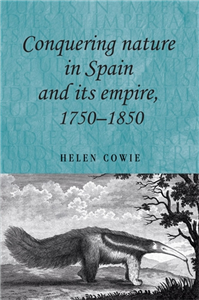
        Conquering nature in Spain and its empire, 1750–1850

        by Helen Cowie, Andrew Thompson, John M. MacKenzie

        This book examines the study of natural history in the Spanish empire in the years 1750-1850. During this period, Spain made strenuous efforts to survey, inventory and exploit the natural productions of her overseas possessions, orchestrating a serries of scientific expeditions and cultivating and displaying American fauna and flora in metropolitan gardens and museums. This book assesses the cultural significance of natural history, emphasising the figurative and utilitarian value with which eighteenth-century Spaniards invested natural objects, from globetrotting elephants to three-legged chickens. It considers how the creation, legitimisation and dissemination of scientific knowledge reflected broader questions of imperial power and national identity. This book will be of particular interest to scholars and students of Spanish and Latin American History, the History of Science and Imperial Culture

      • Trusted Partner
        2020

        Veterinary Diseases and their Treatment

        Dogs, cats, horses, pigs, cattle

        by Dr. Wolfgang Daubenmerkl

        Flea dermatitis in dogs, runny noses in cats, colic in horses – when our four-legged friends suffer, the owners suffer with them and want to find the best possible treatment. Alongside conventional medicine, natural remedies and homoeopathic treatments also offer opportunities for treating animals – but which of them have proved effective? An experienced veterinarian and alternative practitioner draws on his wealth of knowledge and explains ■ Typical clinical pictures with causes, symptoms and their diagnosis ■ Tried and tested proposed treatments from conventional medicine, homoeopathy, phytotherapy and other procedures ■ Basic principles, such as structure and function of organs, nerve and hormone systems, blood circulation Here the reader can quickly find the most effective method of treatment!

      • Trusted Partner
        Humanities & Social Sciences
        January 2024

        Dog politics

        Species stories and the animal sciences

        by Mariam Motamedi Fraser

        Do dogs belong with humans? Scientific accounts of dogs' 'species story,' in which contemporary dog-human relations are naturalised with reference to dogs' evolutionary becoming, suggest that they do. Dog politics dissects this story. This book offers a rich empirical analysis and critique of the development and consolidation of dogs' species story in science, asking what evidence exists to support it, and what practical consequences, for dogs, follow from it. It explores how this story is woven into broader scientific shifts in understandings of species, animals, and animal behaviours, and how such shifts were informed by and informed transformative political events, including slavery and colonialism, the Second World War and its aftermath, and the emergence of anti-racist movements in the twentieth and twenty-first centuries. The book pays particular attention to how species-thinking bears on 'race,' racism, and individuals.

      • Trusted Partner
        September 2011

        Conquering nature in Spain and its empire, 1750–1850

        by Helen Cowie, Andrew Thompson, John Mackenzie

        This book examines the study of natural history in the Spanish empire in the years 1750-1850. During this period, Spain made strenuous efforts to survey, inventory and exploit the natural productions of her overseas possessions, orchestrating a serries of scientific expeditions and cultivating and displaying American fauna and flora in metropolitan gardens and museums. This book assesses the cultural significance of natural history, emphasising the figurative and utilitarian value with which eighteenth-century Spaniards invested natural objects, from globetrotting elephants to three-legged chickens. It considers how the creation, legitimisation and dissemination of scientific knowledge reflected broader questions of imperial power and national identity. This book will be of particular interest to scholars and students of Spanish and Latin American History, the History of Science and Imperial Culture ;

      • Trusted Partner
        Humanities & Social Sciences
        June 2025

        Living with water

        Everyday encounters and liquid connections

        by Charlotte Bates, Kate Moles

        Living with water brings together sociologists, geographers, artists, writers and poets to explore the ways in which water binds, immerses and supports us. Drawing from international research on river crossings, boat dwelling, wild swimming, sea fishing, and drought impacts, and navigating urban waters, glacial lagoons, barrier reefs and disappearing tarns, the collection illuminates the ways that we live with and without water, and explores how we can think and write with water on land. Water offers a way of attending to emerging and enduring social and ecological concerns and making sense of them in lively and creative ways. By approaching Living with water from different disciplinary and methodological perspectives, and drawing on research from around the world, this collection opens up discussions that reinvigorate and renew previously landlocked debates. This book is relevant to United Nations Sustainable Development Goal 6, Clean water and sanitation

      • Trusted Partner
        May 2021

        Escapades in Evolution

        Of humans, chimps and other capers of nature

        by Matthias Glaubrecht

        Humans are rapidly changing the conditions of evolution, and while many species have not yet been discovered, the extinction of numerous species is becoming more and more dramatic. In this book, Matthias Glaubrecht contrasts the impending “end of evolution”, of which the evolutionary biologist writes in his bestseller of the same name, with the beauty, diversity and also the whims of nature. In 36 short chapters, the zoologist presents the animal and the all-tooanimal from the curiosity cabinet of evolution, easy to understand and with a good touch of humour – from dinosaurs with four wings to the annual new “Minnelied” hit of the humpback whale to the women’s communes of bonobos who use sex as a form of social bonding.

      • Trusted Partner
        May 2023

        Homoeopathy for Cats and Dogs

        by Dr. Daniela Birkelbach

        Alternatives or supplements to conventional medicine for cats and dogs? Yes, homoeopathy provides holistic therapeutic approaches for our four-legged friends too! Whether they are suffering from anxiety, conjunctivitis, or a tick bite, this book describes the appropriate homoeopathic remedies. The author draws on her many years of experience as an animal healer and presents the most important symptoms and their treatment using homoeopathy.This handy paperback fits into a lab coat pocket and provides:- Basic information on homoeopathy for dogs and cats- Symptoms from A to Z- Characteristics of the most important single-remedy homoeopathic preparations

      • Trusted Partner
        Humanities & Social Sciences
        December 2024

        Critical theory and Independent Living

        by Teodor Mladenov

        Critical theory and Independent Living explores intersections between contemporary critical theory and disabled people's struggle for self-determination. The book highlights the affinities between the Independent Living movement and studies of epistemic injustice, biopower, and psychopower. It discusses in depth the activists' critical engagement with welfare-state paternalism, neoliberal marketisation, and familialism. This helps develop a pioneering comparison between various welfare regimes grounded in Independent Living advocacy. The book draws on the activism of disabled people from the European Network on Independent Living (ENIL) by developing case studies of the ENIL's campaigning for deinstitutionalisation and personal assistance. It is argued that this work helps rethink independence as a form of interdependence, and that this reframing is pivotal for critical theorising in the twenty-first century.

      • Trusted Partner
        Children's & YA

        Wild. They Hear You Thinking

        by Ella Blix

        They hear you thinking. But you can’t understand them. Not yet! After a terrifying experience on a school trip to the forest, Noomi isn’t the same anymore. Fragments of memories that are as thrilling as they are disturbing continually lead her back to this same day in the forest. Something has happened to her since then and she has to find out what went on there. Why can’t she remember? Why does she now feel so close to animals? One secret experiment. Four young offenders. Animals acting like humans in the forest. Evolution at a turning point - FEEL NATURE! Atmospheric, enigmatic and disturbing – the new novel from the prize-winning author duo Ella Blix, consisting of Antje Wagner and Tania Witte. 2019 literary awards: the Mannheim Feuergriffel (Fire Pen) for Tania Witte and the town of Wetzlar’s Fantasy Prize. Printed on recycled paper and certified with the Blue Angel.

      • Trusted Partner
        Children's & YA

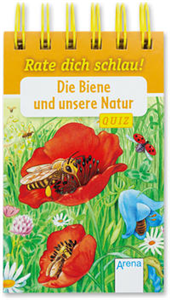
        Quiz Yourself Smart! Bees and Our Nature

        by Friederun Reichenstetter/ Helen Seeberg/ Hans-Günther Döring

        Where do bees get the wax for their honeycombs from? What does the bee dance mean? Why are bees important for us humans? General knowledge for primary school children! Who will be quiz king? The life of the little honeybee and its environment is full of surprises. Do you know your way around the native animal world? Discover their secrets, research how animals live and what distinguishes them. One quiz question – three possible answers. Plus all sorts of fascinating facts on the reverse page. For one or more players aged 6+.

      • Trusted Partner
      • Trusted Partner
        June 2023

        be nature

        80 Yoga-Übungen, die dich mit Himmel und Erde verbinden

        by Schöps, Inge

      • Trusted Partner
        2024

        High-functioning Depression

        The overlooked condition. An educational book

        by Michelle Hildebrandt

        The image many people have of depression is devastating - a chronic condition that leaves not only the sufferer but also their loved ones at a loss. Unfortunately, psychotherapies often focus on deficits rather than individual strengths and resources. Although this makes patients feel understood, there is a risk that they will become stuck in the role of victim. But what about those who seem to be functioning normally, those who masterfully hide their depression behind a smile? High-functioning depression" is often overlooked because people affected by it have good coping strategies to deal with everyday life. In this groundbreaking book, Dr Michelle Hildebrandt, a specialist in psychiatry and psychotherapy, shows how high-functioning depression can be recognised and how resource-oriented therapy can help not only those affected, but also other people with depression and their relatives. This book broadens the picture of depression and creates a space of hope.

      • Trusted Partner
        2024

        The second half of your life - a manual

        Tips and strategies for successful ageing

        by Dr. Petra Kiedaisch

        In the middle of our lives, the cards are reshuffled: marriages are divorced, careers are questioned, friendships are ended, questions of meaning are asked, bodies change - and not just hormonally. At the same time, children leave home and parents become carers. From the age of 45, the majority of our population is at the centre of a second upheaval that affects all facets of our lives and leaves us at a loss in many ways. Not only in our daily lives, but also when it comes to planning for our own old age. This guide is designed to help us find our way. It presents the most important information from all areas relevant to a good life after 45. Leading experts from the fields of medicine, nutrition, philosophy, theology, psychology, care, law and finance give recommendations on what to look out for and what tools are needed to get through these challenging years unscathed. Useful checklists round off the articles. The book shows us the unique opportunity to see these challenges not as a crisis but as a source of strength. Not only can we come through this period of our lives healthy and happy, but we can also shape it so that the next age threshold is no longer frightening. During the second phase of adolescence, we lay the foundations for whether and how we will grow older. Be it in terms of health or living together with family and friends. With contributions from: Prof. Dr. Martin Gessmann (philosophy), Dipl. Psych. Claudia Kühner (psychology), Dr Suso Lederle (medicine), Dr Petra Forster (nutrition), Christian Hald, Anja Heine (law), Prof Dr Philipp Schreiber (finance), Prof Dr Thomas Klie (nursing care insurance), Georg Eberhardt (religion).

      • Trusted Partner
        Business, Economics & Law
        January 2026

        Latin America and international investment law

        A mosaic of resistance

        by Sufyan Droubi, Cecilia Juliana Flores Elizondo

        Latin America has been a complex laboratory for the development of international investment law. While some governments and non-state actors have remained true to the Latin American tradition of resistance towards the international investment law regime, other governments and actors have sought to accommodate said regime in the region. Consequently, a profusion of theories and doctrines, too often embedded in clashing narratives, has emerged. In Latin America, the practice of international investment law is the vivid amalgamation of the practice of governments sometimes resisting and sometimes welcoming mainstream approaches; the practice of lawyers assisting foreign investors from outside and within the region; and the practice of civil society, indigenous peoples and other actors in their struggle for human rights and sustainable development. Latin America and international investment law describes the complex roles that governments have played vis-à-vis foreign investors and investments; the refreshing but clashing forces that international organizations, corporations, civil society, and indigenous peoples have brought to the field; and the contribution that Latin America has made to the development of the theory and practice of international investment law, notably in fields in which the Latin American experience has been traumatic: human rights and sustainable development. Latin American scholars have been contributing to the theory of international investment law for over a century; resting on the shoulders of true giants, this volume aims at pushing this contribution a little further.

      • Trusted Partner
        2024

        Why headless males are better lovers

        Sex and reproduction in the animal kingdom

        by Monika Niehaus / Michael Wink

        "Sex sells" also applies to evolution. Without sex, there is no genetic variation, and without genetic variation, there is no natural selection and evolution. When it comes to sex and reproduction, all animals have things in common, but there are also many variations. In this game of the sexes, everything revolves around the conflicts of interest between females and males, the diversity of mating systems, matriarchal and patriarchal communities and the securing of paternity, whether through beauty, song and dance or violence.

      • Trusted Partner
        2019

        When a Virus Defeated Napoleon

        How nature makes history

        by Sebastian Jutzi

        Humans write history, but nature and coincidence often play a significant part in making history. The weather, volcanoes, celestial bodies, pathogens: all of them can influence historical events. In 413 BC, a lunar eclipse contributed to the defeat of the Athenians by Syracuse. In 1802, Napoleon’s soldiers on Saint-Domingue, the Haiti of today, were carried off in their thousands by yellow fever; the slave revolt that the troops had been sent to suppress succeeded, and the island declared itself independent in 1804. Nature not only makes history, it can also contribute to the understanding of history. For example, the route that the Carthaginians took over the Alps was only revealed recently by the discovery of ancient manure – not too surprising since Hannibal was accompanied by an estimated 10,000 horses. Sebastian Jutzi relates these and many other (hi)stories in a knowledgeable, entertaining and informative way – a treasure trove for anyone who wants to get to know history from an “unusual” perspective.

      • Trusted Partner
        Humanities & Social Sciences
        January 2025

        Catholics and the law in Restoration Ireland

        by Paul Smith

        In 1660 Charles II was restored to the thrones of England, Scotland and Ireland, but his hold on power was precarious. In particular, Ireland was fundamentally unstable - Catholics formed the majority of the population in a country where Protestantism was the established religion, a state of affairs unique in Europe. It was through the law that the restored Stuart monarchy governed its subjects and its colonial dependencies, and this book examines how Catholics engaged with and experienced English common law primarily through the eyes of Catholic clerics and Gaelic poets. It also examines how Catholics engaged with the Courts and the particular challenges they faced as lawyers. The book draws on an extensive body of primary source materials, including Irish-language poetry and little-used archival material relating to elite Catholic families.

      Subscribe to our

      newsletter