Your Search Results

      • UnderCover Literary Agents

        Watch our CoLOGnEFraNkfURt RiGhTS Video: https://vimeo.com/466846561 Since foundation, in 1997, UnderCover has brokered and accompanied countless major international book launches, with cooperation partners mainly in Spain, Catalonia, South America, Eastern and Northern Europe and in the US. As agents or co-agents, the agency established national and international bestselling authors, such as Matilde Asensi, Elia Barceló, Jorge Bucay, Jaume Cabré, Félix Palma, Carlos Ruiz Zafón, Javier Sierra, Jorge Volpi and many others.

        View Rights Portal
      • Springer Nature

        For over 175 years Springer Nature has been advancing discovery by providingthe best possible service to the whole research community.We help researchers uncover new ideas, makesure all the research we publish is significant, robust and stands up to objectivescrutiny, that it reaches all relevant audiences in the best possible format, and can be discovered, accessed, used, re-used and shared.Wesupport librarians and institutions with innovations in technology and data; and providequality publishing support to societies. As a research publisher, Springer Nature is home to trusted brands including Springer, Nature Research, BMC, Palgrave Macmillan and Scientific American. https://group.springernature.com/gp/group

        View Rights Portal
      • Trusted Partner
        2019

        When a Virus Defeated Napoleon

        How nature makes history

        by Sebastian Jutzi

        Humans write history, but nature and coincidence often play a significant part in making history. The weather, volcanoes, celestial bodies, pathogens: all of them can influence historical events. In 413 BC, a lunar eclipse contributed to the defeat of the Athenians by Syracuse. In 1802, Napoleon’s soldiers on Saint-Domingue, the Haiti of today, were carried off in their thousands by yellow fever; the slave revolt that the troops had been sent to suppress succeeded, and the island declared itself independent in 1804. Nature not only makes history, it can also contribute to the understanding of history. For example, the route that the Carthaginians took over the Alps was only revealed recently by the discovery of ancient manure – not too surprising since Hannibal was accompanied by an estimated 10,000 horses. Sebastian Jutzi relates these and many other (hi)stories in a knowledgeable, entertaining and informative way – a treasure trove for anyone who wants to get to know history from an “unusual” perspective.

      • Trusted Partner
        Children's & YA

        Wild. They Hear You Thinking

        by Ella Blix

        They hear you thinking. But you can’t understand them. Not yet! After a terrifying experience on a school trip to the forest, Noomi isn’t the same anymore. Fragments of memories that are as thrilling as they are disturbing continually lead her back to this same day in the forest. Something has happened to her since then and she has to find out what went on there. Why can’t she remember? Why does she now feel so close to animals? One secret experiment. Four young offenders. Animals acting like humans in the forest. Evolution at a turning point - FEEL NATURE! Atmospheric, enigmatic and disturbing – the new novel from the prize-winning author duo Ella Blix, consisting of Antje Wagner and Tania Witte. 2019 literary awards: the Mannheim Feuergriffel (Fire Pen) for Tania Witte and the town of Wetzlar’s Fantasy Prize. Printed on recycled paper and certified with the Blue Angel.

      • Trusted Partner
        Biography & True Stories
        July 2026

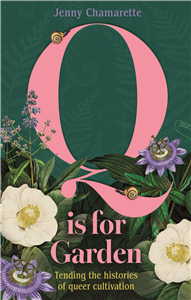
        Q is for garden

        Tending the histories of queer cultivation

        by Jenny Chamarette

        A bold, tender exploration of how queerness and nature entwine - and what happens when we step beyond the binaries that fence us in. There is a Q in garden, but you can't always see it. When Jenny Chamarette faced a devastating health crisis, they found themselves unmoored from the rules of gender, sexuality and productivity. In a small South London garden, Jenny began to imagine another way of living: porous, unruly, rooted in the lessons of soil and plant life. Gardens, like identities, are usually bounded - but what if those limits can be re-drawn? Blending memoir and cultural criticism, this book asks whether the categories we inherit - colonial, patriarchal, conventions of sexuality and gender - still serve us, or whether they confine us. From illness and recovery to queer love and ecological wonder, Q is for garden invites readers to reimagine how we inhabit land, culture and each other. An eloquent work of nature writing and queer thought, Q is for garden digs into the rich history of queer gardeners, botanists, artists and agriculturalists. It offers a hopeful vision of belonging, if we are curious enough to unearth it.

      • Trusted Partner
        March 2024

        The Strategy of Rescue

        The past and present of a power-political concept

        by Johannes F. Lehmann

        "Rescue” has two fundamentally different “existential” dimensions. One is aimed at “saving” individual lives that are in danger. Firefighters, for instance, rescue people from fires, while the sea rescue services rescue shipwrecked people from the Mediterranean. The second dimension of “rescue”, on the other hand, concerns systems – think of the bailing out of banks, the euro or the climate disaster – and so points to a larger context that creates the conditions for “life” to even be possible, or at least to be preserved. The complex subject of this stringent essay is just to what extent politics enable or prevent “rescue attempts”, to what extent it understands its actions as “rescue actions”, and how decisively the “narrative”, i.e. the “talk of rescue”, ultimately dominates our entire understanding of politics.

      • Trusted Partner
        Humanities & Social Sciences
        January 2013

        Crime, Law and Society in the Later Middle Ages

        by Anthony Musson, Edward Powell

        This book provides an accessible collection of translated legal sources through which the exploits of criminals and developments in the English criminal justice system (c.1215-1485) can be studied. Drawing on the wealth of archival material and an array of contemporary literary texts, it guides readers towards an understanding of prevailing notions of law and justice and expectations of the law and legal institutions. Tensions are shown emerging between theoretical ideals of justice and the practical realities of administering the law during an era profoundly affected by periodic bouts of war, political in-fighting, social dislocation and economic disaster. Introductions and notes provide both the specific and wider legal, social and political contexts in addition to offering an overview of the existing secondary literature and historiographical trends. This collection affords a valuable insight into the character of medieval governance as well as revealing the complex nexus of interests, attitudes and relationships prevailing in society during the later Middle Ages.

      • Trusted Partner
        Humanities & Social Sciences
        February 2017

        Conquering nature in Spain and its empire, 1750–1850

        by Helen Cowie, Andrew Thompson, John M. MacKenzie

        This book examines the study of natural history in the Spanish empire in the years 1750-1850. During this period, Spain made strenuous efforts to survey, inventory and exploit the natural productions of her overseas possessions, orchestrating a serries of scientific expeditions and cultivating and displaying American fauna and flora in metropolitan gardens and museums. This book assesses the cultural significance of natural history, emphasising the figurative and utilitarian value with which eighteenth-century Spaniards invested natural objects, from globetrotting elephants to three-legged chickens. It considers how the creation, legitimisation and dissemination of scientific knowledge reflected broader questions of imperial power and national identity. This book will be of particular interest to scholars and students of Spanish and Latin American History, the History of Science and Imperial Culture

      • Trusted Partner
        Humanities & Social Sciences
        August 2003

        Understanding A/S level government and politics

        by Christopher Wilson

        This is the first comprehensive textbook on the market to cover the A/S level politics syllabuses offered by the main examination boards.. Written in clear, accessible, easy to understand language, with checklists, bullet points, chapter summaries, boxes and charts, revision notes and sample examination questions, as well as further sources of information, in both written form and on the web, this is the perfect information source for students preparing for the A/S level politics examination.. The book starts by giving a basic introduction to politics including a definition of what politics is, the nature of government and the basic concepts of politics and political action.. It goes on to deal with popular participation, including democracy, elections, the electoral system and referendums, political parties including their role and functions, ideologies, theories and traditions of UK parties, the current state of the parties with regard to policy, and the work of parties at local, national and European level. ;

      • Trusted Partner
        Medicine
        February 1995

        Ethics, law and nursing

        by Nina Fletcher

        An introduction to the ethical and legal dilemmas in nursing practice, this text is designed to provoke the nurse to reflect on the nature of his or her professional obligations and future practice. The authors firstly familiarise the reader with the basic principles of ethical debate and the overall structure of the legal system as it effects nurses. They then address the fundamental dilemmas of nursing practice, such as whether or not paternalism can ever be justified, if patients have the right to die, and what a nurse's response should be to poor professional practice by colleagues. The book aims to enhance the reader's understanding of the issues, and to educate nurses to develop their own skills of reasoning and judgement. ;

      • Trusted Partner
        Business, Economics & Law
        October 2020

        Design Thinking Navigator

        Kartenset zur kreativen Projektarbeit

        by Mayer, Lena; Osann, Isabell; Szymanski, Caroline; Taheri, Mana

        Design Thinking: Solve problems together, user-centered and iterative, develop innovations and have fun doing so! - Practical cards for innovation project work with change of perspective- Consistently customer-oriented and iterative- Targeted use of the maps in project planning and implementation with Design Thinking- Pragmatic, compact and wonderfully descriptive- Suitable for the most diverse questions or problems- With folding poster for targeted use of maps in project planning and decorative at the workplace- From the authors "Design Thinking Quick Start

      • Trusted Partner
      • Trusted Partner
        April 2023

        Purveyors to the Court

        How politics makes use of science and breaks down because of it

        by Klaus Ferdinand Gärditz

        — Astute analysis of the relationship between politics and the natural sciences — Danger of undermining democratic processes Today, political decision-making processes are closely intertwined with processes of scientific knowledge generation. The natural sciences play a central role in politics. This became particularly clear during the corona pandemic and in the regular press conferences in which politicians largely narrowed their course to scientific findings. The consequence of this maxim is that the rationalisation of politics is accompanied by a politicisation of science. Science is exploited, and sometimes allows itself to be exploited. In his equally brilliant and sharp analysis, Klaus Ferdinand Gärditz explains the consequences of this development for the democratic process in particular.

      • Trusted Partner
        June 2023

        be nature

        80 Yoga-Übungen, die dich mit Himmel und Erde verbinden

        by Schöps, Inge

      • Trusted Partner
        May 2021

        Escapades in Evolution

        Of humans, chimps and other capers of nature

        by Matthias Glaubrecht

        Humans are rapidly changing the conditions of evolution, and while many species have not yet been discovered, the extinction of numerous species is becoming more and more dramatic. In this book, Matthias Glaubrecht contrasts the impending “end of evolution”, of which the evolutionary biologist writes in his bestseller of the same name, with the beauty, diversity and also the whims of nature. In 36 short chapters, the zoologist presents the animal and the all-tooanimal from the curiosity cabinet of evolution, easy to understand and with a good touch of humour – from dinosaurs with four wings to the annual new “Minnelied” hit of the humpback whale to the women’s communes of bonobos who use sex as a form of social bonding.

      • Trusted Partner
        Humanities & Social Sciences
        September 1997

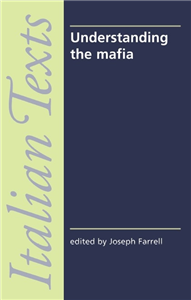
        Understanding the mafia

        by Joe Farrell

        An anthology of writings in Italian which examine the origins, nature and culture of the Sicilian mafia. Separate chapters are devoted to the culture from which the mafia emerged, the economic and business activities in which it is now engaged, its relations with politics and politicians, as well as its structure and historical evolution. There are portraits of prominent mafiosi as well as of the people and organizations that have struggled against mafia crime. The individual pieces come from a diverse range of sources, including newspapers, historical and sociological works. There is an introduction in English, as well as a full vocabulary and a glossary of terms associated with the mafia.

      • Trusted Partner
        Humanities & Social Sciences
        November 2023

        Solidarity: Nature, grounds, and value

        by Andrea Sangiovanni

      • Trusted Partner
        Political science & theory
        July 2012

        Neoclassical realism in European politics

        Bringing power back in

        by Edited by Asle Toje and Barbara Kunz

        Realism is making a comeback in Europe. This book brings together a new generation of realist scholars. It provides a rigorous survey for specialists seeking to understand the dynamics of international relations in a time of change. The volume thus seeks to explore the European dimension to neoclassical realism. The hope with this book is that it will spark a debate that, in time, might lead to the re-emergence of a distinctly European realist school which draws on the roots of the historical, non-American realist tradition, benefiting from insights in the liberal-constructivist paradigm. Through detailed case studies, the book illustrates that power and influence remain fruitful, even indispensable variables through which to understand the formation of foreign policy.

      • Trusted Partner
        2023

        Preventing Migraines Naturally

        by Dr. C. Gaul

        Migraine, a widespread disease Migraine is the second most common headache disorder in western industrialised countries. Pulsating headache attacks occur at more or less frequent intervals, usually on one side of the head. Women are up to three times more likely to be affected than men. In a quarter of patients, the disease begins in childhood and adolescence, and the onset of migraine attacks after the age of 45 is rather unusual. Most migraine attacks occur between the ages of 20 and 40. This self-help book provides migraine patients with up-todate medical and scientifically sound information on how to - be able to relieve headaches and migraines efficiently and sustainably using natural remedies, - reduce the frequency of pain attacks, and - better manage headaches and migraines with simple preventive measures. Improve your quality of life!

      • Trusted Partner
        Humanities & Social Sciences
        March 2009

        The making of the Irish poor law, 1815–43

        None

        by Peter Gray

        The making of the Irish poor law, 1815-43 examines the debates preceding and surrounding the 1838 act on the nature of Irish poverty and the responsibilities of society towards it. It traces the various campaigns for a poor law from the later eighteenth century. The nature and internal frictions of the great Irish poor inquiry of 1833-36 are analysed, along with the policy recommendations made by its chair, Archbishop Whately. It considers the aims and limitations of the government's measure and the public reaction to it in Ireland and Britain. Finally, it describes the implementation of the Poor Law between 1838 and 1843 under the controversial direction of George Nicholls. It will be of particular importance to those with a serious interest in the history of social welfare, of Irish social thought and politics, and of British governance in Ireland in the early nineteenth century. ;

      Subscribe to our

      newsletter