Silke Heiss (Give Your Writing The Edge)
We are a one-woman charity, hoping to transform into a self-sustaining business, devoted to reminding readers of themselves.
View Rights Portal
We are a one-woman charity, hoping to transform into a self-sustaining business, devoted to reminding readers of themselves.
View Rights Portal
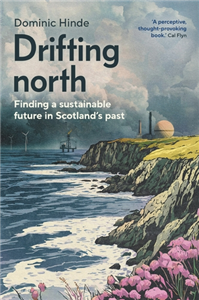
Scotland's past and future collide in this engaging journey through climate change, fossil capitalism and the struggle for a sustainable world. Scotland's history and future are entangled with climate change and the story of the modern world. This small country on the fringes of northern Europe pioneered fossil capitalism and played a key role in its spread across the planet. It is a living museum of the crisis of the west, of deindustrialisation, stagnation and the struggle to build a better future from the ashes. Journalist and sociologist Dominic Hinde travels from the treeless Highlands to the lowland cities, struggling to balance memories with aspiration. Through this journey he finds that his own sensory turmoil, shaped by recovery from a near fatal accident, mirrors the disarray of the fossil fuel transition - an uncertain passage between what was and what must be. Part memoir, part environmental history, part travelogue, this is a compelling narrative of connections - to place, energy and the possibility of renewal. Through the lens of one country, it asks a vital question: can the lessons of the past help us build a more sustainable future?

This book examines the study of natural history in the Spanish empire in the years 1750-1850. During this period, Spain made strenuous efforts to survey, inventory and exploit the natural productions of her overseas possessions, orchestrating a serries of scientific expeditions and cultivating and displaying American fauna and flora in metropolitan gardens and museums. This book assesses the cultural significance of natural history, emphasising the figurative and utilitarian value with which eighteenth-century Spaniards invested natural objects, from globetrotting elephants to three-legged chickens. It considers how the creation, legitimisation and dissemination of scientific knowledge reflected broader questions of imperial power and national identity. This book will be of particular interest to scholars and students of Spanish and Latin American History, the History of Science and Imperial Culture
 Trusted Partner
 Trusted Partner
Trusted Partner
Trusted Partner


Humans write history, but nature and coincidence often play a significant part in making history. The weather, volcanoes, celestial bodies, pathogens: all of them can influence historical events. In 413 BC, a lunar eclipse contributed to the defeat of the Athenians by Syracuse. In 1802, Napoleon’s soldiers on Saint-Domingue, the Haiti of today, were carried off in their thousands by yellow fever; the slave revolt that the troops had been sent to suppress succeeded, and the island declared itself independent in 1804. Nature not only makes history, it can also contribute to the understanding of history. For example, the route that the Carthaginians took over the Alps was only revealed recently by the discovery of ancient manure – not too surprising since Hannibal was accompanied by an estimated 10,000 horses. Sebastian Jutzi relates these and many other (hi)stories in a knowledgeable, entertaining and informative way – a treasure trove for anyone who wants to get to know history from an “unusual” perspective.
Trusted Partner
Trusted Partner

Humans are rapidly changing the conditions of evolution, and while many species have not yet been discovered, the extinction of numerous species is becoming more and more dramatic. In this book, Matthias Glaubrecht contrasts the impending “end of evolution”, of which the evolutionary biologist writes in his bestseller of the same name, with the beauty, diversity and also the whims of nature. In 36 short chapters, the zoologist presents the animal and the all-tooanimal from the curiosity cabinet of evolution, easy to understand and with a good touch of humour – from dinosaurs with four wings to the annual new “Minnelied” hit of the humpback whale to the women’s communes of bonobos who use sex as a form of social bonding.


In The Path of the Law, Holmes discusses his personal philosophy on legal practice. The Common Law is a series of lectures that established Holmes's reputation as a witty and articulate writer.
Trusted Partner

Law across imperial borders offers new perspectives on the complex legal connections between Britain's presence in Western China in the western frontier regions of Yunnan and Xinjiang, and the British colonies of Burma and India. Bringing together a transnational methodology with a social-legal focus, it demonstrates how inter-Asian mobility across frontiers shaped British authority in contested frontier regions of China. It examines the role of a range of actors who helped create, constitute and contest legal practice on the frontier-including consuls, indigenous elites and cultural mediators. The book will be of interest to historians of China, the British Empire in Asia and legal history.
Trusted Partner

The image many people have of depression is devastating - a chronic condition that leaves not only the sufferer but also their loved ones at a loss. Unfortunately, psychotherapies often focus on deficits rather than individual strengths and resources. Although this makes patients feel understood, there is a risk that they will become stuck in the role of victim. But what about those who seem to be functioning normally, those who masterfully hide their depression behind a smile? High-functioning depression" is often overlooked because people affected by it have good coping strategies to deal with everyday life. In this groundbreaking book, Dr Michelle Hildebrandt, a specialist in psychiatry and psychotherapy, shows how high-functioning depression can be recognised and how resource-oriented therapy can help not only those affected, but also other people with depression and their relatives. This book broadens the picture of depression and creates a space of hope.
Trusted Partner
Latin America has been a complex laboratory for the development of international investment law. While some governments and non-state actors have remained true to the Latin American tradition of resistance towards the international investment law regime, other governments and actors have sought to accommodate said regime in the region. Consequently, a profusion of theories and doctrines, too often embedded in clashing narratives, has emerged. In Latin America, the practice of international investment law is the vivid amalgamation of the practice of governments sometimes resisting and sometimes welcoming mainstream approaches; the practice of lawyers assisting foreign investors from outside and within the region; and the practice of civil society, indigenous peoples and other actors in their struggle for human rights and sustainable development. Latin America and international investment law describes the complex roles that governments have played vis-à-vis foreign investors and investments; the refreshing but clashing forces that international organizations, corporations, civil society, and indigenous peoples have brought to the field; and the contribution that Latin America has made to the development of the theory and practice of international investment law, notably in fields in which the Latin American experience has been traumatic: human rights and sustainable development. Latin American scholars have been contributing to the theory of international investment law for over a century; resting on the shoulders of true giants, this volume aims at pushing this contribution a little further.
Trusted Partner
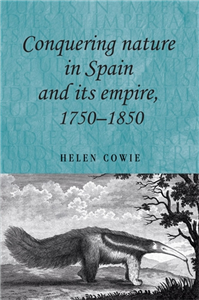
This book examines the study of natural history in the Spanish empire in the years 1750-1850. During this period, Spain made strenuous efforts to survey, inventory and exploit the natural productions of her overseas possessions, orchestrating a serries of scientific expeditions and cultivating and displaying American fauna and flora in metropolitan gardens and museums. This book assesses the cultural significance of natural history, emphasising the figurative and utilitarian value with which eighteenth-century Spaniards invested natural objects, from globetrotting elephants to three-legged chickens. It considers how the creation, legitimisation and dissemination of scientific knowledge reflected broader questions of imperial power and national identity. This book will be of particular interest to scholars and students of Spanish and Latin American History, the History of Science and Imperial Culture ;
Trusted Partner
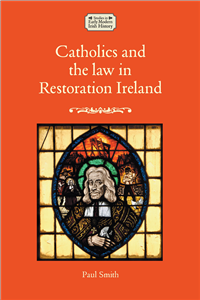
In 1660 Charles II was restored to the thrones of England, Scotland and Ireland, but his hold on power was precarious. In particular, Ireland was fundamentally unstable - Catholics formed the majority of the population in a country where Protestantism was the established religion, a state of affairs unique in Europe. It was through the law that the restored Stuart monarchy governed its subjects and its colonial dependencies, and this book examines how Catholics engaged with and experienced English common law primarily through the eyes of Catholic clerics and Gaelic poets. It also examines how Catholics engaged with the Courts and the particular challenges they faced as lawyers. The book draws on an extensive body of primary source materials, including Irish-language poetry and little-used archival material relating to elite Catholic families.
Trusted Partner

This book provides an accessible collection of translated legal sources through which the exploits of criminals and developments in the English criminal justice system (c.1215-1485) can be studied. Drawing on the wealth of archival material and an array of contemporary literary texts, it guides readers towards an understanding of prevailing notions of law and justice and expectations of the law and legal institutions. Tensions are shown emerging between theoretical ideals of justice and the practical realities of administering the law during an era profoundly affected by periodic bouts of war, political in-fighting, social dislocation and economic disaster. Introductions and notes provide both the specific and wider legal, social and political contexts in addition to offering an overview of the existing secondary literature and historiographical trends. This collection affords a valuable insight into the character of medieval governance as well as revealing the complex nexus of interests, attitudes and relationships prevailing in society during the later Middle Ages.
Trusted Partner
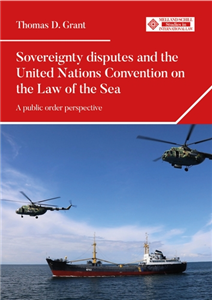
Because maritime questions are often admixed with territorial sovereignty questions, parties sometimes seek to settle them together. Jurisdiction under the United Nations Convention on the Law of the Sea-UNCLOS-according to the received view does not encompass disputes concerning territorial sovereignty. In this book, international law scholar and practitioner Thomas D. Grant argues that the received view overstates the exclusion of sovereignty disputes. In Coastal State Rights, UNCLOS Annex VII arbitrators overstated the scope of the term 'sovereignty dispute' as well, an error of definition compounded when they ignored evidence probative as to whether a sovereignty dispute exists. Examining UNCLOS, its drafting history, and decades of decided cases, Sovereignty Disputes and the United Nations Convention on the Law of the Sea relates an important problem of international dispute settlement to the public order of which UNCLOS forms part.
Trusted Partner
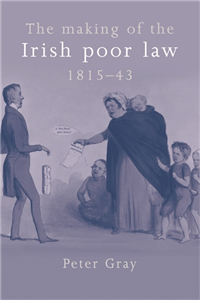
The making of the Irish poor law, 1815-43 examines the debates preceding and surrounding the 1838 act on the nature of Irish poverty and the responsibilities of society towards it. It traces the various campaigns for a poor law from the later eighteenth century. The nature and internal frictions of the great Irish poor inquiry of 1833-36 are analysed, along with the policy recommendations made by its chair, Archbishop Whately. It considers the aims and limitations of the government's measure and the public reaction to it in Ireland and Britain. Finally, it describes the implementation of the Poor Law between 1838 and 1843 under the controversial direction of George Nicholls. It will be of particular importance to those with a serious interest in the history of social welfare, of Irish social thought and politics, and of British governance in Ireland in the early nineteenth century. ;
Trusted Partner

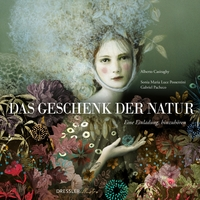
Der Stimme der Natur lauschen Mit sanften Illustrationen und einfühlsamen Texten lädt dieses wunderbare Bilderbuch dazu ein, die Geheimnisse der Natur zu entdecken und ihre Lehren für das eigene Leben anzunehmen. Inspiriert von den vier Elementen, regt der Text zum Nachdenken an und zeigt, wie tief unsere Wurzeln mit der Welt verbunden sind. Ein Buch für all jene, die inmitten des Alltags die Nähe zur Natur suchen, Inspiration finden und sich mit der Welt um sie herum verbunden fühlen möchten. Das Geschenk der Natur. Eine Einladung, hinzuhören: Die Geheimnisse der Natur entdecken Den Herzschlag der Erde spüren: Ein poetisches Bilderbuch für Erwachsene über die Weisheiten der Natur. Achtsamkeit in der Natur: Anhand der vier Elemente beschreibt das hochwertige Geschenkbuch, wie tief die Menschen mit der Natur verbunden sind. Kraftvolle Botschaften: Die einfühlsamen Texte von Alberto Casiraghy regen zum Nachdenken über das eigene Leben an. Zauberhafte Bilder: Die sanften Illustrationen von Sonia Maria Luce Possentini und Gabriel Pacheco laden zum Entdecken, Fühlen und Staunen ein. Naturverbundenheit verschenken: Das Bilderbuch ist ein inspirierendes Geschenk für Erwachsene, die im Alltag die Nähe zur Natur suchen und sich mit ihr verbunden fühlen möchten. Die Schönheit des Lebens feiern mit DRESSLERillustro!DRESSLERillustro steht für sorgfältig kuratierte Geschenkbücher mit einzigartigen Bildern und Texten. Die reich illustrierten Bilderbücher für Erwachsene von namhaften Autor*innen und Illustrator*innen begeistern durch ihre hohe inhaltliche und optische Qualität. Bei DRESSLERillustro dreht sich alles um die großen Themen unserer Zeit: Liebe, Hoffnung, Sehnsucht, Naturverbundenheit, Selbstfürsorge. Jedes Buch ist ein kleines Kunstwerk und ein wertvolles Geschenk für einen lieben Menschen oder für sich selbst. Für kleine Auszeiten und Momente des Innehaltens und Reflektierens.
Trusted Partner
 Trusted Partner

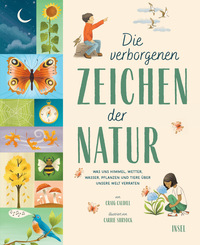
Die Natur kann uns so viel erzählen – wenn wir nur lernen, genau hinzusehen. Eine Herde Schafe kann das Wetter vorhersagen, der Polarstern bietet auch in dunkler Nacht einen Orientierungspunkt und die Form der Dünen in der Wüste verrät, aus welcher Richtung der Wind weht. Dieses Buch zeigt, wie wir die Zeichen der Natur deuten können, und ist zugleich eine Reise durch die wunderbare Vielfalt der Landschaften unserer Erde: von der eisigen Arktis über die Alpen bis zu den tropischen Regenwäldern am Amazonas – und sogar direkt vor der eigenen Haustür gibt es vieles zu entdecken. Ein Buch für alle, die neugierig sind und die Geheimnisse von Landschaft und Lebewesen entschlüsseln wollen. Denn wer die Zeichen der Natur versteht, sieht die Welt mit anderen Augen.
Trusted Partner


This practical book introduces “nature-based therapy” (NBT) as a newer therapeutic approach to the treatment of stressrelated illnesses. The authors, with many years of experience in the felds of psychosomatics and garden therapy, use NBT as an extension of garden therapy and landscape medicine. They present the theoretical foundations and justify the use of nature as a therapeutic space. They show how the therapeutic approach can be applied in the felds of stress research, psycho neuroimmunology, epigenetics, personality psychology, and lifestyle research. In 20 case descriptions they present the use of concrete therapy modules and describe each module with preparatory nature anamnesis, core topics, goals, materials and exercises.