
Your Search Results


-
Promoted Content

 Humanities & Social SciencesFebruary 2023
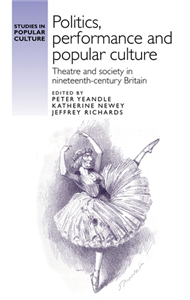
Politics, performance and popular culture
Theatre and society in nineteenth-century Britain
by Peter Yeandle, Katherine Newey, Jeffrey Richards
This collection brings together studies of popular performance and politics across the nineteenth century, offering a fresh perspective from an archivally grounded research base. It works with the concept that politics is performative and performance is political. The book is organised into three parts in dialogue regarding specific approaches to popular performance and politics. Part I offers a series of conceptual studies using popular culture as an analytical category for social and political history. Part II explores the ways that performance represents and constructs contemporary ideologies of race, nation and empire. Part III investigates the performance techniques of specific politicians - including Robert Peel, Keir Hardie and Henry Hyndman - and analyses the performative elements of collective movements.
-
Promoted Content
 Literature & Literary StudiesFebruary 2015
Biblical women in early modern literary culture, 1550–1700
1550–1700
by Edited by Victoria Brownlee and Laura Gallagher
At once pervasive and marginal, appealing and repellent, exemplary and atypical, the women of the Bible provoke an assortment of readings across early modern literature. Biblical women in early modern literary culture, 1550-1700 draws attention to the complex ways in which biblical women's narratives could be reimagined for a variety of rhetorical and religious purposes. Considering a confessionally diverse range of writers, working across a variety of genres, this volume reveals how women from the Old and New Testaments exhibit an ideological power that frequently exceeds, both in scope and substance, their associated scriptural records. The essays explore how the Bible's women are fluidly negotiated and diversely redeployed to offer (conflicting) comment on issues including female authority, speech and sexuality, and in discussions of doctrine, confessional politics, exploration and grief. As it explores the rich ideological currency of the Bible's women in early modern culture, this volume demonstrates that the Bible's women are persistently difficult to evade. ;
-
 Trusted Partner
 Humanities & Social SciencesApril 2022
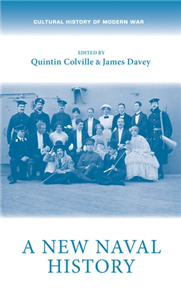
A new naval history
by Quintin Colville, James Davey, Katherine Parker, Elaine Chalus, Evan Wilson, Barbara Korte, Cicely Robinson, Cindy McCreery, Ellie Miles, Mary A. Conley, Jonathan Rayner, Daniel Spence, Emma Hanna, Ulrike Zimmerman, Max Jones, Jan Rüger
A New Naval History brings together the most significant and interdisciplinary approaches to contemporary naval history. The last few decades have witnessed a transformation in how this field is researched and understood and this volume captures the state of a field that continues to develop apace. It examines - through the prism of naval affairs - issues of nationhood and imperialism; the legacy of Nelson; the socio-cultural realities of life in ships and naval bases; and the processes of commemoration, journalism and stage-managed pageantry that plotted the interrelationship of ship and shore. This bold and original publication will be essential for undergraduate and postgraduate students of naval and maritime history. Beyond that, though, it marks an important intervention into wider historiographies that will be read by scholars from across the spectrum of social history, cultural studies and the analysis of national identity.
-
Trusted Partner
 Humanities & Social SciencesAugust 2018
Flight MH17, Ukraine and the new Cold War
by Kees van der Pijl, Radhika Desai, Alan Freeman
-
Trusted Partner
-
Trusted Partner
 Humanities & Social SciencesDecember 2024
British culture after empire
Race, decolonisation and migration since 1945
by Josh Doble, Liam Liburd, Emma Parker
British culture after Empire is the first collection of its kind to explore the intertwined social, cultural and political aftermath of empire in Britain from 1945 up to and beyond the Brexit referendum of 2016, combining approaches from the fields of history, English and cultural studies. Against those who would deny, downplay or attempt to forget Britain's imperial legacy, the various contributions expose and explore how the British Empire and the consequences of its end continue to shape Britain at the local, national and international level. As an important and urgent intervention in a field of increasing relevance within and beyond the academy, the book offers fresh perspectives on the colonial hangovers in post-colonial Britain from up-and-coming as well as established scholars.
-
Trusted Partner
 The ArtsSeptember 2009
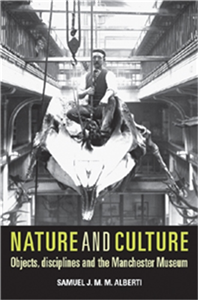
Nature and culture
Objects, disciplines and the Manchester Museum
by Samuel J. M. M. Alberti
This is a vital new work; the first to take the University of Manchester's Museum as its subject. By setting the museum in its cultural and intellectual contexts, Nature and culture explores twentieth-century collecting and display, and the status of the object in the modern world. Beginning with the origins of the Manchester Museum, accounting for its development as an internationally renowned university museum, and concluding at its major expansion at the turn of the millennium, this book casts new light on the history of museums. How did objects become knowledge? Who encountered museum objects on their way to museums? What happened to collections within the museum? How did visitors use and respond to objects? In answering these questions, Nature and culture illuminates not only the history of one institution, but also contributes to wider discussions in the history of science, cultural history and museology. ;
-
Trusted Partner
 The ArtsJune 2021
The new pornographies
Explicit sex in recent French fiction and film
by Victoria Best, Martin Crowley
The turn of the twenty-first century has witnessed the striking advance of pornography into the Western cultural mainstream. Symptomatic of this development has been the use by writers, artists, and film-makers of the imagery and aesthetics of pornography, in works which have, often on this basis, achieved considerable international success. Amongst these artists are a number of French authors and directors - such as Michel Houellebecq, Catherine Breillat, Virginie Despentes, or Catherine Millet - whose work has often been dismissed as trashy or exploitative, but whose use of pornographic material may in fact be indicative of important contemporary concerns. In this study of a very significant trend, the authors explore how the reference to pornography encodes diverse political, cultural, and existential questions, including relations between the sexes, the collapse of avant-garde politics, gay sexualities in the time of AIDS, the anti-feminist backlash, the relation to the body and illness, the place of fantasy, and the sexualisation of children. It will be of interest to undergraduates, graduates, and researchers in the fields of French culture, gender, film and media studies.
-
Trusted Partner
 The ArtsJanuary 2019
The new pornographies
Explicit sex in recent French fiction and film
by Victoria Best, Martin Crowley
The turn of the twenty-first century has witnessed the striking advance of pornography into the Western cultural mainstream. Symptomatic of this development has been the use by writers, artists, and film-makers of the imagery and aesthetics of pornography, in works which have, often on this basis, achieved considerable international success. Amongst these artists are a number of French authors and directors - such as Michel Houellebecq, Catherine Breillat, Virginie Despentes, or Catherine Millet - whose work has often been dismissed as trashy or exploitative, but whose use of pornographic material may in fact be indicative of important contemporary concerns. In this, the first study of this significant trend, the authors explore how the reference to pornography encodes diverse political, cultural, and existential questions, including relations between the sexes, the collapse of avant-garde politics, gay sexualities in the time of AIDS, the anti-feminist backlash, the relation to the body and illness, the place of fantasy, and the sexualisation of children. It will be of interest to undergraduates, graduates, and researchers in the fields of French culture, gender, film and media studies.
-
Trusted Partner
 Humanities & Social SciencesJune 2020
Gentry culture and the politics of religion
by Richard Cust, Peter Lake
-
Trusted Partner
 Humanities & Social SciencesMarch 2017
The harem, slavery and British imperial culture
Anglo-Muslim relations in the late nineteenth century
by Diane Robinson-Dunn
This book focuses on British efforts to suppress the traffic in female slaves destined for Egyptian harems during the late-nineteenth century. It considers this campaign in relation to gender debates in England, and examines the ways in which the assumptions and dominant imperialist discourses of these abolitionists were challenged by the newly-established Muslim communities in England, as well as by English people who converted to or were sympathetic with Islam. While previous scholars have treated antislavery activity in Egypt first and foremost as an extension of earlier efforts to abolish plantation slavery in the New World, this book considers it in terms of encounters with Islam during a period which it argues marked a new departure in Anglo-Muslim relations. This approach illuminates the role of Islam in the creation of English national identities within the global cultural system of the British Empire. This book would appeal to those with an interest in British imperial history; Islam; gender, feminism, and women's studies; slavery and race; the formation of national identities; global processes; Orientalism; and Middle Eastern studies.
-
Trusted Partner
 Literature & Literary StudiesApril 2021
Positive emotions in early modern literature and culture
by Cora Fox, Bradley J. Irish, Cassie M. Miura
-
Trusted Partner

 2024
2024Brave new city
Smart Cities - a survaillance-nightmare?
by Peter Schaar
The dream of the ideal city is as old as the city itself. Since real cities often develop chaotically, the idea of perfecting them, even tearing them down if necessary, and rebuilding them according to the prevailing patterns of thought is an obvious one. The latest manifestation of this utopia is the smart city - the intelligent city, packed with the latest technology and extensively digitised. But will air taxis and hyperloops, ubiquitous sensors, access control systems and data-driven management really make the city of the future a better place to live? Are they the answer to the enormous challenges facing today's fast-growing metropolises? Or will the supposed administrative paradise ultimately mutate into a digital juggernaut?
-
Trusted Partner
 Industrial / commercial art & designApril 2017
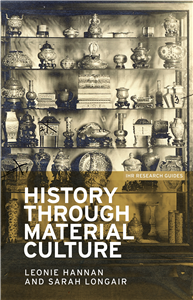
History through material culture
by Series edited by Simon Trafford, Leonie Hannan, Sarah Longair
History through material culture is a unique, step-by-step guide for students and researchers who wish to use objects as historical sources. Responding to the significant, scholarly interest in historical material culture studies, this book makes clear how students and researchers ready to use these rich material sources can make important, valuable and original contributions to history. Written by two experienced museum practitioners and historians, the book recognises the theoretical and practical challenges of this approach and offers clear advice on methods to get the best out of material culture research. With a focus on the early modern and modern periods, this volume draws on examples from across the world and demonstrates how to use material culture to answer a range of enquiries, including social, economic, gender, cultural and global history.
-
Trusted Partner
 Literature & Literary StudiesFebruary 2000
Feminism, femininity and popular culture
by Joanne Hollows
Accessible, introductory student guide which identifies key feminist approaches to popular culture from the 1960s to the present.. The only introduction to both feminist cultural studies and feminism and popular culture published in the UK.. Presents its information in a reader friendly series of case studies on: women's film romantic fiction soap opera consumption and material culture fashion and beauty proactices youth culture and popular music. Will appeal to students across a wide range of disciplines as a variety of popular cultural forms are discussed. ;
-
Trusted Partner
 Humanities & Social SciencesJuly 2010
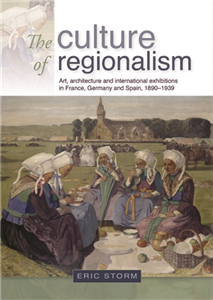
The culture of regionalism
Art, architecture and international exhibitions in France, Germany and Spain, 1890–1939
by Eric Storm
This pioneering book studies the rise, heyday and demise of regionalism from the Belle Époque until the Eve of the Second World War. By using a novel comparative perspective it gives a fresh view of the relationship between cultural regionalism, political regionalism and nationalism. Storm further illuminates how during the first decades of the twentieth century the culture of regionalism slowly lost the battle against its main rival: the avant-garde. Regional identities, like national identities, were created and sometimes even invented; and this was equally the case in France, Germany and Spain. Artists, architects and international exhibitions played a highly influential role in this process. They all appropriated, and in some cases perverted, the regionalist message showing that strong regional identities would ultimately reinforce national unity. This book offers new perspectives to specialists of regionalism and nationalism, but will also be of interest to students of the cultural history of France, Germany and Spain and to specialists from the fields of politics, ethnology, art history, cultural studies and architectural history. ;
-
Trusted Partner
-
Trusted Partner
 Humanities & Social SciencesDecember 2001
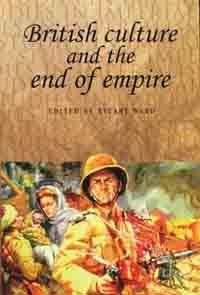
British culture and the end of empire
by Andrew Thompson, Stuart Ward, John Mackenzie
This book is the first major attempt to examine the cultural manifestations of the demise of imperialism as a social and political ideology in post-war Britain. Far from being a matter of indifference or resigned acceptance as is often suggested, the fall of the British Empire came as a profound shock to the British national imagination, and resonated widely in British popular culture. The sheer range of subjects discussed, from the satire boom of the 1960s to the worlds of sport and the arts, demonstrates how profoundly decolonisation was absorbed into the popular consciousness. Offers an extremely novel and provocative interpretation of post-war British cultural history, and opens up a whole new field of enquiry in the history of decolonisation. ;
-
Trusted Partner
 Humanities & Social SciencesMarch 2017
British culture and the end of empire
by Stuart Ward
This book is the first major attempt to examine the cultural manifestations of the demise of imperialism as a social and political ideology in post-war Britain. Far from being a matter of indifference or resigned acceptance as is often suggested, the fall of the British Empire came as a profound shock to the British national imagination, and resonated widely in British popular culture. The sheer range of subjects discussed, from the satire boom of the 1960s to the worlds of sport and the arts, demonstrates how profoundly decolonisation was absorbed into the popular consciousness. Offers an extremely novel and provocative interpretation of post-war British cultural history, and opens up a whole new field of enquiry in the history of decolonisation.
-
Trusted Partner
 Humanities & Social SciencesSeptember 2001
Railways and culture in Britain
The epitome of modernity
by Ian Carter, Jeffrey Richards
The nineteenth-century's steam railway epitomised modernity's relentlessly onrushing advance. In Railways and culture in Britain Ian Carter delves into the cultural impact of train technology, and how this was represented in British society. Why, for example, did Britain possess no great railway novel? The book's first half tests that assertion by comparing fiction and images by some canonical British figures (Turner, Dickens, Arnold Bennett) with selected French and Russian competitors: Tolstoy, Zola, Monet, Manet. The second half proposes that if high cultural work on the British steam railway is thin, then this does not mean that all British culture ignored this revolutionary artefact. Detailed discussions of comic fiction, crime fiction and cartoons reveal a popular fascination with railways tumbling from vast (and hitherto unexplored) stores of critically overlooked genres. A final chapter contemplates cultural correlations of the steam railway's eclipse. If this was the epitome of modernity, then does the triumph of diesel and electric trains, of cars and planes, signal a decisive shift to postmodernity? ;



