
NeWest Press
Livres Canada Books
View Rights Portal


Die Reihe Einfach erklärt hält, was sie verspricht: Hier werden komplexe Themen leicht verständlich aufbereitet und anschaulich illustriert. Kurze Kapitel, eine klare Struktur und der coole Mix aus Fotos und modernen Infografiken helfen Leser*innen ab zehn Jahren, schnell und unkompliziert neues Wissen zu erlangen. So klappt es mit dem Durchblick – garantiert! Was ist ein Algorithmus? Können Maschinen denken? Welche technischen Entwicklungen wird es in der Zukunft geben? Wie entstehen Fake News? Und wie können Staaten und Regierungen all das nutzen, um ihre Bevölkerung zu beeinflussen? Der Autor spannt den Bogen von Algorithmen über den Einsatz von künstlicher Intelligenz in verschiedenen Bereichen bis hin zum hochaktuellen Thema Propaganda. Durch leicht verständliche Erklärungen und zahlreiche detaillierte Infografiken wird so das Interesse an unserer technischen Zukunft geweckt.

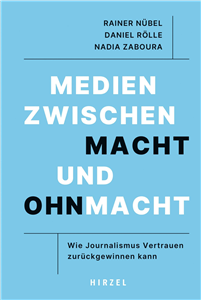
The media leave no one indifferent. Many people are upset that once again wrong things are written in the newspaper. Others think journalists are far too powerful. And some people philosophize polemically that the mass media are damaging democracy, while elsewhere “lying press” is chanted. This book combines media analysis and criticism with media education and journalistic transparency, reflection and advice. In doing so reflect the main tasks of journalism today: providing well-founded information, stimulating and perspective-rich opinion-forming – and sophisticated entertainment.
 Trusted Partner

 Trusted Partner

Decades before the emergence of a French self-styled 'hood' film around 1995, French filmmakers looked beyond the gates of the capital for inspiration and content. In the Paris suburbs they found an inexhaustible reservoir of forms, landscapes and social types in which to anchor their fictions, from bourgeois villas and bucolic riverside cafés to post-war housing estates and postmodern new towns. For the first time in English, contributors to this volume address key aspects of this long film history, marked by such towering figures as Jean Renoir, Jacques Tati and Jean-Luc Godard. Idyllic or menacing, expansive or claustrophobic, the suburb served divergent aesthetic and ideological programmes across the better part of a century. Themes central to French cultural modernity - class conflict, leisure, boredom and anti-authoritarianism - cut across the fifteen chapters.
Trusted Partner

The Toronto New Wave (TNW) comprises a group of avant-garde filmmakers working in Canada from the 1980s and into the new millennium whose innovative film works share significant affinities with anarchist themes and aesthetics. Several of the TNW filmmakers openly identify as anarchists and/or acknowledge a debt to anarchism in their production of highly apocalyptic narratives as part of their cinematic political projects. However, recognition of anarchism's progressive apocalyptic theoretical relevance has yet to be substantially taken up by scholarship in cinema analysis. This analysis introduces an anarchist-inflected analytical methodology to understand the apocalyptic-revelatory political work these films attempt to accomplish in the perceptual space between the filmic texts and both their auteurs and potential viewers, and to re-locate the TNW within cinema history as an ongoing phenomenon with new significance in an apocalyptic era of digital distribution.
Trusted Partner


The very smallest children can identify and name objects from their homes in this award-winning, large-format board book. Magdalena Skala’s fantastic illustrations use bright colours and clear forms to depict the most important objects from the nursery, kitchen, garden, lounge, bathroom – in short from children’s everyday worlds: a great start into the world of words – and books! Magdalena Skala was awarded the 2019 Meefisch Prize and the Marktheidenfeld Prize for picture book illustration for THINGS. MY 200-PICTURE BOOK.
Trusted Partner

This is the first major study of Britain's pioneering graphic satirist, Sir Francis Carruthers Gould (1844-1925), the first staff political cartoonist on a daily newspaper in Britain, and the first of his kind to be knighted. Written by the distinguished media historian, Colin Seymour-Ure, it is essential reading for anyone interested in cartoons, caricature and illustration and will also be welcomed by students of history, politics and the media. It examines Gould's career in Fleet Street until his retirement after the First World War. It also discusses his illustrations for magazines and books and there is an analysis of his use of symbolism and literary allusion to lampoon such eminent politicians as Gladstone and Joseph Chamberlain. As Lord Baker says in his Foreword, this book is 'a major contribution to our knowledge of British cartooning.'
Trusted Partner
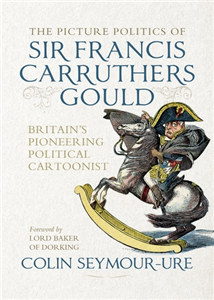
This is the first major study of Britain's pioneering graphic satirist, Sir Francis Carruthers Gould (1844-1925), the first staff political cartoonist on a daily newspaper in Britain, and the first of his kind to be knighted. Written by the distinguished media historian, Colin Seymour-Ure, it is essential reading for anyone interested in cartoons, caricature and illustration and will also be welcomed by students of history, politics and the media. It examines Gould's career in Fleet Street until his retirement after the First World War. It also discusses his illustrations for magazines and books and there is an analysis of his use of symbolism and literary allusion to lampoon such eminent politicians as Gladstone and Joseph Chamberlain. As Lord Baker says in his Foreword, this book is 'a major contribution to our knowledge of British cartooning.'
Trusted Partner

European Film Noir is the first book to bring together specialist discussions of film noir in specific European national cinemas. Written by leading scholars, this groundbreaking study provides an authoritative understanding of an important aspect of European cinema and of film noir itself, for too long considered as a solely American form. The Introduction reviews the problems of defining film noir, its key characteristics and discusses its significance to the development of European film, the relationship of specific national films noirs to each other, to American noir and to historical and social change. Eight chapters then discuss film noir in France, Germany, Britain and Spain, analysing both earlier developments and the evolution of neo-noir through to the present. A further chapter explores film noir in Italian cinema where its presence is not so well defined. Each piece provides a critical overview of the most significant films in relation to their industrial and social contexts. European Film Noir is an important contribution to the study of European cinema that will have a broad appeal to undergraduates, cinéastes, film teachers and researchers.
Trusted Partner

'Realist film theory and cinema' embraces studies of cinematic realism and 19th century tradition, the realist film theories of Lukács, Grierson, Bazin and Kracauer, and the relationship of realist film theory to the general field of film theory and philosophy. This is the first book to attempt a rigorous and systematic application of realist film theory to the analysis of particular films. The book suggests new ways forward for a new series of studies in cinematic realism, and for a new form of film theory based on realism. It stresses the importance of the question of realism both in film studies and in contemporary life. Aitken's work will be of interest to scholars and advanced students of film studies, literary studies, media studies, cultural studies and philosophy.
Trusted Partner
 Trusted Partner

Lukácsian film theory and cinema explores Georg Lukács' writings on film. The Hungarian Marxist critic Georg Lukács is primarily known as a literary theorist, but he also wrote extensively on the cinema. These writings have remained little known in the English-speaking world because the great majority of them have never actually been translated into English - until now. Aitken has gathered together the most important essays and the translations appear here, often for the first time. This book thus makes a decisive contribution to understandings of Lukács within the field of film studies, and, in doing so, also challenges many existing preconceptions concerning his theoretical position. For example, whilst Lukács' literary theory is well known for its repudiation of naturalism, in his writings on film Lukács appears to advance a theory and practice of film that can best be described as naturalist. Lukácsian film theory and cinema is divided into two parts. In part one, Lukács' writings on film are explored, and placed within relevant historical and intellectual contexts, whilst part two consists of the essays themselves. This book will be of considerable interest to scholars and students working within the fields of film studies, literary studies, intellectual history, media and cultural studies. It is also intended to be the final volume in a trilogy of works on cinematic realism, which includes the author's earlier European film theory and cinema (2001), and Realist film theory and cinema (2006).
Trusted Partner


People think and remember in images, images influence our feelings and our perception, they shape our interpersonal communication and interaction. Coaches, supervisors,trainers, consultants, and therapists can use picture cards as a creative method to initiate learning and change processes among their clients. The card set can be used when working with groups and teams as well as in individual settings. Using the picture cards and the detailed exercise descriptions, processes ofprofessional and personal reorientation and further development of clients can be effectively supported. The enclosed booklet gives numerous suggestions for the use of the picture cards in practice. For: • coaches• supervisors• consultants• group leaders• psychotherapists• psychologists• teachers, educators, personnel developers
Trusted Partner

Medieval film explores theoretical questions about the ideological, artistic, emotional and financial investments inhering in cinematic renditions of the medieval period. What does it mean to create and watch a 'medieval film'? What is a medieval film and why are they successful? This is the first work that attempts to answer these questions, drawing, for instance, on film theory, postcolonial theory, cultural studies and the growing body of work on medievalism. Contributors investigate British, German, Italian, Australian, French, Swedish and American film, exploring topics such translation, temporality, film noir, framing and period film - and find the medieval lurking in inexpected corners. In addition it provides in-depth studies of individual films from different countries including The Birth of a Nation to Nosferatu, and Robin Hood: Prince of Thieves. Medieval Film will be of interest to medievalists working in disciplines including literature, history, to scholars working on film and in cultural studies. It will also be of interest to undergraduates, postgraduates and to an informed enthusiast in film or/and medieval culture.
Trusted Partner

Medieval film explores theoretical questions about the ideological, artistic, emotional and financial investments inhering in cinematic renditions of the medieval period. What does it mean to create and watch a 'medieval film'? What is a medieval film and why are they successful? This is the first work that attempts to answer these questions, drawing, for instance, on film theory, postcolonial theory, cultural studies and the growing body of work on medievalism. Contributors investigate British, German, Italian, Australian, French, Swedish and American film, exploring topics such translation, temporality, film noir, framing and period film - and find the medieval lurking in unexpected corners. In addition it provides in-depth studies of individual films from different countries including The Birth of a Nation to Nosferatu, and Robin Hood: Prince of Thieves. Medieval film will be of interest to medievalists working in disciplines including literature, history, art history, to scholars working on film and in cultural studies. It will also be of interest to undergraduates, postgraduates and to an informed enthusiast in film or/and medieval culture.
Trusted Partner
Trusted Partner
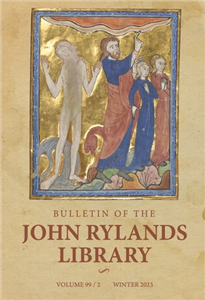
The John Rylands Library houses one of the finest collections of rare books, manuscripts and archives in the world. The collections span five millennia and cover a wide range of subjects, including art and archaeology; economic, social, political, religious and military history; literature, drama and music; science and medicine; theology and philosophy; travel and exploration. For over a century, the Bulletin of the John Rylands Library has published research that complements the Library's special collections. The editors invite the submission of articles in these fields and welcome discussion of in-progress projects.
Trusted Partner

Excellent Revels text now back in print at the new £9.99 price. Leading edition of this play by Ben Jonson - no other edition of this calibre at the moment. Professor Anthony Parr has a proven track record with the Three Jacobean Travel Plays (now in paperback at £14.99). The complete canon of Ben Jonson is being brought back into print in the Revels. The play itself is one of Jonson's best and has a prescient storyline about journalism being traduced and becoming entertainment instead of remaining factual. ;
Trusted Partner
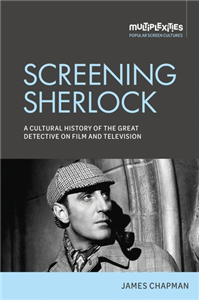
Screening Sherlock is the first book-length academic study of the film and television career of the most famous detective in fiction. Chapman explores the contexts, adaptation strategies and critical reception of Sherlock Holmes (and Dr Watson) on film and television in Britain and the United States. The book includes case studies of such famous Holmes impersonators as William Gillette, Basil Rathbone, Peter Cushing, Jeremy Brett and Benedict Cumberbatch, as well as charting a path through many lesser-known productions. From early cinema to the Hollywood studio system, and from heritage drama to contemporary postmodern television, Screening Sherlock is an indispensible work for all aficionados of Arthur Conan Doyle's consulting detective of Baker Street.
Trusted Partner

Looking at contemporary film and television, this book explores how popular genres frame our understanding of on-screen performance. Previous studies of screen performance have tended to fix upon star actors, directors, or programme makers, or they have concentrated upon particular training and acting styles. Moving outside of these confines, this book provides a truly interdisciplinary account of performance in film and television and examines a much neglected area in our understanding of how popular genres and performance intersect on screen. Each chapter concentrates upon a particular genre or draws upon generic case studies in examining the significance of screen performance. Individual chapters examine contemporary film noir, horror, the biopic, drama-documentary, the western, science fiction, comedy performance in 'spoof news' programmes and the television 'sit com' and popular Bollywood films.



