
Your Search Results


-
Promoted Content
-
Promoted Content

 Literature & Literary StudiesJune 2026
The politics of Middle English parables
Fiction, theology, and social practice
by Mary Raschko
The politics of Middle English parables examines the dynamic intersection of fiction, theology and social practice in late-medieval England. Parables occupy a prominent place in Middle English literature, appearing in dream visions and story collections as well as in lives of Christ and devotional treatises. While most scholarship approaches the translated stories as stable vehicles of Christian teaching, this book highlights the many variations and points of conflict across Middle English renditions of the same story. In parables related to labour, social inequality, charity and penance, the book locates a creative theological discourse through which writers attempted to re-construct Christian belief and practice. Analysis of these diverse retellings reveals not what a given parable meant in a definitive sense but rather how Middle English parables inscribe the ideologies, power structures and cultural debates of late-medieval Christianity.
-
 Trusted Partner
Humanities & Social SciencesMay 2024
Trusted Partner
Humanities & Social SciencesMay 2024Out of his mind
Masculinity and mental illness in Victorian Britain
by Amy Milne-Smith
Out of His Mind interrogates how Victorians made sense of the madman as both a social reality and a cultural representation. Even at the height of enthusiasm for the curative powers of nineteenth-century psychiatry, to be certified as a lunatic meant a loss of one's freedom and in many ways one's identify. Because men had the most power and authority in Victorian Britain, this also meant they had the most to lose. The madman was often a marginal figure, confined in private homes, hospitals, and asylums. Yet as a cultural phenomenon he loomed large, tapping into broader social anxieties about respectability, masculine self-control, and fears of degeneration. Using a wealth of case notes, press accounts, literature, medical and government reports, this text provides a rich window into public understandings and personal experiences of men's insanity.
-
Trusted Partner
 Humanities & Social SciencesJanuary 2026
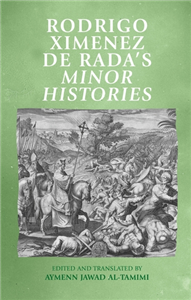
Rodrigo Ximenez de Rada’s Minor Histories
by Aymenn Al-Tamimi
This work provides the first complete English translation of works by Toledan archbishop Rodrigo Ximénez de Rada (1170-1247 CE), whose 'Minor Histories' are sequels to his larger 'Gothic History' and thus round off his grand history of Spain project that he began at the request of King Ferdinand III. The 'Minor Histories' include Rodrigo's 'History of the Arabs' that can be considered the first surviving Western monograph focused on Arab and Islamic history and thus occupies a unique position in the medieval Latin corpus of writings. In addition to the translation, this book provides a thorough and accessible introduction to the life and works of Rodrigo, making sense of the context in which he wrote and his historical method. The translations are thoroughly annotated including cross-references to other Latin and Arabic sources for comparison.
-
Trusted Partner
 The ArtsMarch 2026
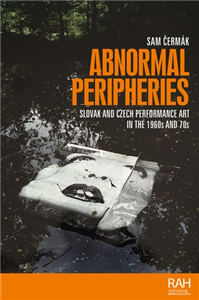
Abnormal peripheries
Slovak and Czech performance art in the 1960s and 70s
by Sam Cermak
This book traces an early history of performance art from the former Czechoslovakia, which emerged in the 1960s and 1970s in the context of the Prague Spring and the subsequent policy of Normalization that brought on cultural censorship, prosecution, and state violence against artists. The book draws on Czech and Slovak scholarship as well as primary research in archives, interviews, and fieldwork to dispel misreadings of visual and cultural idioms in pre-existing Anglophone scholarship about the region. Although the former Soviet Bloc is often equated with repression and lack of experimental art in public spaces, performance artists within the former Socialist Czechoslovakia often used public, semi-public and clandestine spheres to create their performances. By analysing both works of established artists such as Aktual, Alex Mlynárcik, Petr Stembera, Jan Mlcoch, as well as under-theorised practitioners including Luba Lauffová, Karel Miler, Temporary Society of Intense Living, and Crusaders School of Pure Humour with no Joke, this book analyses how performance can survive and sometimes even thrive on the background of a politically oppressive regime. Cermak tells a unique story of localised resistance to a monolithic public sphere through artistic intervention, a closely knit community, artistic exchange, and agonistic reframing of socialism as a philosophy rather than state ideology.
-
Trusted Partner
Literature & Literary StudiesMarch 2023
Sleep and its spaces in Middle English literature
Emotions, ethics, dreams
by Megan Leitch
Middle English literature is intimately concerned with sleep and the spaces in which it takes place. In the medieval English imagination, sleep is an embodied and culturally determined act. It is both performed and interpreted by characters and contemporaries, subject to a particular habitus and understood through particular hermeneutic lenses. While illuminating the intersecting medical and moral discourses by which it is shaped, sleep also sheds light on subjects in favour of which it has hitherto been overlooked: what sleep can enable (dreams and dream poetry) or what it can stand in for or supersede (desire and sex). This book argues that sleep mediates thematic concerns and questions in ways that have ethical, affective and oneiric implications. At the same time, it offers important contributions to understanding different Middle English genres: romance, dream vision, drama and fabliau.
-
Trusted Partner
-
Trusted Partner
-
Trusted Partner
-
Trusted Partner
-
Trusted Partner
 Biography & True StoriesMay 2025
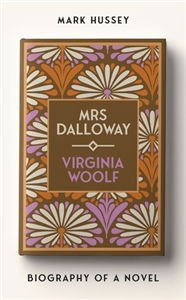
Mrs Dalloway
Biography of a novel
by Mark Hussey
A compelling biography of one of the most celebrated novels in the English language. The fourth and best-known of Virginia Woolf's novels, Mrs Dalloway is a modernist masterpiece that has remained popular since its publication in 1925. Its dual narratives follow a day in the life of wealthy housewife Clarissa Dalloway and shell-shocked war veteran Septimus Warren Smith, capturing their inner worlds with a vividness that has rarely been equalled. Mrs Dalloway: Biography of a novel offers new readers a lively introduction to this enduring classic, while providing Woolf lovers with a wealth of information about the novel's writing, publication and reception. It follows Woolf's process from the first stirrings in her diary through her struggles to create what was quickly recognised as a major advance in prose fiction. It then traces the novel's remarkable legacy to the present day. Woolf wrote in her diary that she wanted her novel 'to give life & death, sanity & insanity. to criticise the social system, & to show it at work, at its most intense.' Mrs Dalloway: Biography of a novel reveals how she achieved this ambition, creating a book that will be read by generations to come.
-
Trusted Partner
 Humanities & Social SciencesAugust 1999
British Politics in an Age of Reform
by Michael J. Turner, Mark Greengrass
This work is a detailed examination of principal themes in the political history of late 18th- and early 19th-century Britain. It evaluates much recent research, links the politics of the elite with the politics of the people and seeks to explain significant developments with reference to both their long- and short-term causes. Among the issues addressed are the relative powers of crown, cabinet and parliament between 1760 and 1832; the impact on domestic politics of revolution and war abroad; the growth of radicalism and popular political activity; agitation for reform and the responses of government; the rise of party; the connections between extra-parliamentary pressure and instability; at the centre of power. ;
-
Trusted Partner
 Humanities & Social SciencesNovember 2024
Culture is bad for you
by Orian Brook, Dave O'Brien, Mark Taylor
-
Trusted Partner
 Humanities & Social SciencesJuly 2025
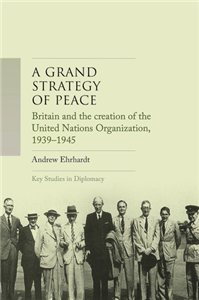
A grand strategy of peace
Britain and the creation of the United Nations Organization, 1939-1945
by Andrew Ehrhardt
A grand strategy of peace is the first detailed account of Britain's role in the creation of the United Nations Organization during the Second World War. As a work of traditional diplomatic history that brings in elements of intellectual history, the book describes how British officials, diplomats, politicians, and writers - previously seen to be secondary actors to the United States in this period - thought about, planned for, and helped to establish a future international order. While in the present day, many scholars and analysts have returned to the origins of the post- 1945 international system, this book offers an exhaustive account of how the statesmen and more importantly, the officials working below the statesmen, actually conceived of and worked to establish a post-war world order.
-
Trusted Partner
 Humanities & Social SciencesMay 2020
Connecting centre and locality
by Chris R. Kyle, Jason Peacey, Alastair Bellany
-
Trusted Partner
 Humanities & Social SciencesAugust 2002
The rise of the Nazis
by Conan Fischer, Mark Greengrass
How and why did the Nazis seize power in Germany? Nearly seventy years on, the question remains heated and important discoveries continue to challenge long standing assumptions. Beginmning with an overview of the historical context within which Nazism grew, looking at the foreign relations, politics and society of Weimar and in particular at the role of the elites in the rise of Nazism. The book questions the anatomy of Nazism itself: What lent Nazi ideology its coherence and credibility? What distinguished the Nazi's programme from their competitors' and how did they project it so effectively? How was Hitler able to put together and fund an organisation so quickly and effectively that it could launch a sustained assault on Weimar? Who supported the Nazis and what were their motives? Where, precisely, does Nazism belong in the history of Europe?. Since the publication of the first edition, important new works have appeared and this new scholarship has been incorporated into the text. ;
-
Trusted Partner
 Humanities & Social SciencesNovember 2023
The Liberal Democrats
by David Cutts, Andrew Russell, Joshua Harry Townsley
-
Trusted Partner
 Literature & Literary StudiesOctober 2025
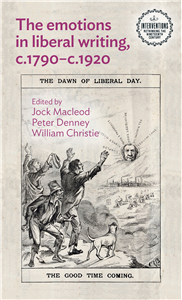
The emotions in liberal writing, c.1790–c.1920
by Jock Macleod, Peter Denney, William Christie
This volume of essays from a selection of distinguished international scholars is the first of its kind to explore in depth the emotional dimensions of liberal writing in Britain over the long nineteenth century. Addressing liberal writing in the public sphere rather than high political or parliamentary liberalism, it comprises a clear, context-setting introduction and eleven substantive chapters. The chapters analyse key texts and figures from the 1790s through to the 1920s and offer several different approaches to the central concern with the emotions and liberalism. These include examining the place of the emotions in the 'good life'; the social and political function of the emotions; emotional rhetoric in liberal writing; and liberal theories of the emotions. Both individually and as a collection, the essays provide an essential foundation for further scholarly work in this emerging field.
-
Trusted Partner
 Humanities & Social SciencesMay 2026
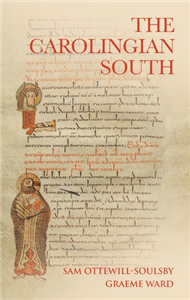
The Carolingian South
by Sam Ottewill-Soulsby, Graeme Ward
The Carolingian South turns the Frankish world upside down by taking as its subject the lands of the Carolingian empire south of the Loire and the Alps. It assembles an international group of scholars from different disciplines to examine how the Carolingians defined and were defined by this region. This book asks how Carolingian power was created and negotiated in the south. It views the Frankish empire from the perspective of the Christian and Muslim polities of the Mediterranean, while also following the movement of people and ideas through the endlessly fascinating world that they made.
-
Trusted Partner
 Literature & Literary StudiesJune 2021
Sleep and its spaces in Middle English literature
by Megan Leitch, Anke Bernau, David Matthews, James Paz



