Your Search Results

      • Kogan Page

        Kogan Page is the leading independent global publisher of specialist professional books and content with over 700 titles in print. Founded in 1967, our award-winning work offers solutions for professional practice and academic achievement in both print and digital form. Our author base, which is part of some of the most prestigious academic institutions, international commercial organisations or professional associations, delivers high level, accessible, professional content to our readers in our key subject areas: Leadership, Management, Marketing, Branding, Human Resources, Coaching, Logistics, Supply Chain, Entrepreneurship and Careers.

        View Rights Portal
      • Trusted Partner
        Humanities & Social Sciences
        June 2026

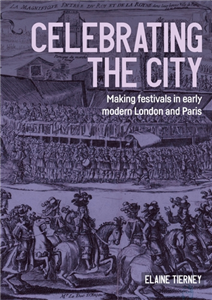
        Celebrating the city

        Making festivals in early modern London and Paris

        by Elaine Tierney

        Celebrating the city goes behind the scenes of early modern celebrations. Moving from splendid coronations to courtyard bonfires, it offers the first comparative, interdisciplinary study of festivals in London and Paris. In a major departure from existing scholarship, it uses the widest range of textual, visual and material evidence to demonstrate the importance of designing, making and organising to how and why festivals were meaningful. Mining evidence of the active processes by which events were made, it argues that urban festival politics cannot be understood without incorporating its material world into our analysis. The book's unique methodology, combining the tools of design history and the concerns of political history, will shed new light on how political publics were formed in early modern European cities. In showing how cities made festivals - and festivals made cities - this wide-ranging study makes a significant contribution to histories of festivals, political culture and urban life.

      • Trusted Partner
        Literature & Literary Studies
        May 2017

        Pageantry and Power

        by Tracey Hill

      • Trusted Partner
        Humanities & Social Sciences
        September 2024

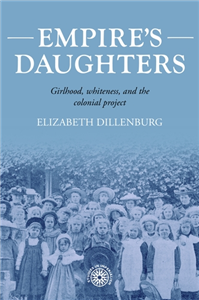
        Empire's daughters

        Girlhood, whiteness and the colonial project

        by Elizabeth Dillenburg

        Girlhood and whiteness in the British empire traces the interconnected histories of girlhood, whiteness, and British colonialism in the late nineteenth and early twentieth centuries through the study of the Girls' Friendly Society. The society functioned as both a youth organisation and emigration society, making it especially valuable in examining girls' multifaceted participation with the empire. The book charts the emergence of the organisation during the late Victorian era through its height in the first decade of the twentieth century to its decline in the interwar years. Employing a multi-sited approach and using a range of sources-including correspondences, newsletters, and scrapbooks-the book uncovers the ways in which girls participated in the empire as migrants, settlers, laborers, and creators of colonial knowledge and also how they resisted these prescribed roles and challenged systems of colonial power.

      • Trusted Partner
        Literature & Literary Studies
        May 2000

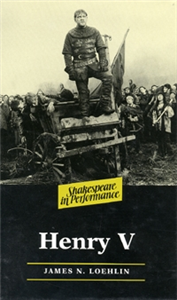
        Henry V

        by James Loehlin

        This study examines the profound changes that twentieth-century performance has wrought on Shakespeare's complex drama of war and politics. What was accepted at the turn of the century as a patriotic celebration of a national hero has emerged in the modern theatre as a dark and troubling analysis of the causes and costs of war. The book details the theatrical innovations and political insights that have turned one of Shakespeare's most traditional-bound plays into one of his most popular and provocative. Henry V gives details analyses of several important modern productions. Beginning with a consideration of the play's political significance in Elizabethan London, the book goes on the reveal its subsequent reinvention, both as patriotic pageant and anti-war manifesto. Individual chapters consider important productions by the Royal Shakespeare Company, and other British and North American companies, as well as the landmark film versions. A compelling account of the theatrical revolution that has transformed one of Shakespeare's most challenging plays. ;

      • Trusted Partner
        Literature & Literary Studies
        May 2023

        Pasts at play

        Childhood encounters with history in British culture, 1750–1914

        by Rachel Bryant Davies, Barbara Gribling

        This collection brings together scholars from disciplines including Children's Literature, Classics, and History to develop fresh approaches to children's culture and the uses of the past. It charts the significance of historical episodes and characters during the long nineteenth-century (1750-1914), a critical period in children's culture. Boys and girls across social classes often experienced different pasts simultaneously, for purposes of amusement and instruction. The book highlights an active and shifting market in history for children, and reveals how children were actively involved in consuming and repackaging the past: from playing with historically themed toys and games to performing in plays and pageants. Each chapter reconstructs encounters across different media, uncovering the cultural work done by particular pasts and exposing the key role of playfulness in the British historical imagination.

      • Trusted Partner
        History of Art / Art & Design Styles
        February 2017

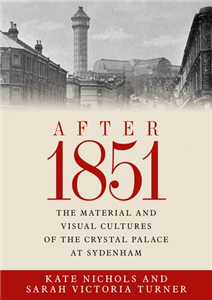
        After 1851

        The material and visual cultures of the Crystal Palace at Sydenham

        by Edited by Kate Nichols, Sarah Victoria Turner

        Echoing Joseph Paxton's question at the close of the Great Exhibition, 'What is to become of the Crystal Palace?', this interdisciplinary essay collection argues that there is considerable potential in studying this unique architectural and art-historical document after 1851, when it was rebuilt in the South London suburb of Sydenham. It brings together research on objects, materials and subjects as diverse as those represented under the glass roof of the Sydenham Palace itself; from the Venus de Milo to Sheffield steel, souvenir 'peep eggs' to war memorials, portrait busts to imperial pageants, tropical plants to cartoons made by artists on the spot, copies of paintings from ancient caves in India to 1950s film. Essays do not simply catalogue and collect this eclectic congregation, but provide new ways for assessing the significance of the Sydenham Crystal Palace for both nineteenth- and twentieth-century studies. The volume will be of particular interest to researchers and students of British cultural history, museum studies, and art history.

      • Trusted Partner
        Modern history to 20th century: c 1700 to c 1900
        May 2017

        Inventing the cave man

        From Darwin to the Flintstones

        by Andrew Horrall. Series edited by Jeffrey Richards

        Fred Flintstone lived in a sunny Stone Age American suburb, but his ancestors were respectable, middle-class Victorians. They were very amused to think that prehistory was an archaic version of their own world because it suggested that British ideals were eternal. In the 1850s, our prehistoric ancestors were portrayed in satirical cartoons, songs, sketches and plays as ape-like, reflecting the threat posed by evolutionary ideas. By the end of the century, recognisably human cave men inhabited a Stone Age version of late-imperial Britain, sending-up its ideals and institutions. Cave men appeared constantly in parades, civic pageants and costume parties. In the early 1900s American cartoonists and early Hollywood stars like Charlie Chaplin and Buster Keaton adopted and reimagined this very British character, cementing it in global popular culture. Cave men are an appealing way to explore and understand Victorian and Edwardian Britain.

      • Trusted Partner
        Humanities & Social Sciences
        May 2017

        Inventing the cave man

        From Darwin to the Flintstones

        by Andrew Horrall, Jeffrey Richards

        Fred Flintstone lived in a sunny Stone Age American suburb, but his ancestors were respectable, middle-class Victorians. They were very amused to think that prehistory was an archaic version of their own world because it suggested that British ideals were eternal. In the 1850s, our prehistoric ancestors were portrayed in satirical cartoons, songs, sketches and plays as ape-like, reflecting the threat posed by evolutionary ideas. By the end of the century, recognisably human cave men inhabited a Stone Age version of late-imperial Britain, sending-up its ideals and institutions. Cave men appeared constantly in parades, civic pageants and costume parties. In the early 1900s American cartoonists and early Hollywood stars like Charlie Chaplin and Buster Keaton adopted and reimagined this very British character, cementing it in global popular culture. Cave men are an appealing way to explore and understand Victorian and Edwardian Britain.

      • Trusted Partner
        The Arts
        February 2022

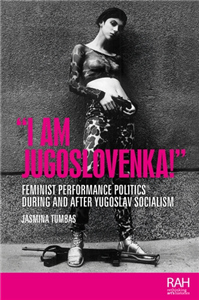
        "I am Jugoslovenka!"

        Feminist performance politics during and after Yugoslav Socialism

        by Jasmina Tumbas, Amelia Jones, Marsha Meskimmon

        "I am Jugoslovenka" argues that queer-feminist artistic and political resistance were paradoxically enabled by socialist Yugoslavia's unique history of patriarchy and women's emancipation. Spanning performance and conceptual art, video works, film and pop music, lesbian activism and press photos of female snipers in the Yugoslav wars, the book analyses feminist resistance in a range of performative actions that manifest the radical embodiment of Yugoslavia's anti-fascist, transnational and feminist legacies. It covers celebrated and lesser-known artists from the 1970s to today, including Marina Abramovic, Sanja Ivekovic, Vlasta Delimar, Tanja Ostojic, Selma Selman and Helena Janecic, along with music legends Lepa Brena and Esma Redzepova. "I am Jugoslovenka" tells a unique story of women's resistance through the intersection of feminism, socialism and nationalism in East European visual culture.

      Subscribe to our

      newsletter