
Your Search Results
-

-

Kia Persia Literary Agency
KIA Literary Agency was founded in 2002 in Tehran with the aim of promoting and supporting fine literary works in all forms throughout the world. It brings about opportunities for authors, illustrators, publishers, translators, and those involved in this field to meet their counterparts. And at the same time, it introduces them to the world and will inform them of all the related events which take place in the world of art and literature.
View Rights Portal
-
Promoted Content
-
Promoted Content

 The ArtsSeptember 2020
Science in performance
Theatre and the politics of engagement
by Simon Parry
This electronic version has been made available under a Creative Commons (BY-NC-ND) open access license. This book is about science in theatre and performance. It explores how theatre and performance engage with emerging scientific themes from artificial intelligence to genetics and climate change. The book covers a wide range of performance forms from Broadway musicals to educational theatre, from Somali drama to grime videos. It features work by pioneering companies including Gob Squad, Headlong Theatre and Theatre of Debate as well as offering fresh analysis of global blockbusters such as Wicked and Urinetown. The book offers detailed description and analysis of theatre and performance practices as well as broader commentary on the politics of theatre as public engagement with science. Science in performance is essential reading for researchers, students and practitioners working between science and the arts within fields such as theatre and performance studies, science communication, interdisciplinary arts and health humanities.
-
 Trusted Partner
 The ArtsFebruary 2022
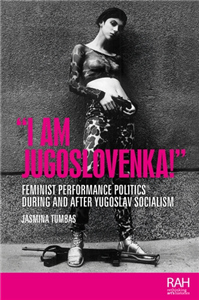
"I am Jugoslovenka!"
Feminist performance politics during and after Yugoslav Socialism
by Jasmina Tumbas, Amelia Jones, Marsha Meskimmon
"I am Jugoslovenka" argues that queer-feminist artistic and political resistance were paradoxically enabled by socialist Yugoslavia's unique history of patriarchy and women's emancipation. Spanning performance and conceptual art, video works, film and pop music, lesbian activism and press photos of female snipers in the Yugoslav wars, the book analyses feminist resistance in a range of performative actions that manifest the radical embodiment of Yugoslavia's anti-fascist, transnational and feminist legacies. It covers celebrated and lesser-known artists from the 1970s to today, including Marina Abramovic, Sanja Ivekovic, Vlasta Delimar, Tanja Ostojic, Selma Selman and Helena Janecic, along with music legends Lepa Brena and Esma Redzepova. "I am Jugoslovenka" tells a unique story of women's resistance through the intersection of feminism, socialism and nationalism in East European visual culture.
-
Trusted Partner
 The ArtsMarch 2026
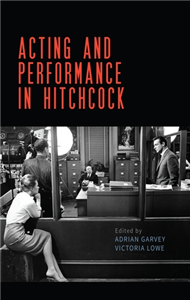
Acting and performance in Hitchcock
by Adrian Garvey, Victoria Lowe
Hitchcock's professed disdain for actors is belied by the extraordinary range and depth of performances featured in his films. It might even be argued that many stars gave their richest and most complex performances in his work. Hitchcock's films are also imbued with the theme of performance, as when his fugitive men and errant women assume fragile new identities and move between roles. Actors and other performers also often feature as characters. However, the exhaustive academic literature on Hitchcock has to date produced surprisingly little work about acting and performance in his films. The collection includes contributions from a range of leading scholars on Hitchcock, performance, stardom, and British Cinema, including Charles Barr, David Greven, Mark Glancy, Lucy Bolton, Lawrence Napper and Michael Williams, and an interview with leading composers/accompanists Neil Brand and Stephen Horne on scoring performance in Silent Hitchcock.
-
Trusted Partner
 Humanities & Social SciencesFebruary 2023
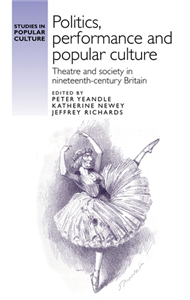
Politics, performance and popular culture
Theatre and society in nineteenth-century Britain
by Peter Yeandle, Katherine Newey, Jeffrey Richards
This collection brings together studies of popular performance and politics across the nineteenth century, offering a fresh perspective from an archivally grounded research base. It works with the concept that politics is performative and performance is political. The book is organised into three parts in dialogue regarding specific approaches to popular performance and politics. Part I offers a series of conceptual studies using popular culture as an analytical category for social and political history. Part II explores the ways that performance represents and constructs contemporary ideologies of race, nation and empire. Part III investigates the performance techniques of specific politicians - including Robert Peel, Keir Hardie and Henry Hyndman - and analyses the performative elements of collective movements.
-
Trusted Partner
 The ArtsMay 2026
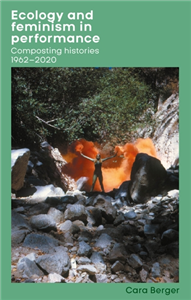
Ecology and feminism in performance
Composting histories 1962–2020
by Cara Berger
This book provides a vital new history of feminist performance through an ecological lens. It argues that from the 1960s to the present, artists have used performance to challenge the linked oppression of women and nature. Proposing 'composting' as a new method for writing feminist history, the study moves beyond linear narratives to trace regenerative connections between generations of practitioners. It provides sustained analysis of genres from land art to postdramatic theatre, re-evaluating the work of canonical figures while examining how contemporary artists continue to address these urgent themes. By placing ecofeminism in dialogue with feminist new materialism, queer ecology, and transecological thought, this study demonstrates how performance has been a crucial site for imagining more just and sustainable futures in an age of environmental crisis.
-
Trusted Partner
 The ArtsSeptember 2020
Science in performance
by Maggie B. Gale, Maria M. Delgado, Peter Lichtenfels, Simon Parry
-
Trusted Partner
 Humanities & Social SciencesAugust 2024
The machinic city
Media, performance and participation
by Marcos P. Dias
As human and machine agency become increasingly intermingled and digital media is overlaid onto the urban landscape, The machinic city argues that performance art can help us to understand contemporary urban living. Dias analyses interventions from performance artists such as Blast Theory, Rafael Lozano-Hemmer and Rimini Protokoll, which draw from a rich history of avant-garde art movements to create spaces for deliberation and reflection on urban life, and speculation on its future. While cities are increasingly controlled by autonomous processes mediated by technical machines, Dias analyses the performative potential of the aesthetic machine, as it assembles with media, capitalist, human and urban machines. The aesthetic machine of performance art in urban space is examined through its different components - design, city and technology actants. This unveils the unpredictable nature and emerging potential of performance art as it unfolds in the machinic city.
-
Trusted Partner
-
Trusted Partner
-
Trusted Partner
 The ArtsMay 2024
Adaptation and resilience in the performing arts
The pandemic and beyond
by Pascale Aebischer, Rachael Nicholas
This book offers insights into some of the digital innovations, structural adaptations and analogue solutions that enabled live performance in the UK to survive through the COVID-19 pandemic. It provides evidence of values-led policies and practices that have improved the wellbeing of the creative workforce and have increased access to live performance. Through sections that address digital innovations, workforce resilience and programming live performances outdoors and in community settings, this book provides practical insights into the challenges live performance faced during the pandemic. It shows how, in order to survive, individuals and companies within the sector drew on the creativity and resourcefulness of its workforce, and on new and existing networks. In these accounts, the pandemic functioned as catalyst for technological innovations, stock-taking regarding exploitative industry structures, and a re-valuing of the role of live performance for community-building.
-
Trusted Partner
 The ArtsJune 2026
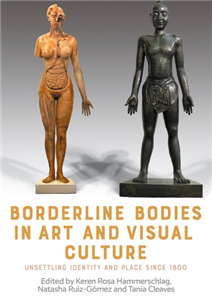
Borderline bodies in art and visual culture
Unsettling identity and place since 1800
by Keren Hammerschlag, Natasha Ruiz-Gómez, Tania Anne Cleaves
Borderline bodies offers original interpretations of visual representations of human bodies as bounded and unbounded, fortified and permeable, mobile and static-subject to borders and able to traverse and challenge them. It also takes as its focus images and objects that might be considered 'borderline' because they sit at the intersection of disciplines or sit outside accepted notions of what constitutes serious 'art.' By mapping the ways human bodies traverse borders and straddle-even dismantle-categories, this volume's essays approach afresh the relationship of bodies to traditional modes of representation, especially in art and medicine, and encourage us to think anew about how we understand the relationship between human corporeality, identity and place. Critical transdisciplinary and transnational analyses of objects and images from a range of geographies shed new light on the themes of: bodies and identity; typologies of the body; racialised bodies; 'normal' and 'abnormal' bodies; encounters between bodies; bodies in transition; bodies and mobility; and the bounded and unbounded human body. The outcome is a fresh approach to depictions of the human body produced for the purposes of artistic and medical education, aesthetic edification, and scientific and professional advancement, which disrupts assumptions about the normative human body perpetuated through Western image-making traditions.
-
Trusted Partner
 The ArtsApril 2025
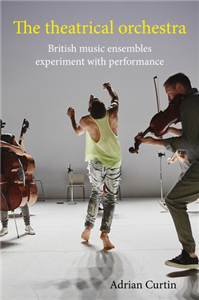
The theatrical orchestra
British music ensembles experiment with performance
by Adrian Curtin
The Theatrical Orchestra analyses experimental performances by British music ensembles in the twenty-first century. Orchestras are reconceiving how concerts are programmed and presented, how musicians perform, where performance can occur, and the role of the audience in the co-creation of the live event. They are embracing theatricality, thereby realising music more fully as a multi-sensory performance art. This book explains how and why orchestras are thinking theatrically about performance, and uses the work of British music ensembles as exemplars. It analyses performances by Aurora Orchestra, London Contemporary Orchestra, London Sinfonietta, Manchester Collective, Multi-Story Orchestra, Paraorchestra, Scottish Ensemble, and Southbank Sinfonia. The book bridges musicology and theatre studies to analyse the theatrical orchestra on the concert stage and beyond, addressing such topics as visuality, storytelling, physical performance, site-engaged performance, and immersive performance.
-
Trusted Partner
 The ArtsJune 2021
Genre and performance: film and television
by Christine Cornea
Looking at contemporary film and television, this book explores how popular genres frame our understanding of on-screen performance. Previous studies of screen performance have tended to fix upon star actors, directors, or programme makers, or they have concentrated upon particular training and acting styles. Moving outside of these confines, this book provides a truly interdisciplinary account of performance in film and television and examines a much neglected area in our understanding of how popular genres and performance intersect on screen. Each chapter concentrates upon a particular genre or draws upon generic case studies in examining the significance of screen performance. Individual chapters examine contemporary film noir, horror, the biopic, drama-documentary, the western, science fiction, comedy performance in 'spoof news' programmes and the television 'sit com' and popular Bollywood films.
-
Trusted Partner
 Humanities & Social SciencesJuly 2025
Empirical art
Filmmaking for fieldwork in practice
by Andy Lawrence, Martha-Cecilia Dietrich
Empirical art: Filmmaking for fieldwork in practice is an insightful exploration of what the craft of filmmaking brings to social science research. Providing creative avenues on how to narrate encounters, relationships, and experiences during fieldwork, this comprehensive volume offers a rich tapestry of theoretical explorations and explorative methodologies. Skilfully connecting the worlds of ethnography, art and cinema, the contributors in this book act as a compass for filmmakers and researchers venturing to use a camera and microphone to relate and narrate their research collaborations and fieldsites. Drawing from the authors' extensive experience in disciplines like social anthropology, environmental humanities, and political science, "Empirical Art" breaks down the intricate process of crafting ethnographic films that departs from the researcher's subjectivity. Covering aspects of filmmaking from conceptualisation to production and distribution, readers are equipped with a treasure trove of collaborative techniques, innovative approaches, and ethical considerations necessary to generate and examine storytelling practices in contemporary fields of study. The authors discuss the significance of the multiple roles that technologies of filmmaking play in reflecting on cultural practices, social dynamics, and (beyond) human storytelling and their transformative potentials. Whether a seasoned filmmaker, an aspiring ethnographer, or an academic seeking new dimensions for their research, Empirical Art serves as a guide to integrating visual storytelling, cinema craft and empirical research.
-
Trusted Partner
 Literature & Literary StudiesApril 2001
Women, theatre and performance
New histories, new historiographies
by Kate Dorney, Maggie B. Gale, Susan Williams
The first in a new annual series, Women, Theatre and Performance that will consist of themed volumes on diverse aspects of women's engagement with theatre and performance. Ranging across three hundred years the essays in this volume address key questions in women's theatre history and retrieve a number of hitherto 'hidden' histories of women performers. Resituates women's, largely neglected, creative contribution within theatre and cultural history and seeks to challenge orthodox readings of both history and text. Topics include: Susanna Centlivre and the notion of intertheatricality; gender and theatrical space; the repositioning of women performers such as Wagner's Muse, Willhelmina Schröder-Devrient, the Comédie Français' 'Mademoiselle Mars', Mme Arnould-Plessey, and the actresses of the Russian serf theatre. ;
-
Trusted Partner
 The ArtsMarch 2026
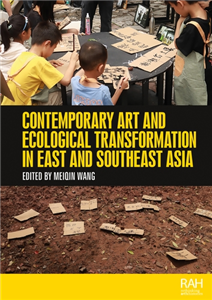
Contemporary art and ecological transformation in East and Southeast Asia
by Meiqin Wang
This anthology, presenting new research from fourteen scholars, delves into the interplay between contemporary art and ecological concerns in East and Southeast Asia. Focused on the concept of artistic remediation, the book unravels the diverse capacities of art to combat systemic anthropogenic destruction to the environment and ecology. At its core, the book articulates the ongoing ecological transformation in art and art history that embraces a paradigm shift in human-nature relationships, emphasizing interconnectedness of all life forms of the Earth. Bridging art studies, activism, and environmental studies, the book examines how artistic practices in the region have engaged with ecocritical reflection, biodiversity advocacy, sustainable practices, and environmental justice, among others. Providing a platform for critical and timely analysis of artistic interventions in the face of existential crises, the book acknowledges diverse voices of scholars who have situated their scholarship in the cultural and artistic specificities of various societies, locales, and communities in the region.
-
Trusted Partner
 The ArtsNovember 2011
The limits of performance in the French Romantic theatre
by Susan McCready, Mike Thompson
This volume analyses major French plays of the 1830s, focusing on their theatricality, and on the ways in which they expose the workings of the theatre rather than conceal them. Through an examination of performance within these plays, the study posits that the stage is a privileged site of demonstration, a literal 'proving ground' that lends a physical reality to abstract values announced in the text and shared or questioned by the audience. Negotiating between the literary study of drama and performance theory, this work breaks new ground in nineteenth-century theatre scholarship while proposing a fresh direction in the study of text and performance. The limits of performance 'challenges conventional wisdom', offering 'a novel take on the mal du siècle, that thematic hardy perennial of French Romanticism and the nineteenth century in general', combined with 'eminently readable and, therefore, compelling' analysis of plays - 'a thought-provoking addition to work in the field' (Glyn Hambrook, Modern and Contemporary France, November 2008). ;
-
Trusted Partner
-
Trusted Partner
 The ArtsMarch 2026
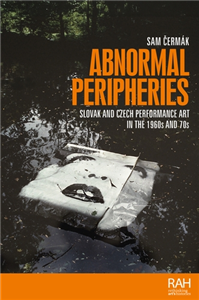
Abnormal peripheries
Slovak and Czech performance art in the 1960s and 70s
by Sam Cermak
This book traces an early history of performance art from the former Czechoslovakia, which emerged in the 1960s and 1970s in the context of the Prague Spring and the subsequent policy of Normalization that brought on cultural censorship, prosecution, and state violence against artists. The book draws on Czech and Slovak scholarship as well as primary research in archives, interviews, and fieldwork to dispel misreadings of visual and cultural idioms in pre-existing Anglophone scholarship about the region. Although the former Soviet Bloc is often equated with repression and lack of experimental art in public spaces, performance artists within the former Socialist Czechoslovakia often used public, semi-public and clandestine spheres to create their performances. By analysing both works of established artists such as Aktual, Alex Mlynárcik, Petr Stembera, Jan Mlcoch, as well as under-theorised practitioners including Luba Lauffová, Karel Miler, Temporary Society of Intense Living, and Crusaders School of Pure Humour with no Joke, this book analyses how performance can survive and sometimes even thrive on the background of a politically oppressive regime. Cermak tells a unique story of localised resistance to a monolithic public sphere through artistic intervention, a closely knit community, artistic exchange, and agonistic reframing of socialism as a philosophy rather than state ideology.



