
Your Search Results
-

-

Kia Persia Literary Agency
KIA Literary Agency was founded in 2002 in Tehran with the aim of promoting and supporting fine literary works in all forms throughout the world. It brings about opportunities for authors, illustrators, publishers, translators, and those involved in this field to meet their counterparts. And at the same time, it introduces them to the world and will inform them of all the related events which take place in the world of art and literature.
View Rights Portal
-
Promoted Content

 The ArtsMay 2024
Adaptation and resilience in the performing arts
The pandemic and beyond
by Pascale Aebischer, Rachael Nicholas
This book offers insights into some of the digital innovations, structural adaptations and analogue solutions that enabled live performance in the UK to survive through the COVID-19 pandemic. It provides evidence of values-led policies and practices that have improved the wellbeing of the creative workforce and have increased access to live performance. Through sections that address digital innovations, workforce resilience and programming live performances outdoors and in community settings, this book provides practical insights into the challenges live performance faced during the pandemic. It shows how, in order to survive, individuals and companies within the sector drew on the creativity and resourcefulness of its workforce, and on new and existing networks. In these accounts, the pandemic functioned as catalyst for technological innovations, stock-taking regarding exploitative industry structures, and a re-valuing of the role of live performance for community-building.
-
Promoted Content
 The ArtsSeptember 2020
Science in performance
Theatre and the politics of engagement
by Simon Parry
This electronic version has been made available under a Creative Commons (BY-NC-ND) open access license. This book is about science in theatre and performance. It explores how theatre and performance engage with emerging scientific themes from artificial intelligence to genetics and climate change. The book covers a wide range of performance forms from Broadway musicals to educational theatre, from Somali drama to grime videos. It features work by pioneering companies including Gob Squad, Headlong Theatre and Theatre of Debate as well as offering fresh analysis of global blockbusters such as Wicked and Urinetown. The book offers detailed description and analysis of theatre and performance practices as well as broader commentary on the politics of theatre as public engagement with science. Science in performance is essential reading for researchers, students and practitioners working between science and the arts within fields such as theatre and performance studies, science communication, interdisciplinary arts and health humanities.
-
 Trusted Partner
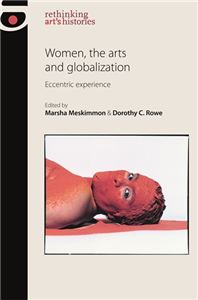 The ArtsMarch 2013
Women, the arts and globalization
Eccentric experience
by Marsha Meskimmon, Amelia Jones, Dorothy C. Rowe, Dorothy Rowe, Marsha Meskimmon
Women, the arts and globalization: Eccentric experience is the first anthology to bring transnational feminist theory and criticism together with women's art practices to discuss the connections between aesthetics, gender and identity in a global world. The essays in Women, the Arts and Globalization demonstrate that women in the arts are rarely positioned at the centre of the art market, and the movement of women globally (as travelers or migrants, empowered artists/scholars or exiled practitioners), rarely corresponds with the dominant models of global exchange. Rather, contemporary women's art practices provide a fascinating instance of women's eccentric experiences of the myriad effects of globalization. Bringing scholarly essays on gender, art and globalization together with interviews and autobiographical accounts of personal experiences, the diversity of the book is relevant to artists, art historians, feminist theorists and humanities scholars interested in the impact of globalization on culture in the broadest sense. ;
-
Trusted Partner
 Literature & Literary StudiesJune 2021
New slaveries in contemporary British literature and visual arts
by Pietro Deandrea
-
Trusted Partner
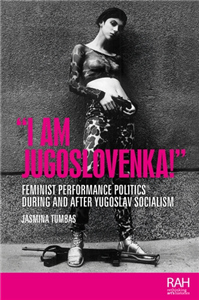 The ArtsFebruary 2022
"I am Jugoslovenka!"
Feminist performance politics during and after Yugoslav Socialism
by Jasmina Tumbas, Amelia Jones, Marsha Meskimmon
"I am Jugoslovenka" argues that queer-feminist artistic and political resistance were paradoxically enabled by socialist Yugoslavia's unique history of patriarchy and women's emancipation. Spanning performance and conceptual art, video works, film and pop music, lesbian activism and press photos of female snipers in the Yugoslav wars, the book analyses feminist resistance in a range of performative actions that manifest the radical embodiment of Yugoslavia's anti-fascist, transnational and feminist legacies. It covers celebrated and lesser-known artists from the 1970s to today, including Marina Abramovic, Sanja Ivekovic, Vlasta Delimar, Tanja Ostojic, Selma Selman and Helena Janecic, along with music legends Lepa Brena and Esma Redzepova. "I am Jugoslovenka" tells a unique story of women's resistance through the intersection of feminism, socialism and nationalism in East European visual culture.
-
Trusted Partner
-
Trusted Partner
-
Trusted Partner
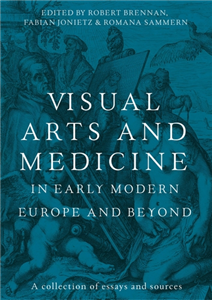 The ArtsFebruary 2026
Visual arts and medicine in early modern Europe and beyond
A collection of essays and sources
by Robert Brennan, Fabian Jonietz, Romana Sammern
This book opens up new perspectives on the relationship between art, medicine, and science in late-medieval and early modern Europe. Looking beyond the traditional nexus of art, anatomy, and optics, the volume sheds light on a broader array of connections between artists and physicians: collaborations between painters and doctors on colour charts, handwork skills common to sculptors and surgeons, the transmission of art theory through medical texts long before the emergence of art writing itself as an independent genre, and the kinship of medical diagnosis with early modes of connoisseurship. Reconfiguring the histories of art, medicine, and science, the book also traverses conventional boundaries between physical and mental health, religious and medical modes of healing, menial and exalted forms of knowledge and labour, as well as vernacular and scientific understandings of human difference, including gender, race, and neurodiversity.
-
Trusted Partner

 March 2025
Arts and Medicine
How music, painting, theatre, dance, literature and architecture heal
by Stefan N. Willich
Art, medicine and health have many points of contact and a long tradition. Even in Greek mythology, Apollo was the god of the arts. Artistic approaches to therapy (including visual and performing arts, music, dance and literature) have been used for many centuries and are still offered in some medical institutions today. Despite this long practical experience, there is little scientific evidence of its effectiveness. Basic research provides an important basis for art therapy with interesting new approaches for investigating possible mechanisms of action. In addition, the overall social signifi- cance of art for health is an important topic, especially with regard to preventive effects for the population. The book provides a comprehensive overview of how art can be used as a health-promoting resource and highlights various research approaches. In addition, a brief review of the historical development of art in medicine is given. For the first time, the influence of music, painting, dance, literature and architecture on people’s state of health and the healing effect they can have is shown. Target group: Art therapists, artists, psychotherapists, child and adolescent psychologists, psychoanalysts and psychologists, health professionals, music and dance therapists, art and music educators, community musicians
-
Trusted Partner
Literature & Literary StudiesJune 2024
Marie Duval
Maverick Victorian Cartoonist
by Simon Grennan, Roger Sabin, Julian Waite
Marie Duval: maverick Victorian cartoonist offers the first critical appraisal of the work of Marie Duval (Isabelle Émilie de Tessier, 1847-1890), one of the most unusual, pioneering and visionary cartoonists of the later nineteenth century. It discusses key themes and practices of Duval's vision and production, relative to the wider historic social, cultural and economic environments in which her work was made, distributed and read, identifing Duval as an exemplary radical practitioner. The book interrogates the relationships between the practices and the forms of print, story-telling, drawing and stage performance. It focuses on the creation of new types of cultural work by women and highlights the style of Duval's drawings relative to both the visual conventions of theatre production and the significance of the visualisation of amateurism and vulgarity. Marie Duval: maverick Victorian cartoonist establishes Duval as a unique but exemplary figure in a transformational period of the nineteenth century.
-
Trusted Partner
 The ArtsSeptember 2020
Science in performance
by Maggie B. Gale, Maria M. Delgado, Peter Lichtenfels, Simon Parry
-
Trusted Partner
 Humanities & Social SciencesFebruary 2022
Women art workers and the Arts and Crafts movement
by Zoë Thomas, Lynn Abrams
-

 The ArtsMarch 1905
Concerning the Spiritual in Art
by Wassily Kandinsky
A pioneering work in the movement to free art from its traditional bonds to material reality, this book is one of the most important documents in the history of modern art. Written by the famous nonobjective painter Wassily Kandinsky (1866–1944), it explains Kandinsky's own theory of painting and crystallizes the ideas that were influencing many other modern artists of the period. Along with his own groundbreaking paintings, this book had a tremendous impact on the development of modern art. Kandinsky's ideas are presented in two parts. The first part, called "About General Aesthetic," issues a call for a spiritual revolution in painting that will let artists express their own inner lives in abstract, non-material terms. Just as musicians do not depend upon the material world for their music, so artists should not have to depend upon the material world for their art. In the second part, "About Painting," Kandinsky discusses the psychology of colors, the language of form and color, and the responsibilities of the artist. An Introduction by the translator, Michael T. H. Sadler, offers additional explanation of Kandinsky's art and theories, while a new Preface by Richard Stratton discusses Kandinsky's career as a whole and the impact of the book. Making the book even more valuable are nine woodcuts by Kandinsky himself that appear at the chapter headings. This English translation of Über das Geistige in der Kunst was a significant contribution to the understanding of nonobjectivism in art. It continues to be a stimulating and necessary reading experience for every artist, art student, and art patron concerned with the direction of 20th-century painting.
-
Trusted Partner
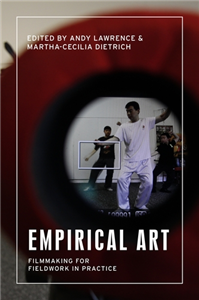 Humanities & Social SciencesJuly 2025
Empirical art
Filmmaking for fieldwork in practice
by Andy Lawrence, Martha-Cecilia Dietrich
Empirical art: Filmmaking for fieldwork in practice is an insightful exploration of what the craft of filmmaking brings to social science research. Providing creative avenues on how to narrate encounters, relationships, and experiences during fieldwork, this comprehensive volume offers a rich tapestry of theoretical explorations and explorative methodologies. Skilfully connecting the worlds of ethnography, art and cinema, the contributors in this book act as a compass for filmmakers and researchers venturing to use a camera and microphone to relate and narrate their research collaborations and fieldsites. Drawing from the authors' extensive experience in disciplines like social anthropology, environmental humanities, and political science, "Empirical Art" breaks down the intricate process of crafting ethnographic films that departs from the researcher's subjectivity. Covering aspects of filmmaking from conceptualisation to production and distribution, readers are equipped with a treasure trove of collaborative techniques, innovative approaches, and ethical considerations necessary to generate and examine storytelling practices in contemporary fields of study. The authors discuss the significance of the multiple roles that technologies of filmmaking play in reflecting on cultural practices, social dynamics, and (beyond) human storytelling and their transformative potentials. Whether a seasoned filmmaker, an aspiring ethnographer, or an academic seeking new dimensions for their research, Empirical Art serves as a guide to integrating visual storytelling, cinema craft and empirical research.
-
Trusted Partner
 The ArtsSeptember 2025
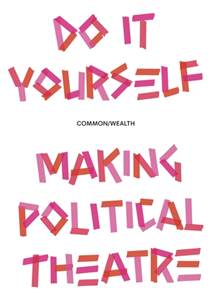
Do It Yourself
Making political theatre
by Common Wealth
A unique guide to creating political theatre, produced by one of the UK's most exciting companies. Do It Yourself is a vital resource for anyone interested in exploring theatre culture grounded in and produced by working-class, multi-racial communities. Designed for artists, activists and community organisers, the book offers a step-by-step guide to creating political theatre that is relevant, impactful and rooted in the lives of everyday people. Common Wealth have spent fifteen years working at the cutting edge of political theatre. In Do It Yourself, they share their experimental and activist approach to performance-making, based on DIY principles and the belief that ground-breaking theatre can be made with anyone, anywhere, in ways that truly resonate with the communities it serves. Do It Yourself introduces Common Wealth's artistic and political ethos, provides unique insights into their most significant performances and offers practical exercises for creating your own work. But this is not just a manual. It is a celebration of culture as a collective endeavour, one that can challenge the status quo and inspire change.
-
Trusted Partner
-
Trusted Partner
-
Trusted Partner
-
Trusted Partner
 Literature & Literary StudiesJune 2022
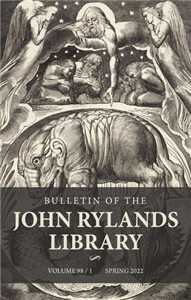
Bulletin of the John Rylands Library 98/1
The Artist of the Future Age: William Blake, Neo-Romanticism, Counterculture and Now
by Douglas Field
This special issue of the Bulletin of the John Rylands Library is devoted to William Blake. It explores the British and European reception of Blake's work from the late nineteenth century to the present day, with a particular focus on the counterculture. Opening with two articles by the late Michael Horovitz, an important figure in the 'Blake Renaissance' of the 1960s, the issue goes on to investigate the ideological struggle over Blake in the early part of the twentieth century, with particular reference to W. B. Yeats. This is followed by articles on the artistic avant-garde and underground of the 1960s and on Blake's significance for science fiction authors of the 1970s. The issue closes with an article on the contemporary Belgian art collective maelstrÖm reEvolution.
-
Trusted Partner



