
Your Search Results
-

-

Kia Persia Literary Agency
KIA Literary Agency was founded in 2002 in Tehran with the aim of promoting and supporting fine literary works in all forms throughout the world. It brings about opportunities for authors, illustrators, publishers, translators, and those involved in this field to meet their counterparts. And at the same time, it introduces them to the world and will inform them of all the related events which take place in the world of art and literature.
View Rights Portal
-
Promoted Content

 The ArtsJuly 2025
Ida Lupino
Multifaceted performer and cinematic pioneer
by Gillian Kelly
This book contributes to a welcome new wave focusing on the importance of female filmmakers, providing a reappraisal of Ida Lupino, a cinematic figure of significant importance. Given her ability to move between popular and independent cinemas and her status as both a Hollywood star and director/writer/producer of socially relevant films overlooked by the mainstream, Lupino is a particularly interesting case study. Employing a range of critical approaches, including feminist theory, auteur theory and critical theory, this book investigates key themes and motifs that developed across Lupino's unusual and unique career as one of the most significant female players in film history. Investigating her oeuvre as actress, director, writer and producer, it discusses Lupino as a complex and important filmmaker whose career, on both sides of the camera, requires substantially more critical attention than it has been awarded thus far.
-
Promoted Content
 Humanities & Social SciencesJuly 2025
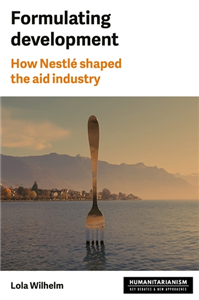
Formulating development
How Nestlé shaped the aid industry
by Lola Wilhelm
In the 1970s, Nestlé became a lightning rod for criticism against the food industry's negative impacts on humans and their environment, especially in the Global South. But what has so far eluded historical scrutiny is that the picture was more nuanced. This book tells the exclusive story of how the Swiss food giant, and more broadly corporate capitalism, have shaped the aid industry since the late nineteenth century. It follows Nestlé's bid for a share of the humanitarian market brokered by the Red Cross in wartime Europe, of its clinical trials in Swiss and Senegalese maternities, and of its agricultural modernisation schemes in Mexico, India, and the Ivory Coast. Based on extensive research in the firm's own historical archives and the records of national and international aid agencies, the volume interrogates the legacies of this long history for international development today.
-
 Trusted Partner

 Humanities & Social Sciences
Shining Light on the Dark Side of Personality
by Peter Karl Jonason
Learn which dark side of personality assessment to use and when • Introduces different assessment tools• Highlights the nuances between tests• Presents the relevant psychometric properties• Explores findings about human nature This volume explores the latest research on the assessment of the dark personality traits, including the dark triad of narcissism, Machiavellianism, and psychopathy, and more. The internationally renowned group of contributors provide a comprehensive, evidence- based overview of the personality traits currently being explored and the instruments used to measure them. This convergence of research from various measures can provide a broad mosaic of information about people colloquially called psychopaths, narcissists, spiteful, Machiavellian, and sadists. For:• researchers and students of test development• practitioners
-
Trusted Partner
-
Trusted Partner
-
Trusted Partner
 Psychology
ICD-11 Personality Disorders: A Clinician’s Guide
by Bo Bach, Sebastian Simonsen
Introduction to the new ICD-11 classification of personalitydisorders and related traits. Using clinical examples, thisbook explains aspects of personality functioning, diagnosingseverity and specifying trait domains.Specific guidelines are included for the diagnosis and clinicalmanagement of mild, moderate and severe personalitydisorders as well as subdiagnostic personality difficulties. Inaddition, the reader is guided in interpreting specific combinationsof trait domains. Guidance on differential diagnosticconsiderations, clinical decision-making, individualizedtreatment planning, treatment intensity, and psychotherapeuticfocus is also included.
-
Trusted Partner

 May 2021
Escapades in Evolution
Of humans, chimps and other capers of nature
by Matthias Glaubrecht
Humans are rapidly changing the conditions of evolution, and while many species have not yet been discovered, the extinction of numerous species is becoming more and more dramatic. In this book, Matthias Glaubrecht contrasts the impending “end of evolution”, of which the evolutionary biologist writes in his bestseller of the same name, with the beauty, diversity and also the whims of nature. In 36 short chapters, the zoologist presents the animal and the all-tooanimal from the curiosity cabinet of evolution, easy to understand and with a good touch of humour – from dinosaurs with four wings to the annual new “Minnelied” hit of the humpback whale to the women’s communes of bonobos who use sex as a form of social bonding.
-
Trusted Partner
 Humanities & Social SciencesDecember 2024
Critical theory and Independent Living
by Teodor Mladenov
Critical theory and Independent Living explores intersections between contemporary critical theory and disabled people's struggle for self-determination. The book highlights the affinities between the Independent Living movement and studies of epistemic injustice, biopower, and psychopower. It discusses in depth the activists' critical engagement with welfare-state paternalism, neoliberal marketisation, and familialism. This helps develop a pioneering comparison between various welfare regimes grounded in Independent Living advocacy. The book draws on the activism of disabled people from the European Network on Independent Living (ENIL) by developing case studies of the ENIL's campaigning for deinstitutionalisation and personal assistance. It is argued that this work helps rethink independence as a form of interdependence, and that this reframing is pivotal for critical theorising in the twenty-first century.
-
Trusted Partner
 Humanities & Social SciencesOctober 2020
Dealing with Borderline Personality Disorder
by Bohus, Martin; Reicherzer, Markus
About three out of one hundred adults experience a longer borderline episode once in their lives: violently fluctuating emotions, suicidal crises, self-harm and deep despair are accompanied by problems in the interpersonal sphere. These particularly affect the basic feeling of “belonging” to others, so that profound loneliness and lostness often alternate with disappointment and anger. This guidebook provides information about the various characteristics of borderline personality disorder and its origin. The aim is to encourage those affected to seek effective psychotherapeutic treatment focusing on Dialectical Behavioral Therapy (DBT), which was specifically developed for the treatment of borderline disorder and has proven to be very effective. The structure and workings of DBT are explained, pressing questions are addressed, and initial guidance for self-help is provided as well as assistance for relatives and references to self-help groups.
-
Trusted Partner
 Humanities & Social SciencesMarch 2022
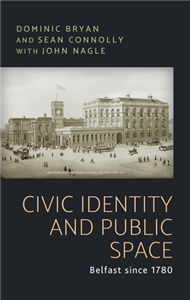
Civic identity and public space
Belfast since 1780
by Dominic Bryan, Sean J. Connolly, John Nagle
Civic identity and public space, focussing on Belfast, and bringing together the work of a historian and two social scientists, offers a new perspective on the sometimes lethal conflicts over parades, flags and other issues that continue to disrupt political life in Northern Ireland. It examines the emergence during the nineteenth century of the concept of public space and the development of new strategies for its regulation, the establishment, the new conditions created by the emergence in 1920 of a Northern Ireland state, of a near monopoly of public space enjoyed by Protestants and unionists, and the break down of that monopoly in more recent decades. Today policy makers and politicians struggle to devise a strategy for the management of public space in a divided city, while endeavouring to promote a new sense of civic identity that will transcend long-standing sectarian and political divisions.
-
Trusted Partner
 Humanities & Social SciencesFebruary 2025
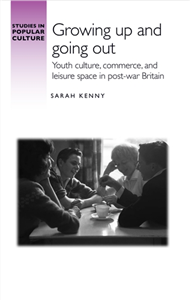
Growing up and going out
Youth culture, commerce, and leisure space in post-war Britain
by Sarah Kenny
In the decades following the Second World War, youthful sociability was remade as young people across Britain flocked to newly-opened coffee bars, beat clubs, and discos. These spaces, increasingly unknown and unfamiliar to the adults who passed by them, played a remarkable role in reshaping town and city centres after dark as sites of leisure and recreation. Telling the history of youth in post-war Britain from the ground up, through the towns and cities that young people moved through, this book traces how the new spaces of post-war youth leisure transformed both young people's relationship with their local environment and adults' perceptions of the possibilities and dangers of modern leisure. Growing up and going out offers a timely study of youth, commerce, and leisure that explores the reimagination, remaking, and regulation of the post-war city after dark.
-
Trusted Partner
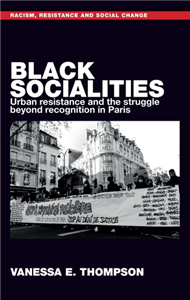 Humanities & Social SciencesMarch 2026
Black socialities
Urban resistance and the struggle beyond recognition in Paris
by Vanessa Eileen Thompson
From author: This is a cutting-edge exploration of black urban politics in Parisian racialized working class and working poor districts, the formation of abolition geography, and the possibilities of new forms of political blackness. In Black Socialities. Urban resistance and the struggle beyond recognition in Paris, Vanessa E. Thompson argues that black urban politics in the French banlieues are multi-racial and spatially grounded towards abolition. Based on a close engagement with urban black activist practices against racial imagery in the city, policing and state racism, and housing insecurity, she shows how radical anti-racism goes beyond struggles for recognition and unfolds alongside new formations of political blackness that is based on urban conviviality. This form of black politics has much to teach us in this current conjuncture of liberal anti-racism and state recognition politics.
-
Trusted Partner
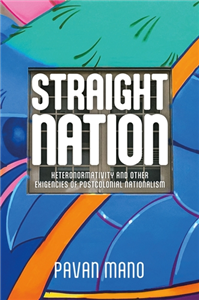 Humanities & Social SciencesMarch 2025
Straight nation
Heteronormativity and other exigencies of postcolonial nationalism
by Pavan Mano
In Straight Nation, Pavan Mano reveals the logic of straightness that sits at the heart of postcolonial nationalism in Singapore. Mano rejects the romantic notion of the nation as a haven of belonging, showing it to be a relentless force that is allied with heteronormativity to create a host of minoritized and xenologized figures. Through meticulous exploration and close reading of a swathe of texts, Mano unveils the instrumental role of sexuality in structuring the national imaginary. The book adroitly demonstrates how queerness is rendered foreign in postcolonial Singapore and functions alongside technologies of "race", gender, and class. A provocative critique of narrow contemporary identity politics and its concomitant stymying of a more ambitious political critique, Straight Nation sets out an argument that moves beyond the negativity of traditional critique into a space of (re)thinking, (re)building and (re)imagining.
-
Trusted Partner
 International lawAugust 2005
The law of international organisations
Second edition
by Nigel D. White
This new edition considers the unifying legal attributes that span vastly differing inter-governmental organisations, from the UN to the EU. A law of international organisations has become established in certain areas, such as legal personality, powers, membership, finance, and decision-making. In other, newer, areas - accountability, responsibility and democracy - politics is still much rawer, and has not yet been fully converted into legal concepts and principles. As with the first edition, there are plenty of examples of organisations given in the text. Individual organisations dealing with issues such as security, health, civil aviation, finance and trade are scrutinised by way of example, to illustrate how different they can be, but also to show how it is possible to debate a set of legal principles that transcend each institution. This new edition of an established text will appeal to students and academics as well as individuals seeking a legal and political insight into international organisations.
-
Trusted Partner
-
Trusted Partner
 Humanities & Social SciencesJuly 2020
Political theologies and development in Asia
by Giuseppe Bolotta, Philip Fountain, R. Michael Feener
-
Trusted Partner
 Humanities & Social SciencesOctober 2024
Egypt and the rise of fluid authoritarianism
Political ecology, power and the crisis of legitimacy
by Maria Gloria Polimeno
Egypt and the rise of fluid authoritarianism focuses on the struggle of the post-2013 political authorities for internal political legitimacy after the crisis following the 2013 coup d'état. It explores the microstructural and macro-systemic dynamics of leadership, power, protests and the authority-making process in political systems. These cannot simply be defined as structural, political, social and economic projections of the authoritarianism of the past, but rather as a rupture with that past. The book offers a complex, ground-breaking socio-political and economic analysis into how the forging of an internal political legitimacy claim has eventually modified the regime in Egypt along the authoritarian spectrum, turning into a fluid autocracy closer to a non-exclusivist personalist regime. This shift had implications that resonated both politically and economically.
-
Trusted Partner
 Humanities & Social SciencesFebruary 2025
Missing persons, political landscapes and cultural practices
Violent absences, haunting presences
by Laura Huttunen
This book examines human disappearances anthropologically in various contexts, ranging from enforced disappearances under oppressive governments and during armed conflicts to disappearing undocumented migrants and, finally, to people who go missing under more everyday circumstances. Two focuses run through the book: the relationship between the state and disappearances, and the consequences of disappearances for the families and communities of missing persons. The book analyses both the circumstances that make some people disappear and the variety of responses that disappearances give rise to; the latter include projects focused on searching for the missing and identifying human remains, as well as political projects that call for accountability for disappearances. While providing empirical examples from a variety of places, with Bosnia-Herzegovina as they key empirical site, the book develops an analytic grip on the slippery category of the 'disappeared'.
-
Trusted Partner
 December 2009
Malherbe, Théophile de Viau and Saint-Amant
A selection
by Mike Thompson, Richard G. Maber
This volume offers a representative yet concise selection of the work of the seventeenth-century poets, Malherbe, de Viau and Saint-Amant. It also provides supporting documentation to bring out the unique literary personality of each, and to help make their poetry as accessible as possible to a modern reader. It is designed to fill the gap between scholarly complete editions and more general anthologies which are rarely able to devote much space to any one author. The present volume was prompted by the success that this poetry enjoyed with readers who were relative newcomers to French verse. ;
-
Trusted Partner
 September 2022
Identity or Not?
by Jean-Pierre Wils (ed.)
Questions of identity trigger controversial and highly emotional discussions in the political and social debate. The positions range from radically emancipatory perspectives to authoritarian and restorative efforts on the far right wing of politics. Liberal democracies are now opening up – slowly – as identity- and gender-sensitive forums. Opposite them are the 'new ethics' of illiberal democracies and totalitarian states that are aimed at ethnic homogeneity and gender uniformity. But that's not to say that there is unity in the liberal settings on the necessary degree of identity politics. Both language and gender politics are deeply controversial. Do we need an 'identity' and, if so, which one or how many? Can the identity debate be extended by means of other concepts?



