
Your Search Results
-

-

Petra Schier
Petra Schier, Jahrgang 1978, lebt mit Mann und Hund in einer kleinen Gemeinde in der Eifel. Sie studierte Geschichte und Literatur an der Fernuniversität Hagen und arbeitet seit 2003 freie Autorin. Ihre sehr erfolgreichen historischen Romane erscheinen u.a. im Rowohlt Taschenbuch Verlag, ihre ebenfalls sehr beliebten Weihnachts- sowie Liebesromane bei Rütten Loening, MIRA Taschenbuch, HarperCollins und Weltbild.Unter dem Pseudonym Mila Roth veröffentlicht die Autorin verlagsunabhängig verschiedene erfolgreiche Buchserien.
View Rights Portal
-
Promoted Content

 Humanities & Social SciencesSeptember 2025
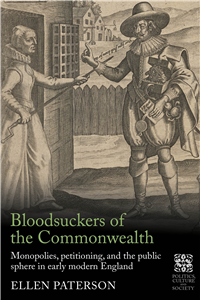
Bloodsuckers of the Commonwealth
Monopolies, petitioning, and the public sphere in early modern England
by Ellen Paterson
This book offers the first in-depth analysis of anti-monopoly petitioning in late-Elizabethan and Jacobean England. Drawing on a range of manuscript petitions, it reveals the centrality of the issues of monopoly and corporatism for the politicisation of a range of subjects between 1590-1625. Both Elizabeth I and James I liberally granted monopolies and charters as a fiscal device. Petitioning emerged as the main way through which subjects protested these intrusions on their trades and livelihoods. Whilst this activity occurred throughout the realm, it was especially pronounced in the city of London. Members of London's livery companies, bodies which held exclusive rights to trade, petitioned for and against monopolies and charters. Bloodsuckers of the Commonwealth offers a fresh perspective on political culture in this well-studied period by arguing that economic policies generated conflicts, contests, and participation in a nascent public sphere.
-
Promoted Content
-
 Trusted Partner
-
Trusted Partner
-
Trusted Partner
-
Trusted Partner

 January 1996
Der Riesenzwerg
Roman
by Petit, Marc / Französisch Soellner, Rolf; Französisch Soellner, Hedda
-
Trusted Partner

 January 1994
Der Riesenzwerg
Roman
by Petit, Marc / Übersetzt von Soellner, Rolf; Übersetzt von Soellner, Hedda
-
Trusted Partner
 Literature & Literary StudiesMarch 2025
The Catholicism of literature in the age of the Book of Common Prayer
Poetry, plays, works, 1558-1689
by Thomas Rist
Offering a complete reading of English Literature throughout 1558-1689, this book demonstrates the continuity of Roman Catholicism in English Literature from the accession of Elizabeth I to the deposing of James II. Rist shows that poetry and plays promoted Roman Catholic ideas in a Biblicist age which established the Church of England through the Book of Common Prayer. From the very idea of literary works to chapters on the Eucharist, Purgatory, Christian worship and the Virgin Mary, Rist joins together major and minor authors of the era to present English Literature afresh. Important literary figures include William Shakespeare, Ben Jonson, Thomas Middleton, Queen Henrietta Maria, John Donne, John Dryden, Robert Herrick, Margaret Cavendish and Aphra Behn.
-
Trusted Partner
 Humanities & Social SciencesJune 2020
Gentry culture and the politics of religion
by Richard Cust, Peter Lake
-
Trusted Partner
 Humanities & Social SciencesAugust 2025
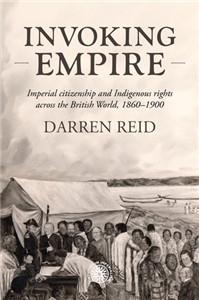
Invoking Empire
Imperial citizenship and Indigenous rights across the British World, 1860–1900
by Darren Reid
Invoking Empire examines the histories of Canada, South Africa, Australia, and New Zealand during the transitional decades between 1860-1900, when each gained some degree of self-government yet still remained within the sovereignty of the British Empire. It applies the conceptual framework of imperial citizenship to nine case studies of settlers and Indigenous peoples who lived through these decades to make two main arguments. It argues that colonial subjects adapted imperial citizenship to both support and challenge settler sovereignty, revealing the continuing importance of imperial authority in self-governing settler spaces. It also posits that imperial citizenship was rendered inoperable by a combination of factors in both Britian and the colonies, highlighting the contingency of settler colonialism on imperial governmental structures and challenging teleological assumptions that the rise of settler nation states was an inevitable result of settler self-government.
-
Trusted Partner

 Children's & YA
You for Future
by Franziska Wessel/ Günther Wessel
‘We will not stop demonstrating,’ writes Franziska Wessel in a guest column in the Berliner Zeitung. Franziska is pursuing a goal. Decisive measures must finally be taken to protect the climate. While that is not happening she spends every Friday on the streets, gives interviews and puts pressure on politicians. But climate change isn’t the only thing threatening our future. There is so much suffering, injustice and destruction in the world. Something must be done about it. And as a climate activist, Franziska knows exactly how to be active. Together with her father, the journalist and author, Günther Wessel, she explains: How do I start a petition? How do I organise a campaign? How does lobbying work? So that everyone knows how they can make things happen.
-
Trusted Partner
 Humanities & Social SciencesOctober 2021
Loyalty, memory and public opinion in England, 1658–1727
by Peter Lake, Anthony Milton, Jason Peacey, Alexandra Gajda, Edward Vallance
-
Trusted Partner

 June 2018
Die allerbeste Prinzessin
by Poznanski, Ursula / Illustrated by Büchner, SaBine
An innovative & different princess story! • The three princesses love to quarrel • Original and incredibly witty • Written by Ursula Poznanski and stunning illustrations by Sabine Büchner • Translation Grant! Bianca, Violetta and Rosalind are three adorable princesses. But they share a tiny quirk: they love to argue! One day a visitor asks for entrance into the castle. Prince Waldomir doesn’t enjoy hunting dragons anymore and rather prefers to get married know. Of course each princess is convinced to be the best choice and the prince’s one and only. So a rat race is launched before they have even met the puny prince for the first time…
-
Trusted Partner
 Humanities & Social SciencesJanuary 2007
Religion in Revolutionary England
by Christopher Durston, Judith Maltby
This book offers a collection of essays tightly focused around the issue of religion in England between 1640 and 1660, a time of upheaval and civil war in England. Edited by well-known scholars of the subject, topics include the toleration controversy, women's theological writing, observance of the Lord's Day and prayer books. To aid understanding, the essays are divided into three sections examining theology in revolutionary England, inside and outside the revolutionary National Church and local impacts of religious revolution. Carefully and thoughtfully presented, this book will be of great use for those seeking to better understand the practices and patterns of religious life in England in this important and fascinating period. ;
-
Trusted Partner
 Humanities & Social SciencesMay 2024
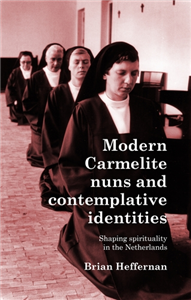
Modern Carmelite nuns and contemplative identities
Shaping spirituality in the Netherlands
by Brian Heffernan
Discalced Carmelite convents are among the most influential wellsprings of female spirituality in the Catholic tradition, as the names of Teresa of Avila, Therese of Lisieux and Edith Stein attest. Behind these 'great Carmelites' stood communities of women who developed discourses on their relationship with God and their identity as a spiritual elite in the church and society. This book looks at these discourses as formulated by Carmelites in the Netherlands, from their arrival there in 1872 up to the recent past, providing an in-depth case study of the spiritualities of modern women contemplatives. The female religious life was a transnational phenomenon, and the book draws on sources and scholarship in English, Dutch, French and German to provide insights on gendered spirituality, memory and the post-conciliar renewal of the religious life.
-
Trusted Partner
-
Trusted Partner

 March 2026
Oben rechts
Rechtspopulismus als Klassenprojekt
by Thomas Biebricher, Tobias Moorstedt, Lukas Haffert, Anton Jäger, Moira Weigel, Heinrich Geiselberger
Als Trump zum ersten Mal Präsident wurde, ging ein Richard Rorty zugeschriebenes Zitat viral: Wenn die »kulturelle Linke«, so Rorty 1998, materielle Fragen weiterhin ignoriere, werde es einen Bruch geben – »something will crack«. Ärmere Wähler würden einen starken Mann an die Macht bringen, es drohe eine Rückkehr des Sadismus. So hellsichtig diese Prognose war, hat der Fokus auf die »woken« Linken und die »Verlierer« in Debatten über Trump & Co. doch einen blinden Fleck erzeugt. Geht man davon aus, dass Politiker wie Trump sich auch selbst wählen, kommt schließlich eine andere »Klassenfraktion« in den Blick: konservative Männer, die ihr eigenes Unternehmen leiten. Aus diesem Milieu stammen nicht nur Vorläufer wie Berlusconi, sondern auch viele Unterstützer. Die Beiträge in diesem Band nehmen diese Gruppe unter die Lupe. Wen wählen die Angehörigen der klassischen petite bourgeoisie ? Wie haben die entsprechenden Netzwerke den »Vibe Shift« vorbereitet? Und warum gerät diese Fraktion erst in den Fokus, nachdem Elon Musk die politische Arena betreten hat?
-
Trusted Partner
 Literature & Literary StudiesMarch 2026
The dreadful name of Henry Hills
The lives and afterlives of a seventeenth-century printer
by Michael Durrant
1. Introducing the Career of Henry Hills, Printer - What is a printer? - Print output - Insignia - Roles - Partnerships - Cultural configurations of the early modern printer 2. 'Once upon a time': Biographical Encounters with Henry Hills - Henry Hills' Lives: From DNB to ODNB - Cultural biographies of printers - Hugh Dalton's Cave: Reading Henry Hills Part 2: Transformations 3. '[N]othing but the plain truth': The Prodigal Repackaged (1650-51, 1688, 1825) - Henry Hills: Particular Baptist printer / author - The Prodigal as shame management - Henry Hills and the tailor's wife: 'Pressing' at a biographical anecdote - The Prodigal Returned to his Father's House, by Henry Hills (1825): Reprinting a reprint 4. 'Licking himself whole again': Writing and Rewriting Henry Hills' Catholic Conversion (1685, 1686, 1733, 1826) - Henry Hills: Catholic Printer - A View (1685): From runaway apprentice to anti-Catholic book burner - Entering Book (1686): Roger Morrice and the Hills household - Revolution Politicks (1733): Print mediation and and public talk - Hills, last seen at Watten, near Sainte-Omer, 13 February 1689 Part 3: Afterlives 5. Henry Hills, Eikon Basilike, and his Posthumous Role in the Pamela Prayer Conspiracy - Taking the Pamela Prayer interpolation seriously: Eikon Basilike, authorship, and the work of conspiracy - '[T]he Roundhead printer!': Almack, Madan, and Hills' role in the publication of the Eikon - The 'leading witness': Writing and rewriting Hills in Milton scholarship - Finding Henry Hills in Dr Bernard's library 6. Pirates, Parents, and Print: Rewriting Henry Hills' Last Will and Testament - 'Suite Trouble': Contesting Hills' legacy - '[A]n expedient lineage': Henry Hills junior goes to Bombay - Working with what remains
-
Trusted Partner

 July 1981
Erzählungen und Gespräche
Übersetzt von Katharina Scheinfuß
by Denis Diderot, Katharina Scheinfuß
Der hinreißende Erzähler und Kenner des weiblichen Herzens, der weitblickende Denker, dessen funkelnder Geist alle Gegenstände, die er berührt, mit Leben, Natürlichkeit und Anmut erfüllt, wird hier in einer gültigen deutschen Auswahl dargeboten. Sie enthält seine meisterhaften Erzählungen, die berühmten »petits papiers« wie »Das Bedauern über meinen alten Schlafrock« oder »Über die Frauen«, und die großen und kleinen Gespräche, darunter »Rameaus Neffe«, das »Paradox über den Schauspieler« und »D’Alemberts Traum«.
-
Trusted Partner

 2021
2021Lexicon of Medicinal Plants
by Prof. Dr. Dietrich Frohne (†), in collaboration with Prof. Dr. Birgit Classen
Indian mulberry, St. John’s wort, Hawaiian baby woodrose – whether disputed wonder drug, traditional medicinal plant or unknown exotic plant – the Lexicon of Medicinal Plants can always be relied upon. The lexical and classic knowledge about the individual medicinal plants – such as family, origin, use, effect and constituents – garnered over decades and peppered with particular anecdotes on the herbal drugs, can be regarded as unique and largely timeless. At the repeated request of readers, this reference work has therefore been reissued in book form, with its contents largely unchanged but with misprints corrected and its layout modernised. A wealth of experience that even in the fast-moving digital world preserves traditional knowledge.



