Your Search Results

      • Dar Al-Rowad (Pioneers) Publishers

        Pioneers (Al Rowad) Publishing House was established in 1986 as a bookstore and a distributor. In 2006 it moved into the world of publishing and started new business as a publisher. It has 120 titles for the family, young adults, children and has recently started publishing novels. It has the Arabic copyrights of some American Publishers such as Adams Media and some German copyrights from Wissenmedia. AlRowad Publishes in Arabic and English. Kassem Al Tarras, owner and director of Al Rowad Publishers. He has a BA in English Literature from Damascus University. He is certified as a Teacher Trainer of English from the University of Delaware, USA and he is certified in ISBN from the International ISBN Agency in London. He works now as a director of Al Rowad Publishers, he is an English teacher and a member of new Curricula of English committe in the Ministery of Awqaf in Damascus and he is the directory of the ISBN Syrian Agency in the Syrian Publishers Association.

        View Rights Portal
      • Trusted Partner
        The Arts
        July 2025

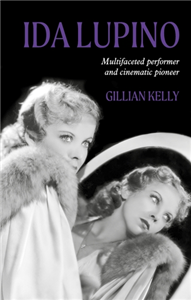
        Ida Lupino

        Multifaceted performer and cinematic pioneer

        by Gillian Kelly

        This book contributes to a welcome new wave focusing on the importance of female filmmakers, providing a reappraisal of Ida Lupino, a cinematic figure of significant importance. Given her ability to move between popular and independent cinemas and her status as both a Hollywood star and director/writer/producer of socially relevant films overlooked by the mainstream, Lupino is a particularly interesting case study. Employing a range of critical approaches, including feminist theory, auteur theory and critical theory, this book investigates key themes and motifs that developed across Lupino's unusual and unique career as one of the most significant female players in film history. Investigating her oeuvre as actress, director, writer and producer, it discusses Lupino as a complex and important filmmaker whose career, on both sides of the camera, requires substantially more critical attention than it has been awarded thus far.

      • Trusted Partner
        The Arts
        January 2019

        Spanish cinema 1973–2010

        Auteurism, politics, landscape and memory

        by Maria M. Delgado, Robin Fiddian

        This collection offers a new lens through which to examine Spain's cinema production following the isolation imposed by the Franco regime. The seventeen key films analysed in the volume span a period of 35 years that have been crucial in the development of Spain, Spanish democracy and Spanish cinema. They encompass different genres (horror, thriller, melodrama, social realism, documentary), both popular (Los abrazos rotos/Broken Embraces, Vicky Cristina Barcelona) and more select art house fare (En la ciudad de Sylvia/In the City of Sylvia, El espíritu de la colmena/Spirit of the Beehive) and are made in English (as both first and second language), Basque, Castilian, Catalan and French. Offering an expanded understanding of 'national' cinemas, the volume explores key works by Guillermo del Toro and Lucrecia Martel alongside an examination of the ways in which established auteurs (Almodóvar, José Garci, Carlos Saura) and younger generations of filmmakers (Cesc Gay, Amenábar, Bollaín) have harnessed cinematic language towards a commentary on the nation-state. The result is a bold new study of the ways in which film has created new prisms that have determined how Spain is positioned in the global marketplace.

      • Trusted Partner
        The Arts
        February 2019

        Bertrand Tavernier

        by Lynn Anthony Higgins

        Bertrand Tavernier is widely recognized as the leading French filmmaker of his generation. Both a consummate artist and a controversial public figure, he is a passionate advocate for social causes and also a tireless defender of world cinema in general and the French cinematic heritage in particular. Lynn Higgins' book offers a guided tour through Tavernier's oeuvre, taking into account both its prodigious diversity and its unifying themes. It explores his use of genre and adaptation, his work with actors and his affection for characters, his treatment of France's colonial history, his explorations of the powers of art and the complexities of intergenerational relations, both among fictional characters and within French cinema history. This is the most comprehensive and up-to-date scholarly book about Tavernier. Original and lively, sophisticated and engaging, the book will appeal to anyone interested in film studies, gender studies, and French cultural studies including academics, students, cinema enthusiasts, and Tavernier fans.

      • Trusted Partner
        The Arts
        December 2024

        Horizontal together

        Art, dance, and queer embodiment in 1960s New York

        by Paisid Aramphongphan

        Horizontal together tells the story of 1960s art and queer culture in New York through the overlapping circles of Andy Warhol, underground filmmaker Jack Smith and experimental dance star Fred Herko. Taking a pioneering approach to this intersecting cultural milieu, the book uses a unique methodology that draws on queer theory, dance studies and the analysis of movement, deportment and gesture to look anew at familiar artists and artworks, but also to bring to light queer artistic figures' key cultural contributions to the 1960s New York art world. Illustrated with rarely published images and written in clear and fluid prose, Horizontal together will appeal to specialists and general readers interested in the study of modern and contemporary art, dance and queer history.

      • Trusted Partner
        The Arts
        January 2019

        Contemporary French cinema

        An introduction (revised edition)

        by Guy Austin

        Contemporary French cinema is an essential introduction to popular French film of the last 35 years. It charts recent developments in all genres of French cinema with analyses of over 120 movies, from Les Valseuses to Caché. Reflecting the diversity of French film production since the New Wave, this clear and perceptive study includes chapters on the heritage film, the thriller and the war movie, alongside the 'cinéma du look', representations of sexuality, comedies, the work of women film makers and le jeune cinéma. Each chapter introduces the public reception and critical debates surrounding a given genre, interwoven with detailed accounts of relevant films. Confirmed as a major contribution to both Film Studies and French Studies, this book is a fascinating volume for students and fans of French film alike.

      • Trusted Partner
        The Arts
        June 2021

        Contemporary French cinema

        An introduction (revised edition)

        by Guy Austin

        Contemporary French cinema is an essential introduction to popular French film of the last 35 years. It charts recent developments in all genres of French cinema with analyses of over 120 movies, from Les Valseuses to Caché. Reflecting the diversity of French film production since the New Wave, this clear and perceptive study includes chapters on the heritage film, the thriller and the war movie, alongside the 'cinéma du look', representations of sexuality, comedies, the work of women film makers and le jeune cinéma. Each chapter introduces the public reception and critical debates surrounding a given genre, interwoven with detailed accounts of relevant films. Confirmed as a major contribution to both Film Studies and French Studies, this book is a fascinating volume for students and fans of French film alike.

      • Trusted Partner
        The Arts
        December 2025

        The films of Bigas Luna

        by Santiago Fouz-Hernández

        The films of Bigas Luna is the first comprehensive English-language study of the complete filmography of Spanish filmmaker Bigas Luna, spanning from Tatuaje (1976) to DiDi Hollywood (2010). Engaging with theoretical frameworks such as haptic cinema, erotic cinema, auteur theory, and studies of gender, sexuality, and national identity, the book situates close readings of Bigas Luna's films within broader discussions of production and marketing. Fouz Hernández draws on extensive archival research-including original screenplays, press materials, and interviews with industry professionals-while engaging with previous scholarship in multiple languages. Structured into five thematic chapters, the book explores key concerns in Bigas Luna's work, including genre, gender representation, Iberian and Mediterranean identities, and meta-cinematic narratives. It can be read as a cohesive study of his oeuvre or as a reference for specific films.

      • Trusted Partner
        The Arts
        June 2021

        Medieval film

        by Anke Bernau, Bettina Bildhauer

        Medieval film explores theoretical questions about the ideological, artistic, emotional and financial investments inhering in cinematic renditions of the medieval period. What does it mean to create and watch a 'medieval film'? What is a medieval film and why are they successful? This is the first work that attempts to answer these questions, drawing, for instance, on film theory, postcolonial theory, cultural studies and the growing body of work on medievalism. Contributors investigate British, German, Italian, Australian, French, Swedish and American film, exploring topics such translation, temporality, film noir, framing and period film - and find the medieval lurking in inexpected corners. In addition it provides in-depth studies of individual films from different countries including The Birth of a Nation to Nosferatu, and Robin Hood: Prince of Thieves. Medieval Film will be of interest to medievalists working in disciplines including literature, history, to scholars working on film and in cultural studies. It will also be of interest to undergraduates, postgraduates and to an informed enthusiast in film or/and medieval culture.

      • Trusted Partner
        The Arts
        January 2019

        Medieval film

        by Anke Bernau, Bettina Bildhauer

        Medieval film explores theoretical questions about the ideological, artistic, emotional and financial investments inhering in cinematic renditions of the medieval period. What does it mean to create and watch a 'medieval film'? What is a medieval film and why are they successful? This is the first work that attempts to answer these questions, drawing, for instance, on film theory, postcolonial theory, cultural studies and the growing body of work on medievalism. Contributors investigate British, German, Italian, Australian, French, Swedish and American film, exploring topics such translation, temporality, film noir, framing and period film - and find the medieval lurking in unexpected corners. In addition it provides in-depth studies of individual films from different countries including The Birth of a Nation to Nosferatu, and Robin Hood: Prince of Thieves. Medieval film will be of interest to medievalists working in disciplines including literature, history, art history, to scholars working on film and in cultural studies. It will also be of interest to undergraduates, postgraduates and to an informed enthusiast in film or/and medieval culture.

      • Trusted Partner
        The Arts
        January 2019

        French cinema in the 1970s

        The echoes of May

        by Alison Smith

        This book re-examines French cinema of the 1970s. It focuses on the debates which shook French cinema, and the calls for film-makers to rethink their manner of filming, subject matter and ideals in the immediate aftermath of the student revolution of May 1968. Alison Smith examines the effect of this re-thinking across the spectrum of French production, the rise of new genres and re-formulation of older ones. Chapters investigate political thrillers, historical films, new naturalism and Utopian fantasies, dealing with a wide variety of films. A particular concern is the extent to which film-makers' ideas and intentions are contained in or contradicted by their finished work, and the gradual change in these ideas over the decade. The final chapter is a detailed study of two directors who were deeply involved in the debates and events of the 70s, William Klein and Alain Tanner, here taken as exemplary spokesmen for those changing debates as their echoes reached the cinema.

      • Trusted Partner
        The Arts
        June 2021

        Genre and performance: film and television

        by Christine Cornea

        Looking at contemporary film and television, this book explores how popular genres frame our understanding of on-screen performance. Previous studies of screen performance have tended to fix upon star actors, directors, or programme makers, or they have concentrated upon particular training and acting styles. Moving outside of these confines, this book provides a truly interdisciplinary account of performance in film and television and examines a much neglected area in our understanding of how popular genres and performance intersect on screen. Each chapter concentrates upon a particular genre or draws upon generic case studies in examining the significance of screen performance. Individual chapters examine contemporary film noir, horror, the biopic, drama-documentary, the western, science fiction, comedy performance in 'spoof news' programmes and the television 'sit com' and popular Bollywood films.

      • Trusted Partner
        The Arts
        January 2019

        Postcolonial African cinema

        Ten directors

        by David Murphy, Patrick Williams

        This is the first introduction of its kind to an important cross-section of postcolonial African filmmakers from the 1950s to the present. Building on previous critical work in the field, this volume will bring together ideas from a range of disciplines - film studies, African cultural studies, and, in particular, postcolonial studies - in order to combine the in-depth analysis of individual films and bodies of work by individual directors with a sustained interrogation of these films in relation to important theoretical concepts. Structurally, the book is straightforward, though the aim is to incorporate diversity and complexity of approach within the overall simplicity of format. Chapters provide both an overview of the director's output to date, and the necessary background - personal or national, cultural or political - to enable readers to achieve a better understanding of the director's choice of subject matter, aesthetic or formal strategies, or ideological stance. They also offer a particular reading of one or more films, in which the authors aim to situate African cinema in relation to important critical and theoretical debates. This book thus constitutes a new departure in African film studies, recognising the maturity of the field, and the need for complex yet accessible approaches to it, which move beyond the purely descriptive while refusing to get bogged down in theoretical jargon. Consequently, the volume should be of interest not only to specialists but also to the general reader.

      • Trusted Partner
        Humanities & Social Sciences
        March 2017

        Air empire

        British imperial civil aviation, 1919–39

        by Gordon Pirie, Andrew Thompson, John M. MacKenzie

        Air empire is a fresh study of civil aviation as a tool of late British imperialism. The first pioneering flights across the British empire in 1919-20 were flag-waving adventures that recreated an era of plucky British maritime exploration and conquest. Britain's development of international air routes and services was approved, organised and celebrated largely in London; there was some resistance in and beyond the subordinate colonies and dominions. Negotiating the financing and geopolitics of regular commercial air service delayed its inception until the 1930s. Technological, managerial and logistical problems also meant that Britain was slow into the air and slow in the air. Propaganda concealed underperformance and criticism. The study uses archival sources, biographies, industry magazines and newspapers to chronicle the disputed progress toward air empire. The rhetoric behind imperial air service offers a glimpse of late imperial hopes, fears, attitudes and style. Empire air service had emotional appeal and symbolic value, but disappointed in practice.

      • Trusted Partner
      • Trusted Partner
        The Arts
        June 2026

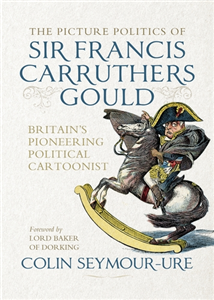
        The picture politics of Sir Francis Carruthers Gould

        Britain's pioneering political cartoonist

        by Colin Seymour-Ure, Mark Bryant

        This is the first major study of Britain's pioneering graphic satirist, Sir Francis Carruthers Gould (1844-1925), the first staff political cartoonist on a daily newspaper in Britain, and the first of his kind to be knighted. Written by the distinguished media historian, Colin Seymour-Ure, it is essential reading for anyone interested in cartoons, caricature and illustration and will also be welcomed by students of history, politics and the media. It examines Gould's career in Fleet Street until his retirement after the First World War. It also discusses his illustrations for magazines and books and there is an analysis of his use of symbolism and literary allusion to lampoon such eminent politicians as Gladstone and Joseph Chamberlain. As Lord Baker says in his Foreword, this book is 'a major contribution to our knowledge of British cartooning.'

      • Trusted Partner
        The Arts
        December 2024

        The picture politics of Sir Francis Carruthers Gould

        Britain's pioneering political cartoonist

        by Mark Bryant

        This is the first major study of Britain's pioneering graphic satirist, Sir Francis Carruthers Gould (1844-1925), the first staff political cartoonist on a daily newspaper in Britain, and the first of his kind to be knighted. Written by the distinguished media historian, Colin Seymour-Ure, it is essential reading for anyone interested in cartoons, caricature and illustration and will also be welcomed by students of history, politics and the media. It examines Gould's career in Fleet Street until his retirement after the First World War. It also discusses his illustrations for magazines and books and there is an analysis of his use of symbolism and literary allusion to lampoon such eminent politicians as Gladstone and Joseph Chamberlain. As Lord Baker says in his Foreword, this book is 'a major contribution to our knowledge of British cartooning.'

      • Trusted Partner
        The Arts
        June 2026

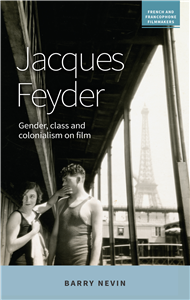
        Jacques Feyder

        Gender, class and colonialism on film

        by Barry Nevin

        This is the first English-language book on Jacques Feyder, one of the Golden Age of French cinema's most prolific directors. Although once hailed as a major filmmaker, Feyder's reputation waned in the decades following his death, and scholars tend to underestimate his contributions to cinema. This study argues that a fuller understanding of Feyder's style involves exploring his provocative portrayals of gender, class and colonialism across his body of work, including films he directed in France, Hollywood, Germany, England and elsewhere. In doing so, the book reveals an ambitious director who took cinema in new aesthetic directions and often crafted provocative reflections on social inequalities in French society.

      • Trusted Partner
        The Arts
        June 2021

        Lukácsian film theory and cinema

        A study of Georg Lukács' writing on film 1913–1971

        by Ian Aitken

        Lukácsian film theory and cinema explores Georg Lukács' writings on film. The Hungarian Marxist critic Georg Lukács is primarily known as a literary theorist, but he also wrote extensively on the cinema. These writings have remained little known in the English-speaking world because the great majority of them have never actually been translated into English - until now. Aitken has gathered together the most important essays and the translations appear here, often for the first time. This book thus makes a decisive contribution to understandings of Lukács within the field of film studies, and, in doing so, also challenges many existing preconceptions concerning his theoretical position. For example, whilst Lukács' literary theory is well known for its repudiation of naturalism, in his writings on film Lukács appears to advance a theory and practice of film that can best be described as naturalist. Lukácsian film theory and cinema is divided into two parts. In part one, Lukács' writings on film are explored, and placed within relevant historical and intellectual contexts, whilst part two consists of the essays themselves. This book will be of considerable interest to scholars and students working within the fields of film studies, literary studies, intellectual history, media and cultural studies. It is also intended to be the final volume in a trilogy of works on cinematic realism, which includes the author's earlier European film theory and cinema (2001), and Realist film theory and cinema (2006).

      Subscribe to our

      newsletter