
S&P Literary - Publishing Division of Sosia & Pistoia SRL
Chiara Melloni Irene Pepiciello
View Rights Portal
Chiara Melloni Irene Pepiciello
View Rights Portal
La Pollera's catalog includes narrative, essay, and chronicle of contemporary and classic authors.
View Rights Portal

This book examines Turkey's integration with Europe within structural dynamics of globalisation from a critical political economy perspective. Critical approaches have been sidelined within European Studies. Turkish enlargement is not an exemption. The analyses are based on original data generated by 109 interviews conducted in 2010, 2017 and 2023 with five categories of actors: representatives of capital and labour, political parties, state officials, and struggles around ecology, patriarchy and migration. It argues that the pro-membership was hegemonic in the 2000s which was contested by two rival class strategies, Ha-vet and neo-mercantilism. In the 2010s, pro-membership is no longer hegemonic within rising critical tone of social forces supporting rival class strategies. Unevenness of Turkey's trajectory of integration to Europe is likely to be consolidated through market integration and management of migration through transactional approach.
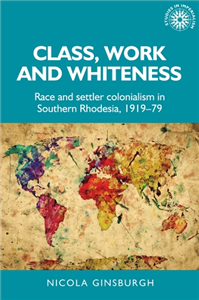
This book offers the first comprehensive history of white workers from the end of the First World War to Zimbabwean independence in 1980. It reveals how white worker identity was constituted, examines the white labouring class as an ethnically and nationally heterogeneous formation comprised of both men and women, and emphasises the active participation of white workers in the ongoing and contested production of race. White wage labourers' experiences, both as exploited workers and as part of the privileged white minority, offer insight into how race and class co-produced one another and how boundaries fundamental to settler colonialism were regulated and policed. Based on original research conducted in Zimbabwe, South Africa and the UK, this book offers a unique theoretical synthesis of work on gender, whiteness studies, labour histories, settler colonialism, Marxism, emotions and the New African Economic History.
 Trusted Partner

Focussing on professional politicians Klaus Stolz investigates the interrelationship between political career patterns and political institutions in two of the most widely discussed cases of regionalism: Catalonia and Scotland. The study deals with two different yet closely related sets of questions: Firstly, how do professional politicians pursue their careers in the regional context. And secondly, how do they shape and reshape the political institutions in which they pursue these careers. The monograph is based on extensive empirical research including a comprehensive data set on the careers of Catalan and Scottish parliamentarians, systematic surveys of regional representatives as well as in-depth interviews of a wide range of politicians and experts in both regions. Exploring the effects of political professionalisation on regional democracy, Stolz goes way beyond traditional studies of regionalism and decentralization, while his focus on the regional career arena introduces a much needed territorial dimension to the study of political careers. Rich original data, innovative theoretical concepts and a strictly comparative approach are the basis for a study that considerably deepens and enhances our understanding of the tremendous political changes both Catalonia and Scotland are undergoing. Thus, the book is of interest to the still growing number of scholars concerned with devolution in the UK, the Spanish autonomous communities as well as to those interested in regional politics and regionalisation in general. Furthermore, its theoretical focus makes it highly relevant for scholars working on political careers, political professionalisation and democratic theory. ;
Trusted Partner

This is the first book-length study to focus primarily on the role of class in the encounter between South Asians and British institutions in the United Kingdom at the height of British imperialism. In a departure from previous scholarship on the South Asian presence in Britain, 'The better class' of Indians emphasizes the importance of class as the register through which British polite society interpreted other social distinctions such as race, gender, and religion. Drawing mainly on unpublished material from the India Office Records, the National Archives, and private collections of charitable organizations, this book examines not only the attitudes of British officials towards South Asians in their midst, but also the actual application of these attitudes in decisions pertaining to them. This fascinating book will be of particular interest to scholars and general readers of imperialism, immigration as well as British and Indian social history.
Trusted Partner
Trusted Partner
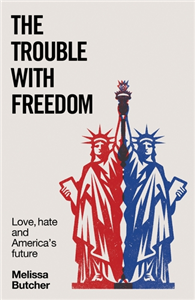
An illuminating account of how Americans have been divided by the very value that unites them. America today is being torn apart by the struggle over a single concept, deeply rooted in the country's sense of self: freedom. Battered by wave after wave of crises, ordinary people of all political persuasions have come to feel that their freedom is under threat - and with it, nothing less than the soul of the nation. In The trouble with freedom, journalist and researcher Melissa Butcher takes a trip into the ferociously polarised world of American politics, hoping to find out what's going on beneath the surface. Criss-crossing the country, she talks to a wide range of people: Democrat and Republican, gay and straight, urban and rural, immigrants, First Nations, Black, white, the incarcerated. What she discovers is that political conflict is often the outcome of very personal experiences of managing cultural change. Exploring the different ways freedom has been used to define what it means to be American, Butcher encounters anger and distrust, but also untapped possibilities for empathy and care.
Trusted Partner
 Trusted Partner
Trusted Partner
Trusted Partner
Trusted Partner
Trusted Partner

This exploration of one of the most concentrated immigrant communities in Britain combines a fascinating narrative history, an original theoretical analysis of the evolving relationship between progressive left politics and ethnic minorities, and an incisive critique of political multiculturalism. It recounts and analyses the experiences of many of those who took part in over six decades of political history that range over secular nationalism, trade unionism, black radicalism, mainstream local politics, Islamism and the rise and fall of the Respect Coalition. Through this Bengali case study and examples from wider immigrant politics, it traces the development and adoption of the concepts of popular frontism, revolutionary stages theory and identity politics. It demonstrates how these theories and tactics have cut across class-based organisation and acted as an impediment to addressing socio-economic inequality; and it argues for a left materialist alternative. It will appeal equally to sociologists, political activists and local historians. ;
Trusted Partner
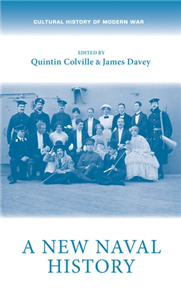
A New Naval History brings together the most significant and interdisciplinary approaches to contemporary naval history. The last few decades have witnessed a transformation in how this field is researched and understood and this volume captures the state of a field that continues to develop apace. It examines - through the prism of naval affairs - issues of nationhood and imperialism; the legacy of Nelson; the socio-cultural realities of life in ships and naval bases; and the processes of commemoration, journalism and stage-managed pageantry that plotted the interrelationship of ship and shore. This bold and original publication will be essential for undergraduate and postgraduate students of naval and maritime history. Beyond that, though, it marks an important intervention into wider historiographies that will be read by scholars from across the spectrum of social history, cultural studies and the analysis of national identity.
Trusted Partner

British culture after Empire is the first collection of its kind to explore the intertwined social, cultural and political aftermath of empire in Britain from 1945 up to and beyond the Brexit referendum of 2016, combining approaches from the fields of history, English and cultural studies. Against those who would deny, downplay or attempt to forget Britain's imperial legacy, the various contributions expose and explore how the British Empire and the consequences of its end continue to shape Britain at the local, national and international level. As an important and urgent intervention in a field of increasing relevance within and beyond the academy, the book offers fresh perspectives on the colonial hangovers in post-colonial Britain from up-and-coming as well as established scholars.
Trusted Partner
The book addresses what is political in critical theory and which aspects, arguments or notions of critical theory maintain political significance for the 20th and the 21st centuries. The collection of essays comprises itself of a series of clear and critical perspectives that analyze the extent to which critical theory relates political argument to modern societies and, thereby, exerts a critique of the multiple social and political phenomena of late modernity. The contributors focus on a multiplicity of universal phenomena such as globalization, multiple crises, late capitalism and the social role of the sciences, and posit some novel criticism of the contemporary social sphere, as it is situated within the wider system of global capitalism. They also present a plurivalent critique that links arguments in Marxism and Freud to all three generations of critical theory.
Trusted Partner

Borders and conflict in South Asia is the first full-length study of the 1947 drawing of the Indo-Pakistani boundary in Punjab. Using the Radcliffe commission as a window onto the decolonization and independence of India and Pakistan, and examining the competing interests, both internal and international, that influenced the actions of the various major players, it highlights British efforts to maintain a grip on India even as the decolonization process spun out of control. Drawing on extensive archival research in India, Pakistan, and Britain, combined with innovative use of cartographic sources, the book paints a vivid picture of both the partition process and the Radcliffe line's impact on Punjab. This book will be vital reading for scholars and students of colonialism, decolonization, partition, and borderlands studies, while providing anyone interested in South Asia's independence with a highly readable account of one of its most controversial episodes.
Trusted Partner
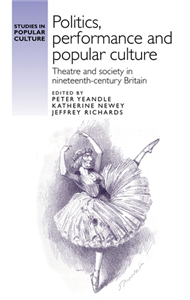
This collection brings together studies of popular performance and politics across the nineteenth century, offering a fresh perspective from an archivally grounded research base. It works with the concept that politics is performative and performance is political. The book is organised into three parts in dialogue regarding specific approaches to popular performance and politics. Part I offers a series of conceptual studies using popular culture as an analytical category for social and political history. Part II explores the ways that performance represents and constructs contemporary ideologies of race, nation and empire. Part III investigates the performance techniques of specific politicians - including Robert Peel, Keir Hardie and Henry Hyndman - and analyses the performative elements of collective movements.
Trusted Partner

Men in political theory builds on feminist re-readings of the traditional canon of male writers in Political Philosophy by turning the 'gender lens' on to the representation of men in widely studies texts. It explains the distinction between 'man' as an apparently de-gendered 'individual' or 'citizen', and 'man' as an overtly gendered being in human society. Both these representations of 'man' are crucial to a clearer understanding of the operation of gender. Newly available in paperback, the book is the first to use the 'men's studies' and 'masculinities' literatures in re-thinking the political problems that students and specialists in the social sciences and humanities must encounter: consent, obligation, patriarchy, gender, sexuality, life-cycle, and discriminatory disadvantage related to sex, age, class, race/ethnicity and disability. It does this by re-examining the historical materials from which present-day concepts of citizenship, individuality, identity, subjectivity, normativity and legitimacy arise. The ten chapters on Plato, Aristotle, Jesus, Augustine, Machiavelli, Hobbes, Locke, Rousseau, Marx and Engels show the operation of the 'gender lens' in different ways, depending on how the philosopher deploys concepts of men and masculinity to pose and solve classic problems. They can all be read independently and are as suitable for those just making the acquaintance of these classic writers as for those with specialist knowledge and interests. ;
Trusted Partner
In Straight Nation, Pavan Mano reveals the logic of straightness that sits at the heart of postcolonial nationalism in Singapore. Mano rejects the romantic notion of the nation as a haven of belonging, showing it to be a relentless force that is allied with heteronormativity to create a host of minoritized and xenologized figures. Through meticulous exploration and close reading of a swathe of texts, Mano unveils the instrumental role of sexuality in structuring the national imaginary. The book adroitly demonstrates how queerness is rendered foreign in postcolonial Singapore and functions alongside technologies of "race", gender, and class. A provocative critique of narrow contemporary identity politics and its concomitant stymying of a more ambitious political critique, Straight Nation sets out an argument that moves beyond the negativity of traditional critique into a space of (re)thinking, (re)building and (re)imagining.
Trusted Partner
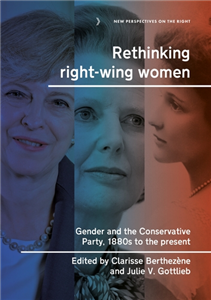
Rethinking Right-Wing Women explores the institutional structures for and the representations, mobilisation, and the political careers of women in the British Conservative Party since the late 19th century. From the Primrose League (est.1883) to Women2Win (est.2005), the party has exploited women's political commitment and their social power from the grass-roots to the heights of the establishment. Yet, although it is the party that extended the equal franchise, had the first woman MP to sit Parliament, and produced the first two women Prime Ministers, the UK Conservative Party has developed political roles for women that jar with feminist and progressive agendas. Conservative women have tended to be more concerned about the fulfilment of women's duties than the realisation of women's rights. This book tackles the ambivalences between women's politicisation and women's emancipation in the history of Britain's most electorally successful and hegemonic political party.
Trusted Partner
In the aftermath of the greed vs. grievance debate and the new wars paradigm, the focus of conflict studies shifted decisively to understanding "predatory" behaviours as the raison d'etre of contemporary conflict. Conflict was viewed as a continuum in which the more you engage in criminal behaviour, the less political you are.This approach has been robustly criticised over the past 15 years; however, in the process, we have been left with unsuitable concepts to handle the complex interactions between civil war, political power and criminality. The departure point here is the understanding of politics and criminality as two historically differentiated domains of human activity. Different, but interrelated, often co-constitutive and overlapping. Here, we empirically and theoretically explore their interactions, connections, and convergences, not focusing solely on irregular actors, thus bringing back the State and elites into this debate.
Trusted Partner



