
La Pollera Ediciones
La Pollera's catalog includes narrative, essay, and chronicle of contemporary and classic authors.
View Rights Portal
La Pollera's catalog includes narrative, essay, and chronicle of contemporary and classic authors.
View Rights Portal
Polperro Heritage Press is an independent British publisher, established in 1995. Recent titles from Polperro Press have included biographies, guides and a growing list of Cornish local history titles.
View Rights Portal


Scholars of Edmund Spenser have focused much more on his accomplishments in epic and pastoral than his work in satire. Scholars of early modern English satire almost never discuss Spenser. However, these critical gaps stem from later developments in the canon rather than any insignificance in Spenser's accomplishments and influence on satiric poetry. This book argues that the indirect form of satire developed by Spenser served during and after Spenser's lifetime as an important model for other poets who wished to convey satirical messages with some degree of safety. The book connects key Spenserian texts in The Shepheardes Calender and the Complaints volume with poems by a range of authors in the late sixteenth and early seventeenth centuries, including Joseph Hall, Thomas Nashe, Tailboys Dymoke, Thomas Middleton and George Wither, to advance the thesis that Spenser was seen by his contemporaries as highly relevant to satire in Elizabethan England.
 Trusted Partner

Terry Gilliam presents a sustained examination of one of cinema's most challenging and lauded auteurs, proposing fresh ways of seeing Gilliam that go beyond reductive readings of him as a gifted but manic fantasist. Analysing Gilliam's work over nearly four decades, from the brilliant anarchy of his Monty Python animations through the nightmarish masterpiece Brazil to the provocative Gothic horror of Tideland, it critically examines the variety and richness of Gilliam's sometimes troubled but always provocative output. The book situates Gilliam within the competing cultural contexts of the British, European and American film industries, examining his regular struggles against aesthetic and commercial pressures. He emerges as a passionate, immensely creative director, whose work encompasses a dizzying array of material: anarchic satire, childhood and adult fantasy, dystopia, romantic comedy, surrealism, road movie, fairy tale and the Gothic. The book charts how Gilliam interweaves these genres and forms to create magical interfaces between reality and the illuminating, frightening but liberating worlds of the imagination. Scrutinising the neglected importance of literature and adaptation in Gilliam's career, this study also observes him through the lenses of auteurism, genre, performance, design and national culture, explaining how someone born in Minnesota and raised in California came to be one of British television and film's most compelling figures.
Trusted Partner
 Trusted Partner

This book is the first major attempt to examine the cultural manifestations of the demise of imperialism as a social and political ideology in post-war Britain. Far from being a matter of indifference or resigned acceptance as is often suggested, the fall of the British Empire came as a profound shock to the British national imagination, and resonated widely in British popular culture. The sheer range of subjects discussed, from the satire boom of the 1960s to the worlds of sport and the arts, demonstrates how profoundly decolonisation was absorbed into the popular consciousness. Offers an extremely novel and provocative interpretation of post-war British cultural history, and opens up a whole new field of enquiry in the history of decolonisation.
Trusted Partner

 Trusted Partner
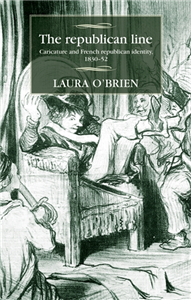
The years between 1830 and 1852 were turbulent ones in French politics - but were also a golden age for French political caricature. Caricature was wielded as a political weapon, so much so that in 1835 the French politician Adolphe Thiers claimed that 'nothing was more dangerous' than graphic satire. This book is the first full study of French political caricature during the critical years of the July Monarchy (1830-48) and the Second Republic (1848-52). Focusing on the crucial question of republicanism, it shows how caricature was used - by both republicans and anti-republicans - to discuss, define and articulate notions of republican identity during this highly significant period in modern French and European history. ;
Trusted Partner


This guide provides patients with important medical information about interactions of their drug products with vitamins and minerals. These interactions are not always listed in the accompanying package inserts. Those who take acid blockers such as omeprazole or pantoprazole may not only develop disorders relating to calcium, magnesium, vitamin D and bone metabolism in the long term, but above all become deficient in vitamin B12. This way, patients can improve their treatment, reduce the side effects of their medication and increase their quality of life!
Trusted Partner

This book is the first major attempt to examine the cultural manifestations of the demise of imperialism as a social and political ideology in post-war Britain. Far from being a matter of indifference or resigned acceptance as is often suggested, the fall of the British Empire came as a profound shock to the British national imagination, and resonated widely in British popular culture. The sheer range of subjects discussed, from the satire boom of the 1960s to the worlds of sport and the arts, demonstrates how profoundly decolonisation was absorbed into the popular consciousness. Offers an extremely novel and provocative interpretation of post-war British cultural history, and opens up a whole new field of enquiry in the history of decolonisation. ;
Trusted Partner
This is an exciting collection of essays on the rule of Charles I at a time of fundamental importance to English history. It combines the work of historians with academics from literary studies to provide an interdisciplinary examination of the culture and political life of the decade. The chapters focus on issues in politics, religion, the monarchy and culture, as well as literature and art history. Essays examine everything from the King's correspondence to the role of consort queens at court and opposition to the King in libel, satire and on the stage. Many historians assert that it was Charles's inept and dangerous policy of 'personal rule' which was responsible for putting the country on the road to civil war. This book will be invaluable for students and lecturers seeking to better understand the causes of the conflict. ;
Trusted Partner
The book addresses what is political in critical theory and which aspects, arguments or notions of critical theory maintain political significance for the 20th and the 21st centuries. The collection of essays comprises itself of a series of clear and critical perspectives that analyze the extent to which critical theory relates political argument to modern societies and, thereby, exerts a critique of the multiple social and political phenomena of late modernity. The contributors focus on a multiplicity of universal phenomena such as globalization, multiple crises, late capitalism and the social role of the sciences, and posit some novel criticism of the contemporary social sphere, as it is situated within the wider system of global capitalism. They also present a plurivalent critique that links arguments in Marxism and Freud to all three generations of critical theory.
Trusted Partner
This is the first major study of Britain's pioneering graphic satirist, Sir Francis Carruthers Gould (1844-1925), the first staff political cartoonist on a daily newspaper in Britain, and the first of his kind to be knighted. Written by the distinguished media historian, Colin Seymour-Ure, it is essential reading for anyone interested in cartoons, caricature and illustration and will also be welcomed by students of history, politics and the media. It examines Gould's career in Fleet Street until his retirement after the First World War. It also discusses his illustrations for magazines and books and there is an analysis of his use of symbolism and literary allusion to lampoon such eminent politicians as Gladstone and Joseph Chamberlain. As Lord Baker says in his Foreword, this book is 'a major contribution to our knowledge of British cartooning.'
Trusted Partner
Galatea and Midas are two of John Lyly's most engaging plays. Lyly took up the story of two young women, Galatea (or Gallathea) and Phillida who are dressed up in male clothes by their fathers so that they can avoid the requirement of the god Neptune that every year 'the fairest and chastest virgin in all the country' be sacrificed to a sea-monster. Hiding together in the forest, the two maidens fall in love, each supposing the other to be a young man. Galatea has become the subject of considerable feminist critical study in recent years. Midas (1590) uses mythology in quite a different way, dramatising two stories about King Midas in such a way as to fashion a satire of King Philip of Spain (and of any tyrant like him) for colossal greediness and folly. In the wake of the defeat of Philip's Armada fleet and its attempted invasion of England in 1588, this satire was calculated to win the approval of Queen Elizabeth and her court.
Trusted Partner
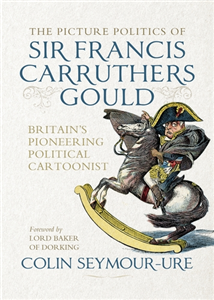
This is the first major study of Britain's pioneering graphic satirist, Sir Francis Carruthers Gould (1844-1925), the first staff political cartoonist on a daily newspaper in Britain, and the first of his kind to be knighted. Written by the distinguished media historian, Colin Seymour-Ure, it is essential reading for anyone interested in cartoons, caricature and illustration and will also be welcomed by students of history, politics and the media. It examines Gould's career in Fleet Street until his retirement after the First World War. It also discusses his illustrations for magazines and books and there is an analysis of his use of symbolism and literary allusion to lampoon such eminent politicians as Gladstone and Joseph Chamberlain. As Lord Baker says in his Foreword, this book is 'a major contribution to our knowledge of British cartooning.'
Trusted Partner
Trusted Partner

This book examines Turkey's integration with Europe within structural dynamics of globalisation from a critical political economy perspective. Critical approaches have been sidelined within European Studies. Turkish enlargement is not an exemption. The analyses are based on original data generated by 109 interviews conducted in 2010, 2017 and 2023 with five categories of actors: representatives of capital and labour, political parties, state officials, and struggles around ecology, patriarchy and migration. It argues that the pro-membership was hegemonic in the 2000s which was contested by two rival class strategies, Ha-vet and neo-mercantilism. In the 2010s, pro-membership is no longer hegemonic within rising critical tone of social forces supporting rival class strategies. Unevenness of Turkey's trajectory of integration to Europe is likely to be consolidated through market integration and management of migration through transactional approach.
Trusted Partner
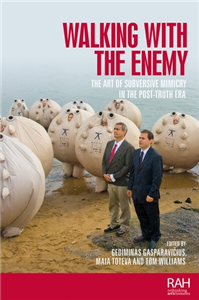
This book is about artists and activists who have embraced mimicry as a subversive tactic. Bringing together the contributions of seventeen writers, it addresses the ways in which artists have responded to power and ideology by imitating its outward forms. These contributors address in particular the current age of fantasy and political deception, and they consider the work of artists who have reacted by using dissimulation and make-believe themselves. Chapters include discussions of mimicry in reference to a number developments and debates: the post-truth era, the neoliberal consensus, the politics of race and gender, online subcultures, and the rise of the new right.
Trusted Partner
 Trusted Partner
 Trusted Partner



