
Thornapple Press
Publisher of bestselling and award-winning books including Polysecure, More Than Two and Love’s Not Color Blind.
View Rights Portal
Publisher of bestselling and award-winning books including Polysecure, More Than Two and Love’s Not Color Blind.
View Rights Portal
Home to poetry slammers / stage poets and their stages-texts as well as novels / fictional works. What have all our authors in common? They can perform on stages what make every reading quite entertaining. When a stage-experienced actor and poetry slammer writes a dragon-novel for yound readers / listeners, then it's beatuful to read, listen and his readings are always fascinating. That way, the young dragon Fionrir, princess Quirina and their most unusual pack gained a intensely interacting fanbase. As the other stage-performers do.
View Rights Portal

This book provides the most comprehensive analysis of the post-war political thought of the Liberals and Liberal Democrats to date. The rationale of the book stems from a belief that contemporary debate over the party's future ideological direction can only be fully appreciated by placing it within a broader historical context. The book begins by outlining the three dominant ideological traditions within the Liberals and Liberal Democrats - namely, classical liberalism, the 'centre' and social liberalism. The main ideas, policies and personalities associated with each tradition are evaluated. Leading experts in the field then examine a range of themes and issues including constitutional reform, decentralization, political economy, social morality, internationalism and political strategy. The final section consists of three commentaries from different ideological perspectives written by leading Liberal Democrat MPs - Vincent Cable, David Howarth and Steve Webb. In adopting a new approach to the Liberals and Liberal Democrats and in combining expert analysis with political commentary, this book will be of interest to students and the general reader alike. ;

This book provides a careful and systematic analysis of Anthony Ascham's career and writings for the first time in English. During the crucial period between the Second Civil War and the establishment of the English Republic, when he served as official pamphleteer of the Parliament and the republican government, Ascham put forward a complex argument in support of Parliament's claims for obedience which drew on the political thought of Grotius, Hobbes, Selden, Filmer and Machiavelli. He combined ideas taken from these authors and turned them into a powerful instrument of propaganda to be deployed in the service of the political agenda of his Independent patrons in Parliament. This investigation of Ascham's works brings together an intellectual analysis of his political thought and an exploration of the interaction between politics, propaganda and political ideas.
 Trusted Partner
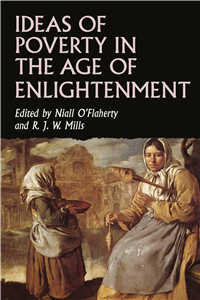
This collection of essays examines the ways in which poverty was conceptualised in the social, political, and religious discourses of eighteenth-century Europe. It brings together experts with a wide range of expertise to offer pathbreaking discussions of how eighteenth-century thinkers thought about the poor. Because the theme of poverty played important roles in many critical issues in European history, it was central to some of the key debates in Enlightenment political thought throughout the period, including the controversies about sovereignty and representation, public and private charity, as well as questions relating to crime and punishment. The book examines some of the most important contributions to these debates, while also ranging beyond the canonical Enlightenment thinkers, to investigate how poverty was conceptualised in the wider intellectual culture, as politicians, administrators and pamphlet writers grappled with the issue.
Trusted Partner
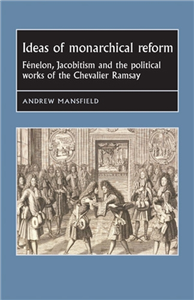
This book examines the political works of Andrew Michael Ramsay (1683-1743) within the context of early eighteenth-century British and French political thought. In the first monograph on Ramsay in English for over sixty years, the author uses Ramsay to engage in a broader evaluation of the political theory in the two countries and the exchange between them. At the beginning of the eighteenth century, Britain and France were on divergent political paths. Yet in the first three decades of that century, the growing impetus of mixed government in Britain influenced the political theory of its long-standing enemy. Shaped by experiences and ideologies of the seventeenth century, thinkers in both states exhibited a desire to produce great change by integrating past wisdom with modern knowledge.
Trusted Partner
In the aftermath of the greed vs. grievance debate and the new wars paradigm, the focus of conflict studies shifted decisively to understanding "predatory" behaviours as the raison d'etre of contemporary conflict. Conflict was viewed as a continuum in which the more you engage in criminal behaviour, the less political you are.This approach has been robustly criticised over the past 15 years; however, in the process, we have been left with unsuitable concepts to handle the complex interactions between civil war, political power and criminality. The departure point here is the understanding of politics and criminality as two historically differentiated domains of human activity. Different, but interrelated, often co-constitutive and overlapping. Here, we empirically and theoretically explore their interactions, connections, and convergences, not focusing solely on irregular actors, thus bringing back the State and elites into this debate.
Trusted Partner

Egypt and the rise of fluid authoritarianism focuses on the struggle of the post-2013 political authorities for internal political legitimacy after the crisis following the 2013 coup d'état. It explores the microstructural and macro-systemic dynamics of leadership, power, protests and the authority-making process in political systems. These cannot simply be defined as structural, political, social and economic projections of the authoritarianism of the past, but rather as a rupture with that past. The book offers a complex, ground-breaking socio-political and economic analysis into how the forging of an internal political legitimacy claim has eventually modified the regime in Egypt along the authoritarian spectrum, turning into a fluid autocracy closer to a non-exclusivist personalist regime. This shift had implications that resonated both politically and economically.
Trusted Partner

Written specifically to cover the A2 component of the GCE Government and Politics A-level. Provides a comprehensive introduction to the various political ideas and movements that have shaped the modern world. Underpinned by the work of major thinkers such as Marx, Locke, Weber, Hobbes and Foucault, the book examines at political concepts including the state and sovereignty, the nation and democracy, representation and legitimacy, freedom, equality and rights, obligation and citizenship. Addresses traditional theoretical subjects such as socialism, marxism and nationalism as well as contemporary contemporary movements such as environmentalism, ecologism and feminism. Written in a clear, accessible style, including a number of student-friendly features, such as chapter summaries, key points to consider, definitions and pointers to further sources of information.
Trusted Partner


Design Thinking: Solve problems together, user-centered and iterative, develop innovations and have fun doing so! - Practical cards for innovation project work with change of perspective- Consistently customer-oriented and iterative- Targeted use of the maps in project planning and implementation with Design Thinking- Pragmatic, compact and wonderfully descriptive- Suitable for the most diverse questions or problems- With folding poster for targeted use of maps in project planning and decorative at the workplace- From the authors "Design Thinking Quick Start
Trusted Partner

This book examines how Ireland's relationship with the EU was affected by a succession of crises in both the Republic of Ireland and Northern Ireland. The financial crisis, the Brexit crisis and the migration crisis were not of equal significance on the island of Ireland. The financial crisis was a huge issue for the Republic but not Northern Ireland, Brexit had a major impact in both polities, the migration and populism issues were less controversial, while foreign policy challenges had a minimal impact. The book provides a summary of the main features of each of the crises to be considered, from both the EU and the Irish perspective. Ireland and the European Union is the first volume of its kind to provide a comprehensive analysis on British-Irish relations in the context of Brexit. It assesses the Withdrawal Agreement and Protocol on Ireland/Northern Ireland, the devolution settlement and the 1998 Agreement, as well as the European dimension to Northern Ireland's peace process. The contributors explore a number of policy areas that are central to the understanding of each of the crises and the impact of each for Ireland. Chapters examine issues such as security, migration and taxation as well as protest politics, political parties, the media, public opinion and the economic impact of each of these crises on Ireland's relationship with the EU.
Trusted Partner
After the fall of the Ben Ali regime in 2011, Tunisia swiftly began dealing with its authoritarian past and initiated a comprehensive transitional justice process, with the Truth and Dignity Commission as its central institution. However, instead of bringing about peace and justice, transitional justice soon became an arena of contention. Through a process lens, the book explores why and how the process evolved, and explains how it relates to the country's political transition. Based on extensive field research in Tunisia and the US, and interviews with a broad range of international stakeholders and decision-makers, this is the first book to comprehensively study the Tunisian transitional justice process. It provides an in-depth analysis of a crucial period, examining the role of justice professionals in different stages, as well as the alliances and frictions between different actor groups that cut across the often-assumed local-international divide.
Trusted Partner
 Trusted Partner

This book explores radical dissent from orthodox mainstream economics, and sets out a theoretically grounded vision for the emerging paradigm of social ecological economics. At the heart of this paradigmatic shift lies an acknowledgement of the inextricable embeddedness of economies in biophysical reality and social structure. The struggle for this transformative vision unfolds through a critical examination of mainstream environmental thought, followed by a nuanced evaluation of contributions from Marxists, socialists, critical institutionalists, feminists and Post-Keynesians grappling with the urgent environmental crisis. Synthesising insights from these diverse and heterodox schools, the book navigates the philosophical underpinnings of science, embracing a critical realist approach that challenges not only mainstream economic thought but also eclectic pluralism, relativism and strong constructionism. The question of what constitutes revolutionary science is explored in light of works by Kuhn, Schumpeter and Neurath, emphasising the pivotal role of values and ideology in works from Marx to Gramsci. Building on these radical and philosophical foundations, the book articulates a preanalytic vision of social ecological economics, dismantling entrenched notions of growth and efficiency in favour of a framework centered on social provisioning and needs embedded in ethics. In a thought-provoking conclusion, the book applies its analytical lens to the multiple crises of modernity within industrialised capital-accumulating economies. An agenda for social ecological transformation toward diverse alternative economies emerges, providing a compelling call to action in the face of contemporary challenges.
Trusted Partner

The revival of recognition theory has brought new energy to critical theory. In general terms, recognition theory aims to critically evaluate social structures against a standard of social freedom identified with norms of interaction which are freely recognised by all parties. Until now, attention has primarily focused on the categories and forms of recognition theory. However, the influence of contemporary French theory upon the development of theories of recognition has not yet received the consideration it merits. This collection outlines the current state of recognition theory, studies the impact of French theory, and uses French thought to identity aspects of the recognitive process which are often overlooked. Exploring French accounts of agonistic identity construction, vulnerability, power, ethical obligation and reflexive theory construction, this book supports the intentions of critical theory with heightened attentiveness to oppression in all of its forms.
Trusted Partner

The revival of recognition theory has brought new energy to critical theory. In general terms, recognition theory aims to critically evaluate social structures against a standard of social freedom identified with norms of interaction which are freely recognised by all parties. Until now, attention has primarily focused on the categories and forms of recognition theory. However, the influence of contemporary French theory upon the development of theories of recognition has not yet received the consideration it merits. The book takes up this task. With chapters by internationally recognised authors, the collection outlines the current state of recognition theory, studies the impact of French theory, and uses French thought to identity aspects of the recognitive process which are often overlooked. Exploring French accounts of agonistic identity construction, vulnerability, power, ethical obligation and reflexive theory construction, this book supports the intentions of critical theory with heightened attentiveness to oppression in all of its forms. ;
Trusted Partner
In this book, the complexity and the significance of the foods we eat are analysed from a variety of perspectives, by sociologists, economists, geographers and anthropologists. Chapters address a number of intriguing questions: how do people make judgments about taste? How do such judgments come to be shared by groups of people?; what social and organisational processes result in foods being certified as of decent or proper quality? How has dissatisfaction with the food system been expressed? What alternatives are thought to be possible? The multi-disciplinary analysis of this book explores many different answers to such questions. The first part of the book focuses on theoretical and conceptual issues, the second part considers processes of formal and informal regulation, while the third part examines social and political responses to industrialised food production and mass consumption. Qualities of food will be of interest to researchers and students in all the social science disciplines that are concerned with food, whether marketing, sociology, cultural studies, anthropology, human nutrition or economics.
Trusted Partner

This book examines Turkey's integration with Europe within structural dynamics of globalisation from a critical political economy perspective. Critical approaches have been sidelined within European Studies. Turkish enlargement is not an exemption. The analyses are based on original data generated by 109 interviews conducted in 2010, 2017 and 2023 with five categories of actors: representatives of capital and labour, political parties, state officials, and struggles around ecology, patriarchy and migration. It argues that the pro-membership was hegemonic in the 2000s which was contested by two rival class strategies, Ha-vet and neo-mercantilism. In the 2010s, pro-membership is no longer hegemonic within rising critical tone of social forces supporting rival class strategies. Unevenness of Turkey's trajectory of integration to Europe is likely to be consolidated through market integration and management of migration through transactional approach.
Trusted Partner

One of the few books which systematically brings post-structuralist theory to bear on substantive political analysis. Offers accessible accounts of different strands of discourse theory such as deconstruction, psychoanalysis and genealogy, which are applied to the analysis of specific cases such as Northern Ireland and contemporary East European politics. Each chapter addresses a key theme and issue in contemporary politics. Draws on inspiration from Ernesto Laclau, Jacques Derrida, Michel Foucault and Jacques Lacan. Contains a clear introductory statement of the theoretical approach used and concludes with an assessment of the future directions of discourse theory in the social sciences. ;
Trusted Partner
This new edition will be essential reading for all students studying politics at A2 level, as it covers the important issues as required by the main examining boards, and has been specifically tailored to the brand new Edexcel Route A specification. Fully updated to include the global recession and other recent political developments, it looks at the important issues in British politics since 1945. It is also useful as an introductory reader for all those who are interested in the field. Neil McNaughton is a seasoned writer at this level. He examines, on a chapter by chapter basis, the key issues of British politics today; economic policy, the Welfare State, law and order, environment policy, Northern Ireland, issues concerning women, European integration and the European Union, and the impact of the European Union on Britain. In each case he describes the issues in detail and places them in their political context. Written in an accessible style, with helpful features such as summaries, definition, tables and boxes to illuminate the points made and suggestions for additional reading and research, this book is urgently needed as students grapple with the issues thrown up by the new examinations. ;
Trusted Partner

How should we respond to the inhumanity that suffused the twentieth Century and continues in the present one? Has there been an adequate treatment of this issue by the political left? Questions such as these are treated in this, the first scholarly book to combine academic and blogging approaches to some of the major political issues of the day. It does this by focusing on the work of Norman Geras - Marxist, political philosopher and blogger - and developing the central themes of his work such as crimes against humanity, the Holocaust, Marxism, and the means/ends problem in politics. It contains contributions by famous political philosophers such as Michael Walzer, Hillel Steiner and David McLennan, and bloggers and journalists such as David Aaronovitch, Nick Cohen and Ophelia Benson. The book contains a unique response by Geras in which he draws together the various themes it covers. It will be of interest to all who are concerned with these pressing political issues of our time. The book will be particularly relevant for those with an academic or general interest in politics, philosophy, sociology, genocide studies, applied ethics, international relations and law. It will also be of interest to bloggers and all those who regard new technology as having significant implications for public debate on these issues. ;
Trusted Partner
The book addresses what is political in critical theory and which aspects, arguments or notions of critical theory maintain political significance for the 20th and the 21st centuries. The collection of essays comprises itself of a series of clear and critical perspectives that analyze the extent to which critical theory relates political argument to modern societies and, thereby, exerts a critique of the multiple social and political phenomena of late modernity. The contributors focus on a multiplicity of universal phenomena such as globalization, multiple crises, late capitalism and the social role of the sciences, and posit some novel criticism of the contemporary social sphere, as it is situated within the wider system of global capitalism. They also present a plurivalent critique that links arguments in Marxism and Freud to all three generations of critical theory.

