La Pollera Ediciones
La Pollera's catalog includes narrative, essay, and chronicle of contemporary and classic authors.
View Rights Portal
La Pollera's catalog includes narrative, essay, and chronicle of contemporary and classic authors.
View Rights Portal
La Pollera publishes narrative, essay, and chronicle of contemporary and classic authors. They work with foreign authors, both in contemporary Latin American narrative and in the translation of some universal classic authors.
View Rights Portal

Großer Kreativspaß für alle Drachen-Flieger-Fans: Einfach aus den vorgestanzten Bögen die Drachen basteln und schon beginnt das große Turnier! Feuerdrache, Donnervogel oder Eisdrache - alle fliegen um die Wette. Wer wird wohl das Rennen gewinnen? Mit vielen spannenden Fakten über die fantastischen Kreaturen.

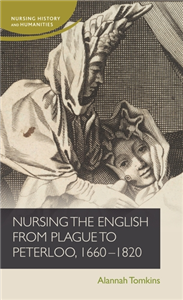
This book studies the negative stereotypes around the women who worked as sick nurses in this period and contrasts them with the lived experience of both domestic and institutional nursing staff. Furthermore, it integrates nursing by men into the broader history of care as a constant if little-recognised presence. It finds that women and men undertook caring work to the best of their ability, and often performed well, despite multiple threats to nurse reputations on the grounds of gender norms and social status. Chapters consider nursing in the home, in general hospitals, in specialist institutions like the Royal Chelsea Hospital and asylums, plus during wartime, illuminated by multiple accounts of individual nurses. In these settings, it employs the sociological concept of 'dirty work' to contextualise the challenges to nurses and nursing identities.
 Trusted Partner


How Environmental Destruction Caused the Corona Pandemic and Why Ecological Medicine Can Save Us The corona crisis can repeat itself at any time. A book about the disease-causing mechanisms of environmental pollution, and an innovative guide out of the health crisis Clemens Arvay is an expert in the field of medical ecology. In WE CAN DO BETTER, he takes the current corona crisis as an opportunity to look far beyond and work out exactly why negative environmental factors are responsible for an increasing deterioration of public health. Yet the author also points the way out of the calamity, explaining how we ourselves and future generations can improve our health through a different approach to nature.It was only because of environmental factors that COVID-19 was able to become a pandemic. Thus, for Clemens Arvay the corona crisis represents a symptom of a much larger problem, namely, a natural habitat that is making humans sick. It is already known today that fine particulate matter intensifies not only corona but also influenza infections, thereby killing hundreds of thousands of people worldwide every year. Light pollution leads to a rapid increase in cancer, and even the abrasion of automobile tires inhibits our immune system. Clemens Arvay makes himself clear: this is our last chance to take control of the situation. After the corona crisis, we must never allow things to return to the way they were before. Arvay therefore calls for nothing less than an eco-medical revolution in healthcare; a different, less global and industrialized lifestyle. And he shows each and every one of us how we can utilize factors in our environment to protect our health, strengthen our immune system, and stay well. For readers of shinrin-yoku by Annette Lavrijsen
Trusted Partner

Environmental policy has become an increasingly important area of European Union (EU) policy-making and the source of political conflict between Britain and Germany. This book explains why national conflicts have arisen and how they are resolved at EU level by focusing on the Europeanisation of air and water pollution control in particular. Wurzel argues that Anglo-German divergences are best explained in terms of ecological vulnerability, economic cost and capacity, political salience and environmental regulatory styles. Focusing on two very important and media-exploitable issues - car emissions and bathing water regulation - this book challenges the conventional wisdom that Britain has shown a clear preference for environmental quality objectives while Germany championed uniform emission limits. Acceptance of the concept of ecological modernisation plays a vital role in the adoption of more progressive environmental standards. ;
Trusted Partner
Trusted Partner
 Trusted Partner
 Trusted Partner
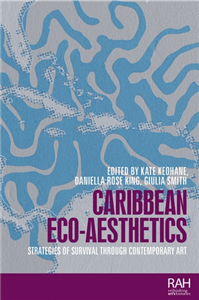
This edited volume reframes the Caribbean as a paradigm of ecological resilience and creativity by bringing together the voices of contemporary artists and scholars who are at the forefront of environmental activism in the region and across its diasporas. While dominant narratives percolating from the environmental sciences to the mainstream press present the Caribbean as a frontier of planetary disaster, the contributors to this volume show how the region offers radical models for overcoming the environmental challenges of the present. At the heart of this argument lies the history of the Caribbean as a centre for grassroots forms of anti-colonial and anti-capitalist resistance founded upon nature-centred cosmologies and practices. Caribbean Eco-Aesthetics shows how contemporary artists are mobilising this radical heritage in a bid to unlock alternative planetary futures.
Trusted Partner

Any reader who has ever visited Asia knows that the great bulk of Western-language fiction about Asian cultures turns on stereotypes. This book, a collection of essays, explores the problem of entering Asian societies through Western fiction, since this is the major port of entry for most school children, university students and most adults. In the thirteenth century, serious attempts were made to understand Asian literature for its own sake. Hau Kioou Choaan, a typical Chinese novel, was quite different from the wild and magical pseudo-Oriental tales. European perceptions of the Muslim world are centuries old, originating in medieval Christendom's encounter with Islam in the age of the Crusades. There is explicit and sustained criticism of medieval mores and values in Scott's novels set in the Middle Ages, and this is to be true of much English-language historical fiction of the nineteenth and early twentieth centuries. Even mediocre novels take on momentary importance because of the pervasive power of India. The awesome, remote and inaccessible Himalayas inevitably became for Western writers an idealised setting for novels of magic, romance and high adventure, and for travellers' tales that read like fiction. Chinese fictions flourish in many guises. Most contemporary Hong Kong fiction reinforced corrupt mandarins, barbaric punishments and heathens. Of the novels about Japan published after 1945, two may serve to frame a discussion of Japanese behaviour as it could be observed (or imagined) by prisoners of war: Black Fountains and Three Bamboos.
Trusted Partner
Trusted Partner
Trusted Partner
Trusted Partner

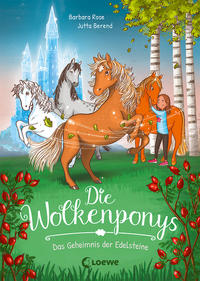
The Magic Cloud Ponies - The Secret of the Diamonds (Vol.1) Four Hooves full of Magic Lotti, her parents and her sister have just moved to Wetterstein, because they have inherited Grandma Luna's big beautiful house. When Lotti moves into her new room, she finds a thick book on the shelf - the book of magical ponies. And just as she is about to open it, a dainty little bracelet with four precious stones on it falls out. Shortly thereafter, an unknown pony appears at the horse farm to which Lotti's older sister Paula has dragged her. It won't let anyone touch it - except Lotti. And then the pony starts talking to her! The pony is called Whirlwind because it comes from a magical land, the land of Light Blue. And this land is in great danger. Only Lotti, who is magically connected to Whirlwind and his three siblings by the bracelet, can help now.
Trusted Partner
Trusted Partner
Trusted Partner
Trusted Partner
Trusted Partner
Trusted Partner

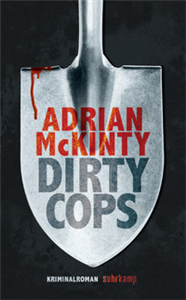
»Die Reihe gehört zweifellos zu den besten Krimiserien, die derzeit im Buchhandel erhältlich sind.« Jörg Kijanski, krimi-couch Gejagt von unbekannten Kräften, bedroht von internen Ermittlungen, unter Druck gesetzt von der Mutter seines Kindes, versucht er, einen der wahnwitzigsten Mordfälle seiner Laufbahn aufzuklären, ohne dabei sein eigenes Leben zu verlieren. Belfast 1988: Ein Mann wird mit einem Pfeil im Rücken tot aufgefunden. Es waren wohl kaum Indianer, und auch Robin Hood dürfte als Täter nicht in Frage kommen. Und da das Opfer eh nur ein Drogendealer war, könnte man sein kurioses Dahinscheiden ruhigen Gewissens zu den Akten legen. Doch Inspector Sean Duffy tut sich schwer damit, Morde zu den Akten zu legen – auch wenn seine Vorgesetzten ihn dazu drängen und der Haussegen bei der jungen Familie Duffy gerade reichlich schief hängt. Und noch jemand möchte Duffy zum Aufgeben zwingen: Eines Nachts findet er sich im Wald wieder, wo drei bewaffnete, maskierte Gestalten ihn dazu zwingen, sein eigenes Grab auszuheben …
Trusted Partner