Your Search Results

      • Poplar Publishing Co., Ltd

        POPLAR Publishing Co., Ltd., a leading independent publisher of children's books in Japan, has been in business for more than 70 years. As it started as a children's books publisher, it has always tried to provide children with enjoyable and exciting books. Today, the company's goals remain unchanged: everything it publishes should be enjoyable and enrich people's lives.

        View Rights Portal
      • Contrappunto House of Books Literary Agency

        Contrappunto House Of Books accompanies its authors in every aspect of their publishing journey: review and editing of the manuscript, negotiation with potential publishers, promotion, press and communication office. Thanks to its professional staff, the company covers the entire publishing chain, providing authors with a path that combines the creative aspect of writing with editorial and commercial ones. Contrappunto House Of Books goes beyond the traditional concept of a literary agency, working on the development of the Personal Branding of each author. The Agency also works along with publishers on the promotion of their catalogs, enhancing the "mission" of each brand. From the work on the text to that of promotion, from the organization of events to the participation in book fairs, Contrappunto traces an original path for each individual author.

        View Rights Portal
      • Trusted Partner
        Humanities & Social Sciences
        March 2017

        Imperialism and the natural world

        by John M. MacKenzie

        Imperial power, both formal and informal, and research in the natural sciences were closely dependent in the nineteenth century. This book examines a portion of the mass-produced juvenile literature, focusing on the cluster of ideas connected with Britain's role in the maintenance of order and the spread of civilization. It discusses the political economy of Western ecological systems, and the consequences of their extension to the colonial periphery, particularly in forms of forest conservation. Progress and consumerism were major constituents of the consensus that helped stabilise the late Victorian society, but consumerism only works if it can deliver the goods. From 1842 onwards, almost all major episodes of coordinated popular resistance to colonial rule in India were preceded by phases of vigorous resistance to colonial forest control. By the late 1840s, a limited number of professional positions were available for geologists in British imperial service, but imperial geology had a longer pedigree. Modern imperialism or 'municipal imperialism' offers a broader framework for understanding the origins, long duration and persistent support for overseas expansion which transcended the rise and fall of cabinets or international realignments in the 1800s. Although medical scientists began to discern and control the microbiological causes of tropical ills after the mid-nineteenth century, the claims for climatic causation did not undergo a corresponding decline. Arthur Pearson's Pearson's Magazine was patriotic, militaristic and devoted to royalty. The book explores how science emerged as an important feature of the development policies of the Colonial Office (CO) of the colonial empire.

      • Trusted Partner
        Humanities & Social Sciences
        May 2022

        Birth controlled

        by Amrita Pande, Srila Roy, Nicky Falkof

      • Trusted Partner
        Humanities & Social Sciences
        September 2024

        The business of birth control

        by Claire L. Jones

      • Trusted Partner
        Humanities & Social Sciences
        February 2017

        Welsh missionaries and British imperialism

        The Empire of Clouds in north-east India

        by Andrew May

        In 1841, the Welsh sent their first missionary, Thomas Jones, to evangelise the tribal peoples of the Khasi Hills of north-east India. This book follows Jones from rural Wales to Cherrapunji, the wettest place on earth and now one of the most Christianised parts of India. As colonised colonisers, the Welsh were to have a profound impact on the culture and beliefs of the Khasis. The book also foregrounds broader political, scientific, racial and military ideologies that mobilised the Khasi Hills into an interconnected network of imperial control. Its themes are universal: crises of authority, the loneliness of geographical isolation, sexual scandal, greed and exploitation, personal and institutional dogma, individual and group morality. Written by a direct descendant of Thomas Jones, it makes a significant contribution in orienting the scholarship of imperialism to a much-neglected corner of India, and will appeal to students of the British imperial experience more broadly.

      • Trusted Partner
        Computing & IT
        May 2026

        Democratizing AI

        by Annette Zimmermann

        Democratizing AI offers a powerful rethinking of how artificial intelligence should be governed. Challenging the dominance of tech elites in shaping AI's future, Zimmermann argues that AI deployment is a political act-one that must be subject to democratic control. She proposes a practical "playbook" for reclaiming agenda-setting power through civic participation, public ownership, and institutional reform. Engaging with leading critics, Zimmermann defends a risk-sensitive proceduralist approach while acknowledging the deeper structural challenges posed by capitalism, inequality, and democratic fatigue. This book is a call to action: to resist learned helplessness, confront techno-authoritarianism, and shape AI's trajectory in line with democratic values. Thoughtful, urgent, and visionary, the book is essential reading for anyone concerned with the future of technology and democracy.

      • Trusted Partner
        Humanities & Social Sciences
        March 2017

        Reporting the Raj

        The British Press and India, c.1880–1922

        by Chandrika Kaul

        This book is the first analysis of the dynamics of British press reporting of India and the attempts made by the British Government to manipulate press coverage as part of a strategy of imperial control. The press was an important forum for debate over the future of India and was used by significant groups within the political elite to advance their agendas. Focuses on a period which represented a critical transitional phase in the history of the Raj, witnessing the impact of the First World War, major constitutional reform initiatives, the tragedy of the Amritsar massacre, and the launching of Gandhi's mass movement. Asserts that the War was a watershed in official media manipulation and in the aftermath of the conflict the Government's previously informal and ad hoc attempts to shape press reporting were placed on a more formal basis.

      • Trusted Partner
        Biography & True Stories
        November 2024

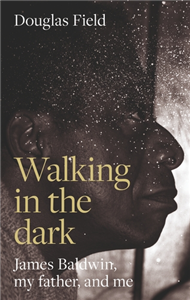
        Walking in the dark

        James Baldwin, my father and I

        by Douglas Field

        A moving exploration of the life and work of the celebrated American writer, blending biography and memoir with literary criticism. Since James Baldwin's death in 1987, his writing - including The Fire Next Time, one of the manifestoes of the Civil Rights Movement, and Giovanni's Room, a pioneering work of gay fiction - has only grown in relevance. Douglas Field was introduced to Baldwin's essays and novels by his father, who witnessed the writer's debate with William F. Buckley at Cambridge University in 1965. In Walking in the dark, he embarks on a journey to unravel his life-long fascination and to understand why Baldwin continues to enthral us decades after his death. Tracing Baldwin's footsteps in France, the US and Switzerland, and digging into archives, Field paints an intimate portrait of the writer's life and influence. At the same time, he offers a poignant account of coming to terms with his father's Alzheimer's disease. Interweaving Baldwin's writings on family, illness, memory and place, Walking in the dark is an eloquent testament to the enduring power of great literature to illuminate our paths.

      • Trusted Partner
        Psychiatry

        Self-control in Adults With Autism

        Dealing With Anger, Injustice, and Frustration

        by Jeroen Bartels

        This title helps people with autism to effectively cope with anger, frustration, and injustice. This practical book offers a training-program which can be completed alone, based on scientifically examined treatment methods. It is especially suited to be used together with a caretaker. The first part of the book clearly describes the connection between autism and self-control issues. The second part offers practical exercises which explain how to recognize anger in time and how strong emotions such as anger and frustration. Numerous tips, exercises and relatable examples help the reader to experience more direction and control.   Target Group: Adults with autism and involved caretakers

      • Trusted Partner
      • Trusted Partner
        Humanities & Social Sciences
        March 2026

        Negotiating identity conflicts in a fragmenting world order

        by Paul Willem Meerts, Mark Anstey

        At every level of human interaction new levels of identity-based tension are in evidence. Contributors to this book explore facets of fragmentation processes within systems of state and interstate organisation, how they influence the use of negotiation, and how negotiation might be used to effect renewed coherence. Following Anstey's (Ch1) introductory chapter framing the nature and shape of fragmentation dynamics, Zartman (Ch 2) argues that the use of negotiation as a process of conflict resolution is deeply shaped by identity groups whose internal coherence is dependent on sustaining a negative identity of others. International relations are no longer solely the realm of experienced diplomats but are shaped as Meerts (Ch3) points out by politicians seeking to be responsive to voting publics rather than wider concerns. Anstey digs into problems of fragmentation (Ch. 4) and Troitskiy (Ch 5) points out how a reluctant acceptance of the power of 'the other' can lead to a form of strategic stability in relations. Anstey and Meerts (Ch 6) point out in their analysis of the Israeli-Palestinian case as an identity conflict turned very bad. Guggenbuhl (Ch 7 ) reveals how structures and processes have been designed within the EU to prevent, contain and regulate conflicts to limit risks of confrontation and fragmentation. Schuessler (Ch 8) to advocates a shift away from a template or roadmap approach to EU membership to a cohesion based on non-dominance. There is still a strong desire on the part of some states, like Northern Macedonia, to become EU members, as reflected in Manton's (Ch 9). Paula Garzon and Frans Schram explain the success of the Colombia Peace Negotiations (Ch 10), while Odigie and da Rocha (Ch 11) analyse the struggle faced by ECOWAS to influence coup leaders in Mali to return to constitutional government and changes of government by constitutional means. Liang (Ch12) discusses how the internet as the modern vehicle of inter-state, inter-group and interpersonal communication has become weaponised. In Ch 13 Anstey draws some lessons from contributions to the compilation.

      • Trusted Partner
        Humanities & Social Sciences
        May 2016

        Working men’s bodies

        by John Field

      • Trusted Partner
        Humanities & Social Sciences
        July 2023

        Leaving the field

        by Robin James Smith, Sara Delamont

      • Trusted Partner
      • Trusted Partner
        Humanities & Social Sciences
        March 2022

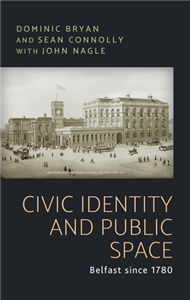
        Civic identity and public space

        Belfast since 1780

        by Dominic Bryan, Sean J. Connolly, John Nagle

        Civic identity and public space, focussing on Belfast, and bringing together the work of a historian and two social scientists, offers a new perspective on the sometimes lethal conflicts over parades, flags and other issues that continue to disrupt political life in Northern Ireland. It examines the emergence during the nineteenth century of the concept of public space and the development of new strategies for its regulation, the establishment, the new conditions created by the emergence in 1920 of a Northern Ireland state, of a near monopoly of public space enjoyed by Protestants and unionists, and the break down of that monopoly in more recent decades. Today policy makers and politicians struggle to devise a strategy for the management of public space in a divided city, while endeavouring to promote a new sense of civic identity that will transcend long-standing sectarian and political divisions.

      • Trusted Partner
        Humanities & Social Sciences
        September 2025

        Eclipsing the West

        China, India and the forging of a new world

        by Vince Cable

        As the international order begins to crumble, this incisive book asks what the rise of the Asian superstates means for the future. The Western-dominated world we have known for the past three hundred years is coming to an end. As America withdraws from its role as enforcer of the international order, other countries are moving in to fill the void. Among them are two rising Asian 'superstates'. Accounting for almost half of the world's population, China and India have the potential to wield enormous economic and political power. China is already vying with the US for the top spot in the global economy, and on some measures has surpassed it. By the middle of the century India may be number two. How will these countries navigate their growing roles on the world stage? What are the implications for commerce, international law and the fight against climate change? Vince Cable has followed China and India for decades, first as a professional economist and later as a senior government minister. In Eclipsing the West he draws on the latest data and a lifetime of political and economic experience to offer a compelling account of what the rise of the Asian superstates means for the future.

      • Trusted Partner
        Humanities & Social Sciences
        January 2025

        Catholics and the law in Restoration Ireland

        by Paul Smith

        In 1660 Charles II was restored to the thrones of England, Scotland and Ireland, but his hold on power was precarious. In particular, Ireland was fundamentally unstable - Catholics formed the majority of the population in a country where Protestantism was the established religion, a state of affairs unique in Europe. It was through the law that the restored Stuart monarchy governed its subjects and its colonial dependencies, and this book examines how Catholics engaged with and experienced English common law primarily through the eyes of Catholic clerics and Gaelic poets. It also examines how Catholics engaged with the Courts and the particular challenges they faced as lawyers. The book draws on an extensive body of primary source materials, including Irish-language poetry and little-used archival material relating to elite Catholic families.

      • Trusted Partner
        The Arts
        April 2025

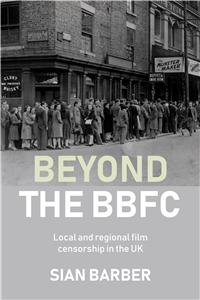
        Beyond the BBFC

        Local and regional film censorship in the UK

        by Sian Barber

        This work scrutinises British film censorship from a local perspective. Examining different regions and areas, the work of individual councils and their relations with one another and with the BBFC, it offers a broad historical exploration of the intricacies of film censorship in action. Drawing on local archival material and considering the activities of local government in enforcing Cinematograph legislation, this work considers the significance of film censorship apparatus and processes in shaping and informing responses to and control of film culture in different locations across the twentieth century.

      • Trusted Partner
        Humanities & Social Sciences
        August 1984

        The Postmodern Condition

        A report on knowledge

        by Jean-François Lyotard

        Many definitions of postmodernism focus on its nature as the aftermath of the modern industrial age when technology developed. This book extends that analysis to postmodernism by looking at the status of science, technology, and the arts, the significance of technocracy, and the way the flow of information is controlled in the Western world. ;

      Subscribe to our

      newsletter