
The Porcupine's Quill
Livres Canada Books
View Rights Portal


 Trusted Partner

 Trusted Partner
 Trusted Partner

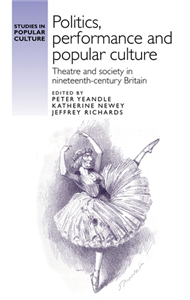
This collection brings together studies of popular performance and politics across the nineteenth century, offering a fresh perspective from an archivally grounded research base. It works with the concept that politics is performative and performance is political. The book is organised into three parts in dialogue regarding specific approaches to popular performance and politics. Part I offers a series of conceptual studies using popular culture as an analytical category for social and political history. Part II explores the ways that performance represents and constructs contemporary ideologies of race, nation and empire. Part III investigates the performance techniques of specific politicians - including Robert Peel, Keir Hardie and Henry Hyndman - and analyses the performative elements of collective movements.
Trusted Partner
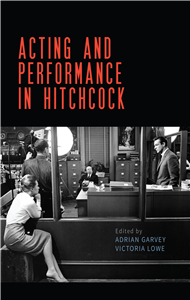
Hitchcock's professed disdain for actors is belied by the extraordinary range and depth of performances featured in his films. It might even be argued that many stars gave their richest and most complex performances in his work. Hitchcock's films are also imbued with the theme of performance, as when his fugitive men and errant women assume fragile new identities and move between roles. Actors and other performers also often feature as characters. However, the exhaustive academic literature on Hitchcock has to date produced surprisingly little work about acting and performance in his films. The collection includes contributions from a range of leading scholars on Hitchcock, performance, stardom, and British Cinema, including Charles Barr, David Greven, Mark Glancy, Lucy Bolton, Lawrence Napper and Michael Williams, and an interview with leading composers/accompanists Neil Brand and Stephen Horne on scoring performance in Silent Hitchcock.
Trusted Partner

This electronic version has been made available under a Creative Commons (BY-NC-ND) open access license. This book is about science in theatre and performance. It explores how theatre and performance engage with emerging scientific themes from artificial intelligence to genetics and climate change. The book covers a wide range of performance forms from Broadway musicals to educational theatre, from Somali drama to grime videos. It features work by pioneering companies including Gob Squad, Headlong Theatre and Theatre of Debate as well as offering fresh analysis of global blockbusters such as Wicked and Urinetown. The book offers detailed description and analysis of theatre and performance practices as well as broader commentary on the politics of theatre as public engagement with science. Science in performance is essential reading for researchers, students and practitioners working between science and the arts within fields such as theatre and performance studies, science communication, interdisciplinary arts and health humanities.
Trusted Partner
This is the first major study of Britain's pioneering graphic satirist, Sir Francis Carruthers Gould (1844-1925), the first staff political cartoonist on a daily newspaper in Britain, and the first of his kind to be knighted. Written by the distinguished media historian, Colin Seymour-Ure, it is essential reading for anyone interested in cartoons, caricature and illustration and will also be welcomed by students of history, politics and the media. It examines Gould's career in Fleet Street until his retirement after the First World War. It also discusses his illustrations for magazines and books and there is an analysis of his use of symbolism and literary allusion to lampoon such eminent politicians as Gladstone and Joseph Chamberlain. As Lord Baker says in his Foreword, this book is 'a major contribution to our knowledge of British cartooning.'
Trusted Partner
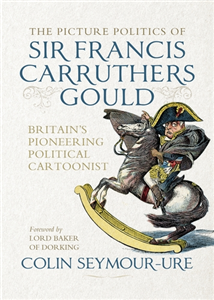
This is the first major study of Britain's pioneering graphic satirist, Sir Francis Carruthers Gould (1844-1925), the first staff political cartoonist on a daily newspaper in Britain, and the first of his kind to be knighted. Written by the distinguished media historian, Colin Seymour-Ure, it is essential reading for anyone interested in cartoons, caricature and illustration and will also be welcomed by students of history, politics and the media. It examines Gould's career in Fleet Street until his retirement after the First World War. It also discusses his illustrations for magazines and books and there is an analysis of his use of symbolism and literary allusion to lampoon such eminent politicians as Gladstone and Joseph Chamberlain. As Lord Baker says in his Foreword, this book is 'a major contribution to our knowledge of British cartooning.'
Trusted Partner
This unique and exciting collection, inspired by the scholarship of literary critic Stephanie Trigg, offers cutting-edge responses to the writings of Geoffrey Chaucer for the current critical moment. The chapters are linked by the organic and naturally occurring affinities that emerge from Trigg's ongoing legacy; containing diverse methodological approaches and themes, they engage with Chaucer through ecocriticism, medieval literary and historical criticism, and medievalism. The contributors, trailblazing international specialists in their respective fields, honour Trigg's distinctive and energetic mode of enquiry (the symptomatic long history) and intellectual contribution to the humanities. At the same time, their approaches exemplify shifting trends in Chaucer scholarship. Like Chaucer's pilgrims, these scholars speak to and alongside each other, but their essays are also attentive to 'hearing Chaucer speak' then, now and in the future.
Trusted Partner

The first in-depth, comprehensive study of Korean cinema offering original insight into the relationships between ideology and the art of cinema from East Asian perspectives. Combines issues of contemporary Korean culture and cinematic representation of the society and people in both North and South Korea. Covers the introduction of motion pictures in 1903, Korean cinema during the Japanese colonial period (1910-45) and the development of North and South Korean cinema up to the 1990s. Introduces the works of Korea's major directors, and analyses the Korean film industry in terms of film production, distribution and reception. Based on this historical analysis, the study investigates ideological constructs in seventeen films, eight from North Korea and nine from South Korea.
Trusted Partner
 Trusted Partner

Looking at contemporary film and television, this book explores how popular genres frame our understanding of on-screen performance. Previous studies of screen performance have tended to fix upon star actors, directors, or programme makers, or they have concentrated upon particular training and acting styles. Moving outside of these confines, this book provides a truly interdisciplinary account of performance in film and television and examines a much neglected area in our understanding of how popular genres and performance intersect on screen. Each chapter concentrates upon a particular genre or draws upon generic case studies in examining the significance of screen performance. Individual chapters examine contemporary film noir, horror, the biopic, drama-documentary, the western, science fiction, comedy performance in 'spoof news' programmes and the television 'sit com' and popular Bollywood films.
Trusted Partner
Trusted Partner
Trusted Partner
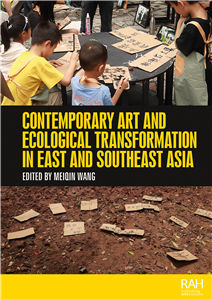
This anthology, presenting new research from fourteen scholars, delves into the interplay between contemporary art and ecological concerns in East and Southeast Asia. Focused on the concept of artistic remediation, the book unravels the diverse capacities of art to combat systemic anthropogenic destruction to the environment and ecology. At its core, the book articulates the ongoing ecological transformation in art and art history that embraces a paradigm shift in human-nature relationships, emphasizing interconnectedness of all life forms of the Earth. Bridging art studies, activism, and environmental studies, the book examines how artistic practices in the region have engaged with ecocritical reflection, biodiversity advocacy, sustainable practices, and environmental justice, among others. Providing a platform for critical and timely analysis of artistic interventions in the face of existential crises, the book acknowledges diverse voices of scholars who have situated their scholarship in the cultural and artistic specificities of various societies, locales, and communities in the region.
Trusted Partner
 Trusted Partner
Trusted Partner
Trusted Partner
Trusted Partner
Trusted Partner



