
Your Search Results
-

-

Agriculture & International Development
Textbooks, research and professional titles in Agriculture and International Development
View Rights Portal
-
Promoted Content
-
Promoted Content
-
 Trusted Partner

 Humanities & Social SciencesJuly 2025
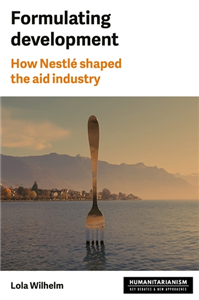
Formulating development
How Nestlé shaped the aid industry
by Lola Wilhelm
In the 1970s, Nestlé became a lightning rod for criticism against the food industry's negative impacts on humans and their environment, especially in the Global South. But what has so far eluded historical scrutiny is that the picture was more nuanced. This book tells the exclusive story of how the Swiss food giant, and more broadly corporate capitalism, have shaped the aid industry since the late nineteenth century. It follows Nestlé's bid for a share of the humanitarian market brokered by the Red Cross in wartime Europe, of its clinical trials in Swiss and Senegalese maternities, and of its agricultural modernisation schemes in Mexico, India, and the Ivory Coast. Based on extensive research in the firm's own historical archives and the records of national and international aid agencies, the volume interrogates the legacies of this long history for international development today.
-
Trusted Partner
-
Trusted Partner
-
Trusted Partner
 Teaching, Language & ReferenceFebruary 2012
Workers, state and development in Brazil
Powers of labour, chains of value
by Benjamin Selwyn
How do changing class relations contribute to processes of capitalist development? Within development studies the importance of class relations is usually relegated to lesser status than the roles of states and markets in generating and allocating resources. This book argues that the changing class relations are central to different patterns of capitalist development and that processes and outcomes of class struggle co-determine the form that development takes. Workers, State and Development in Brazil, nominated for the International Political Economy Group (IPGG) Book Prize 2013 and now available in paperback, illuminates these claims through a detailed empirical investigation of class dynamics and capitalist development in North East Brazil's São Francisco valley. It details how workers in the valley's export grape sector have won significant concessions from employers, contributing to a progressive pattern of regional capitalist development. The book will appeal to students and researchers interested in processes of capitalist development, agrarian political economy and international political economy. ;
-
Trusted Partner
-
Trusted Partner
-
Trusted Partner
-
Trusted Partner
 Humanities & Social SciencesJuly 2015
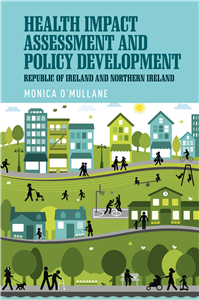
Health Impact Assessment and policy development
The Republic of Ireland and Northern Ireland
by Monica O'Mullane
It is an accepted convention that non-health sector policies and strategies impact on population health. An instrument and approach, Health Impact Assessment (HIA), seeks to assess the health impacts of projects, programmes and policies in a systematic way. The ultimate goal of HIA is to inform public policy processes of these impacts. This book provides for the first time an analysis of how and why HIAs informed local policy development in both jurisdictions on the island of Ireland. An original theoretical framework was used as the analytical lens for this exploration, drawing from the fields of political and social sciences, and public health. The HIA projects were conducted on traffic and transport, Traveller accommodation, urban redevelopment and air quality. This conceptually-grounded guide draws from the disciplines of the political and social sciences and public health, and will appeal to academics, students and practitioners in these fields as well as policy-makers and planners at local and national government levels. ;
-
Trusted Partner
 Sociology: sport & leisureFebruary 2017
Localizing global sport for development
by Iain Lindsey. Series edited by John Horne
This jointly authored book extends understanding of the use of sport to address global development agendas by offering an important departure from prevailing theoretical and methodological approaches in the field. Drawing on nearly a decade of wide-ranging multidisciplinary research undertaken with young people and adults living and working in urban communities in Zambia, the book presents a localised account that locates sport for development in historical, political, economic and social context. A key feature of the book is its detailed examination of the lives, experiences and responses of young people involved in sport for development activities, drawn from their own accounts. The book's unique approach and content will be highly relevant to academic researchers and post-graduate students studying sport and development in across many different contexts.
-
Trusted Partner
 Humanities & Social SciencesJuly 2020
Political theologies and development in Asia
by Giuseppe Bolotta, Philip Fountain, R. Michael Feener
-
Trusted Partner
 The ArtsJuly 2025
Ida Lupino
Multifaceted performer and cinematic pioneer
by Gillian Kelly
This book contributes to a welcome new wave focusing on the importance of female filmmakers, providing a reappraisal of Ida Lupino, a cinematic figure of significant importance. Given her ability to move between popular and independent cinemas and her status as both a Hollywood star and director/writer/producer of socially relevant films overlooked by the mainstream, Lupino is a particularly interesting case study. Employing a range of critical approaches, including feminist theory, auteur theory and critical theory, this book investigates key themes and motifs that developed across Lupino's unusual and unique career as one of the most significant female players in film history. Investigating her oeuvre as actress, director, writer and producer, it discusses Lupino as a complex and important filmmaker whose career, on both sides of the camera, requires substantially more critical attention than it has been awarded thus far.
-
Trusted Partner
 Humanities & Social SciencesMarch 2014
Transforming conflict through social and economic development
Practice and policy lessons from Northern Ireland and the Border Counties
by Sandra Buchanan
Transforming conflict through social and economic development examines lessons learned from the Northern Ireland and Border Counties conflict transformation process through social and economic development and their consequent impacts and implications for practice and policymaking, with a range of functional recommendations produced for other regions emerging from and seeking to transform violent conflict. It provides, for the first time, a comprehensive assessment of the region's transformation activity, largely amongst grassroots actors, enabled by a number of specific funding programmes, namely the International Fund for Ireland, Peace I, II and III and INTERREG I, II and IIIA. These programmes have been responsible for a huge increase in grassroots practice which to date has attracted virtually no academic analysis; this book seeks to fill this gap. In focusing on the politics of the socioeconomic activities that underpinned the elite negotiations of the peace process, key theoretical transformation concepts are firstly explored, followed by an examination of the social and economic context of Northern Ireland and the border counties. The three programmes and their impacts are then assessed before considering what policy lessons can be learned and what recommendations can be made for practice. This is underpinned by a range of semi-structured interviews and the author's own experience as a project promoter through these programmes in the border counties for more than a decade. The book will be essential reading for students, practitioners and policymakers in the fields of peace and conflict studies, conflict transformation, peacebuilding, post-agreement reconstruction and the political economy of conflict and those interested in contemporary developments in the Northern Ireland peace process. ;
-
Trusted Partner
 Humanities & Social SciencesAugust 2022
The power of citizens and professionals in welfare encounters
The influence of bureaucracy, market and psychology
by Nanna Mik-Meyer
This book is about power in welfare encounters. Present-day citizens are no longer the passive clients of the bureaucracy and welfare workers are no longer automatically the powerful party of the encounter. Instead, citizens are expected to engage in active, responsible and coproducing relationships with welfare workers. However, other factors impact these interactions; factors which often pull in different directions. Welfare encounters are thus influenced by bureaucratic principles and market values as well. Consequently, this book engages with both Weberian (bureaucracy) and Foucauldian (market values/NPM) studies when investigating the powerful welfare encounter. The book is targeted Academics, post-graduates, and undergraduates within sociology, anthropology and political science.
-
Trusted Partner
 Art: Financial Aspects
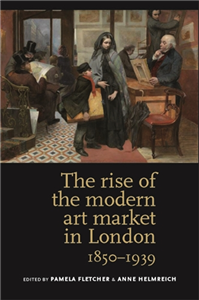
The rise of the modern art market in London
1850–1939
by Edited by Pamela Fletcher and Anne Helmreich
Now available in paperback for the first time, this study of the modern London art market establishes the central importance of London for the development of the modern retail market in fine art. Leading experts track the emergence and development of the structures and practices that have come to characterize the commercial art system, including the commercial art gallery, the professional dealer, the exhibition cycle and its accompanying rhetoric of press coverage and publicity, and an international network for the circulation of goods. This new commercial system involved a massive transformation of the experience of viewing art; of the relationships between artists, dealers, collectors, art objects and audiences; and of the very criteria of aesthetic value itself. Its history is thus a vital part of the history of modern art, and this anthology will be of interest to art historians as well as scholars of Victorian Studies, Museum Studies, and Social History.
-
Trusted Partner

 November 2021
The Metropolitan Age
The decisive force in the Anthropocene
by German Environmental Foundation (Ed.)
Three quarters of the world’s population live in cities. One in eight people lives in a metropolitan area. Megacities swallow up land, energy and resources – and at the same time are particularly hard hit by the current climate crisis that they fuel. However, in the metropolises of the overcrowded world plenty of committed people have heard the warning signals and establish networks to use the potential of cities to reorganize the participative and social-ecological activity that is urgently needed. The contributions to this Yearbook for Ecology focus on the present and future of cities from wide-ranging viewpoints and highlight perspectives for their creative transformation towards liveable sustainability.
-
Trusted Partner
-
Trusted Partner
 Humanities & Social SciencesMarch 2017
Imperialism and the natural world
by John M. MacKenzie
Imperial power, both formal and informal, and research in the natural sciences were closely dependent in the nineteenth century. This book examines a portion of the mass-produced juvenile literature, focusing on the cluster of ideas connected with Britain's role in the maintenance of order and the spread of civilization. It discusses the political economy of Western ecological systems, and the consequences of their extension to the colonial periphery, particularly in forms of forest conservation. Progress and consumerism were major constituents of the consensus that helped stabilise the late Victorian society, but consumerism only works if it can deliver the goods. From 1842 onwards, almost all major episodes of coordinated popular resistance to colonial rule in India were preceded by phases of vigorous resistance to colonial forest control. By the late 1840s, a limited number of professional positions were available for geologists in British imperial service, but imperial geology had a longer pedigree. Modern imperialism or 'municipal imperialism' offers a broader framework for understanding the origins, long duration and persistent support for overseas expansion which transcended the rise and fall of cabinets or international realignments in the 1800s. Although medical scientists began to discern and control the microbiological causes of tropical ills after the mid-nineteenth century, the claims for climatic causation did not undergo a corresponding decline. Arthur Pearson's Pearson's Magazine was patriotic, militaristic and devoted to royalty. The book explores how science emerged as an important feature of the development policies of the Colonial Office (CO) of the colonial empire.
-
Trusted Partner
 Humanities & Social SciencesOctober 2024
Egypt and the rise of fluid authoritarianism
Political ecology, power and the crisis of legitimacy
by Maria Gloria Polimeno
Egypt and the rise of fluid authoritarianism focuses on the struggle of the post-2013 political authorities for internal political legitimacy after the crisis following the 2013 coup d'état. It explores the microstructural and macro-systemic dynamics of leadership, power, protests and the authority-making process in political systems. These cannot simply be defined as structural, political, social and economic projections of the authoritarianism of the past, but rather as a rupture with that past. The book offers a complex, ground-breaking socio-political and economic analysis into how the forging of an internal political legitimacy claim has eventually modified the regime in Egypt along the authoritarian spectrum, turning into a fluid autocracy closer to a non-exclusivist personalist regime. This shift had implications that resonated both politically and economically.



