
Association des éditeurs des Hauts de France
High quality titles from a selection of French independent publishers
View Rights Portal
High quality titles from a selection of French independent publishers
View Rights Portal
Publishing House specialized in Graphic Novels and cinema books. We've Biographies set in WWII and Spanish Civil War, Fantasy graphic novels and humour
View Rights Portal

The documents in this stimulating volume span from 1245 to 1424 but focus on the 'contagion of rebellion' from 1355 to 1382 that followed in the wake of the plague. They comprise a diversity of sources and cover a variety of forms of popular protest in different social, political and economic settings. Their authors range across a wide political and intellectual horizon and include revolutionaries, the artistocracy, merchants and representatives from the church. They tell gripping and often gruesome stories of personal and collective violence, anguish, anger, terror, bravery, and foolishness. Of over 200 documents presented here, most have been translated into English for the first time, providing students and scholars with a new opportunity to compare social movements across Europe over two centuries, allowing a re-evaluation of pre-industrial revolts, the Black Death and its consequences for political culture and action. This book will be essential reading for those seeking to better understand popular attitudes and protest in medieval Europe.
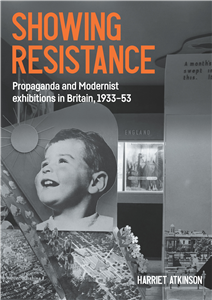
This is the first book-length analysis of exhibitions used for propaganda and political interventions in Britain during the two decades from 1933. It analyses how exhibitions were mounted in public places - from station concourses to workers' canteens, empty shops and bombsites - becoming a key tool for public communication. Richly illustrated, the book extends our existing knowledge of the work of a range of prominent artists, architects and designers active in Britain, including Edith Tudor-Hart, Edward McKnight-Kauffer, Paul Nash, F. H. K. Henrion, Misha Black, John Heartfield, Oskar Kokoschka and Erno Goldfinger.
 Trusted Partner
 Trusted Partner

This book tells the story of critical avant-garde design in Japan, which emerged during the 1960s and continues to inspire designers today. The practice communicates a form of visual and material protest drawing on the ideologies and critical theories of the 1960s and 1970s, notably feminism, body politics, the politics of identity, and ecological, anti-consumerist and anti-institutional critiques, as well as the concept of otherness. It also presents an encounter between two seemingly contradictory concepts: luxury and the avant-garde. The book challenges the definition of design as the production of unnecessary decorative and conceptual objects, and the characterisation of Japanese design in particular as beautiful, sublime or a product of 'Japanese culture'. In doing so it reveals the ways in which material and visual culture serve to voice protest and formulate a social critique.
Trusted Partner
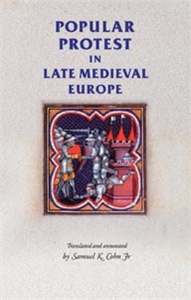
The documents in this stimulating volume span from 1245 to 1424 but focus on the 'contagion of rebellion' from 1355 to 1382 that followed in the wake of the plague. They comprise a diversity of sources and cover a variety of forms of popular protest in different social, political and economic settings. Their authors range across a wide political and intellectual horizon and include revolutionaries, the artistocracy, merchants and representatives from the church. They tell gripping and often gruesome stories of personal and collective violence, anguish, anger, terror, bravery, and foolishness. Of over 200 documents presented here, most have been translated into English for the first time, providing students and scholars with a new opportunity to compare social movements across Europe over two centuries, allowing a re-evaluation of pre-industrial revolts, the Black Death and its consequences for political culture and action. This book will be essential reading for those seeking to better understand popular attitudes and protest in medieval Europe. ;
Trusted Partner

Touting informal settlements or informality in general as illegal, crime-ridden, unsafe, filthy, chaotic, and formal developments as legal, orderly or safe, and so forth has not solved anything and informality as a way of life or an economic reality lingers and grows. Demystifying informal urban design and planning delves deeper into this conundrum and seeks to debunk some common misguided perceptions about it. Borrowing popular philosophical and political analogies from Isaiah Berlin and Gregory Treverton and others, it encourages urban designers and planners to become multitaskers like foxes rather than hedgehogs who can do one thing right. The book ends with some general takeaways on assuming more proactive roles in informal urban design issues and avoiding two potential pitfalls while interacting with them.
Trusted Partner
Trusted Partner
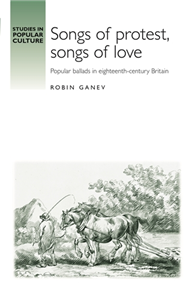
Songs of Protest, Songs of Love shows how songs can bring back voices from the past in a new way. The focus of the book is on rural Britain in a time of crisis. As the traditional rights of peasants were being jettisoned to enforce a new system of enclosure, rural labourers chanted out their concerns in songs of protest. These songs became increasingly strident and popular after the 1770s as rural life became even more precarious with fluctuating grain prices and uncertain employment opportunities. Many ballads in the eighteenth century were love songs. But these are also rich in social meaning. Many of these love songs celebrated the free and easy sexuality of rural workers, especially milkmaids and ploughmen, which was contrasted with the tepid and flaccid sex life attributed to urban aristocrats. The book will be of interest to scholars, advanced students and readers with an interest in cultural history and popular ballads. ;
Trusted Partner
Trusted Partner
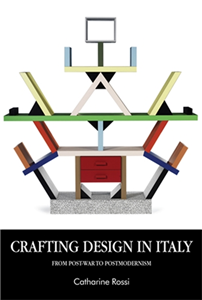
Crafting design in Italy is the first book to examine the role that craft played in post-war Italian design, one of the most celebrated design episodes in the twentieth century. Craft was vital to the development of Italian design, and it has been so far overlooked. This book examines the multiple ways craft shaped Italian design from 1945 to the 1980s in the context of bigger socio-economic, cultural and political change; from post-war reconstruction to the economic 'miracle' of the 1960s, to the rise of the countercultural Radical Design movement and advent of postmodernism. It consists of case studies on design areas including product, furniture, fashion, glass and ceramics to bring to light previously unknown makers and objects as well as re-examine design 'icons' such as Gio Ponti's Superleggera chair and Ettore Sottsass's Memphisware. It also offers a model for analysing design and craft's relationship in other contexts, including today. ;
Trusted Partner
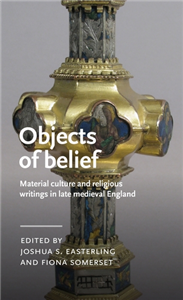
Objects in late medieval Europe were a means for lay people and clergy to negotiate their access to powers beyond the everyday, in folk practice as well as religious observance. As has been noted by scholars, this period is marked by a profusion of objects granted special importance, imaginary as well as material. These objects prompt reconsideration of cultural and intellectual frameworks, for example of superstition, reform, and heresy, that never quite successfully contain them. Essays in this volume center attention on these things themselves, from puppets to rosaries, as indeed do the written accounts through which they are often mediated. With a focus on England, contributors re-evaluate our understanding of works and authors including Geoffrey Chaucer, Walter Hilton, Nicholas Love, Julian of Norwich, miracles of the Virgin, Edward Hall's Chronicle, the Wycliffite Glossed Gospels, and the Croxton Play of the Sacrament.
Trusted Partner
 Trusted Partner
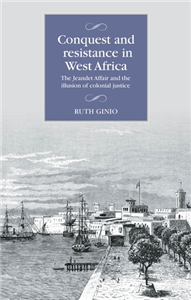
This book is an enthralling account of a legal scandal, which erupted in colonial Senegal in 1890 and reached the French metropolitan press and the parliament. The murder of a colonial administrator, Abel Jeandet, by one of his soldiers led to the brutal and illegal executions without trial of the killer and two local dignitaries. The volume follows the fascinating story of Ndiereby Ba, the widow of one of the dignitaries, who with the help of powerful métis men in the capital Saint Louis sued the French administrators who had supervised the executions for the murder of her husband. Through this captivating tale the book articulates the French expansion into West Africa, the resistance to colonial rule both violent and non-violent, and the lack of interest on the part of French politicians in the brutal conquest of a territory they know nothing about.
Trusted Partner
Trusted Partner
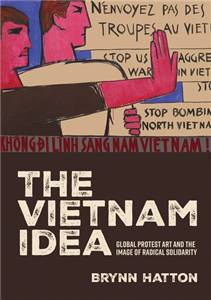
The Vietnam idea examines how Vietnam became a potent symbol for global movements fighting colonialism, racism, and imperialism during the American War and its aftermath. Rather than focusing on Vietnam as a place, Brynn Hatton explores how artists and activists around the world used the idea of 'Vietnam' to express political identification and solidarity through posters, films, protest actions, exhibitions, and conceptual art. Drawing on international archives, the book reveals how diverse visual works helped shape the political imagination of the global left, and continue to influence how we see identity, conflict, and solidarity today.
Trusted Partner
 Trusted Partner


Design Thinking: Solve problems together, user-centered and iterative, develop innovations and have fun doing so! - Practical cards for innovation project work with change of perspective- Consistently customer-oriented and iterative- Targeted use of the maps in project planning and implementation with Design Thinking- Pragmatic, compact and wonderfully descriptive- Suitable for the most diverse questions or problems- With folding poster for targeted use of maps in project planning and decorative at the workplace- From the authors "Design Thinking Quick Start
Trusted Partner

This book examines how Ireland's relationship with the EU was affected by a succession of crises in both the Republic of Ireland and Northern Ireland. The financial crisis, the Brexit crisis and the migration crisis were not of equal significance on the island of Ireland. The financial crisis was a huge issue for the Republic but not Northern Ireland, Brexit had a major impact in both polities, the migration and populism issues were less controversial, while foreign policy challenges had a minimal impact. The book provides a summary of the main features of each of the crises to be considered, from both the EU and the Irish perspective. Ireland and the European Union is the first volume of its kind to provide a comprehensive analysis on British-Irish relations in the context of Brexit. It assesses the Withdrawal Agreement and Protocol on Ireland/Northern Ireland, the devolution settlement and the 1998 Agreement, as well as the European dimension to Northern Ireland's peace process. The contributors explore a number of policy areas that are central to the understanding of each of the crises and the impact of each for Ireland. Chapters examine issues such as security, migration and taxation as well as protest politics, political parties, the media, public opinion and the economic impact of each of these crises on Ireland's relationship with the EU.
Trusted Partner
Queer lives give rise to a vast array of objects: the things we fill our houses with, the gifts we share with our friends, the commodities we consume at work and at play, the clothes and accessories we wear, and the analogue and digital technologies we use to communicate with one another. But what makes an object queer? The sixty-three chapters in Queer Objects consider this question in relation to lesbian, gay and transgender communities across time, cultures and space. In this unique international collaboration, well-known and newer writers traverse world history to write about items ranging from ancient Egyptian tomb paintings and Roman artefacts to political placards, snapshots, sex toys and the smartphone. Fabulous, captivating, transgressive.
Trusted Partner



