Your Search Results

      • Sharp Rights Publishing Consultancy

        Founded under lockdown in 2020, Sharp Rights publishing consultancy handles rights for independent publishers, agencies and authors, including The bks Agency, HopeRoad Publishing, Fledgling Press, FROM YOU TO ME, Little Island and Fine Feather Press. Founder Andrew Sharp is the former group rights director at Hachette Children's Group in London. He was The Bookseller Rights Professional of the Year in 2019. Our main focus is selling translation and English language rights for children's books. We also handle general trade titles. We are seeking publisher clients who require representation. We are interested to hear from publishers of adult fiction and non-fiction, children's non-fiction and picture books. We are particularly keen to hear from publishers whose lists focus on under-represented communities.

        View Rights Portal
      • Gryphon Publishing Consulting, LLC

        Gryphon Publishing Consulting, LLC is a boutique subsidiary rights, permissions and licensing company specializing in rights management for independent publishers. Through Gryphon Publishing Consulting’s services, publishers can grow their books' income potential and gain more visibility through targeted outbound licensing. Gryphon Publishing Consulting’s clients can select from a variety of outbound rights management pitches including but not limited to serializations, audio books, book clubs, foreign translations, and more. Clients include Interlude Press and Pivotal Media, and growing.

        View Rights Portal
      • Trusted Partner
        Humanities & Social Sciences
        August 2022

        The power of citizens and professionals in welfare encounters

        The influence of bureaucracy, market and psychology

        by Nanna Mik-Meyer

        This book is about power in welfare encounters. Present-day citizens are no longer the passive clients of the bureaucracy and welfare workers are no longer automatically the powerful party of the encounter. Instead, citizens are expected to engage in active, responsible and coproducing relationships with welfare workers. However, other factors impact these interactions; factors which often pull in different directions. Welfare encounters are thus influenced by bureaucratic principles and market values as well. Consequently, this book engages with both Weberian (bureaucracy) and Foucauldian (market values/NPM) studies when investigating the powerful welfare encounter. The book is targeted Academics, post-graduates, and undergraduates within sociology, anthropology and political science.

      • Trusted Partner
        Literature & Literary Studies
        January 2013

        The lives of Thomas Becket

        by Michael Staunton

        This collection tells the story of Thomas Becket's turbulent life, violent death and extraordinary posthumous acclaim in the words of his contemporaries. The only modern collection from the twelfth-century Lives of Thomas Becket in English and features all his major biographers, including many previously untranslated extracts. Providing both a valuable glimpse of the late twelfth-century world, and an insight into the minds of those who witnessed the events. By using contemporary sources, this book is the most accessible way to study this central episode in medieval history. Thomas Becket features prominently in most medieval core courses. This book allows the subject to be taught as never before, and is highly suitable as a set text.

      • Trusted Partner
        The Arts
        September 2020

        Science in performance

        Theatre and the politics of engagement

        by Simon Parry

        This electronic version has been made available under a Creative Commons (BY-NC-ND) open access license. This book is about science in theatre and performance. It explores how theatre and performance engage with emerging scientific themes from artificial intelligence to genetics and climate change. The book covers a wide range of performance forms from Broadway musicals to educational theatre, from Somali drama to grime videos. It features work by pioneering companies including Gob Squad, Headlong Theatre and Theatre of Debate as well as offering fresh analysis of global blockbusters such as Wicked and Urinetown. The book offers detailed description and analysis of theatre and performance practices as well as broader commentary on the politics of theatre as public engagement with science. Science in performance is essential reading for researchers, students and practitioners working between science and the arts within fields such as theatre and performance studies, science communication, interdisciplinary arts and health humanities.

      • Trusted Partner
        Humanities & Social Sciences
        January 2025

        Serving the public

        by Kevin Morgan

      • Trusted Partner
        Humanities & Social Sciences
        March 2026

        Negotiating identity conflicts in a fragmenting world order

        by Paul Willem Meerts, Mark Anstey

        At every level of human interaction new levels of identity-based tension are in evidence. Contributors to this book explore facets of fragmentation processes within systems of state and interstate organisation, how they influence the use of negotiation, and how negotiation might be used to effect renewed coherence. Following Anstey's (Ch1) introductory chapter framing the nature and shape of fragmentation dynamics, Zartman (Ch 2) argues that the use of negotiation as a process of conflict resolution is deeply shaped by identity groups whose internal coherence is dependent on sustaining a negative identity of others. International relations are no longer solely the realm of experienced diplomats but are shaped as Meerts (Ch3) points out by politicians seeking to be responsive to voting publics rather than wider concerns. Anstey digs into problems of fragmentation (Ch. 4) and Troitskiy (Ch 5) points out how a reluctant acceptance of the power of 'the other' can lead to a form of strategic stability in relations. Anstey and Meerts (Ch 6) point out in their analysis of the Israeli-Palestinian case as an identity conflict turned very bad. Guggenbuhl (Ch 7 ) reveals how structures and processes have been designed within the EU to prevent, contain and regulate conflicts to limit risks of confrontation and fragmentation. Schuessler (Ch 8) to advocates a shift away from a template or roadmap approach to EU membership to a cohesion based on non-dominance. There is still a strong desire on the part of some states, like Northern Macedonia, to become EU members, as reflected in Manton's (Ch 9). Paula Garzon and Frans Schram explain the success of the Colombia Peace Negotiations (Ch 10), while Odigie and da Rocha (Ch 11) analyse the struggle faced by ECOWAS to influence coup leaders in Mali to return to constitutional government and changes of government by constitutional means. Liang (Ch12) discusses how the internet as the modern vehicle of inter-state, inter-group and interpersonal communication has become weaponised. In Ch 13 Anstey draws some lessons from contributions to the compilation.

      • Trusted Partner
        Humanities & Social Sciences
        November 2024

        US public diplomacy in socialist Yugoslavia, 1950–70

        Soft culture, cold partners

        by Carla Konta

        The first comprehensive account of the public and cultural diplomacy campaigns carried out by the US in Yugoslavia during the height of the Cold War, this book examines the political role of culture in US-Yugoslav bilateral relations and the fluid links between information and propaganda. Tito allowed the US Information Agency and the State Department's cultural programmes to enter Yugoslavia, liberated from Soviet control. The exchange of intellectual and political personnel helped foster the US-Yugoslav relationship, yet it posed severe ideological challenges for both sides. By providing new insights into porous borders between freedom and coercion in Tito's regime, this book shows how public diplomacy acted as an external input for Yugoslav liberalisation and dissident movements. Using extensive archival research and interviews, Konta analyses the links between information and propaganda, and the unintended effects of propaganda beyond the control of producers and receivers.

      • Trusted Partner
      • Trusted Partner
        Humanities & Social Sciences
        August 2017

        Cultivating political and public identity

        by Rodney Barker

      • Trusted Partner
      • Trusted Partner
        Geography & the Environment
        August 2020

        Urban transformations and public health in the emergent city

        by Michael Keith, Andreza Aruska de Souza Santos, Susan Parnell

        The imperatives of public health shaped our understanding of the cities of the global north in the first industrial revolutions of the nineteenth and twentieth centuries. They are doing so again today, reflecting new geographies of the urban age of the twenty-first. Emergent cities in parts of the globe experiencing most profound urban growth face major problems of economic, ecological and social sustainability when making sense of new health challenges and designing policy frameworks for public health infrastructures. The rapid evolution of complex 'systems of systems' in today's cities continually reconfigure the urban commons, reshaping how we understand urban public health, defining new problems and drawing on new data tools for analysis that work from the historical legacies and geographical variations that structure public health systems.

      • Trusted Partner
      • Trusted Partner
        Business, Economics & Law
        July 2025

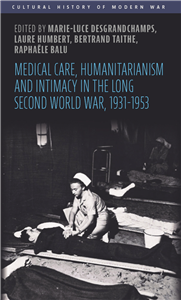
        Medical care, humanitarianism and intimacy in the long Second World War, 1931-1953

        by Marie-Luce Desgrandchamps, Laure Humbert, Bertrand Taithe, Raphaële Balu

        This book offers a micro-global history of humanitarianism and medical care during the 'long' Second World War, which challenges the traditional and Eurocentric chronological boundaries of 1939/1945. It takes as its starting point the Japanese invasion of Manchuria in 1931, which led to the progressive dislocation of the League of Nations, with the Japanese, German and Soviet departures in the 1930s. It ends with the termination of the Korean War in 1953, and the subsequent dismantlement of the first United Coalition and UN Peace enforcement operation. It considers the slow, messy and ambivalent transformation of humanitarian actors' relations to the suffering of distant others through a study of humanitarian encounters, practices, spaces and affects. Paying close attention to a variety of actors, such as French colonial doctors, Swiss ICRC delegates, Egyptian relief workers, Chinese-style physicians, Peruvian and Ecuadorian nurses or American member of the Unitarian Service Committee, the book provides a more holistic story of humanitarianism.

      • Trusted Partner
        Humanities & Social Sciences
        January 2025

        The four dimensions of power

        Understanding domination, empowerment and democracy

        by Mark Haugaard

        In this accessible and sophisticated exploration of the nature and workings of social and political power, Haugaard examines the interrelation between domination and empowerment. Building upon the perspectives of Steven Lukes, Michel Foucault, Amy Allen, Hannah Arendt, Anthony Giddens, Pierre Bourdieu and others, he offers a clear theoretical framework, delineating power in four interrelated dimensions. The first and second dimensions of power entail two different types of social conflict. The third dimension concerns tacit knowledge, uses of truth and reification. Drawing upon genealogical theory and accounts of slavery as social death, the fourth dimension of power concerns the power to create social subjects. The book concludes with an original normative pragmatist power-based account of democracy. Offering lucid and entertaining illustrations of complex theoretical perspectives, this book is essential reading for scholars and activists.

      • Trusted Partner
      • Trusted Partner
      • Trusted Partner
        Humanities & Social Sciences
        October 2021

        Higher education in a globalising world

        Community engagement and lifelong learning

        by Peter Mayo

        This book focuses on current policy discourse in Higher Education, with special reference to Europe. It discusses globalisation, Lifelong Learning, the EU's Higher Education discourse, this discourse's regional ramifications and alternative practices in Higher Education from both the minority and majority worlds with their different learning traditions and epistemologies. It argues that these alternative practices could well provide the germs for the shape of a public good oriented Higher Education for the future. It theoretically expounds on important elements to consider when engaging Higher Education and communities, discussing the nature of the term 'community' itself. Special reference is accorded to the difference that lies at the core of these ever-changing communities. It then provides an analysis of an 'on the ground project' in University community engagement, before suggesting signposts for further action at the level of policy and provision. This book is relevant to United Nations Sustainable Development Goal 4, Quality education

      • Trusted Partner
      • Trusted Partner
        Medicine
        February 2025

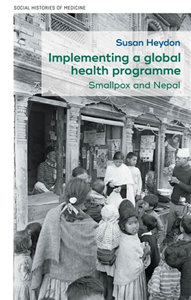
        Implementing a global health programme

        Smallpox and Nepal

        by Susan Heydon

        Worldwide eradication of the devastating viral disease of smallpox was devised as a distant global policy, but success depended on implementing a global vaccination programme within nation states. How this was achieved remains relevant and topical for responding to today's global communicable disease challenges. The small and poor Himalayan kingdom of Nepal faced enormous geographical and infrastructure challenges if it was going to succeed in a nationwide vaccination programme. This book acknowledges the key role of the WHO but disrupts the top-down, centre-led standard narrative. Against a background of widespread internal political and social change, Nepal's programme was expanded, effectively decentralised and a vaccination strategy introduced that aligned with people's beliefs. Few foreign personnel were involved.

      Subscribe to our

      newsletter