
McGill-Queen's University Press
Livres Canada Books
View Rights Portal

Established in 1948, UQP is a dynamic publishing house known for its innovative philosophy and commitment to producing books of high quality and cultural significance. UQP publishes books for general readers in the areas of fiction, non-fiction, poetry, Indigenous writing and youth literature as well as scholarly works. Our books and authors have received national and international recognition through literary prizes. These include the Miles Franklin Literary Award, the ABIAs, the CBCAs, the Prime Minister’s Literary Awards, the NSW Premier’s Literary Awards, the Deutscher Jugendliteraturpreis and the White Raven awards.
View Rights Portal Trusted Partner
Trusted Partner
Trusted Partner
Trusted Partner
Trusted Partner
Trusted Partner
Trusted Partner
Trusted Partner
Trusted Partner
Trusted Partner
Trusted Partner
Trusted Partner
Trusted Partner
Trusted Partner
Trusted Partner
Trusted Partner
Trusted Partner
Trusted Partner
Trusted Partner

 Trusted Partner

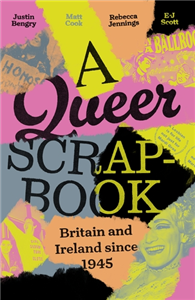
A beautifully illustrated compendium of LGBTIQ+ life. A queer scrapbook offers a treasure trove of LGBTIQ+ histories from across Britain and Ireland. Packed with materials, from interviews and newspaper articles to photographs and flyers, the book explores urban, rural and regional queer life since 1945. Commentaries and short essays introduce a changing queer landscape, spotlighting four broad themes: home and family, sex and socialising, arts and culture and politics and activism. The book delves into the meaning and experiences of domesticity and parenting and explores the sometimes unexpected places LGBTIQ+ people met to have fun. It examines the importance of creative work in forming community and identity and shows how people fought injustice and advocated for equal rights. Collecting has been a way for the marginalised to explore and assert identity and community. A queer scrapbook vividly illustrates the diversity of queer and trans lives across the British and Irish isles since the Second World War.
Trusted Partner
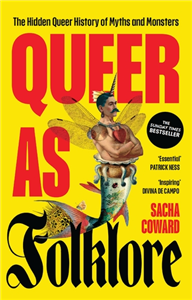
A celebration of queer history like you've never seen it before. Queer as folklore travels across centuries and continents to reveal the unsung heroes and villains of storytelling, magic and fantasy. Featuring images from archives, galleries and museums around the world, each chapter investigates the queer history of different mythic and folkloric characters, both old and new. Leaving no headstone unturned, Sacha Coward takes you on a wild ride through the night from ancient Greece to the main stage of RuPaul's Drag Race, visiting cross-dressing pirates, radical fairies and the graves of the 'queerly departed' along the way. Queer communities have often sought refuge in the shadows and created safe spaces in underworlds. But these forgotten narratives tell stories of resilience that deserve to be heard. Join any Pride march and you will see a glorious display of papier-mâché unicorn heads, drag queens in mermaid tails and more fairy wings than you can shake a trident at. These are not just accessories: they are queer symbols with historic roots. To truly understand who queer people are today, we must confront the twisted tales of the past.
Trusted Partner

De-centering queer theory seeks to reorient queer theory to a different conception of bodies and sexuality derived from Eastern European Marxism. The book articulates a contrast between the concept of the productive body, which draws its epistemology from Soviet and avant-garde theorists, and Cold War gender, which is defined as the social construction of the body. The first part of the book concentrates on the theoretical and visual production of Eastern European Marxism, which proposed an alternative version of sexuality to that of western liberalism. In doing so it offers a historical angle to understand the emergence not only of an alternative epistemology, but also of queer theory's vocabulary. The second part of the book provides a Marxist, anti-capitalist archive for queer studies, which often neglects to engage critically with its liberal and Cold War underpinnings.
Trusted Partner
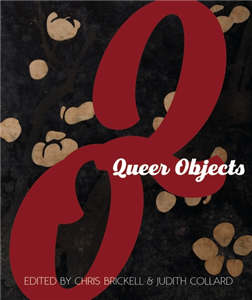
Queer lives give rise to a vast array of objects: the things we fill our houses with, the gifts we share with our friends, the commodities we consume at work and at play, the clothes and accessories we wear, and the analogue and digital technologies we use to communicate with one another. But what makes an object queer? The sixty-three chapters in Queer Objects consider this question in relation to lesbian, gay and transgender communities across time, cultures and space. In this unique international collaboration, well-known and newer writers traverse world history to write about items ranging from ancient Egyptian tomb paintings and Roman artefacts to political placards, snapshots, sex toys and the smartphone. Fabulous, captivating, transgressive.
Trusted Partner

Can reading make us better citizens? In Crossing borders and queering citizenship, Feghali crafts a sophisticated theoretical framework to theorise how the act of reading can contribute to the queering of contemporary citizenship in North America. Providing sensitive and convincing readings of work by both popular and niche authors, including Gloria Anzaldúa, Dorothy Allison, Gregory Scofield, Guillermo Gómez-Peña, Erín Moure, Junot Díaz, and Yann Martel, this book is the first to not only read these authors together, but also to discuss how each powerfully resists the exclusionary work of state-sanctioned citizenship in the U.S. and Canada. This book convincingly draws connections between queer theory, citizenship studies, and border studies and sheds light on how these connections can reframe our understanding of American Studies.
Trusted Partner
Trusted Partner
Jacques Martineau, Olivier Ducastel, Alain Guiraudie, Sébastien Lifshitz and Céline Sciamma. The films of these five major French directors exemplify queer cinema in the twenty-first century. Comprehensive in scope, Queer cinema in contemporary France traces the development of the meaning of queer across these directors' careers, from their earliest, often unknown films to their later, major films with wide international release. Whether having sex on the beach or kissing in the high school swimming pool, these cinematic characters create or embody forward-looking, open-ended and optimistic forms of queerness and modes of living, loving and desiring. Whether they are white, beur or black, whether they are lesbian, gay, trans* or queer, they open up hetero- and cisnormativity to new ways of being a gendered subject.
Trusted Partner

Charting a collaborative art-based project using carpet-making skills and the industrial heritage of the region, the book investigates how a cleaved ex-industrial community used arts methodologies as a cohesion strategy. Drawing on images from the company's archives, the book mines the history of Firths Carpets Limited, a firm that carpeted interiors across the globe from the mid-1800s. Women's labour and tastes were business critical to the production and sale of Firths carpets. Drawing on the author's personal connection to the village, an ethnographic sensibility and novel research techniques, ex-worker responses to a village radically altered by ruination are explored. Ex-workers felt nostalgia for the dignity of work and a sense of homesickness in a village ghosted by industrial spectres of the past. Threads of Labour argues that left-behind deindustrialised places require acts of social re-making if their communities are to survive.



