
QuestFriendz
QuestFriendz is an independent publisher with a focus on imaginative, interactive and inclusive STEM-themed books and resources for children.
View Rights Portal
QuestFriendz is an independent publisher with a focus on imaginative, interactive and inclusive STEM-themed books and resources for children.
View Rights Portal


Parents as well as those working with children can find themselves confronted with questions about children’s rude, angry, or downright aggressive behavior. This book seeks to inform parents, teachers, and other caregivers about behavioral issues, how to get to the bottom of the problem and evaluate whether external help should be sought. It provides practical tips that help reduce harmful behavior. This title can also be used in youth mental healthcare for psychoeducation. Target Group: Parents, caregivers, teachers


Working at the sales counter is never dull: Every day, people come to you with the widest possible variety of questions and expect good advice. It does not matter whether it is about self-medication for adults, pregnant women, children, about aids and appliances, vegan diets or alternative medicine: Whatever your customer’s concerns – you always offer well-founded counselling. Based on real-life counselling situations routinely encountered in a pharmacy, the authors – all pharmacists with experience of retail sales – provide important information for such conversations and suggest helpful questions to ask when patients seek advice. Become a sales counter expert in no time!
 Trusted Partner


This book brings a new classroom approach for primary teachers to teach the explicit knowledge of scientific question-asking. This is an essential skill when children are involved in finding out about the world around them through science enquiry. Challenging the assumption that because children ask lots of questions in science, this automatically leads to meaningful learning of the enquiry curriculum, QuBuild is important for all children developing as scientific thinkers. It outlines an approach to explicitly plan for, practice and develop the craft of scientific question-asking. Unlock your children's science learning potential by exploring the QuBuild Process.
Trusted Partner

The school years are a major challenge, not only for your child but also for you as a parent. You may be asking yourself questions like: • How can I motivate my child to study and learn? • How should I handle homework conflicts? • How can I help my child to become more independent? • What learning strategies are appropriate for primary school children? • How can I help if my child has problems with math, reading, or spelling? Answers to these and many other questions about homework, learning, and studying can be found in this book. It describes practical methods and effective strategies, and shows how providing just a little support can be a big help to your child. Target Group: psychologists, education specialists, parents.
Trusted Partner

In the company of wolves presents further research from the Open Graves, Open Minds Project. It connects together innovative research from a variety of perspectives on the cultural significance of wolves, wild children and werewolves as portrayed in different media and genres. We begin with the wolf itself as it has been interpreted as a cultural symbol and how it figures in contemporary debates about wilderness and nature. Alongside this, we consider eighteenth-century debates about wild children - often thought to have been raised by wolves and other animals - and their role in key questions about the origins of language and society. The collection continues with essays on werewolves and other shapeshifters as depicted in folk tales, literature, film and TV, concluding with the transition from animal to human in contemporary art, poetry and fashion.
Trusted Partner

Quick and comprehensive information on psychotropic drugs for children and adolescents. The “Clinical Handbook of Psychotropic Drugs for Children and Adolescents” is a unique resource to help you make the right choices about psychotropic medications for younger patients. The ffth edition of this widely acclaimed reference has been fully updated and expanded. • Updated information on psychiatric disorders in children and adolescents • U nique comparison charts (dosages, side effects, pharmacokinetics, interactions …) that allow you to see at a glance which medication is the most suitable for each patient • Instantly recognizable icons in full color throughout, a llowing you to quickly fnd all the information you seek • G eneral information on medications, availability, and indications • D rug action, dosing, pharmacokinetics, and related areas• Warnings and precautions • P atientrelated information, such as lab monitoring recommendations, nursing implications, and patient advice• Clearly written patient and caregiver information sheets as printable PDF fles
Trusted Partner
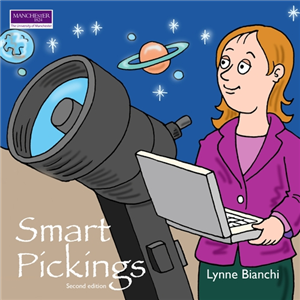
Smart Pickings (2nd Edition) further engages young readers with the world of science. It promotes talk between children, their classmates, teachers, parents, family and friends. The book introduces a range of diverse and inspirational scientists who have or are making a difference through their innovations and research. A book to encouraging us all to wonder, ask questions and ask 'Who are they?', 'How might I be like them?'
Trusted Partner


Anyone giving responsible advice about questions on nutrition must have sound expert knowledge. This must not only be scientifically reliable, but must at the same time be relevant and practicable in the individual context. The concept behind the book series Nutritional Practice is to provide the necessary translation of current research results and guidelines into recommendations suitable for everyday use. In accordance with this consistent, practical approach, the focus is on the individual person in his or her particular stage in their life. The present volume is based on the various stages in life between infancy and adolescence. It therefore covers all questions about nutrition in health and disease from the first day of life to young adulthood
Trusted Partner
Trusted Partner

Jeremy Krauss, one of the last students of Mosché Feldenkrais, has been practicing the Feldenkrais Method for over 40 years and has developed the Jeremy Krauss Approach (JKA) during the past 15 years in his work with children with special needs. This interprofessional approach can provide skill-based support for children with a variety of developmental delays. Krauss looks back on treatment successes with atypically developed individuals whose difficulties are located in the neurological, psychological, or socioemotional domain. Using numerous case studies, Krauss reflects on his experiences, which are connectable to topics such as motor learning, neuroplasticity and developmental psychology. Didactically, JKA is based on close observation of movement sequences and individual movement patterns. The focus is on variations in the dynamic transition from one position to another and the associated individual developmental steps.
Trusted Partner
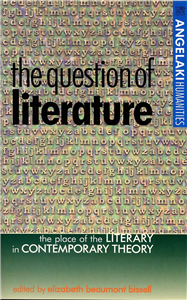
As literary theory has grown more influential, interdisciplinary and sophisticated, it has come to concern itself with a much greater range of issues and objects than those traditionally considered literary. It now addresses philosophy, history, psychology, politics and the media. Addressing a central and fundamental, but relatively neglected, issue in literary theory, this title seeks to recontextualise how theory has changed our understanding of literature and its questions by relating literature to the institution of the university, to ethical judgements and values, new media and computer technology and the nature of representative democracy. ;
Trusted Partner
Trusted Partner

Sentence completions provide importantstarting points for therapeutic workwith children and adolescents and aretherefore often used in the context of diagnostics.The card set contains 160cards with sentence starters for 16 categories,such as family and origin, loveand identity or beliefs and values, whichprovide information on conflicts, resources,problems, fears, hopes andwishes of children and young peopleaged 5 to 13. The cards are the idealcompanion for diagnostics and the furthercourse of treatment thanks to thevarious possible uses and applicationsin individual or group settings, which aredescribed in detail in the accompanyingbooklet, as well as extensive online materials.This means that children andyoung people can complete the sentencestarters as an at-home task andpeople using the card set can writedown the answers to the sentencestarters directly.
Trusted Partner


Mental health problems in children and adolescents are a taboo subject. “As ever, there are social misgivings”, says child and adolescent psychiatrist Dr. Robin Funke. “Many families find it tough when they first come to us. They feel this is a failure.” But what is it like living with depression, compulsive behaviour, anxiety and panic attacks, or with eating disorders, bulimia or anorexia? Schirm e. V., the friends association for child and adolescent psychiatry in Tübingen (Germany), asked young patients to share their stories. A moving book was created about living with mental health problems, about the dayto- day routine in psychiatric practice and the power of confidence.
Trusted Partner

This title provides a semi-structured guide for an evidence-based cognitive-behavioral treatment of children and adolescents between the ages of 9 and 17 who suffer from panic disorder, agoraphobia, specific phobias, or separation anxiety. It describes each step of the therapy in details, pays special attention to fear management, and enables the children to largely cope with the fears by themselves. The treatment modules can be used in the context of short-term therapy in individual or mixed individual and group setting. The manual allows for the therapy to be adjusted to the individual needs of the child or adolescent and some parts can be used also when working with younger children. Parents are trained to be co-therapists, supporting their children during the confrontational exercises but also insuring that parents do no unknowingly enable their child to maintain the anxiety disorder. All necessary worksheets can be found on the accompanying CD-ROM. Target Group: child and adolescent psychotherapists and psychiatrists, students and teachers of psychology, pediatricians, psychotherapists, specialists for psychosomatic medicine, school psychologists
Trusted Partner

Obsessive-compulsive disorders usually cause a high degree of suffering and can significantly impair the quality of life of the affected child or adolescent. The new edition of this guidebook describes the manifestations of obsessive thoughts and compulsive acts as well as the causative, triggering and perpetuating conditions, considering current findings in obsessive-compulsive research. Part I of the guide is aimed at adult readers and Part II at affected children and adolescents, who receive the most important information on obsessive-compulsive disorders in easy-to-understand language. The case studies make it comprehensible how an individual disorder model can be developed, how goals for coping with the compulsions can be derived from it, and finally how the treatment of the obsessive-compulsive disorder can be planned and carried out. The children and adolescents as well as their parents and educators receive concrete advice on how to help themselves and how to cope with compulsions. For:• affected children and adolescents• parents• teachers• therapists• relatives
Trusted Partner

Playful learning is an excellent way to help children acquire skills from an early age. This book illustrates ways to promote the development of preschool- age children through play in everyday family and kindergarten life – entirely without expensive resources! Promotion of (written) language development and mathematical development forms a focus of this book, while preparing your child optimally for the two school subjects English and Mathematics. For:• parents and guardians• interested laypeople• educational specialists (such asteachers, childcare workers, socialworkers)
Trusted Partner

State-of-the-art guidance on the effective assessment andtreatment of children and adolescents with ADHD• New updated edition• Provides guidance on multimodal care and diversity issues• Includes downloadable handoutsThe updated new edition of this popular text integrates thelatest research and practices to give practitioners conciseand readable guidance on the assessment and effectivetreatment of children and adolescents with attention-deficit/hyperactivity disorder (ADHD). This common childhoodcondition can have serious consequences for academic,emotional, social, and occupational functioning. When properlyidentified and diagnosed, however, there are many interventionsthat have established benefits.
Trusted Partner

“Well, that’s football for you!” – football-related conventional wisdom when there’s nothing left to explain after a lucky win or unlucky defeat. But Jörg Heinrich, the renowned football journalist, is not satisfied with this platitude. “Woulda, Coulda, Shoulda”: in the 25 essays in this ball-smart book, bursting with esprit and wit, Jörg Heinrich addresses questions and topics that have never even been considered before, never mind answered. Such as: “What if Günter Netzer had not come on as a substitute in 1973?”, or “if Birgit Prinz had aimed better in the 1995 World Cup?”. “What if Mario Basler had been a non-smoker in 1999”, or “if SC Freiburg had fired their coach Christian Streich after relegation in 2015?”.
Trusted Partner

Solution based communication is a positive and very effective approach in therapy sessions. By means of specific questions, the strengths of the client are emphasized. This fan brings together the most important questions, ordered by subject (e.g. getting to know the client, goals, exceptions) and by type of conversation partner (clients who do not want to co-operate, who are in conflict, or who currently experience a crisis). All relevant questions close are at hand with this extremely practical tool!


