Your Search Results

      • Residenz Verlag GmbH

        Residenz Verlag, founded in 1956 and located in Salzburg and Vienna, is one of the most renowned publishers in Austria. Residenz Verlag stands for an ambitious literature program and dedicated non-fiction books. In the area of non-fiction, Residenz Verlag publishes on the topics of politics, sustainability, contemporary history, and arts as well as biographies.In fiction, the focus is on new discoveries from the German-speaking world, the continuous support of renowned Austrian writers’ oeuvre, and selected translations from (South-)Eastern and Northern European languages as well as from English. The authors’ list includes Thomas Bernhard, Peter Henisch, Walter Kappacher, Christine Nöstlinger, Alek Popov, Clemens Setz, Tanja Maljartschuk.

        View Rights Portal
      • Rachel Amphlett

        USA Today bestselling author Rachel Amphlett is the creator of over 25 crime thrillers. Rachel’s titles are available for consideration to all parties interested in licensing IP.

        View Rights Portal

      • Trusted Partner
        Humanities & Social Sciences
        July 2025

        Conquest and resistance in West Africa

        The Jeandet Affair and the illusion of colonial justice

        by Ruth Ginio

        This book is an enthralling account of a legal scandal, which erupted in colonial Senegal in 1890 and reached the French metropolitan press and the parliament. The murder of a colonial administrator, Abel Jeandet, by one of his soldiers led to the brutal and illegal executions without trial of the killer and two local dignitaries. The volume follows the fascinating story of Ndiereby Ba, the widow of one of the dignitaries, who with the help of powerful métis men in the capital Saint Louis sued the French administrators who had supervised the executions for the murder of her husband. Through this captivating tale the book articulates the French expansion into West Africa, the resistance to colonial rule both violent and non-violent, and the lack of interest on the part of French politicians in the brutal conquest of a territory they know nothing about.

      • Trusted Partner
        Humanities & Social Sciences
        September 2020

        I Refuse to Condemn

        by Asim Qureshi

      • Trusted Partner
        Humanities & Social Sciences
        March 2024

        A savage song

        Racist violence and armed resistance in the early twentieth-century U.S.–Mexico Borderlands

        by Margarita Aragon

        This book examines key moments in which collective and state violence invigorated racialized social boundaries around Mexican and African Americans in the United States, and in which they violently contested them. Bringing anti-Mexican violence into a common analytical framework with anti-black violence, A savage song examines several focal points in this oft-ignored history, including the 1915 rebellion of ethnic Mexicans in South Texas, and its brutal repression by the Texas Rangers and the 1917 mutiny of black soldiers of the 24th Infantry Regiment in Houston, Texas, in response to police brutality. Aragon considers both the continuities and stark contrasts across these different moments: how were racialized constructions of masculinity differently employed? How did African and Mexican American men, including those in uniform, respond to the violence of racism? And how was their resistance, including their claims to manhood and nation, understood by law enforcement, politicians, and the press? Building on extensive archival research, the book examines how African and Mexican American men have been constructed as 'racial problems', investigating, in particular, their relationship with law enforcement and ideas about black and Mexican criminality.

      • Trusted Partner
        Humanities & Social Sciences
        May 2026

        The racial politics of police warfare

        by Jasbinder S. Nijjar

        Amid renewed anti-racist resistance to violent policing, The racial politics of police warfare unpacks the racisms that rationalise militarised policing in contemporary Britain. Jasbinder S. Nijjar shatters prevailing myths about British police as an impartial public service, by revealing it as an institution where racism and war reinforce one another. In examining flagship anti-gang and counter-terrorism policies and practices, the book offers a unique analysis of the relationship between anti-black and anti-Muslim racisms, to demonstrate how racialised populations are institutionalised as common enemies of modernity. Combining perspectives from sociology, history, criminology and social policy, Nijjar illustrates how British policing defends law and order and national security from the perceived threat of race through hyper-intrusive, pre-emptive and deathly measures. Accordingly, he gives a fresh take on resisting racial police warfare, calling for strategies that are at once political, collective, anti-militaristic and abolitionist.

      • Trusted Partner
        Humanities & Social Sciences
        April 2025

        Islamophobia, anti-racism and the British left

        by Scarlet Harris

        Islamophobia is one of the most misunderstood and pernicious forms of racism in Britain. But how do those committed to challenging Islamophobia understand it? And what does this mean for their practices 'on the ground'? Islamophobia, anti-racism and the British left combines first-hand accounts from activists and community workers across two British cities with sociological theory, critically interrogating Islamophobia's relationship to 'race', racial capitalism and other modalities of racism. Setting this discussion against some of the most pertinent political shifts in Britain in recent years - from the resurgence of left nationalism to Black Lives Matter - the book assesses the limits of recent attempts to think about and tackle Islamophobia, and considers the possibilities of an alternative approach from and for the anti-racist left.

      • Trusted Partner
        Humanities & Social Sciences
        May 2021

        Black resistance to British policing

        by Adam Elliott-Cooper

      • Trusted Partner
        Business, Economics & Law
        January 2026

        Undermining resistance

        by Lian Sinclair

      • Trusted Partner
        The Arts
        July 2024

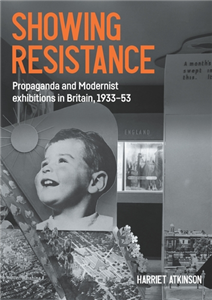
        Showing resistance

        Propaganda and Modernist exhibitions in Britain, 1933–53

        by Harriet Atkinson

        This is the first book-length analysis of exhibitions used for propaganda and political interventions in Britain during the two decades from 1933. It analyses how exhibitions were mounted in public places - from station concourses to workers' canteens, empty shops and bombsites - becoming a key tool for public communication. Richly illustrated, the book extends our existing knowledge of the work of a range of prominent artists, architects and designers active in Britain, including Edith Tudor-Hart, Edward McKnight-Kauffer, Paul Nash, F. H. K. Henrion, Misha Black, John Heartfield, Oskar Kokoschka and Erno Goldfinger.

      • Trusted Partner
        Humanities & Social Sciences
        July 2020

        Race talk

        Languages of racism and resistance in Neapolitan street markets

        by Antonia Lucia Dawes

        This electronic version has been made available under a Creative Commons (BY-NC-ND) open access license. Race talk is about language use as an anti-racist practice in multicultural city spaces. The book contends that attention to talk reveals the relations of domination and subordination in heterogeneous, ethnically diverse and multilingual contexts, while also helping us to understand how transcultural solidarity might be expressed. Drawing on original ethnographic research conducted on licensed and unlicensed market stalls in in heterogeneous, ethnically diverse and multilingual contexts, this book examines the centrality of multilingual talk to everyday struggles about difference, positionality and entitlement. In these street markets, Neapolitan street vendors work alongside documented and undocumented migrants from Bangladesh, China, Guinea Conakry, Mali, Nigeria and Senegal as part of an ambivalent, cooperative and unequal quest to survive and prosper. As austerity, anti-immigration politics and urban regeneration projects encroached upon the possibilities of street vending, talk across linguistic, cultural, national and religious boundaries underpinned the collective action of street vendors struggling to keep their markets open. The edginess of their multilingual organisation offered useful insights into the kinds of imaginaries that will be needed to overcome the politics of borders, nationalism and radical incommunicability.

      • Trusted Partner
      • Trusted Partner
        Literature & Literary Studies
        January 2013

        Popular protest in late-medieval Europe

        Italy, France and Flanders

        by Samuel Kline Cohn

        The documents in this stimulating volume span from 1245 to 1424 but focus on the 'contagion of rebellion' from 1355 to 1382 that followed in the wake of the plague. They comprise a diversity of sources and cover a variety of forms of popular protest in different social, political and economic settings. Their authors range across a wide political and intellectual horizon and include revolutionaries, the artistocracy, merchants and representatives from the church. They tell gripping and often gruesome stories of personal and collective violence, anguish, anger, terror, bravery, and foolishness. Of over 200 documents presented here, most have been translated into English for the first time, providing students and scholars with a new opportunity to compare social movements across Europe over two centuries, allowing a re-evaluation of pre-industrial revolts, the Black Death and its consequences for political culture and action. This book will be essential reading for those seeking to better understand popular attitudes and protest in medieval Europe.

      • Trusted Partner
        Humanities & Social Sciences
        May 2012

        Racism and social change in the Republic of Ireland

        Second edition

        by Bryan Fanning

        Now in its second edition, Racism and Social Change in the Republic of Ireland provides an original and challenging account of racism in twenty-first century Irish society and locates this in its historical, political, sociological and policy contexts. It includes specific case studies of the experiences of racism in twenty-first century Ireland alongside a number of historical case studies that examine how modern Ireland came to marginalize ethnic minorities. Various chapters examine responses by the Irish state to Jewish refugees before, during and after the Holocaust, asylum seekers and Travellers. Other chapters examine policy responses to and academic debates on racism in Ireland. A key focus of the various case studies is upon the mechanics of exclusion experienced by black and ethnic minorities within institutional processes and of the linked challenge of taking racism seriously in twenty-first century Ireland. ;

      • Trusted Partner
        The Arts
        June 2026

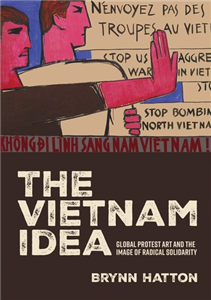
        The Vietnam idea

        Global protest art and the image of radical solidarity

        by Brynn Hatton

        The Vietnam idea examines how Vietnam became a potent symbol for global movements fighting colonialism, racism, and imperialism during the American War and its aftermath. Rather than focusing on Vietnam as a place, Brynn Hatton explores how artists and activists around the world used the idea of 'Vietnam' to express political identification and solidarity through posters, films, protest actions, exhibitions, and conceptual art. Drawing on international archives, the book reveals how diverse visual works helped shape the political imagination of the global left, and continue to influence how we see identity, conflict, and solidarity today.

      • Trusted Partner
        Humanities & Social Sciences
        March 2026

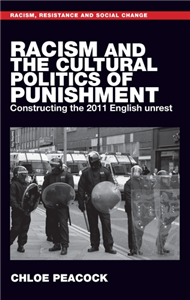
        Justifying (in)justice

        Discourses of crime and punishment in the wake of the 2011 English riots

        by Chloe Peacock

        Justifying (in)justice reveals how processes of ignorance are vital to legitimising punitive and discriminatory criminal justice policy and practices. Focusing on the state's startlingly harsh response to the English 'riots' of 2011, the book draws together unique insights from interviews with prosecutors, sentencers, defence lawyers and policymakers at the heart of the response, alongside analysis of media and political debates. Peacock explores the forms of unknowing that were mobilised to justify and normalise the harsh and inequitable punishment of the 'rioters', from amnesia about police racism and Britain's long history of unrest, to widespread denial about the violence of the prison system. Looking to recent events in Britain and beyond, the book offers timely insight into the cultural processes underpinning the punitive systems that disproportionately harm marginalised and racially minoritised communities.

      • Trusted Partner
        Biography & True Stories
        June 2022

        The punk rock politics of Joe Strummer

        by Gregor Gall

      • Trusted Partner
      • Trusted Partner
        Business, Economics & Law
        January 2026

        Latin America and international investment law

        A mosaic of resistance

        by Sufyan Droubi, Cecilia Juliana Flores Elizondo

        Latin America has been a complex laboratory for the development of international investment law. While some governments and non-state actors have remained true to the Latin American tradition of resistance towards the international investment law regime, other governments and actors have sought to accommodate said regime in the region. Consequently, a profusion of theories and doctrines, too often embedded in clashing narratives, has emerged. In Latin America, the practice of international investment law is the vivid amalgamation of the practice of governments sometimes resisting and sometimes welcoming mainstream approaches; the practice of lawyers assisting foreign investors from outside and within the region; and the practice of civil society, indigenous peoples and other actors in their struggle for human rights and sustainable development. Latin America and international investment law describes the complex roles that governments have played vis-à-vis foreign investors and investments; the refreshing but clashing forces that international organizations, corporations, civil society, and indigenous peoples have brought to the field; and the contribution that Latin America has made to the development of the theory and practice of international investment law, notably in fields in which the Latin American experience has been traumatic: human rights and sustainable development. Latin American scholars have been contributing to the theory of international investment law for over a century; resting on the shoulders of true giants, this volume aims at pushing this contribution a little further.

      • Trusted Partner
        Humanities & Social Sciences
        March 2017

        Air power and colonial control

        by David Omissi

        Air policing was used in many colonial possessions, but its most effective incidence occurred in the crescent of territory from north-eastern Africa, through South-West Arabia, to North West Frontier of India. This book talks about air policing and its role in offering a cheaper means of 'pacification' in the inter-war years. It illuminates the potentialities and limitations of the new aerial technology, and makes important contributions to the history of colonial resistance and its suppression. Air policing was employed in the campaign against Mohammed bin Abdulla Hassan and his Dervish following in Somaliland in early 1920. The book discusses the relationships between air control and the survival of Royal Air Force in Iraq and between air power and indirect imperialism in the Hashemite kingdoms. It discusses Hugh Trenchard's plans to substitute air for naval or coastal forces, and assesses the extent to which barriers of climate and geography continued to limit the exercise of air power. Indigenous responses include being terrified at the mere sight of aircraft to the successful adaptation to air power, which was hardly foreseen by either the opponents or the supporters of air policing. The book examines the ethical debates which were a continuous undercurrent to the stream of argument about repressive air power methods from a political and operational perspective. It compares air policing as practised by other European powers by highlighting the Rif war in Morocco, the Druze revolt in Syria, and Italy's war of reconquest in Libya.

      Subscribe to our

      newsletter