Your Search Results

      • Trusted Partner
      • Trusted Partner
        Humanities & Social Sciences
        February 2025

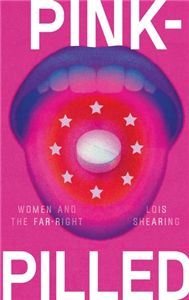
        Pink-pilled

        Women and the far right

        by Lois Shearing

        A daring investigation that explores how women are targeted and recruited by the far right. As the far right has gained popularity and acceptance around the world, its ranks have swelled with an unlikely category of members: women. Women play significant roles in far-right movements, acting as propagandists, prizes to be won and mother-warriors of the nation. But up to now their activities have been largely overlooked. In Pink-pilled, Lois Shearing provides a cutting-edge account of how the far right has used the internet to recruit women, while shedding light on what life is like for women within these movements, including their experiences of misogyny and violence. Understanding how and why women join movements that explicitly aim to restrict their autonomy is essential if we want to fight back. Pink-pilled offers key insights for countering women's radicalisation and building communities resistant to far-right thought.

      • Trusted Partner
        Humanities & Social Sciences
        June 2023

        Vulnerability

        by Charlotte Heath-Kelly, Barbara Gruber

      • Trusted Partner
        Humanities & Social Sciences
        June 2023

        Collective emotions and political violence

        by Maéva Clément

      • Trusted Partner
        Humanities & Social Sciences
        July 2025

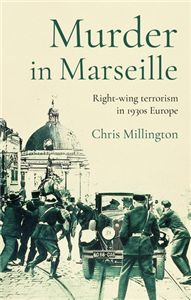
        Murder in Marseille

        Right-wing terrorism in 1930s Europe

        by Christopher Millington

        On 9 October 1934, terrorists murdered King Alexander I of Yugoslavia in a Marseille street. The Croatian ultranationalist Ustashe was behind the attack. The Ustashe hoped that the king's death would cause the collapse of Yugoslavia and the liberation of the Croat people. This book examines the circumstances, processes, and trajectories that shaped the Ustashe terrorists and their attack in Marseille. It brings questions about contemporary terrorism to bear on a historical attack: what prompts people to join terrorist organisations? How are these people 'radicalised' to commit violence? What roles do women play in terrorism? Murder in Marseille bridges the scholarly gap between historical and contemporary terrorism, paying attention to, and often guided by, current concerns, ideas, theories, and notions about terrorist violence.

      • Trusted Partner

      Subscribe to our

      newsletter