Your Search Results

      • Relish Books

        Kate B. Gordon publishes middle grade fiction under the imprint Relish Books. The first book in the Unicorn King series, Lily and the Unicorn King, blends the unicorns of European mythology with Maori myths and lore, a trio of brave friends and their ponies. The second book in the series, Sasha and the Warrior Unicorn, will be out late in 2020 with the third book in 2021.

        View Rights Portal
      • Cultural Relics Press

        Cultural Relics Press was established in 1957, and is the only press dedicated to publishing archeology related books. It is committed to salvaging and protecting China’s cultural heritage and publicizing the content and artistic charm of traditional Chinese culture. Over the past 60 years, it has published about 7000 kinds of books on culture and archeology”. Its publications on traditional Chinese culture are well received across the world. It is the first press to engage in cultural exchange abroad and cooperate with counterparts in Europe, the United States, Hong Kong and Taiwan. It has collaborated with partners in UK, USA, Italy, Japan, former Yugoslavia, Taiwan. More than 300 awards has been received at home and abroad, including, among others, National Book Award, China Book Award, and “Most Beautiful Books in the World” (Leipzig).

        View Rights Portal
      • Trusted Partner
        Humanities & Social Sciences
        April 2022

        Chinese religion in contemporary Singapore, Malaysia and Taiwan

        The cult of the Two Grand Elders

        by Fabian Graham

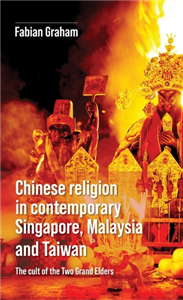
        In Singapore and Malaysia, the inversion of Chinese Underworld traditions has meant that Underworld demons are now amongst the most commonly venerated deities in statue form, channelled through their spirit mediums, tang-ki. The Chinese Underworld and its sub-hells are populated by a bureaucracy drawn from the Buddhist, Taoist and vernacular pantheons. Under the watchful eye of Hell's 'enforcers', the lower echelons of demon soldiers impose post-mortal punishments on the souls of the recently deceased for moral transgressions committed during their prior incarnations. Chinese religion in contemporary Singapore, Malaysia and Taiwan offers an ethnography of contemporary Chinese Underworld traditions, where night-time cemetery rituals assist the souls of the dead, exorcised spirits are imprisoned in Guinness bottles, and malicious foetus ghosts are enlisted to strengthen a temple's spirit army. Understanding the religious divergences between Singapore and Malaysia (and their counterparts in Taiwan) through an analysis of socio-political and historical events, Fabian Graham challenges common assumptions about the nature and scope of Chinese vernacular religious beliefs and practices. Graham's innovative approach to alterity allows the reader to listen to first-person dialogues between the author and channelled Underworld deities. Through its alternative methodological and narrative stance, the book intervenes in debates on the interrelation between sociocultural and spiritual worlds, and promotes the destigmatisation of spirit possession and discarnate phenomena in the future study of mystical and religious traditions.

      • Trusted Partner
        May 1985

        Wie entsteht Religion?

        by Alfred North Whitehead, Hans Günter Holl

        Religion in the Making – so der englische Originaltitel – besteht aus vier Vorlesungen, die Whitehead 1926 gehalten hat. In der gleichen Perspektive, wie er in den ein Jahr früher gehaltenen Lowell Lectures, die unter dem Titel Wissenschaft und moderne Welt erschienen sind, Entwicklung und Wirkung der modernen Wissenschaft analysiert hatte, verfolgt er in Wie entsteht Religion? die Ziele, »eine gedrängte Analyse der vielfältigen Faktoren in der menschlichen Natur vorzulegen, die in ihrem Zusammenwirken eine neue Religion entstehen lassen, den unausweichlichen Wandel der Religion im Zusammenhang mit dem Wandel des Wissens darzustellen und insbesondere die Aufmerksamkeit darauf zu richten, wie die Religion von unserer Auffassung jener beständigen Elemente abhängt, vermöge derer es in der Welt eine feste Ordnung gibt – beständige Elemente, ohne die es keine sich verändernde Welt geben könnte«.

      • Trusted Partner
        May 2002

        Die Religion der Gesellschaft

        by Niklas Luhmann, André Kieserling

        Die Klassiker der Soziologie hatten die Religionssoziologie als einen zentralen Teil der Gesellschaftstheorie angesehen, und zwar auch und gerade dort, wo ihnen die moderne, angeblich so religionsfern gebaute Gesellschaft vor Augen stand. Der vorliegende Band, an dem Niklas Luhmann bis kurz vor seinem Tod gearbeitet hat, erneuert diesen Anspruch, indem er die Religion als autonomes Kommunikationssystem innerhalb der modernen Gesellschaft beschreibt.

      • Trusted Partner
        Humanities & Social Sciences
        October 2021

        Religion and life cycles in early modern England

        by Caroline Bowden, Emily Vine, Tessa Whitehouse

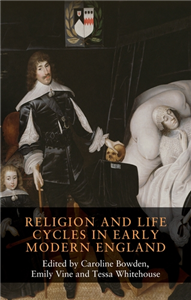
        Religion and life cycles in early modern England assembles scholars working in the fields of history, English literature and art history to further our understanding of the intersection between religion and the life course in the period c. 1550-1800. Featuring chapters on Catholic, Protestant and Jewish communities, it encourages cross-confessional comparison between life stages and rites of passage that were of religious significance to all faiths in early modern England. The book considers biological processes such as birth and death, aspects of the social life cycle including schooling, coming of age and marriage and understandings of religious transition points such as spiritual awakenings and conversion. Through this inclusive and interdisciplinary approach, it seeks to show that the life cycle was not something fixed or predetermined and that early modern individuals experienced multiple, overlapping life cycles.

      • Trusted Partner
        Humanities & Social Sciences
        January 2007

        Religion in Revolutionary England

        by Christopher Durston, Judith Maltby

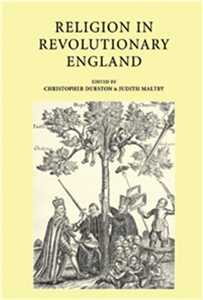
        This book offers a collection of essays tightly focused around the issue of religion in England between 1640 and 1660, a time of upheaval and civil war in England. Edited by well-known scholars of the subject, topics include the toleration controversy, women's theological writing, observance of the Lord's Day and prayer books. To aid understanding, the essays are divided into three sections examining theology in revolutionary England, inside and outside the revolutionary National Church and local impacts of religious revolution. Carefully and thoughtfully presented, this book will be of great use for those seeking to better understand the practices and patterns of religious life in England in this important and fascinating period. ;

      • Trusted Partner
        Humanities & Social Sciences
        November 2004

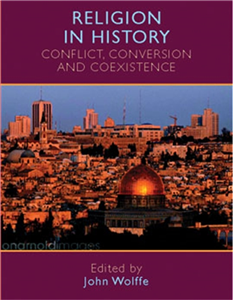
        Religion in history

        Conflict, conversion and coexistence

        by John Wolffe

        This is an integrated collection of essays by leading scholars that looks at issues of conflict, conversion and coexistence in the religious context since the third century. The range of topics explored include paganism and Christianity in the later Roman world, the Crusades, the impact of the Reformation in Britain and Ireland, subsequent Protestant-Catholic conflict, the Hindu Renaissance in nineteenth-century India, the Palestinian-Israeli conflict, Britain in the 1960s, women and the ministry, and Christianity, Judaism and the Holocaust. The book concludes by offering an historical perspective on religion, conflict and coexistence in the world today. Published in association with The Open University, this is a student-friendly and accessible volume on popular subjects within religious history, and it will be of value to students on a range of courses, as well as to a wider readership interested in the historical background to the role of religion in the contemporary world. ;

      • Trusted Partner
        Humanities & Social Sciences
        February 2023

        No masters but God

        Portraits of anarcho-Judaism

        by Hayyim Rothman

        The forgotten legacy of religious Jewish anarchism, and the adventures and ideas of its key figures, finally comes to light in this book. Set in the decades surrounding both world wars, No masters but God identifies a loosely connected group of rabbis and traditionalist thinkers who explicitly appealed to anarchist ideas in articulating the meaning of the Torah, traditional practice, Jewish life and the mission of modern Jewry. Full of archival discoveries and first translations from Yiddish and Hebrew, it explores anarcho-Judaism in its variety through the works of Yaakov Meir Zalkind, Yitshak Nahman Steinberg, Yehudah Leyb Don-Yahiya, Avraham Yehudah Heyn, Natan Hofshi, Shmuel Alexandrov, Yehudah Ashlag and Aaron Shmuel Tamaret. With this ground-breaking account, Hayyim Rothman traces a complicated story about the modern entanglement of religion and anarchism, pacifism and Zionism, prophetic anti-authoritarianism and mystical antinomianism.

      • Trusted Partner
        Humanities & Social Sciences
        November 2022

        The religion of Orange politics

        by Joseph Webster, Alexander Smith

      • Trusted Partner
        Literature & Literary Studies
        January 2004

        Theatre and religion

        Lancastrian Shakespeare

        by Richard Dutton, Alison Findlay, Richard Wilson

        This important collection of essays focuses on the place of Roman Catholicism in early modern England, bringing new perspectives to bear on whether Shakespeare himself was Catholic. In the Introduction, Richard Wilson reviews the history of the debate over Shakespeare's religion, while Arthur Marotti and Peter Milward offer current perspectives on the subject. Eamon Duffy offers a historian's view of the nature of Elizabethan Catholicism, complemented by Frank Brownlow's study of Elizabeth's most brutal enforcer of religious policy, Richard Topcliffe. Two key Catholic controversialists are addressed by Donna Hamilton (Richard Vestegan) and Jean-Christophe Mayer (Robert Parsons). Robert Miola opens up the neglected field of Jesuit drama in the period, whilst Sonia Fielitz specifically proposes a new, Jesuit source-text for Timon of Athens. Carol Enos (As You Like It), Margaret Jones-Davies (Cymbeline), Gerard Kilroy (Hamlet) and Randall Martin (Henry VI 3) read individual plays in the light of these questions, while Gary Taylor's essay fittingly investigates the possible influence of religious conflicts on the publication of the Shakespeare First Folio. Theatre and religion: Lancastrian Shakespeare as a whole represents a major intervention in this fiercely contested current debate. ;

      • Trusted Partner
        Humanities & Social Sciences
        October 2020

        Religion, war and Israel’s secular millennials

        by Stacey Gutkowski

      • Trusted Partner
        April 2000

        Goethe und die Religion

        Aus seinen Werken, Briefen, Tagebüchern und Gesprächen

        by Hans-Joachim Simm

        Hans-Joachim Simm, Dr. phil., geboren 1946 in Braunschweig, war bis 2009 Verlagsleiter des Insel Verlags und des Verlags der Weltreligionen.

      • Trusted Partner
        Humanities & Social Sciences
        May 2024

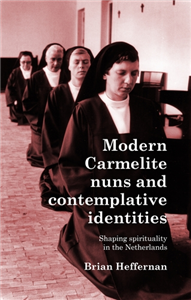
        Modern Carmelite nuns and contemplative identities

        Shaping spirituality in the Netherlands

        by Brian Heffernan

        Discalced Carmelite convents are among the most influential wellsprings of female spirituality in the Catholic tradition, as the names of Teresa of Avila, Therese of Lisieux and Edith Stein attest. Behind these 'great Carmelites' stood communities of women who developed discourses on their relationship with God and their identity as a spiritual elite in the church and society. This book looks at these discourses as formulated by Carmelites in the Netherlands, from their arrival there in 1872 up to the recent past, providing an in-depth case study of the spiritualities of modern women contemplatives. The female religious life was a transnational phenomenon, and the book draws on sources and scholarship in English, Dutch, French and German to provide insights on gendered spirituality, memory and the post-conciliar renewal of the religious life.

      • Trusted Partner
        Humanities & Social Sciences
        February 2023

        Faith stories

        by Anna Hickey-Moody

      • Trusted Partner
        Literature & Literary Studies
        January 2020

        Forms of faith

        by Jonathan Baldo, Isabel Karremann

      • Trusted Partner
      • Trusted Partner
        European history
        January 2003

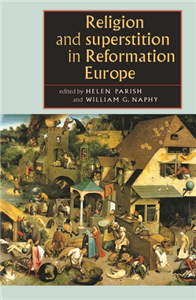
        Religion and superstition in Reformation Europe

        by Edited by Christopher Durston and Judith Maltby

        What, in the sixteenth and seventeenth centuries, was 'superstition'? Where might it be found, and how might it be countered? How was the term used, and how effective a weapon was it in the assault on traditional religion?. The ease with which accusations of 'superstition' slipped into the language of Reformation debate has ensured that one of the most fought over terms in the history of early modern popular culture, especially religious culture, is also one of the most difficult to define. Offers a novel approach to the issue, based upon national and regional studies, and examinations of attitudes to prophets, ghosts, saints and demonology, alongside an analysis of Catholic responses to the Reformation and the apparent presence of 'superstition' in the reformed churches. Challenges the assumptions that Catholic piety was innately superstitious, while Protestantism was rational, and suggests that the early modern concept of 'superstition' needs more careful treatment by historians. Demands that the terminology and presuppositions of historical discourse on the Reformation be altered to remove lingering sectarian polemic.

      • Trusted Partner
      • Trusted Partner
        Humanities & Social Sciences
        June 2025

        Faith, folk and the far right

        Racist and anti-racist Heathenry and Occultism in Britain

        by Dominic Alessio, Robert J. Wallis

        This book offers the first examination of extremist Heathenry and occultism in the UK and how anti-racist Heathens act to counter this discourse. It explores the spectrum of Heathen practice today and the historical origins of racist Heathenry in nineteenth century Germanic romanticism and twentieth century folkish nationalism. Treating each of the three main extremist Heathen organisations, the book extends the analysis to the neo-Nazi occult organization the Order of the Nine Angles (O9A), and the wider racist Heathen cultural scene in Black Metal and Dark Folk music. The authors balance this with discussion of how inclusivist Heathens are countering this discourse, from visible protests at far-right rallies to inter-faith forums and an active presence on social media platforms. The book makes an important contribution to the intersecting fields of new religious movements, nationalist history and racist politics.

      Subscribe to our

      newsletter