EDGE Science Fiction and Fantasy Publishing
Livres Canada Books
View Rights Portal

Sciences Po University Press has a triple vocation: to publish research, to edit reference work for students, and to stimulate public and political debate. Founded in the 1950s by Sciences Po (Political Studies Institute of Paris), it has established itself as a leading university publisher. With more than 1,000 titles in its catalogue, Sciences Po University Press publishes the most advanced research in its areas of expertise: geopolitics, globalization and governance, trends in political life, societal change, gender theory and development and 20th century history.
View Rights Portal

 Trusted Partner


This electronic version has been made available under a Creative Commons (BY-NC-ND) open access license. This book is about science in theatre and performance. It explores how theatre and performance engage with emerging scientific themes from artificial intelligence to genetics and climate change. The book covers a wide range of performance forms from Broadway musicals to educational theatre, from Somali drama to grime videos. It features work by pioneering companies including Gob Squad, Headlong Theatre and Theatre of Debate as well as offering fresh analysis of global blockbusters such as Wicked and Urinetown. The book offers detailed description and analysis of theatre and performance practices as well as broader commentary on the politics of theatre as public engagement with science. Science in performance is essential reading for researchers, students and practitioners working between science and the arts within fields such as theatre and performance studies, science communication, interdisciplinary arts and health humanities.
Trusted Partner

In this book, Michael R. Lynn analyses the popularisation of science in Enlightenment France. He examines the content of popular science, the methods of dissemination, the status of the popularisers and the audience, and the settings for dissemination and appropriation. Lynn introduces individuals like Jean-Antoine Nollet, who made a career out of applying electric shocks to people, and Perrin, who used his talented dog to lure customers to his physics show. He also examines scientifically oriented clubs like Jean-François Pilâtre de Rozier's Musée de Monsieur which provided locations for people interested in science. Phenomena such as divining rods, used to find water and ores as well as to solve crimes; and balloons, the most spectacular of all types of popular science, demonstrate how people made use of their new knowledge. Lynn's study provides a clearer understanding of the role played by science in the Republic of Letters and the participation of the general population in the formation of public opinion on scientific matters.
Trusted Partner
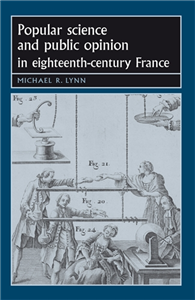
Now available in paperback, Michael R. Lynn's book analyses the popularisation of science in Enlightenment France. He examines the content of popular science, the methods of dissemination, the status of the popularisers and the audience, and the settings for dissemination and appropriation. Lynn introduces individuals like Jean-Antoine Nollet, who made a career out of applying electric shocks to people, and Perrin, who used his talented dog to lure customers to his physics show. He also examines scientifically oriented clubs like Jean-François Pilâtre de Rozier's Musée de Monsieur which provided locations for people interested in science. Phenomena such as divining rods, used to find water and ores as well as to solve crimes; and balloons, the most spectacular of all types of popular science, demonstrate how people made use of their new knowledge. Lynn's study provides a clearer understanding of the role played by science in the Republic of Letters and the participation of the general population in the formation of public opinion on scientific matters.
Trusted Partner

Do dogs belong with humans? Scientific accounts of dogs' 'species story,' in which contemporary dog-human relations are naturalised with reference to dogs' evolutionary becoming, suggest that they do. Dog politics dissects this story. This book offers a rich empirical analysis and critique of the development and consolidation of dogs' species story in science, asking what evidence exists to support it, and what practical consequences, for dogs, follow from it. It explores how this story is woven into broader scientific shifts in understandings of species, animals, and animal behaviours, and how such shifts were informed by and informed transformative political events, including slavery and colonialism, the Second World War and its aftermath, and the emergence of anti-racist movements in the twentieth and twenty-first centuries. The book pays particular attention to how species-thinking bears on 'race,' racism, and individuals.
Trusted Partner

Provides an introduction to the products and context of the new Australian film industry which arose toward the end of the 1960s. Traces the development of Australian film, in terms of prominent directors and stars, consistent themes, styles and evolving genres. The evolution of the film genres peculiar to Australia, and the adaptation of conventional Hollywood forms (such as the musical and the road movie) are examined in detail through textual readings of landmark films. Films and trends discussed include: the period film and Picnic at Hanging Rock; the Gothic film and the Mad Max trilogy; camp and kitsch comedy and the Adventures of Pricilla, Queen of the Desert. The key issue of the revival (the definition, representation and propagation of a national image) is woven through analysis of the new Australian cinema.
Trusted Partner
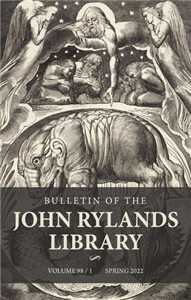
This special issue of the Bulletin of the John Rylands Library is devoted to William Blake. It explores the British and European reception of Blake's work from the late nineteenth century to the present day, with a particular focus on the counterculture. Opening with two articles by the late Michael Horovitz, an important figure in the 'Blake Renaissance' of the 1960s, the issue goes on to investigate the ideological struggle over Blake in the early part of the twentieth century, with particular reference to W. B. Yeats. This is followed by articles on the artistic avant-garde and underground of the 1960s and on Blake's significance for science fiction authors of the 1970s. The issue closes with an article on the contemporary Belgian art collective maelstrÖm reEvolution.
Trusted Partner


The current debate on the corona virus shows that knowledge, and with that science, plays a central role in the struggle to preserve humanity. Knowledge provides opportunities to influence the world, for better or worse. In times when emotions and appeals to baser instincts often triumph over reason and humanity, Ernst Peter Fischer reminds us of the goal of science that has been pursued since the Enlightenment: “to facilitate the conditions of human existence”. In his new book, the bestselling author takes us on an instructive, varied and enjoyable journey through the history of knowledge and science.
Trusted Partner

Two of today’s leading scientists, Ernst Peter Fischer and Detlev Ganten, reconfirm the legacy of two influential 19th-century researchers. To mark the 200th birthday of Rudolf Virchow (1821–1902) and Hermann von Helmholtz (1821–1894), they explain why pioneering research and holistic thinking are still relevant for health science and practice, and for a sustainable balance of people, society and the environment. The historical achievement of Virchow and Helmholtz continues today with the work of researchers like Emmanuelle Charpentier and Christian Drosten, so ensuring that the humane idea continues to be fruitful in the future. An insight into the history of medical science.
Trusted Partner
 Trusted Partner

This book brings a new classroom approach for primary teachers to teach the explicit knowledge of scientific question-asking. This is an essential skill when children are involved in finding out about the world around them through science enquiry. Challenging the assumption that because children ask lots of questions in science, this automatically leads to meaningful learning of the enquiry curriculum, QuBuild is important for all children developing as scientific thinkers. It outlines an approach to explicitly plan for, practice and develop the craft of scientific question-asking. Unlock your children's science learning potential by exploring the QuBuild Process.
Trusted Partner

We‘re in heaven when we‘re in love, admire the stars and Milky Way on crystal-clear nights, and look up to attempt to forecast the weather. We have always been fascinated and shaped by the sky, and even though science may have demythologised it, nonetheless it uses evernew technology to gaze deeper and farther into the universe and is constantly making new discoveries. Rolf Heilmann picks us up with our everyday experiences and questions about the sky, and takes us along on a fascinating journey through the times – from the worlds of the gods and art, philosophy and technology to the exploration of nearby and distant galaxies and the last secrets of science.
Trusted Partner
Penny politics offers a new way to read early Victorian popular fiction such as Jack Sheppard, Sweeney Todd, and The Mysteries of London. It locates forms of radical discourse in the popular literature that emerged simultaneously with Brittan's longest and most significant people's movement. It listens for echoes of Chartist fiction in popular fiction. The book rethinks the relationship between the popular and political, understanding that radical politics had popular appeal and that the lines separating a genuine radicalism from commercial success are complicated and never absolute. With archival work into Newgate calendars and Chartist periodicals, as well as media history and culture, it brings together histories of the popular and political so as to rewrite the radical canon.
Trusted Partner

Ernst Haeckel (1834–1919) is one of the most famous and influential researchers of all times. This brilliant biography by Rainer Willmann recounts Haeckel's fascinating life for science and his fight for freedom of thought. Haeckel is a vehement advocate of Darwinian doctrine and develops it further, which is why he is fiercely attacked not only by the church but also by his fellow scientists. Among other things, we owe to Haeckel the freedom of research and teaching that we take so much for granted. That he was also a talented artist is proven by his drawings of marine organisms ... The gripping and highly interesting life story of an extraordinary freethinker and scientist.
Trusted Partner
This book explores radical dissent from orthodox mainstream economics, and sets out a theoretically grounded vision for the emerging paradigm of social ecological economics. At the heart of this paradigmatic shift lies an acknowledgement of the inextricable embeddedness of economies in biophysical reality and social structure. The struggle for this transformative vision unfolds through a critical examination of mainstream environmental thought, followed by a nuanced evaluation of contributions from Marxists, socialists, critical institutionalists, feminists and Post-Keynesians grappling with the urgent environmental crisis. Synthesising insights from these diverse and heterodox schools, the book navigates the philosophical underpinnings of science, embracing a critical realist approach that challenges not only mainstream economic thought but also eclectic pluralism, relativism and strong constructionism. The question of what constitutes revolutionary science is explored in light of works by Kuhn, Schumpeter and Neurath, emphasising the pivotal role of values and ideology in works from Marx to Gramsci. Building on these radical and philosophical foundations, the book articulates a preanalytic vision of social ecological economics, dismantling entrenched notions of growth and efficiency in favour of a framework centered on social provisioning and needs embedded in ethics. In a thought-provoking conclusion, the book applies its analytical lens to the multiple crises of modernity within industrialised capital-accumulating economies. An agenda for social ecological transformation toward diverse alternative economies emerges, providing a compelling call to action in the face of contemporary challenges.
Trusted Partner
This book provides a powerful diagnosis of why the global governance of science struggles in the face of emerging powers. Through unpacking critical events in China and India over the past twenty years, it demonstrates that the 'subversiveness' assumed in the two countries' rise in the life sciences reflects many of the regulatory challenges that are shared worldwide. It points to a decolonial imperative for science governance to be responsive and effective in a cosmopolitan world. By highlighting epistemic injustice within contemporary science, the book extends theories of decolonisation.
Trusted Partner
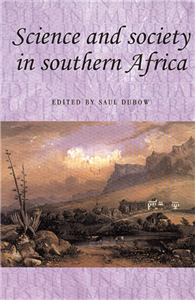
This collection, dealing with case studies drawn from South Africa, Zimbabwe, Mozambique and Mauritius, examines the relationship between scientific claims and practices, and the exercise of colonial power. It challenges conventional views that portray science as a detached mode of reasoning with the capacity to confer benefits in a more or less even-handed manner. That science has the potential to further the collective good is not fundamentally at issue, but science can also be seen as complicit in processes of colonial domination. Not only did science assist in bolstering aspects of colonial power and exploitation, it also possessed a significant ideological component: it offered a means of legitimating colonial authority by counter-poising Western rationality to native superstition and it served to enhance the self-image of colonial or settler elites in important respects. This innovative volume ranges broadly through topics such as statistics, medicine, eugenics, agriculture, entomology and botany. ;
Trusted Partner

This collection, dealing with case studies drawn from South Africa, Zimbabwe, Mozambique and Mauritius, examines the relationship between scientific claims and practices, and the exercise of colonial power. It challenges conventional views that portray science as a detached mode of reasoning with the capacity to confer benefits in a more or less even-handed manner. That science has the potential to further the collective good is not fundamentally at issue, but science can also be seen as complicit in processes of colonial domination. Not only did science assist in bolstering aspects of colonial power and exploitation, it also possessed a significant ideological component: it offered a means of legitimating colonial authority by counter-poising Western rationality to native superstition and it served to enhance the self-image of colonial or settler elites in important respects. This innovative volume ranges broadly through topics such as statistics, medicine, eugenics, agriculture, entomology and botany.
Trusted Partner

—300th birthday of Tobias Mayer in February 2023 — The rediscovery of a great scientist — A chapter in the fascinating history of science The story of Tobias Mayer's life (1723 to 1762) is that of a child prodigy and orphan who became a pioneer of the Enlightenment as a cartographer, mathematician, physicist and astronomer. Having never been to university, at the age of 28 he was appointed a professor in Göttingen by the Elector of Hanover and King of England. He revolutionised cartography with his zeal and skill, helping sailors to find the right path across the seas and providing people with the firstever clear view of the moon. 17th February 2023 marks the 300th anniversary of the birth of Tobias Mayer. High time to recall this prototype of a scientist.