Your Search Results

      • Trusted Partner
        Humanities & Social Sciences
        September 2021

        Nostalgia and the post-war Labour Party

        by Richard Jobson

      • Trusted Partner
        Humanities & Social Sciences
        February 2018

        How to save politics in a post-truth era

        by Ilan Zvi Baron

      • Trusted Partner
        Business, Economics & Law
        April 2023

        Keynes and Marx

        by Bill Dunn

      • Trusted Partner
        October 2023

        Post-Mortem

        Autopsy stories: the unusual experiences of a pathologist

        by Roland Sedivy

        — True crime stories from the morgue — Famous deaths and autopsy stories resolved, such as Antarctic explorer Sir Ernest Shackleton and the case of Anne Greene, who survived her execution by hanging The post-mortem examination. A glimpse inside the interior of the human being. Many find the idea fascinating; for others it is creepy or even repugnant. There are still numerous myths and horror stories surrounding the autopsy, many of them associated with primal human fears such as that of being buried alive, which have existed since Antiquity. It is precisely for this reason that it is important to carry out the post-mortem examination with the utmost conscientiousness. Pathologist Roland Sedivy provides an exciting insight into his profession. Profound and with tremendous humour, he tells us about the early days of the autopsy, and shares with us some macabre and some mysterious cases.

      • Trusted Partner
        Literature & Literary Studies
        June 2025

        Contemporary Slavic horror across media

        Cursed zones

        by Agnieszka Jezyk

        In the Western cultural production that puts individual or collective fear at its center, East/Central Europe has been portrayed as an othered space of horror - lawless, frightening zones where anything can happen. Incorporating articles on literature, film, visual arts, video games, music videos, and music festivals, Contemporary Slavic horror across media: Cursed zones is a pioneering anthology of academic essays devoted to Slavic horror fiction. The book focuses on works from the mid-20th century through the present, particularly the post-Soviet period. Assessing current trends in Czech, Polish, Russian, Slovak, Ukrainian, and East/Central European horror media, the book looks at similarities and idiosyncrasies of the genre in its Slavic variant. With this anthology we hope to tame 'the Easterner Other' and start exorcising 'monstrous' East/Central Europe.

      • Trusted Partner
        Business, Economics & Law
        May 2005

        The UN, human rights and post-conflict situations

        by Nigel White, Dirk Klaasen

        The United Nations is one of the largest providers of assistance in post-conflict situations in the world. This book considers the human rights standards applicable to the United Nations and applied by the United Nations in post-conflict situations, including East Timor, Kosovo and Afghanistan. It looks at legal principles, peace agreements, support of democracy, human rights protection, development and other forms of reconstruction with which the UN has become involved, including the grandly-named task of "state-building". It deals both with the obligation upon the UN to respect human rights in post-conflict situations, and the obligation upon the UN to ensure that human rights are respected by those in positions of power in post-conflict situations. Written by an internationally renowned list of contributors, this book will be of vital use to anyone studying conflict analysis, international relations, international law and the role of the United Nations on the world stage. ;

      • Trusted Partner
        The Arts
        August 2026

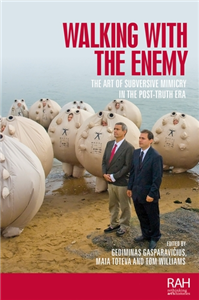
        Walking with the enemy

        The art of subversive mimicry in the post-truth era

        by Gediminas Gasparavicius, Maia Toteva, Tom Williams

        This book is about artists and activists who have embraced mimicry as a subversive tactic. Bringing together the contributions of seventeen writers, it addresses the ways in which artists have responded to power and ideology by imitating its outward forms. These contributors address in particular the current age of fantasy and political deception, and they consider the work of artists who have reacted by using dissimulation and make-believe themselves. Chapters include discussions of mimicry in reference to a number developments and debates: the post-truth era, the neoliberal consensus, the politics of race and gender, online subcultures, and the rise of the new right.

      • Trusted Partner
        Teaching, Language & Reference
        May 2025

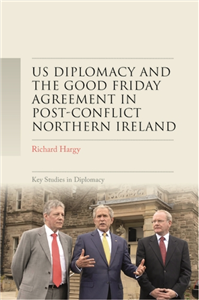
        US diplomacy and the Good Friday Agreement in post-conflict Northern Ireland

        by Richard Hargy

        Richard Haass and Mitchell Reiss, as autonomous diplomats in the George W. Bush State Department, were able to alter US intervention in Northern Ireland and play critical roles in the post-1998 peace process. Their contributions have not been fully appreciated or understood. The restoration of Northern Ireland's power-sharing government in 2007 was made possible by State Department-led intervention in the peace process. There are few references to Northern Ireland in work examining the foreign policy legacy of the George W. Bush presidency. Moreover, the ability to control US foreign policy towards the region brought one of George W. Bush's Northern Ireland special envoys into direct diplomatic conflict with the most senior actors inside the British government. This book will uncover the extent of this fall-out and provide original accounts on how diplomatic relations between these old allies became so fraught.

      • Trusted Partner
        Humanities & Social Sciences
        January 2019

        The post-crisis Irish voter

        Voting behaviour in the Irish 2016 general election

        by Michael Marsh, David M. Farrell, Theresa Reidy

        This is the definitive study of the Irish general election of 2016 - the most dramatic election in a generation, which resulted in the worst electoral outcome for Ireland's established parties, the most fractionalized party system in the history of the state, and the emergence of new parties and groups. These outcomes follow a pattern seen across a number of Western Europe's established democracies in which the 'deep crisis' of the Great Recession has wreaked havoc on party systems. The objective of this book is to assess this most extraordinary of Irish elections both in its Irish and wider cross-national context. With contributions from leading scholars on Irish elections, and using a unique dataset - the Irish National Election Study 2016 - this volume explores voting patterns at Ireland's first post crisis election and it considers the implications for the electoral landscape and politics in Ireland.

      • Trusted Partner
        Demonstrations & protest movements
        July 2014

        Worker protests in post-communist Romania and Ukraine

        Striking with tied hands

        by Mihai Varga

        Worker protests in post-communist Romania and Ukraine is a book about strategies of trade unions confronting employers in difficult conditions. The book's main idea is to study why and how successful forms of workers' interest representation could emerge in a hostile context. The post-communist context makes it difficult for workers and trade unions to mobilise, pose threats to employers, and break out of their political isolation, but even under such harsh conditions strategy matters for defending workers' rights and living standards. The cases studied in this book are 18 conflict episodes at 10 privatised plants in the Romanian steel industry and Ukraine's civil machine-building sector in the 2000s. This book should be relevant for anyone taking interest in how and to what extent workers can reassert their influence over the conditions of production in regions and economic sectors characterised by disinvestment (of which outsourcing and 'lean' methods of production are instances).

      • Trusted Partner
        Humanities & Social Sciences
        July 2014

        Reforming food in post-Famine Ireland

        Medicine, science and improvement, 1845–1922

        by Ian Miller

        Reforming food in post-famine Ireland: Medicine, science and improvement, 1845-1922 is the first dedicated study of how and why Irish eating habits dramatically transformed between the famine and independence. It also investigates the simultaneous reshaping of Irish food production after the famine. Adopting an interdisciplinary approach, the book draws from the diverse methodological disciplines of medical history, history of science, cultural studies, Irish studies, gender studies and food studies. Making use of an impressive range of sources, it maps the pivotal role of food in the shaping of Irish society onto a political and social backdrop of famine, Land Wars, political turbulence, the First World War and the struggle for independence. It will be of interest to historians of medicine and science as well as historians of modern Irish social, economic, political and cultural history. ;

      • Trusted Partner
        September 1979

        Die soziale Situation

        Entwurf eines Modells zur Analyse des Verhältnisses zwischen personalen Systemen und ihrer Umwelt

        by Jürgen Markowitz

        Jürgen Markowitz unternimmt zum ersten Mal den Versuch, den bisher recht unspezifisch gebrauchten Begriff der Situation systematisch zu entfalten. Seine Hauptgesichtspunkte entstammen der phänomenologischen Soziologie und der funktionalistischen Systemtheorie.

      • Trusted Partner
        Humanities & Social Sciences
        January 2026

        Afterlives of the Troubles

        Life stories, culture and conflict transformation in Northern Ireland

        by Graham Dawson

        Focusing on experiential life stories across a range of forms and practices, this book investigates subjectivity, culture and the cultural politics of representation as a neglected dimension of conflict transformation in the Northern Irish peace process. Interdisciplinary critical perspectives from historical cultural studies, oral history and popular-memory theory inform close interpretive engagement with life stories in their cultural, historical and geographical contexts. This enables exploration of the complex temporal dynamics of 'post-conflict' subjectivities in the lengthening 'afterlife' of the Troubles, where feelings attached to conflict experiences are not 'past' but haunt the present, and memory-work carries future-oriented desires for truth, justice and reconciliation. Through case studies responding to the evolving peace process through this prism of life-storytelling, Afterlives maps a contested history of legacy policy-making and approaches to 'dealing with the past', from devolution in 2005-7 through to the Legacy and Reconciliation Act of 2023.

      • Trusted Partner
        Humanities & Social Sciences
        February 2025

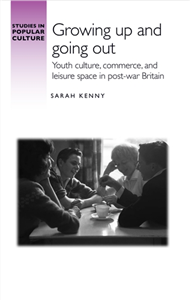
        Growing up and going out

        Youth culture, commerce, and leisure space in post-war Britain

        by Sarah Kenny

        In the decades following the Second World War, youthful sociability was remade as young people across Britain flocked to newly-opened coffee bars, beat clubs, and discos. These spaces, increasingly unknown and unfamiliar to the adults who passed by them, played a remarkable role in reshaping town and city centres after dark as sites of leisure and recreation. Telling the history of youth in post-war Britain from the ground up, through the towns and cities that young people moved through, this book traces how the new spaces of post-war youth leisure transformed both young people's relationship with their local environment and adults' perceptions of the possibilities and dangers of modern leisure. Growing up and going out offers a timely study of youth, commerce, and leisure that explores the reimagination, remaking, and regulation of the post-war city after dark.

      • Trusted Partner
        Humanities & Social Sciences
        July 2026

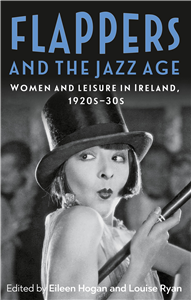
        Flappers and the Jazz Age

        Women and leisure in Ireland, 1920s–30s

        by Eileen Hogan, Louise Ryan

        People's ordinary, everyday lives - and more specifically, their leisure activities - are often obscured within existing academic research on 1920s-30s Ireland. This book seeks to redress that neglect by exploring the relationship between identity, recreation, and culture both North and South of the border, with particular attention to women's lived experiences. Leisurely pursuits during this period were commonly overshadowed by religious influence and the nation-building projects in post-partition Ireland. Nevertheless, there existed alternative spaces, where people enjoyed dancing, singing, listening to music, shopping, glamour, reading magazines, swimming, travelling, and going to the cinema. Such activities reflected international trends beyond national borders. This book documents those activities and spaces through a feminist lens and intersectional analysis of gender, class, religion and rural/urban identities. It brings together multi-disciplinary perspectives including cultural studies, architecture, geography, fashion, and musicology. In so doing, we present new insights and advance understanding of this under-researched aspect of Irish history.

      • Trusted Partner
        Humanities & Social Sciences
        July 2025

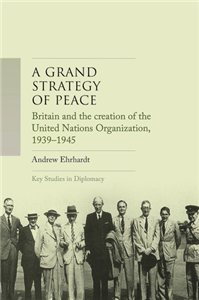
        A grand strategy of peace

        Britain and the creation of the United Nations Organization, 1939-1945

        by Andrew Ehrhardt

        A grand strategy of peace is the first detailed account of Britain's role in the creation of the United Nations Organization during the Second World War. As a work of traditional diplomatic history that brings in elements of intellectual history, the book describes how British officials, diplomats, politicians, and writers - previously seen to be secondary actors to the United States in this period - thought about, planned for, and helped to establish a future international order. While in the present day, many scholars and analysts have returned to the origins of the post- 1945 international system, this book offers an exhaustive account of how the statesmen and more importantly, the officials working below the statesmen, actually conceived of and worked to establish a post-war world order.

      • Trusted Partner
        Literature & Literary Studies
        May 2026

        Russo-Soviet imperialist hauntings

        Neo-Gothic geographies in Central and Eastern Europe since 1989

        by Svitlana Krys, Maryna Romanets

        Russo-Soviet imperialist hauntings attempts to capture some of the ghosts of the colonial and totalitarian past that have been proliferating in international political and cultural landscapes after the collapse of the USSR. By conflating postcolonial, post-totalitarian, postcommunist, and Gothic discourses, it maps virtually untouched aspects of cultural decolonization, focusing on unsettling "hauntings" of unresolved memory traces of Russo-Soviet domination in the former Eastern Bloc countries and Soviet republics. Operating within a vast intertextual field of social, cultural, and ideological discourses, the volume enables a productive exchange across distinct (inter)disciplinary boundaries and represents a range of voices from Europe and North America. The contributors' diverse interests draw on transmedia (literature, visual arts, and film), transnational, and translingual (diasporic literature) approaches, providing insights into a variety of forms that the Gothic has taken in the (late) twentieth and twenty-first centuries, and demonstrating its consistent engagement with history, ideology, and politics.

      • Trusted Partner
        Humanities & Social Sciences
        April 2021

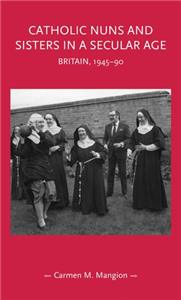
        Catholic nuns and sisters in a secular age

        Britain, 1945–90

        by Carmen M. Mangion

        This is the first in-depth study of post-war female religious life. It draws on archival materials and a remarkable set of eighty interviews to place Catholic sisters and nuns at the heart of the turbulent 1960s, integrating their story of social change into a larger British and international one. Shedding new light on how religious bodies engaged in modernisation, it addresses themes such as the Modern Girl and youth culture, '1968', generational discourse, post-war modernity, the voluntary sector and the women's movement. Women religious were at the forefront of the Roman Catholic Church's movement of adaptation and renewal towards the world. This volume tells their stories in their own words.

      Subscribe to our

      newsletter