Your Search Results

      • Second Story Press

        Our books are sold around the world, have been translated into over 50 languages, won many awards, and have been adapted for film and stage.   We publish stories that feature strong female characters and explore themes of social justice, human rights, equality, and ability issues. Our list spans adult fiction and nonfiction; children’s fiction, nonfiction and picture books; and young adult fiction and nonfiction.

        View Rights Portal
      • Gyeonggi Content Agency

        GCA supports the planning, production, distribution, overseas expansion of contents including videos and films, music, publishing, webtoons and animations, games, etc

        View Rights Portal
      • Trusted Partner
        Humanities & Social Sciences
        October 2021

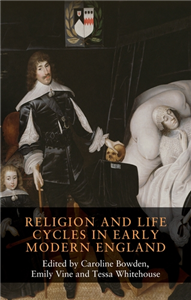
        Religion and life cycles in early modern England

        by Caroline Bowden, Emily Vine, Tessa Whitehouse

        Religion and life cycles in early modern England assembles scholars working in the fields of history, English literature and art history to further our understanding of the intersection between religion and the life course in the period c. 1550-1800. Featuring chapters on Catholic, Protestant and Jewish communities, it encourages cross-confessional comparison between life stages and rites of passage that were of religious significance to all faiths in early modern England. The book considers biological processes such as birth and death, aspects of the social life cycle including schooling, coming of age and marriage and understandings of religious transition points such as spiritual awakenings and conversion. Through this inclusive and interdisciplinary approach, it seeks to show that the life cycle was not something fixed or predetermined and that early modern individuals experienced multiple, overlapping life cycles.

      • Trusted Partner
        August 2016

        How to Survive the First Years of School

        by Petra Jansen, Stefanie Richter

        With a pinch of humor, the authors tell the story of Julia, her husband Peter, and their little whirlwind Alexander, who is starting elementary school. How do the three of them deal with this new stage in Alexander’s life? What problems do they encounter and what do they find stressful? The book sets out to help parents, uncles, aunts, and grandparents understand how children of elementary school age develop. Professionals who work with children of this age may also find it of interest. Petra Jansen and Stefanie Richter are both parents and psychologists. Through the fictional Julia they share their subjective experience as mothers, while also providing background information based on scientific studies. They demonstrate in a clear and entertaining way that some of the problems experienced by children of this age are not unexpected and are no cause for despair.     Target Group: Parents of children in their early years at school.

      • Trusted Partner
        November 2021

        The Metropolitan Age

        The decisive force in the Anthropocene

        by German Environmental Foundation (Ed.)

        Three quarters of the world’s population live in cities. One in eight people lives in a metropolitan area. Megacities swallow up land, energy and resources – and at the same time are particularly hard hit by the current climate crisis that they fuel. However, in the metropolises of the overcrowded world plenty of committed people have heard the warning signals and establish networks to use the potential of cities to reorganize the participative and social-ecological activity that is urgently needed. The contributions to this Yearbook for Ecology focus on the present and future of cities from wide-ranging viewpoints and highlight perspectives for their creative transformation towards liveable sustainability.

      • Trusted Partner
        January 1991

        Gefangener Mut

        117 Tage in einem südafrikanischen Gefängnis

        by First, Ruth

      • Trusted Partner
        September 2023

        Being Able to Stop

        Against the delusion of permanent growth

        by Edited by Jean-Pierre Wils

        We moderns were the inhabitants of an age of impetuous forward movement and voracious discontent. Our main virtue was to increase our reach. Increasing our having and accelerating our being were the signposts towards the future. We just could not get enough. Using the blinkers of ignorance and self-anaesthesia, however, we managed to forget the tremendous costs incurred by this intoxication. Now disillusionment has set in. We look to the future with anxiety. We know that we have long since crossed a line and that a revision of our lifestyle is imminent. We have a bad feeling, and doubts about progress often give way to anger and rebellion. Which stocks of the modern narrative should we defend; which would we do better to let go? How will we even "be able to stop"? The path to a different society needs an attractive goal, because without the prospect of a different, better life, we will not move forward. We should start practising immediately. There is no time to lose.

      • Trusted Partner
        Humanities & Social Sciences
        April 2024

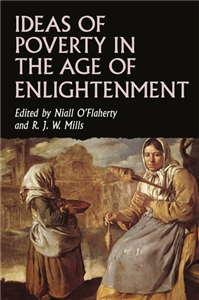
        Ideas of poverty in the Age of Enlightenment

        by Niall O’Flaherty, Robin Mills

        This collection of essays examines the ways in which poverty was conceptualised in the social, political, and religious discourses of eighteenth-century Europe. It brings together experts with a wide range of expertise to offer pathbreaking discussions of how eighteenth-century thinkers thought about the poor. Because the theme of poverty played important roles in many critical issues in European history, it was central to some of the key debates in Enlightenment political thought throughout the period, including the controversies about sovereignty and representation, public and private charity, as well as questions relating to crime and punishment. The book examines some of the most important contributions to these debates, while also ranging beyond the canonical Enlightenment thinkers, to investigate how poverty was conceptualised in the wider intellectual culture, as politicians, administrators and pamphlet writers grappled with the issue.

      • Trusted Partner
        Literature & Literary Studies
        May 2009

        The First and Second Parts of King Edward the Fourth

        By Thomas Heywood

        by David Bevington, Richard Rowland, Richard Dutton, Alison Findlay, Helen Ostovich

        'Edward IV' (1599) was printed no less than six times up to 1626, and was one of the best loved plays of the early modern period, but this edition is the first since the 1870s. The play premiered at a moment when the representation of medieval history in any format was coming under the hostile scrutiny of the Elizabethan government. Yet the playwright produced a text which was at once generically complex (the play blurs the distinction between chronicle history and 'domestic' tragedy), brilliantly assured in its dramatic craftsmanship, and politically explosive. The text of this new paperback edition has already been used by the actors at Shakespeare's Globe when they gave the first London performance of 'Edward IV' for more than four centuries. By demonstrating the playwright's dextrous marshalling of a remarkable range of sources, and by examining afresh the dramatist's singular theatrical technique, this volume reopens an exciting if difficult play to a new generation of scholars and performers. ;

      • Trusted Partner
        Humanities & Social Sciences
        April 2010

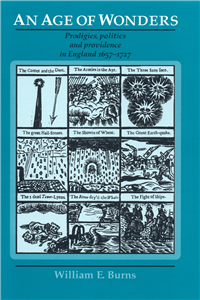
        An age of wonders

        Prodigies, politics and providence in England 1657–1727

        by William Burns, Kim Latham

        Monstrous births, rains of blood, apparitions of battles in the sky - people in early modern England found all of these events to carry important religious and political meanings. In An age of wonders, available in paperback for the first time, William E. Burns explores the process by which these events became religiously and politically insignificant in the Restoration period. The story involves the establishment of early modern science, the shift from 'enthusiastic' to reasonable religion, and the fierce political combat between the Whigs and the Tories. This historical study is based on close readings of a variety of primary sources, both print and manuscript. Burns claims that prodigies lost their religious meaning and became subjects of scientific enquiry as a result of political struggles, first by the supporters of the restored monarchy and the Church of England against Protestant dissenters, and then by the Whig defenders of the Revolution of 1688 against the Tories and the Jacobites. By integrating religious and political history with the history of science, An age of wonders will be of great use to those working in the field of early modern history. ;

      • Trusted Partner
        Business, Economics & Law
        July 2025

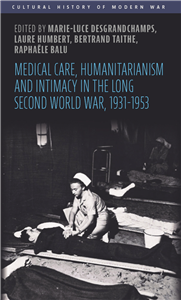
        Medical care, humanitarianism and intimacy in the long Second World War, 1931-1953

        by Marie-Luce Desgrandchamps, Laure Humbert, Bertrand Taithe, Raphaële Balu

        This book offers a micro-global history of humanitarianism and medical care during the 'long' Second World War, which challenges the traditional and Eurocentric chronological boundaries of 1939/1945. It takes as its starting point the Japanese invasion of Manchuria in 1931, which led to the progressive dislocation of the League of Nations, with the Japanese, German and Soviet departures in the 1930s. It ends with the termination of the Korean War in 1953, and the subsequent dismantlement of the first United Coalition and UN Peace enforcement operation. It considers the slow, messy and ambivalent transformation of humanitarian actors' relations to the suffering of distant others through a study of humanitarian encounters, practices, spaces and affects. Paying close attention to a variety of actors, such as French colonial doctors, Swiss ICRC delegates, Egyptian relief workers, Chinese-style physicians, Peruvian and Ecuadorian nurses or American member of the Unitarian Service Committee, the book provides a more holistic story of humanitarianism.

      • Trusted Partner
        Humanities & Social Sciences
        April 2021

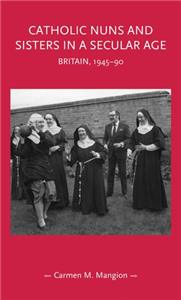
        Catholic nuns and sisters in a secular age

        Britain, 1945–90

        by Carmen M. Mangion

        This is the first in-depth study of post-war female religious life. It draws on archival materials and a remarkable set of eighty interviews to place Catholic sisters and nuns at the heart of the turbulent 1960s, integrating their story of social change into a larger British and international one. Shedding new light on how religious bodies engaged in modernisation, it addresses themes such as the Modern Girl and youth culture, '1968', generational discourse, post-war modernity, the voluntary sector and the women's movement. Women religious were at the forefront of the Roman Catholic Church's movement of adaptation and renewal towards the world. This volume tells their stories in their own words.

      • Trusted Partner
        Humanities & Social Sciences
        January 2007

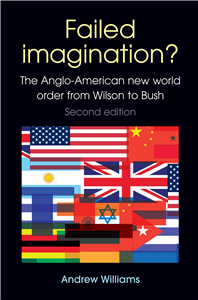
        Failed Imagination? -second edition

        The Anglo-American new world order from Wilson to Bush

        by Andrew Williams

        The main purpose of this book is to explain how (mainly) American, but also British and other Western, policy makers have planned and largely managed to create an international order in their own image, the so-called 'New World Order'. It shows how this seismic shift in international relations has developed through the major global wars of the twentieth and twenty-first centuries. It uses a wide variety of historical archival material to give the background to the current and historical American obsession with creating the world order, one that both reflects the American national interest but also can be said to have established the major security, economic, organisational and normative pillars of our epoch. In addition it provides excellent background reading for the current debate about American foreign policy and the origins of 'neo-conservatism' in international relations. This edition updates a very successful first edition of the title, with additional material to take into account changes in the global order since 2001 and the beginning of the 'War on Terror'. ;

      • Trusted Partner
        Humanities & Social Sciences
        February 2025

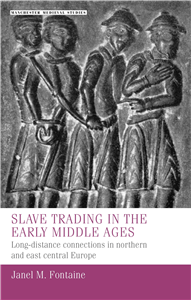
        Slave trading in the Early Middle Ages

        Long-distance connections in northern and east central Europe

        by Janel M. Fontaine

        This book examines slave trading in northern and eastern central Europe from the seventh century through the eleventh century, tracing its growth, climax, and decline. Demand from the Islamic world in the ninth and tenth centuries prompted changes in warfare, trade logistics, and administrative responses to slavery in the slaving zones centred on the British Isles and the Czech lands. This study establishes slave trading as a core driver of connectivity and presents a model for this practice in politically fragmented areas of Europe.

      • Trusted Partner
        Humanities & Social Sciences
        January 2020

        The life–cycle in Western Europe, c.1300–c.1500

        by S. H. Rigby, Deborah Youngs

        This is the first study to examine the entire life cycle in the Middle Ages. Drawing on a wide range of secondary and primary material, the book explores the timing and experiences of infancy, childhood, adolescence and youth, adulthood, old age and, finally, death. It discusses attitudes towards ageing, rites of passage, age stereotypes in operation, and the means by which age was used as a form of social control, compelling individuals to work, govern, marry and pay taxes. The wide scope of the study allows contrasts and comparisons to be made across gender, social status and geographical location. It considers whether men and women experienced the ageing process in the same way, and examines the differences that can be discerned between northern and southern Europe. The fourteenth and fifteenth centuries suffered famine, warfare, plague and population collapse. This fascinating consideration of the life cycle adds a new dimension to the debate over continuity and change in a period of social and demographic upheaval.

      • Trusted Partner
        Humanities & Social Sciences
        March 2017

        Ephemeral vistas

        by Paul Greenhalgh

        The international exhibitions held around the world between 1851 and 1939 were spectacular gestures, which briefly held the attention of the world before disappearing into an abrupt oblivion, of the victims of their planned temporality. Known in Britain as Great Exhibitions, in France as Expositions Universelles and in America as World's Fairs, the genre became a self-perpetuating phenomenon, the extraordinary cultural spawn of industry and empire. Thoroughly in the spirit of the first industrial age, the exhibitions illustrated the relation between money and power, and revelled in the belief that the uncontrolled expression of that power was the quintessence of freedom. Philanthropy found its place on exhibition sites functioning as a conscience to the age although even here morality was inextricably linked to economic efficiency and expansion. Imperial achievement was celebrated to the full at international exhibitions. Nevertheless, most World's Fairs maintained an imperial element and out of this blossomed a vibrant racism. Between 1889 and 1914, the exhibitions became a human showcase, when people from all over the world were brought to sites in order to be seen by others for their gratification and education. In essence, the English national profile fabricated in the closing decades of the nineteenth century was derived from the pre-industrial world. The Fine Arts were an important ingredient in any international exhibition of calibre. This book incorporates comparative work on European and American empire-building, with the chronological focus primarily on the nineteenth and twentieth centuries, when these cultural exchanges were most powerfully at work.

      • Trusted Partner
        Anthropology
        March 2017

        Ageing selves and everyday life in the north of England

        Years in the making

        by Series edited by Alexander Smith, Cathrine Degnen

        Seeking to explore what it means to grow older in contemporary Britain from the perspective of older people themselves, this richly detailed ethnographic study engages in debates over selfhood and people's relationships with time. Based on research conducted in a former coal mining village in South Yorkshire, England, Cathrine Degnen explores how the category of 'old age' comes to be assigned and experienced in everyday life through multiple registers of interaction, including that of social memory, in a postindustrial context of great social transformation. Degnen argues that the complex interplay of social, cultural and physical attributes of ageing means that older people can come to have a different position in relation to time and to the self than younger people, unseating normative conventions about narrative and temporality.

      • Trusted Partner
        Humanities & Social Sciences
        June 2024

        Politicising and gendering care for older people

        Multidisciplinary perspectives from Europe

        by Anca Dohotariu, Ana Paula Gil, Lubica Volanská

        This book offers a new critical framework for understanding the processes of politicising and gendering care for older people and their manifestations in several European contexts. It interrogates how care for older adults varies across time and place while searching for an in-depth comprehension of how it becomes an arena of political struggle and the object of public policy in different countries and at various societal and political levels. It brings together multidisciplinary contributions that examine the issue of care for older people as a political concern from many angles, such as problematising care needs, long-term care policies, home care services, institutional services and family care. The contributions reveal the diversity of situations in which the processes of politicising and gendering care for older adults overlap, contradict or reinforce each other while leading to increased gender (in)equalities on different levels.

      • Trusted Partner
        Care of the elderly
        December 2014

        The politics of old age

        Older people's interest organisations and collective action in Ireland

        by Martha Doyle

        The politics of old age in the twenty first century is contentious, encompassing ideological debates about the rights and welfare entitlements of individuals in later life. An important aspect is the manner in which older people and their representative groups are given the opportunity to articulate their interests in the policy-making process. Drawing upon key literature in political science, social gerontology and cultural sociology, The politics of old age explores the relationship between ageing, politics and representation. It reveals the complexity of older people's representation and how the power the organisations exercise, their legitimacy and existence remain highly contingent on government policy design, political opportunity structures and the prevailing cultural and socioeconomic milieu. This book is essential reading for policymakers and organisations interested in ageing, policy and the political process and for students of ageing, social policy and political sociology.

      • Trusted Partner
        Anthropology
        January 2014

        Ageing selves and everyday life in the north of England

        Years in the making

        by Cathrine Degnen

        Seeking to explore what it means to grow older in contemporary Britain from the perspective of older people themselves, this richly detailed ethnographic study engages in debates over selfhood and people's relationships with time. Based on research conducted in a former coal mining village in South Yorkshire, England, Cathrine Degnen explores how the category of 'old age' comes to be assigned and experienced in everyday life through multiple registers of interaction, including that of social memory, in a postindustrial context of great social transformation. Challenging both the notion of a homogenous relationship with time across generations and the idea of a universalised middle-aged self, Degnen argues that the complex interplay of social, cultural and physical attributes of ageing means that older people can come to have a different position in relation to time and to the self than younger people, unseating normative conventions about narrative and temporality.

      Subscribe to our

      newsletter