
Self-Counsel Press
Livres Canada Books
View Rights Portal


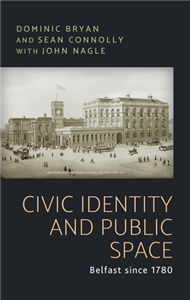
Civic identity and public space, focussing on Belfast, and bringing together the work of a historian and two social scientists, offers a new perspective on the sometimes lethal conflicts over parades, flags and other issues that continue to disrupt political life in Northern Ireland. It examines the emergence during the nineteenth century of the concept of public space and the development of new strategies for its regulation, the establishment, the new conditions created by the emergence in 1920 of a Northern Ireland state, of a near monopoly of public space enjoyed by Protestants and unionists, and the break down of that monopoly in more recent decades. Today policy makers and politicians struggle to devise a strategy for the management of public space in a divided city, while endeavouring to promote a new sense of civic identity that will transcend long-standing sectarian and political divisions.
Insanity, identity and empire examines the formation of colonial social identities inside the institutions for the insane in Australia and New Zealand. Taking a large sample of patient records, it pays particular attention to gender, ethnicity and class as categories of analysis, reminding us of the varied journeys of immigrants to the colonies and of how and where they stopped, for different reasons, inside the social institutions of the period. It is about their stories of mobility, how these were told and produced inside institutions for the insane, and how, in the telling, colonial identities were asserted and formed. Having engaged with the structural imperatives of empire and with the varied imperial meanings of gender, sexuality and medicine, historians have considered the movements of travellers, migrants, military bodies and medical personnel, and 'transnational lives'. This book examines an empire-wide discourse of 'madness' as part of this inquiry.
 Trusted Partner

Considers how notions of Britishness were constructed and promoted through architecture, landscape, painting, sculpture and literature. Maps important moments in the self-conscious evolution of the idea of 'nation' against a broad cultural historical framework. An important addition to the field of postcolonial studies as it looks at how British identity creation affected those living in England - most study in this area has thus far focused on the effect of such identity creation upon the colonial subject. Broad appeal due to wide subject matter covered. Examines just how 'constructed' a national identity is - past and present.
Trusted Partner


Questions of identity trigger controversial and highly emotional discussions in the political and social debate. The positions range from radically emancipatory perspectives to authoritarian and restorative efforts on the far right wing of politics. Liberal democracies are now opening up – slowly – as identity- and gender-sensitive forums. Opposite them are the 'new ethics' of illiberal democracies and totalitarian states that are aimed at ethnic homogeneity and gender uniformity. But that's not to say that there is unity in the liberal settings on the necessary degree of identity politics. Both language and gender politics are deeply controversial. Do we need an 'identity' and, if so, which one or how many? Can the identity debate be extended by means of other concepts?
Trusted Partner
Trusted Partner
Trusted Partner

For the first time, this volume explores the identities of leprosy sufferers and other people affected by the disease in medieval Europe. The chapters, including contributions by leading voices such as Luke Demaitre, Carole Rawcliffe and Charlotte Roberts, challenge the view that people with leprosy were uniformly excluded and stigmatised. Instead, they reveal the complexity of responses to this disease and the fine line between segregation and integration. Ranging across disciplines, from history to bioarchaeology, Leprosy and identity in the Middle Ages encompasses post-medieval perspectives as well as the attitudes and responses of contemporaries. Subjects include hospital care, diet, sanctity, miraculous healing, diagnosis, iconography and public health regulation. This richly illustrated collection presents previously unpublished archival and material sources from England to the Mediterranean.
Trusted Partner
Critical theory and Independent Living explores intersections between contemporary critical theory and disabled people's struggle for self-determination. The book highlights the affinities between the Independent Living movement and studies of epistemic injustice, biopower, and psychopower. It discusses in depth the activists' critical engagement with welfare-state paternalism, neoliberal marketisation, and familialism. This helps develop a pioneering comparison between various welfare regimes grounded in Independent Living advocacy. The book draws on the activism of disabled people from the European Network on Independent Living (ENIL) by developing case studies of the ENIL's campaigning for deinstitutionalisation and personal assistance. It is argued that this work helps rethink independence as a form of interdependence, and that this reframing is pivotal for critical theorising in the twenty-first century.
Trusted Partner
 Trusted Partner
 Trusted Partner
Trusted Partner
Trusted Partner
 Trusted Partner
 Trusted Partner
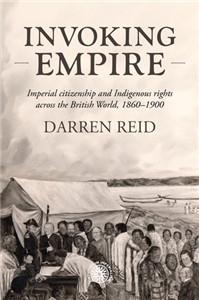
Invoking Empire examines the histories of Canada, South Africa, Australia, and New Zealand during the transitional decades between 1860-1900, when each gained some degree of self-government yet still remained within the sovereignty of the British Empire. It applies the conceptual framework of imperial citizenship to nine case studies of settlers and Indigenous peoples who lived through these decades to make two main arguments. It argues that colonial subjects adapted imperial citizenship to both support and challenge settler sovereignty, revealing the continuing importance of imperial authority in self-governing settler spaces. It also posits that imperial citizenship was rendered inoperable by a combination of factors in both Britian and the colonies, highlighting the contingency of settler colonialism on imperial governmental structures and challenging teleological assumptions that the rise of settler nation states was an inevitable result of settler self-government.
Trusted Partner

How do people seek security in relation to their sense of 'who they are'? How can one make sense of insecurity at the intersection of competing identity claims? Based on the voices of Mayan women, Stern critically re-considers the connections between security, subjectivity and identity. By engaging in a careful reading of how Mayan women 'speak' security in relation to the different contexts that inform their lives, she explores the multiplicity of both identity and security, and questions the main story of security imbedded in the modern 'paradox of sovereignty.' Her provocative analysis thus raises vital questions about what might constitute 'security', and the 'insecurity' that is its inevitable supplement. Her study also offers an innovative methodology that bridges many different disciplines and substantively develops the method of 'reading' politics as a 'textual practice'. It will be essential reading for students of security, identity politics, feminism, and Latin American studies.
Trusted Partner


Minor illness or a serious disease ? Through systematic questioning, pharmacists or pharmaceutical technicians can establish the possibilities and limits of self-medication. Each monograph on the over 100 indications for self-medication includes: - A flow chart: basis for the structured consultation - A brief description: additional information about the symptoms - Recommended medications/groups of medications: the treatment options - Additional advice: individual supportive and alternative treatment options - Specific knowledge for advising particular patient groups: e.g. pregnant women, children and senior citizens New for the 7th edition: Monographs that explore the possibilities of supportive self-medication for indications such as hypertension and diabetes. Information about what to do in the case of poisoning, scabies or inflammation of the nail bed (paronychia) is also provided! The details about active substances, products and additional tips have been updated. The pocket guide has long been the standard for providing advice on self-medication – a “must-have”!
Trusted Partner

This study compares the making and remaking of the political identities of the miners' movements in Britain and Germany. Taking the south Wales and Ruhr coalfields as case studies, it focuses on the public discourse of the trade unions and political parties as it was disseminated in local newspapers, trade union publications, pamphlets and election leaflets. It reveals how the miners' movements used ideas such as class, religion, the 'people' or Volk, socialization and nationalization to construct organizational identities during the turbulent period between 1890 and 1926. These concepts were crucial not only in the formation and self-identity of the miners' trade unions, but also in the way they interacted with employers and the state. They adapted and changed over time as the miners' movements reacted to war, economic depression and increasing industrial conflict. The book contends that these identities were not simply the result of structural factors, but were formed at the juncture where cultural, political and sociological forces intersect. Examining this intersection through discourse analysis and the concept of the 'lifeworld', the book brings together the social world of the miners and the realm of organized politics to advance historical understanding of two of the most important elements in the most powerful labour movements in Europe. ;
Trusted Partner
Trusted Partner
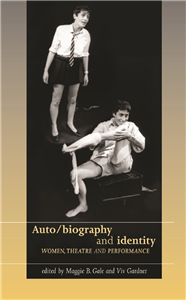
This groundbreaking book shows how female performers - one of the first groups of professional women - used and still use autobiography and performance as both a means of expression and control of their private and public selves, the 'face and the mask'. It looks at how a range of women in the theatre - actors, managers, writers and live artists - have done this on the page and on the stage from the late eighteenth-century to the present day, testing the boundaries between gender, theatre and autobiographical form. This paperback edition facilitates connections - between texts and performances, past and present practitioners, professional and private selves, individuals and communities, all of which have in some way renegotiated identity through autobiography and the creative act. 'Auto/biography and identity' is a landmark in theatre history and performance analysis, in gender and cultural theory, and autobiographical studies. ;
Trusted Partner

This book probes the causes of and conditions for the preference of the members of the British-Bangladeshi community for a religion-based identity vis-à-vis ethnicity-based identity, and the influence of Islamists in shaping the discourse. The first book-length study to examine identity politics among the Bangladeshi diaspora delves into the micro-level dynamics, the internal and external factors and the role of the state and locates these within the broad framework of Muslim identity and Islamism, citizenship and the future of multiculturalism in Europe. Empirically grounded but enriched with in-depth analysis, and written in an accessible language this study is an invaluable reference for academics, policy makers and community activists. Students and researchers of British politics, ethnic/migration/diaspora studies, cultural studies, and political Islam will find the book extremely useful. ;




