
Serpentine Books
Independent publisher of crime, thrillers, sci-fi, mysteries, romantic comedies and mash-ups.
View Rights Portal
Independent publisher of crime, thrillers, sci-fi, mysteries, romantic comedies and mash-ups.
View Rights Portal
Seren Books is proud to be the leading independent publisher of English-language writing from Wales publishing fiction, non-fiction and poetry.
View Rights Portal

Critical Games is about the games we play (whether we know it or not), the ways we play them (for fun, but also to win, and to gain approval from others), and what happens when they get out of hand. The book interrogates the theory of play and gaming, with a particular focus on the games played by literary authors and literary critics. Drawing on (often self-critical) autobiography, as well as readings in texts across a range of languages, Tim Beasley-Murray plays with academic conventions to highlight what is at stake in them, turning to the Game of Literature, from Kafka to Carrère, to seek models and warnings of the outcomes of taking games too seriously, or not taking them seriously enough.
 Trusted Partner


Man brings apocalyptic plagues to the world and his fellow primates – from global warming to the destruction of forests. While millions of monkeys and apes lived on Earth only a few decades ago, today many species are strongly endangered. In this book the anthropologist and monkey researcher Volker Sommer calls on us to finally protect the fundamental rights such as the right to life, freedom and physical integrity of the great apes. For all his seriousness, Sommer is also a great storyteller who deals with his own profession with humour, sympathy and in a highly instructive way.
Trusted Partner

The debate about the Empire dealt in idealism and morality, and both sides employed the language of feeling, and frequently argued their case in dramatic terms. This book opposes two sides of the Empire, first, as it was presented to the public in Britain, and second, as it was experienced or imagined by its subjects abroad. British imperialism was nurtured by such upper middle-class institutions as the public schools, the wardrooms and officers' messes, and the conservative press. The attitudes of 1916 can best be recovered through a reconstruction of a poetics of popular imperialism. The case-study of Rhodesia demonstrates the almost instant application of myth and sign to a contemporary imperial crisis. Rudyard Kipling was acknowledged throughout the English-speaking world not only as a wonderful teller of stories but as the 'singer of Greater Britain', or, as 'the Laureate of Empire'. In the last two decades of the nineteenth century, the Empire gained a beachhead in the classroom, particularly in the coupling of geography and history. The Island Story underlined that stories of heroic soldiers and 'fights for the flag' were easier for teachers to present to children than lessons in morality, or abstractions about liberty and responsible government. The Education Act of 1870 had created a need for standard readers in schools; readers designed to teach boys and girls to be useful citizens. The Indian Mutiny was the supreme test of the imperial conscience, a measure of the morality of the 'master-nation'.
Trusted Partner
 Trusted Partner


People with dementia experience their condition as a big change in which, for example, new events are not linked to existing experiences and wishes, thoughts, and actions can no longer be connected to each other. This kind of experience of the self, due to the intergative function of the brainbeing temporarily or permanently lost, is called dissociative self-experience. Based on this understanding of dementia, the author develops an approach to effectively understand and support people with dementia in everyday activities. Typical everyday situations and behaviours are presented and reflected on in a practical context.
Trusted Partner

What we associate with sleep is shaped by the culture we live in. Whereas the God of the Bible never sleeps, the sinful human falls asleep every night and is thus marked as an inferior being. In the Age of Enlightenment, (too much) sleep was considered a waste of strength, which could otherwise be used to change the world. These days, sleep seems to be subject to the same tenets of usefulness as everything else and is seen to assist with the optimization of one’s self. However, culture and technology also influence how we sleep: for example, the constant availability of light, the modern conditions of work and all sorts of distractions have meant that we no longer follow our natural rhythm – a first sleep before midnight and a second sleep after a longer period of wakefulness, during which we may be active. In “Good Evening, Good Night”, Karoline Walter uses numerous examples from history, literature and research to illustrate how sleep and sleeping have changed across cultures and eras – an entertaining read, certainly nothing to put you to sleep.
Trusted Partner
 Trusted Partner
Trusted Partner
Trusted Partner
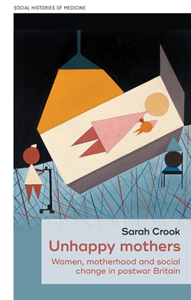
In the decades following the Second World War, mothers' experiences of loneliness, boredom and unhappiness were increasingly widely acknowledged. The language of postnatal depression came to be attached to this, but mothers organised around their own discontent in ways that challenged the medical model. Unhappy mothers draws attention to the social, political, and professional contexts within which knowledge about unhappy mothering developed. Drawing upon an extensive range of archival material, the book addresses themes around expertise, feminism, and the value given to lived experience.
Trusted Partner

Africa was a key focus of Britain's foreign policy under Tony Blair. Military intervention in Sierra Leone, increases in aid and debt relief, and grand initiatives such as the Commission for Africa established the continent as a place in which Britain could 'do good'. Britain and Africa under Blair: in pursuit of the good state critically explores Britain's fascination with Africa. It argues that, under New Labour, Africa represented an area of policy that appeared to transcend politics. Gradually, it came to embody an ideal state activity around which politicians, officials and the wider public could coalesce, leaving behind more contentious domestic and international issues. Building on the story of Britain and Africa under Blair, the book, now available in paperback, draws wider conclusions about the role of 'good' and idealism in foreign policy. In particular, it discusses how international relationships provide opportunities to create and pursue ideals, and why they are essential for the well-being of political communities. It argues that state actors project the idea of 'good' onto idealised, distant objects, in order to restore a sense of the 'good state'. The book makes a distinctive and original contribution to debates about the role of ethics in international relations, and will be of particular interest to academics, policy-makers and students of international relations, Africa and British foreign policy, as well as anyone interested in ethics in international affairs. ;
Trusted Partner

This book, newly available in paperback, argues for greater openness in the ways we approach human rights and international rights promotion, and in so doing brings some new understanding to old debates. Starting with the realities of abuse rather than the liberal architecture of rights, it casts human rights as a language for probing the political dimensions of suffering. Seen in this context, the predominant Western models of rights generate a substantial but also problematic and not always emancipatory array of practices. These models are far from answering the questions about the nature of political community that are raised by the systemic infliction of suffering. Rather than a simple message from 'us' to 'them', then, rights promotion is a long and difficult conversation about the relationship between political organisations and suffering. Three case studies are explored - the Tiananmen Square massacre, East Timor's violent modern history and the circumstances of indigenous Australians. The purpose of these discussions is not to elaborate on a new theory of rights, but to work towards rights practices that are more responsive to the spectrum of injury that we inflict and endure. The book is a valuable and innovative contribution to rights debates for students of international politics, political theory, and conflict resolution, as well as for those engaged in the pursuit of human rights.
Trusted Partner
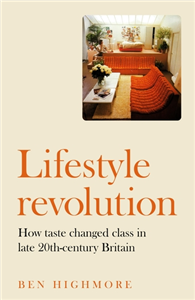
In postwar Britain, journalists and politicians prophesised that the class system would not survive a consumer culture where everyone had TVs and washing machines, and where more and more people owned their own homes. They were to be proved entirely wrong. In good taste charts how class culture, rather than being destroyed by mass consumption, was remade from flat-pack furniture, Mediterranean cuisine and lifestyle magazines. Novelists, cartoonists and playwrights satirised the tastes of the emerging middle classes, and sociologists claimed that an entire population was suffering from status anxiety, but underneath it all, a world was being constructed out of duvets, quiches and mayonnaise, easy chairs from Habitat, white emulsion paint and ubiquitous well-scrubbed, second-hand pine kitchen tables. This was less a world of symbolic goods and more an intimate environment alive with new feelings and attitudes.
Trusted Partner
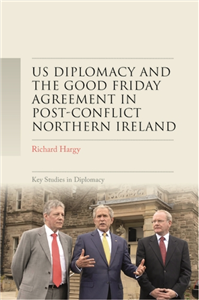
Richard Haass and Mitchell Reiss, as autonomous diplomats in the George W. Bush State Department, were able to alter US intervention in Northern Ireland and play critical roles in the post-1998 peace process. Their contributions have not been fully appreciated or understood. The restoration of Northern Ireland's power-sharing government in 2007 was made possible by State Department-led intervention in the peace process. There are few references to Northern Ireland in work examining the foreign policy legacy of the George W. Bush presidency. Moreover, the ability to control US foreign policy towards the region brought one of George W. Bush's Northern Ireland special envoys into direct diplomatic conflict with the most senior actors inside the British government. This book will uncover the extent of this fall-out and provide original accounts on how diplomatic relations between these old allies became so fraught.
Trusted Partner
Trusted Partner

This edition of Two lamentable tragedies, a quarto printed in 1601 by Richard Read for Matthew Law, and ascribed on the title-page to Robert Yarington, is the first to be published since 1913. It offers a photographic facsimile of the copy in the British Library (C.34.e.23), one of only five to have survived. The play combines a plot based on a real-life London murder case of 1594 with one deriving from an Italian tale of an evil father and his son. The introduction contains an up-to-date consideration of many aspects of the text, including a detailed bibliographical analysis of types, page dimensions, headlines, watermarks and paper; an analysis of compositorial divisions, and of a range of books printed and published by Read and Law; and the nature of the copy-text, which can be deduced from the visualised stage directions and other indications of imaginative staging. There has long been controversy surrounding the authorship of the play, and a full discussion of the issues is provided, including possible identifications of Yarington in contemporary documents, and the question of collaboration. The volume will be essential reading for students of Renaissance drama, book history, and bibliography. ;
Trusted Partner

This book offers a new approach to filmic point of view by combining close analyses informed by the tools of narratology and philosophy with concepts derived from communication studies. Each chapter stages a conversation between two masterpieces of classical Hollywood cinema and one critical concept that can enrich our understanding of them: Vertigo (Alfred Hitchcock, 1958) and Mr. Deeds Goes to Town (Frank Capra, 1936) are interpreted in relation to point of view; Anatomy of a Murder (Otto Preminger, 1959) and The Man Who Shot Liberty Valance (John Ford, 1962) are considered with reference to the concept of distance; and Letter from an Unknown Woman (Max Ophuls, 1948) and Only Angels Have Wings (Howard Hawks, 1939) are explored through the lens of communication. Each encounter reveals new, exciting and mutually illuminating ways of appreciating not only these case studies, but also the critical concepts at stake. ;
Trusted Partner

Doubtful and dangerous examines the pivotal influence of the succession question on the politics, religion and culture of the post-Armada years of Queen Elizabeth's reign. Although the earlier Elizabethan succession controversy has long commanded scholarly attention, the later period has suffered from relative obscurity. This book remedies the situation. Taking a thematic and interdisciplinary approach, individual essays demonstrate that key late Elizabethan texts - literary, political and polemical - cannot be understood without reference to the succession. The essays also reveal how the issue affected court politics, lay at the heart of religious disputes, stimulated constitutional innovation, and shaped foreign relations. By situating the topic within its historiographical and chronological contexts, the editors offer a novel account of the whole reign. Interdisciplinary in scope and spanning the crucial transition from the Tudors to the Stuarts, the book will be indispensable to scholars and students of early modern British and Irish history, literature and religion. ;
Trusted Partner

Lately, autism spectrum disorders (ASD) in adults have received more and more attention. A decade ago, autism was only recognised and diagnosed in children. Oddly enough, the fact that ASD could also occur in adults has been neglected for a long time. By now it has become clear that the symptoms of ASD change over the lifetime. Though people with ASD definitely have many strengths (eye for detail, perseverance, sincerity, a sense of humour, reliability, and consistency), they also have shortcomings. This book brings the reader up to date about ASD. In Part 1, the causes of ASD are described, both in nature and nurture. This part also includes a discussion about information processing in relation to ASD. Part 2 deals with the behavioural aspects as described in the DSM-5. In Part 3, several important themes are discussed, such as the diagnostic process, sexuality, gender differences, and changes that people with ASD experience throughout their lives. ‘I wish I had read this book 15 years ago. I finally understand why people respond to me the way they do.’ Joost, diagnosed with ASD. Target Group: adults with autism, relatives, therapists.
Trusted Partner



