
Agriculture & International Development
Textbooks, research and professional titles in Agriculture and International Development
View Rights Portal
Textbooks, research and professional titles in Agriculture and International Development
View Rights Portal
Parkstone International is a cosmopolitan publishing house that specialises in fine art books.
View Rights Portal
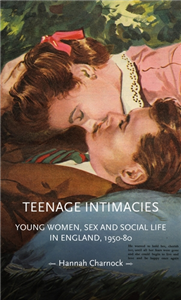
Teenage Intimacies offers a new account of 'sexual revolution' in mid-twentieth century England. Rather than focusing on 'Swinging London', the book reveals the transformations in social life that took place in school playgrounds, local cinemas, and suburban bedrooms. Based on over 300 personal testimonies, Teenage Intimacies traces the everyday experiences of teenage girls, illuminating how romance, sex and intimacy shaped their young lives. The book shows how sex became embedded in ideas about 'growing up' and explores how heterosexuality influenced young women's social lives and vice versa. It offers new explanations of why sexual mores shifted in this period, revealing the pivotal role that young women played in changing sexual values, cultures and practices in the 1950s, 1960s and 1970s.

Bordering intimacy explores the interconnected role of borders and dominant forms of family intimacy in the governance of postcolonial states. Combining a historical investigation with postcolonial, decolonial and black feminist theory, the book reveals how the border policies of the British and other European empires have been reinvented for the twenty-first century through appeals to protect and sustain 'family life' - appeals that serve to justify and obfuscate the continued organisation of racialised violence. The book examines the continuity of colonial rule in numerous areas of contemporary government, including family visa regimes, the policing of 'sham marriages', counterterror strategies, deprivation of citizenship, policing tactics and integration policy.
 Trusted Partner

This book is a collection of articles by anthropologists and social scientists concerned with gendered labour, care, intimacy and sexuality, in relation to mobility and the hardening of borders in Europe. Interrogating the relation between physical, geopolitical borders and ideological, conceptual boundaries, it offers a range of vivid and original ethnographic case studies that will capture the imagination of anyone interested in gendered migration, policies of inclusion and exclusion, and regulation of reproduction and intimacy. The book presents ethnographic and phenomenological discussions of people's changing lives as they cross borders, how people transgress and reshape moral boundaries of proper gender and kinship behaviour, and moral economies of intimacy and sexuality. It also focuses on migrants' navigation of social and financial services in their destination countries, putting questions about rights and limitations on citizenship at the core.
Trusted Partner

This volume provides a novel platform to re-evaluate the notion of open-ended intimacies through the lens of affect theories. Contributors address the embodied, affective and psychic, sensorial and embodied aspects of their ongoing intimate entanglements across various timely phenomena. This fascinating collection asks how the study of affect enables us to rethink intimacies, what affect theories can do to the prevailing notion of intimacy and how do they renew and enrich theories of intimacy in a manner which also considers its normative and violent forms. Lively and thought-provoking, this collection contributes to timely topics across the social sciences, representing multiple disciplines from gender studies, sociology and cultural studies to anthropology and queer studies. By so doing, it advances the value of interdisciplinary perspectives and creative methodologies to understanding affective intimacies.
Trusted Partner
Trusted Partner

The secret life of romantic comedy offers a new approach to one of the most popular and resilient genres in the history of Hollywood. Steering away from the rigidity and ideological determinism of traditional accounts of the genre, this book advocates a more flexible theory, which allows the student to explore the presence of the genre in unexpected places, extending the concept to encompass films that are not usually considered romantic comedies. Combining theory with detailed analyses of a selection of films, including To Be or Not to Be (1942), Rear Window (1954), Kiss Me Stupid (1964), Crimes and Misdemeanors (1989) and Before Sunset (2004), the book aims to provide a practical framework for the exploration of a key area of contemporary experience - intimate matters - through one of its most powerful filmic representations: the genre of romantic comedy. Original and entertaining, The secret life of romantic comedy is perfect for students and academics of film and film genre.
Trusted Partner
Both India and South Africa have shared the infamy of being labelled the world's 'rape capitals', with high levels of everyday gender-based and sexual violence. At the same time, both boast long histories of resisting such violence and its location in wider cultures of patriarchy, settler colonialism and class and caste privilege. Through the lens of the #MeToo moment, the book tracks histories of feminist organising in both countries, while also revealing how newer strategies extended or limited these struggles. Intimacy and injury is a timely mapping of a shifting political field around gender-based violence in the global south. In proposing comparative, interdisciplinary, ethnographically rich and analytically astute reflections on #MeToo, it provides new and potentially transformative directions to scholarly debates this book builds transnational feminist knowledge and solidarity in and across the global south.
Trusted Partner
 Trusted Partner
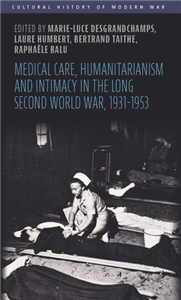
This book offers a micro-global history of humanitarianism and medical care during the 'long' Second World War, which challenges the traditional and Eurocentric chronological boundaries of 1939/1945. It takes as its starting point the Japanese invasion of Manchuria in 1931, which led to the progressive dislocation of the League of Nations, with the Japanese, German and Soviet departures in the 1930s. It ends with the termination of the Korean War in 1953, and the subsequent dismantlement of the first United Coalition and UN Peace enforcement operation. It considers the slow, messy and ambivalent transformation of humanitarian actors' relations to the suffering of distant others through a study of humanitarian encounters, practices, spaces and affects. Paying close attention to a variety of actors, such as French colonial doctors, Swiss ICRC delegates, Egyptian relief workers, Chinese-style physicians, Peruvian and Ecuadorian nurses or American member of the Unitarian Service Committee, the book provides a more holistic story of humanitarianism.
Trusted Partner
Most texts on sexual violence treat capitalism as backdrop or afterthought. In contrast, political economy is the core of this book. Phipps explores the centrality of sexual violence to racial capitalist processes: the enclosure of bodies, the extraction of labour, the expropriation of land and resources, and the disposal of unwanted populations. Importantly, she argues that both sexual violence and sexual fear create social control and surplus value. Through a framework called the coloniality of sexual violence, Phipps conjoins acts of sexual violence and ideas of sexual threat in an analysis of gendered and raced property relations and the split colonial/modern psyche. She argues that fantasies of sexual danger represent the infolded violence of racial capitalism, which is why fear of revolution is often fear of rape. Revolution, however, is always imminent: violence is necessary because power is incomplete.
Trusted Partner
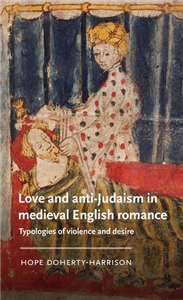
Love and anti-Judaism is a new examination of medieval romance for the questions it poses of the most significant events in Christian history. Providing new readings of Sir Gawain and the Green Knight, Sir Orfeo, Sir Gowther and Sir Amadace, the book argues that romance explores depictions of love-and the sacrifices it may necessitate-in the Hebrew Bible, especially where they do not easily fit into interpretations asserting that this history must prefigure Christ and the crucifixion. An examination of anti-Judaism as a discourse of violence and desire that could be turned inwardly to expose the irresolution in Christianity, this book will provoke new investigations into the religious crises of medieval romance.
Trusted Partner
 Trusted Partner
Through close readings of almost twenty autobiographies written after the break-up of the British Empire, the book examines how individuals engage with the changing narrative landscape brought about by decolonisation. It considers the autobiographies less for what they may teach us about the moment remembered and more as windows on the act of remembering. This adds a crucial dimension to our understanding of the legacies of colonialism and how the ongoing process of decolonisation is reflected on the level of the individual. It argues that autobiographers are at once influenced by and seek to influence the cultural memory of empire and its legacies, and the authors' own position in both. Situated at the intersection of imperial/decolonisation history, memory studies, and life writing studies, the book uncovers this intimate afterlife of empire.
Trusted Partner
Tensions in the struggle for sexual minority rights in Europe, newly available in paperback, is the first queer and poststructuralist reading of political rights concepts in the specific European transnational context. In the last thirty years Europe has seen the rise of gay, lesbian, bisexual and transgender movements fighting nationally and transnationally for participation rights in society. In addition academic theorists have increasingly paid attention to the epistemological and ontological roles gender and sexuality play in modern politics. However, in the political process of arguing for rights the centrality of those roles is mostly hidden from view in official institutional and movement discourses. This book investigates the conceptual themes of lesbian, gay and transgender rights and lobby politics in Europe and their open and hidden relations to binary and hierarchical orders of dominance. It contributes to an understanding of the conditions upon which politics of inclusion, participation, social justice and equality rest and why struggles for sexual minority rights have been so difficult and slow. It illuminates how the paradigms of political discourse constitute, consolidate and contest the meaning and cultural significance of gender and sexuality on modern, democratic, capitalist European societies. ;
Trusted Partner
Since the early 1990s, economic exchanges between China and Taiwan have paved the way to migration across a previously closed border and to social and cultural interactions between the two populations. Despite these broader changes, the unresolved issue of Taiwan sovereignty has tainted not only the relations between the two governments but also the everyday life of those who move across the Taiwan Strait. In this politicised environment, intimate and affective practices linked to cross-border marriage and family formation are never just private. Instead, they are deeply entangled with the emotional and affective processes generated at the macro and meso level of political and social life and revolving around national interests. Tracing the intimate, emotional and affective practices linked to family creation, identity formation and integration with the local and national communities, this ethnographic study offers a subjective, dynamic, and complex picture of what it means to be a mainland spouse in Taiwan.
Trusted Partner
Colonial governments, institutions and companies recognised that in many ways the effective operation of the Empire depended upon sexual arrangements. For example, nuclear families serving agricultural colonization, and prostitutes working for single men who powered armies and plantations, mines and bureaucracies. For this reason they devised elaborate systems of sexual governance, such as attending to marriage and the family. However, they also devoted disproportionate energy to marking and policing the sexual margins. In Sex, Politics and Empire, Richard Phillips investigates controversies surrounding prostitution, homosexuality and the age of consent in the British Empire, and revolutionises our notions about the importance of sex as a nexus of imperial power relations. ;
Trusted Partner

Colonial governments, institutions and companies recognised that in many ways the effective operation of the Empire depended upon sexual arrangements. For example, nuclear families serving agricultural colonization, and prostitutes working for single men who powered armies and plantations, mines and bureaucracies. For this reason they devised elaborate systems of sexual governance, such as attending to marriage and the family. However, they also devoted disproportionate energy to marking and policing the sexual margins. In Sex, Politics and Empire, Richard Phillips investigates controversies surrounding prostitution, homosexuality and the age of consent in the British Empire, and revolutionises our notions about the importance of sex as a nexus of imperial power relations.
Trusted Partner

Catherine Deneuve is indisputably one of the world's most celebrated actresses, both in her native France and throughout the world. Her career has spanned five decades during which she has worked with the most significant of French auteurs, as well as forging partnerships with international directors such as Bunuel and Polanski. The Deneuve star persona has attained such iconic status that it can now symbolise the very essence of French womanhood and civic identity. In this wide-ranging and authoritative collection of essays by a selection of international film academics and writers, the Deneuve persona is scrutinised and illuminated. Beyond the glamorous iconographic status of Yves Saint Laurent's muse, and the epitome of sexual inviolability, Deneuve's status as actress is foregrounded. The book will be essential reading for students and lecturers in star studies.
Trusted Partner

Sexual Progressives is a major new study of the feminists and socialists who campaigned against the moral conservatism of the Victorian period. Drawing on a range of sources, from letters and diaries to radical newspapers and utopian novels, it provides the first group portrait of Scotland's hitherto neglected sexual rebels. They include Bella and Charles Pearce, prominent Glasgow socialists and disciples of an American-based mystic who taught that religion needed 're-sexed'; Jane Hume Clapperton, a feminist freethinker with advanced views on birth-control and women's right to sexual pleasure; and Patrick Geddes, founder of an avant-garde Edinburgh subculture and co-author of an influential scientific book on sex. A consideration of their lives and work forces a reappraisal of our understanding of British sexual progressivism during this period and will therefore be of interest to all historians of modern gender and sexuality.
Trusted Partner

This volume examines the films of Hispanic and Lusophone women filmmakers from the 1930s to the present day. It establishes productive connections between film practices across these geographical areas by identifying common areas of concern on the part of these female filmmakers. Focusing on aesthetic, theoretical and socio-historical analyses, it questions the manifest or latent gender and sexual politics that inform and structure the emerging cinematic productions by women filmmakers in Portugal, Spain, Latin America and the US. With a combination of scholars from the UK, the US, Spain and Latin America, the volume documents and interprets a fascinating corpus of films made by Hispanic and Lusophone women and proposes research strategies and methodologies that can expand our understanding of socio-cultural and psychic constructions of gender and sexual politics. An essential resource to rethink notions of gender identity and subjectivity, it is a unique contribution to Spanish and Latin American Film Studies and Film Studies.


