Your Search Results

      • Kawmiah distributing company

        The National Company for Distribution (Kawmiah distributing company) is one of the national press institutions working in the field of publishing, distribution, printing and journalism, and it has many cultural and intellectual publications through Dar Al Shaab and Dar Al Taawon, and it is of great importance in the paper book market in Egypt and the Arab world with its capabilities in the fields of publishing, distribution and printing And from promising cadres capable of presenting the best publications in various cultural and intellectual fields.

        View Rights Portal

      • Hudhud Publishing & Distribution

        Founded on the steadfast belief that a good book has a positive and lasting impact on the development of children, families and socities, Al Hudhud is a pioneering Emirati publishing and distribution

        View Rights Portal
      • Trusted Partner
        April 2023

        The Battle for Water

        In the century of drought

        by Jürgen Rahmig

        — Water as a reason for war and a political instrument of power — Unique overview of global water conflicts — Foreword by Wolfgang Ischinger Every year, droughts in African countries cause hundreds of thousands of deaths and much suffering. Europe also experienced drought in 2022's summer of record temperatures. Without water, there can be no life. More and more people are suffering from water shortages. Climate change is fuelling the distribution battles for water; violent conflicts over this precious resource are the order of the day. Whether the protests in Iraq, the war in Syria, in the Himalayas, the Nile conflict and in many other places, water is already a reason for war and is being misused as a political instrument of power. The construction of huge dams, the targeted closure of locks, river diversions, water and land grabbing bring wars over the "blue gold" with them. In a unique overview, journalist Jürgen Rahmig describes the struggle for water in the 21st century. Where do dangers lurk today; where will they be tomorrow, and how can we prevent wars over precious water?

      • Trusted Partner
        2022

        Covid, Influenza and more

        How do I strengthen my immune system?

        by Uwe Gröber and Prof. Dr. med. Michael F. Holick

        Many patients are confused in the coronavirus crisis and ask what they can do to prevent themselves and their family from contracting the SARS-Cov-2 virus. There are now several studies that prove the influence of micronutrients such as zinc, selenium and various vitamins on the immune system and specifically on the course of viral diseases. In this brochure, successful author Uwe Gröber, pharmacist and head of the Academy for Micronutrient Medicine in Essen, has compiled his recommendations for strengthening the immune system. Here you can learn -why micronutrients may be considered for combatting the coronavirus, -how the micronutrients are dosed and applied, and -what effects micronutrients have on the immune system. This strengthens the immune system in the fight against the coronavirus!

      • Trusted Partner
      • Trusted Partner
        Humanities & Social Sciences

        Mission Flake

        by Mazen Abdalli, Mira Rzany, Annika Hildebrandt, Lara Neudert

        Sophie is teased by her classmates because of her condition: her skin looks different; she has flaky, red patches. That’s why her classmates only call her “Flake”. Sophie is often sad and doesn’t feel like she belongs. She is afraid to tell her classmates about her illness. One day, Lennart makes friends with her after his mom, a doctor, tells him about neurodermatitis. Sophie realizes how important it is that other people know about her illness and has an idea: together with Lennart she wants to talk about it to the children in her class during a school lesson (“Mission Flake”). This book helps children who suffer from atopic dermatitis (neurodermatitis) to learn more about the condition and the best way for them to cope with it. For:• children of elementary school age(between 6 and 12 years) who sufferfrom atopic dermatitis (neurodermatitis)• parents and relatives• teachers• therapists

      • Trusted Partner
        The Arts
        August 2017

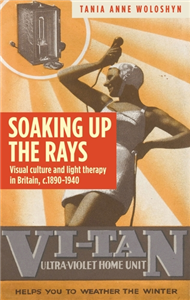
        Soaking up the rays

        Light therapy and visual culture in Britain, c. 1890–1940

        by Tania Woloshyn

        Soaking up the rays forges a new path for exploring Britain's fickle love of the light by investigating the beginnings of light therapy in the country from c.1890-1940. Despite rapidly becoming a leading treatment for tuberculosis, rickets and other infections and skin diseases, light therapy was a contentious medical practice. Bodily exposure to light, whether for therapeutic or aesthetic ends, persists as a contested subject to this day: recommended to counter skin conditions as well as Seasonal Affective Disorder and depression; closely linked to notions of beauty, happiness and well-being, fuelling tourism abroad and the tanning industry at home; and yet with repeated health warnings that it is a dangerous carcinogen. By analysing archival photographs, illustrated medical texts, advertisements, lamps, and goggles and their visual representation of how light acted upon the body, Woloshyn assesses their complicated contribution to the founding of light therapy.

      • Trusted Partner
        August 2016

        Body Image and Body Image Disturbances

        by Andreas Uschok

        Nurses encounter patients whose body image reality has been changed by disease, injuries or traumas on a daily basis. In a world where a flawless body is so highly valued, these patients may struggle to adapt to and accept these changes which can lead to body image disturbances. This handbook provides all those professionals caring for people with amputations, skin disorders, stoma, breast cancer and other diseases with information on the concept of body image and how to assess it, as well as describe possible symptoms and causes of body image disturbances and offers interventions to improve patients’ body image. Target Group: health scientists, geographers, doctors (epidemiologists).

      • Trusted Partner
        The Arts
        September 2017

        Soaking up the rays

        Light therapy and visual culture in Britain, c. 1890–1940

        by Tania Anne Woloshyn

        There is an Open Access edition of this book with a CC-BY-NC-ND license. Soaking up the rays forges a new path for exploring Britain's fickle love of the light by investigating the beginnings of light therapy in the country from c. 1890-1940. Despite rapidly becoming a leading treatment for tuberculosis, rickets and other infections and skin diseases, light therapy was a contentious medical practice. Bodily exposure to light, whether for therapeutic or aesthetic ends, persists as a contested subject to this day: recommended to counter skin conditions as well as Seasonal Affective Disorder and depression; closely linked to notions of beauty, happiness and well-being, fuelling tourism abroad and the tanning industry at home; and yet with repeated health warnings that it is a dangerous carcinogen. By analysing archival photographs, illustrated medical texts, advertisements, lamps, and goggles and their visual representation of how light acted upon the body, Woloshyn assesses their complicated contribution to the founding of light therapy.

      • Trusted Partner
        Humanities & Social Sciences
        September 2018

        Race and the Yugoslav region

        Postsocialist, post-conflict, postcolonial?

        by Catherine Baker, Gurminder Bhambra

        This is the first book to situate the territories and collective identities of former Yugoslavia within the politics of race - not just ethnicity - and the history of how ideas of racialised difference have been translated globally. The book connects critical race scholarship, global historical sociologies of 'race in translation' and south-east European cultural critique to show that the Yugoslav region is deeply embedded in global formations of race. In doing this, it considers the everyday geopolitical imagination of popular culture; the history of ethnicity, nationhood and migration; transnational formations of race before and during state socialism, including the Non-Aligned Movement; and post-Yugoslav discourses of security, migration, terrorism and international intervention, including the War on Terror and the present refugee crisis.

      • Trusted Partner
        History of medicine
        May 2017

        Leprosy and colonialism

        Suriname under Dutch rule, 1750–1950

        by Stephen Snelders. Series edited by Professor Keir Waddington

        Leprosy and colonialism investigates the history of leprosy in Suriname within the context of Dutch colonial power and racial conflict, from the plantation economy and the age of slavery to its legacy in the modern colonial state. It explores the relationship between the modern stigmatization and exclusion of people affected with leprosy, and the political tensions and racial fears originating in colonial slave society, exerting their influence until after the decolonization up to the present day. In the book colonial sources are read from shifting perspectives, of the colonial rulers and, 'from below', the ruled. Though leprosy is today a neglected tropical disease, recognizing influences of our colonial heritage in our global management of health and disease, and exploring the perspectives of other cultures are essential in a time in which migration movements make the permeability of boundaries, and transmission of diseases, more common then perhaps ever before.

      • Trusted Partner
        2022

        Coping Better with Cancer Therapy

        Improved quality of life with the right vitamins and minerals

        by Uwe Gröber and Prof. Dr. Klaus Kisters

        Cancer patients often suffer from malnutrition. Not only do they lack energy-providing macronutrients such as protein, fats and carbohydrates, they particularly lack the micronutrients that regulate the metabolism. Micronutrients such as vitamin D, selenium, L-carnitine, omega-3 fatty acids and vitamin C significantly contribute to supporting the immune system of cancer patients, reducing inflammatory processes, alleviating the side effects of cancer therapy, and improving their quality of life. This patient guide provides information about the relationship between cancer, malnutrition, micronutrient deficiencies, the influence of cancer therapeutics on micronutrient balance, and how cancer patients can support their therapy and improve their quality of life with a controlled intake of micronutrient

      • Trusted Partner
        March 2014

        Hide

        by Rush, Jennifer

      • Trusted Partner
        Humanities & Social Sciences
        January 2025

        The four dimensions of power

        Understanding domination, empowerment and democracy

        by Mark Haugaard

        In this accessible and sophisticated exploration of the nature and workings of social and political power, Haugaard examines the interrelation between domination and empowerment. Building upon the perspectives of Steven Lukes, Michel Foucault, Amy Allen, Hannah Arendt, Anthony Giddens, Pierre Bourdieu and others, he offers a clear theoretical framework, delineating power in four interrelated dimensions. The first and second dimensions of power entail two different types of social conflict. The third dimension concerns tacit knowledge, uses of truth and reification. Drawing upon genealogical theory and accounts of slavery as social death, the fourth dimension of power concerns the power to create social subjects. The book concludes with an original normative pragmatist power-based account of democracy. Offering lucid and entertaining illustrations of complex theoretical perspectives, this book is essential reading for scholars and activists.

      • Trusted Partner
        Humanities & Social Sciences
        November 2024

        Culture is bad for you

        by Orian Brook, Dave O'Brien, Mark Taylor

      • Trusted Partner
      • Trusted Partner
        Science & Mathematics
        February 2025

        Assemblages of cancer

        Experiences and contexts of breast cancer in the UK, France and Italy

        by Cinzia Greco

        Assemblages of cancer illustrates the tensions in the experiences and context of breast cancer in Western Europe. Breast cancer is presented as a success story in oncology, especially in countries with advanced, universal healthcare systems. At the same time, individual experiences are shaped by uncertainty, local variability of healthcare provisions, and the need for patients to assemble information about the treatments, knowledge on healthcare systems navigation, and different processes of meaning-making to manage the uncertainty and variability characterising individual outcomes. The book explores both how individual bodies and experiences are transformed by different local medical practices, institutions and discourses of breast cancer and how patients need to find their own way in these contexts. Assemblages of cancer is based on ten years of ethnographic work with patients and medical professionals in the UK, France and Italy.

      • Trusted Partner
      • Trusted Partner
        2021

        Haemophilia

        Guidelines for pharmacists

        by Dr. Carmen Escuriola Ettingshausen and Nico Kraft

        With the introduction of emicizumab (Hemlibra®) onto the market in February 2018, the advising of patients with blood clotting disorders entered the realm of the pharmacy. After the German law for greater safety in the supply of medicines (GSAV) came into force in August 2020, all drugs for the specific treatment of blood clotting disorders associated with haemophilia – i.e., also products containing clotting factors – are distributed through pharmacies. This change in the law represents an opportunity and at the same time a challenge for pharmacies. A physician and a pharmacist answer questions about the fundamentals of the disease and how to handle its treatment: ■ What causes haemophilia and how is it manifested in patients? ■ Which drugs are used and how is treatment given? ■ What needs to be observed when supplying patients via the pharmacy? Patient, Haemophilia Centre, Pharmacy – seize the opportunity as a pharmacy and establish your position as a competent and reliable partner in this relationship.

      • Trusted Partner

      Subscribe to our

      newsletter