Your Search Results

      • The Glass Slipper Literary Agency

        The Glass Slipper Literary Agency is a full-service literary agency that seeks to excavate, unearth and unveil stories that provoke, trigger, inflame, inspire and awaken, bringing diverse, marginalized and globally appealing voices to the world. We work with authors and publishers across the Americas, Europe, UK, and South Asia. We aim to change the face of the publishing industry by increasing diversity and evoking marginalized and underrepresented voices, including BIPOC,  LGBTQIA, neurodivergent, and/or differently-abled authors.   We proactively nurture writers across the world and take them through every stage of the roller-coaster that is intrinsic to getting published and/or having your work optioned for on-screen adaptation spanning films, TV shows, web series, and more. We believe in developing and furthering the careers of our authors, also helping them build a solid presence across all traditional and non-traditional media, worldwide. Beyond the contours of traditional representation to publishers, we brainstorm potential new projects, orchestrate all book rights for our clients, including translation, republication and entertainment rights, and actively pitch our authors and their works for slots in prime TV shows, print and electronic media outlets, including but not limited to, interviews, Q&As, book reviews and longer-form features on our writers and their works.

        View Rights Portal
      • Trusted Partner
        International relations
        April 2010

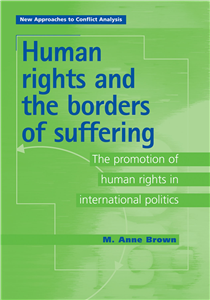
        Human Rights and the Borders of Suffering

        The Promotion of Human Rights in International Politics

        by Anne Brown

        This book, newly available in paperback, argues for greater openness in the ways we approach human rights and international rights promotion, and in so doing brings some new understanding to old debates. Starting with the realities of abuse rather than the liberal architecture of rights, it casts human rights as a language for probing the political dimensions of suffering. Seen in this context, the predominant Western models of rights generate a substantial but also problematic and not always emancipatory array of practices. These models are far from answering the questions about the nature of political community that are raised by the systemic infliction of suffering. Rather than a simple message from 'us' to 'them', then, rights promotion is a long and difficult conversation about the relationship between political organisations and suffering. Three case studies are explored - the Tiananmen Square massacre, East Timor's violent modern history and the circumstances of indigenous Australians. The purpose of these discussions is not to elaborate on a new theory of rights, but to work towards rights practices that are more responsive to the spectrum of injury that we inflict and endure. The book is a valuable and innovative contribution to rights debates for students of international politics, political theory, and conflict resolution, as well as for those engaged in the pursuit of human rights.

      • Trusted Partner
        Humanities & Social Sciences
        January 2019

        Sickness, medical welfare and the English poor, 1750-1834

        by Steven King, Keir Waddington, David Cantor

        At the core of this book are three central contentions: That medical welfare became the totemic function of the Old Poor Law in its last few decades; that the poor themselves were able to negotiate this medical welfare rather than simply being subject to it; and that being doctored and institutionalised became part of the norm for the sick poor by the 1820s, in a way that had not been the case in the 1750s. Exploring the lives and medical experiences of the poor largely in their own words, Sickness, medical welfare and the English poor offers a comprehensive reinterpretation of the so-called crisis of the Old Poor Law from the later eighteenth century. The sick poor became an insistent presence in the lives of officials and parishes and the (largely positive) way that communities responded to their dire needs must cause us to rethink the role and character of the poor law.

      • Trusted Partner
        Humanities & Social Sciences
        March 2009

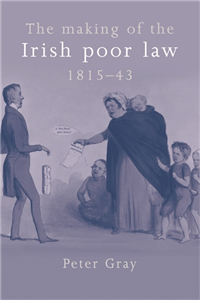
        The making of the Irish poor law, 1815–43

        None

        by Peter Gray

        The making of the Irish poor law, 1815-43 examines the debates preceding and surrounding the 1838 act on the nature of Irish poverty and the responsibilities of society towards it. It traces the various campaigns for a poor law from the later eighteenth century. The nature and internal frictions of the great Irish poor inquiry of 1833-36 are analysed, along with the policy recommendations made by its chair, Archbishop Whately. It considers the aims and limitations of the government's measure and the public reaction to it in Ireland and Britain. Finally, it describes the implementation of the Poor Law between 1838 and 1843 under the controversial direction of George Nicholls. It will be of particular importance to those with a serious interest in the history of social welfare, of Irish social thought and politics, and of British governance in Ireland in the early nineteenth century. ;

      • Trusted Partner
        Humanities & Social Sciences
        May 2020

        Lawyers for the poor

        Legal advice, voluntary action and citizenship in England, 1890–1990

        by Katherine Bradley

        From the 1890s onwards, social reformers, volunteer lawyers, and politicians increasingly came to see access to affordable or free legal advice as a critical part of helping working-class people uphold their rights with landlords, employers, and retailers - and, from the 1940s, with the welfare state. Whilst a state scheme was launched in 1949, it was never fully implemented and help from a lawyer remained out of the reach of many people. Lawyers for the poor is the first full-length study of the development of voluntary action and mutual schemes to make the law more accessible, and the pressure put on the legal profession and governments to bring in further reforms. It offers new insights of the role of access to the law in shaping ideas about citizenship and civil rights in the twentieth century.

      • Trusted Partner
        Literature & Literary Studies
        September 2010

        Plain ugly

        by Naomi Baker, Rebecca Mortimer

      • Trusted Partner
        Humanities & Social Sciences
        April 2024

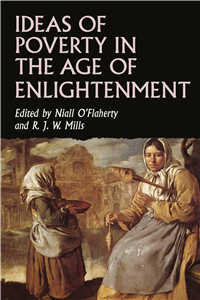
        Ideas of poverty in the Age of Enlightenment

        by Niall O’Flaherty, Robin Mills

        This collection of essays examines the ways in which poverty was conceptualised in the social, political, and religious discourses of eighteenth-century Europe. It brings together experts with a wide range of expertise to offer pathbreaking discussions of how eighteenth-century thinkers thought about the poor. Because the theme of poverty played important roles in many critical issues in European history, it was central to some of the key debates in Enlightenment political thought throughout the period, including the controversies about sovereignty and representation, public and private charity, as well as questions relating to crime and punishment. The book examines some of the most important contributions to these debates, while also ranging beyond the canonical Enlightenment thinkers, to investigate how poverty was conceptualised in the wider intellectual culture, as politicians, administrators and pamphlet writers grappled with the issue.

      • Historical fiction
        February 1905

        Les Misérables

        by Victor Hugo

        Examining the nature of law and grace, the novel elaborates upon the history of France, the architecture and urban design of Paris, politics, moral philosophy, antimonarchism, justice, religion, and the types and nature of romantic and familial love. Les Misérables has been popularized through numerous adaptations for the stage, television, and film, including a musical and a film adaptation of that musical.

      • Trusted Partner
        Humanities & Social Sciences
        October 2019

        Lawyers for the poor

        by Katharine Bradley

      • Trusted Partner
        January 2003

        Arbeit poor

        Unterwegs in der Dienstleistungsgesellschaft

        by Ehrenreich, Barbara / Deutsch Kadritzke, Niels

      • Trusted Partner
        International relations
        July 2013

        Human Rights and the Borders of Suffering

        by Anne Brown

      • Trusted Partner
      • Trusted Partner
      • Trusted Partner
        June 2000

        Wickie, Slime und Paiper

        Das Online-Erinnerungsalbum für die Kinder der siebziger Jahre

        by Pauser, Susanne; Ritschl, Wolfgang

      • Trusted Partner
      • Trusted Partner
        January 2015

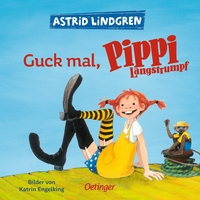
        Guck mal, Pippi Langstrumpf

        by Astrid Lindgren, Katrin Engelking

        Komm mit in die Villa Kunterbunt! Hier wohnt Pippi Langstrumpf. Bei Pippi Langstrumpf gibt es viel zu sehen! Das lustige Mädchen mit den frechen Zöpfen hat ein eigenes Pferd, einen Affen und einen ganzen Koffer voller Gold. Sie ist so stark, dass sie sogar ihr Pferd tragen kann! Im Bett schläft sie mit den Füßen auf dem Kopfkissen. Mit klaren Bildern lernen die Kinder die Welt von Pippi Langstrumpf und ihren Freunden Tommy und Annika kennen und lieben! Astrid Lindgren für Kleine: erstes Benennen und Erzählen rund um Pippis Welt. Ganz ohne Text und mit fröhlichen Bildern von Katrin Engelking. Mit den Pappbilderbüchern aus dem Oetinger Verlag entdecken Kinder ab 1 Jahr die berühmten Figuren aus Astrid Lindgrens Kinderbuch-Klassikern. Die Abenteuer von Pippi Langstrumpf und Co. werden schon für die Allerkleinsten zum besonderen Erlebnis und prägen ihre ersten Schritte in die große weite Bücherwelt. Sorgfältig ausgewählte Illustrationen, originelle Buchformate und eine hochwertige Verarbeitung: Hier dürfen die Kleinen gerne nach Herzenslust und mit allen Sinnen erkunden, erforschen und erfahren. Unsere Pappbilderbücher mit extra stabilen Pappseiten halten jedem frühkindlichen Spieltrieb stand. Die lebensnahen Geschichten der berühmten schwedischen Kinderbuch-Autorin eignen sich perfekt fürs erste Begreifen und Erzählen. Mit den zeitlosen Bilderbuch-Klassikern von Astrid Lindgren macht Großwerden Spaß!

      • Trusted Partner
      • Trusted Partner
        Business, Economics & Law
        July 2018

        The poor in England 1700–1850

        by Alannah Tomkins, Steve King

      • Trusted Partner

      Subscribe to our

      newsletter