Your Search Results

      • China Social Sciences Press

        Established in June, 1978, China Social Sciences Press is sponsored by Chinese Academy of Social Sciences. CSSP is a national level publishing house focusing on academic publications mainly in the field of humanities and social sciences. In 1993, CSSP won the honorary title of “national outstanding press” granted by Propaganda Department of CPC and General Administration of Press and Publication.The missions and the publication targets of CSSP are: first, editing and publishing the most outstanding academic results of CASS and great achievements from the fields of social sciences and culture circle in China, including academic works, text books, reference books and popular books; second, translating Chinese versions of significant humanities and social sciences books written by western authors.

        View Rights Portal
      • Strange Days Books, Social Cooperative Enterprise

        Strange Days Books is a social cooperative publishing firm based in Crete, Greece. Since 2012 we have published almost 100 books. Every year we organize Sand Festival, an online Writers’ Workshop and - in cooperation with www.eyelands.gr literary magazine - the one and only international short story competition based in Greece, plus our International Book Awards. In 2019 SDB was the only publishing house in Greece to receive approval by the European Union’s Creative Europe translation funding program for its project "Strange Days in Europe”. Strange Days Books is an entirely independent publisher, primarily interested in showcasing the wealth of new writing voices in Greece. We work closely with our authors to create books that will appeal to booklovers, books about the present, books that strive to push the art of literature forward, books written with talent and passion, books that challenge the way we see the world, books bursting with new ideas and intriguing perspectives.

        View Rights Portal
      • Trusted Partner
        Humanities & Social Sciences
        October 2025

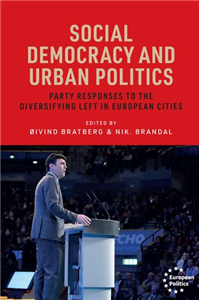
        Social democracy and the urban scene

        Party responses to the diversifying centre-left

        by Nik. Brandal, Øivind Bratberg

        Social democratic parties struggle to appeal to a divided electorate. Particularly prescient is the clash between working-class voters thatare socially conservative and middle-class voters who are liberally inclined but economicallyleft. Are politics and policies that appeal to both even a possibility? Nowhere is thatdebate more acute than in European cities, yet in no other political space are answers more likely to be found.Where urban voters turn left, they are increasingly attracted by radical and green alternatives to social democracy.Social democracy and urban politicsdelves into the changing relationship between these three party families on the urban scene. Mapping electoral geography, governing strategies and the interface between parties and social movements on the left, the authors reflect upon the formation and dilemmas of a broader progressive alliance.

      • Trusted Partner
        Humanities & Social Sciences
        April 2007

        Labour, the state, social movements and the challenge of neo-liberal globalisation

        by Andrew Gamble, Steven Fielding, Steve Ludlam, John Callaghan, Andrew Taylor, Steve Ludlam, Stephen Wood

        With the emergence of neo-liberalism in the 1980s as the dominant domestic and international political-economic orthodoxy, labour as both a social category and political movement tended to be written off or ignored by academics, politicians and commentators. However, at a time when the world's working class is growing faster than at any previous time in history and neo-liberalism is widely challenged, this orthodoxy is clearly inadequate. The spread of global production means that to ignore labour, its organisations, interests and politics, is to ignore one of the key components of that process. Labour organisations have not gone away and neither has the state: their relationship remains as significant as ever. The strategic relationship between trade unions and social movements, nationally and internationally, has also developed markedly, especially in the south. New patterns of resistance are emerging to challenge global capital and those who assert that globalisation is irresistible. ;

      • Trusted Partner

        Does Movement Really Make Us Smart?

        by Petra Jansen, Stefanie Richter

        Media reports often praise movement as a cure-all. But apart from its undisputed positive effect on health, does movement really make us smarter? Consider a national football team, for example – are these excessively sports-driven players automatically the smartest people? Should we simply replace all school subjects with sports? The authors provide a detailed summary of the latest scientific findings on the influence of movement on cognitive ability. They describe the effects of movement, on old age, embodiment, emotion, school as well as other factors that influence cognition. Target Group: teachers, lecturers, psychologists, psychiatrists, neurologists, psychotherapists, movement therapists.

      • Trusted Partner
      • Trusted Partner
        Humanities & Social Sciences
        February 2018

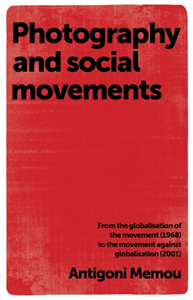
        Photography and social movements

        by Antigoni Memou

      • Trusted Partner
        Humanities & Social Sciences
        October 2017

        Black flags and social movements

        by Dana M. Williams

      • Trusted Partner
        Humanities & Social Sciences
        April 2020

        European labour movements in crisis

        by Thomas Prosser

      • Trusted Partner
        Political ideologies
        July 2013

        Understanding political ideas and movements

        by Kevin Harrison, Tony Boyd

        Written specifically to cover the A2 component of the GCE Government and Politics A-level. Provides a comprehensive introduction to the various political ideas and movements that have shaped the modern world. Underpinned by the work of major thinkers such as Marx, Locke, Weber, Hobbes and Foucault, the book examines at political concepts including the state and sovereignty, the nation and democracy, representation and legitimacy, freedom, equality and rights, obligation and citizenship. Addresses traditional theoretical subjects such as socialism, marxism and nationalism as well as contemporary contemporary movements such as environmentalism, ecologism and feminism. Written in a clear, accessible style, including a number of student-friendly features, such as chapter summaries, key points to consider, definitions and pointers to further sources of information.

      • Trusted Partner
        Business, Economics & Law
        June 2025

        Foundations of social ecological economics

        The fight for revolutionary change in economic thought

        by Clive L Spash

        This book explores radical dissent from orthodox mainstream economics, and sets out a theoretically grounded vision for the emerging paradigm of social ecological economics. At the heart of this paradigmatic shift lies an acknowledgement of the inextricable embeddedness of economies in biophysical reality and social structure. The struggle for this transformative vision unfolds through a critical examination of mainstream environmental thought, followed by a nuanced evaluation of contributions from Marxists, socialists, critical institutionalists, feminists and Post-Keynesians grappling with the urgent environmental crisis. Synthesising insights from these diverse and heterodox schools, the book navigates the philosophical underpinnings of science, embracing a critical realist approach that challenges not only mainstream economic thought but also eclectic pluralism, relativism and strong constructionism. The question of what constitutes revolutionary science is explored in light of works by Kuhn, Schumpeter and Neurath, emphasising the pivotal role of values and ideology in works from Marx to Gramsci. Building on these radical and philosophical foundations, the book articulates a preanalytic vision of social ecological economics, dismantling entrenched notions of growth and efficiency in favour of a framework centered on social provisioning and needs embedded in ethics. In a thought-provoking conclusion, the book applies its analytical lens to the multiple crises of modernity within industrialised capital-accumulating economies. An agenda for social ecological transformation toward diverse alternative economies emerges, providing a compelling call to action in the face of contemporary challenges.

      • Trusted Partner
        Humanities & Social Sciences
        January 2026

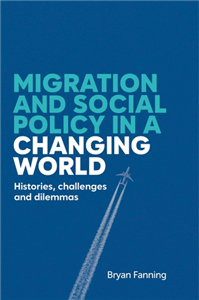
        Migration and social policy in a changing world

        Histories, challenges and dilemmas

        by Bryan Fanning

        Migration and social policy in a changing world bridges the generally separate fields of social policy and migration studies. This book traces social policy responses to migration from the Industrial Revolution to today's era of globalisation and large-scale migration. Through case studies from across the globe, the book explores key themes including rural-urban migration, social citizenship, welfare internationalism and diasporic care systems. It examines how migrants are included in or excluded from social citizenship in host societies, and how they become providers of welfare services such as health and social care. Moving beyond a methodological nationalist focus, the book investigates migrant incorporation into welfare states through family networks, faith communities, and other informal welfare structures. It combines migrants' experiences with host societies' immigration politics, institutional perspectives and policies to present a comprehensive analysis of the migration-welfare relationship. This volume fills a gap in academic literature and offers policymakers, practitioners and scholars a framework for understanding the interplay between migration and social policy in our changing world.

      • Trusted Partner
        Humanities & Social Sciences
        April 2021

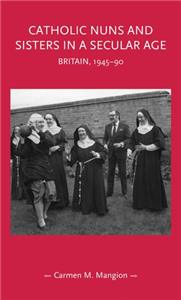
        Catholic nuns and sisters in a secular age

        Britain, 1945–90

        by Carmen M. Mangion

        This is the first in-depth study of post-war female religious life. It draws on archival materials and a remarkable set of eighty interviews to place Catholic sisters and nuns at the heart of the turbulent 1960s, integrating their story of social change into a larger British and international one. Shedding new light on how religious bodies engaged in modernisation, it addresses themes such as the Modern Girl and youth culture, '1968', generational discourse, post-war modernity, the voluntary sector and the women's movement. Women religious were at the forefront of the Roman Catholic Church's movement of adaptation and renewal towards the world. This volume tells their stories in their own words.

      • Trusted Partner
        Business, Economics & Law
        February 2022

        The labour movement in Lebanon

        by Lea Bou Khater, Simon Mabon

      • Trusted Partner
      • Trusted Partner
        Humanities & Social Sciences
        June 2026

        Home front heroism

        by Ellena Matthews

      • Trusted Partner
        Humanities & Social Sciences
        November 1994

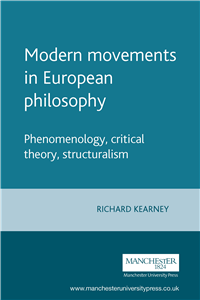
        Modern movements in European philosophy

        Phenomenology, critical theory, structuralism

        by Richard Kearney

        In this now classic textbook, Richard Kearney surveys the work of nineteen of this century's most influential European thinkers, and acts as an introduction to three major movements: phenomenology, critical theory and structuralism. This edition includes a chapter devoted to Julia Kristeva, whose work in the fields of semiotics and psychoanalytic theory has made a significant contribution to recent continental thought. ;

      • Trusted Partner
        Humanities & Social Sciences
        January 2021

        Women art workers and the Arts and Crafts movement

        by Zoë Thomas

        This book constitutes the first comprehensive history of the network of women who worked at the heart of the English Arts and Crafts movement from the 1870s to the 1930s. Challenging the long-standing assumption that the Arts and Crafts simply revolved around celebrated male designers like William Morris, it instead offers a new social and cultural account of the movement, which simultaneously reveals the breadth of the imprint of women art workers upon the making of modern society. Thomas provides unprecedented insight into how women navigated authoritative roles as 'art workers' by asserting expertise across a range of interconnected cultures: from the artistic to the professional, intellectual, entrepreneurial and domestic. Through examination of newly discovered institutional archives and private papers, Thomas elucidates the critical importance of the spaces around which women conceptualised alternative creative and professional lifestyles.

      • Trusted Partner
        Humanities & Social Sciences
        January 2013

        Christian Dualist Heresies in the Byzantine World, c. 650-c. 1450

        by Janet Hamilton, Bernard Hamilton

        Christian dualism originated in the reign of Constans II (641-68). It was a popular religion, which shared with orthodoxy an acceptance of scriptual authority and apostolic tradition and held a sacramental doctrine of salvation, but understood all these in a radically different way to the Orthodox Church. One of the differences was the strong part demonology played in the belief system. This text traces, through original sources, the origins of dualist Christianity throughout the Byzantine Empire, focusing on the Paulician movement in Armenia and Bogomilism in Bulgaria. It presents not only the theological texts, but puts the movements into their social and political context.

      • Trusted Partner
        Humanities & Social Sciences
        April 2025

        Bordering social reproduction

        Migrant mothers and children making lives in the shadows

        by Rachel Rosen, Eve Dickson

        Bordering social reproduction explores what happens when migrants subject to policies that seek to deny them the means of life nonetheless endeavour to make and sustain meaningful lives. Developing innovative theorisations of welfare bordering, the volume provides rich ethnographic insights into the everyday lives of destitute mothers and children who are denied mainstream welfare support in the United Kingdom due to their immigration status. This book shows how enforced destitution and debt work alongside detention and deportation as part of a tripartite of exclusionary technologies of the racial state. It advances the novel concept of weathering to comprehend mother's and children's life-making practices under duress - arguing that these are neither acts of heroic resilience nor solely symptomatic of lives rendered disposable, but indications of the fragilities of repressive migration regimes and, on occasion, refusals to accept their terms of existence.

      Subscribe to our

      newsletter